$SPCX will acquire Cursor in an all-stock deal valuing the AI coding company at $60B
The companies say pairing Cursor’s software engineer distribution with SpaceX’s Colossus compute would help them build “the world’s most useful models.”
$TSLA - TESLA DELIVERIES SET TO BEAT EXPECTATIONS
Goldman Sachs raised its Tesla Q2 delivery forecast to 420,000 vehicles, above the 400,000 consensus, citing stronger-than-expected sales data. Europe led growth with a major rebound, while China and other Asian markets also showed gains. The U.S. remained the weak spot, with deliveries down year-over-year. Goldman says Tesla’s quarterly results are likely to outperform forecasts.
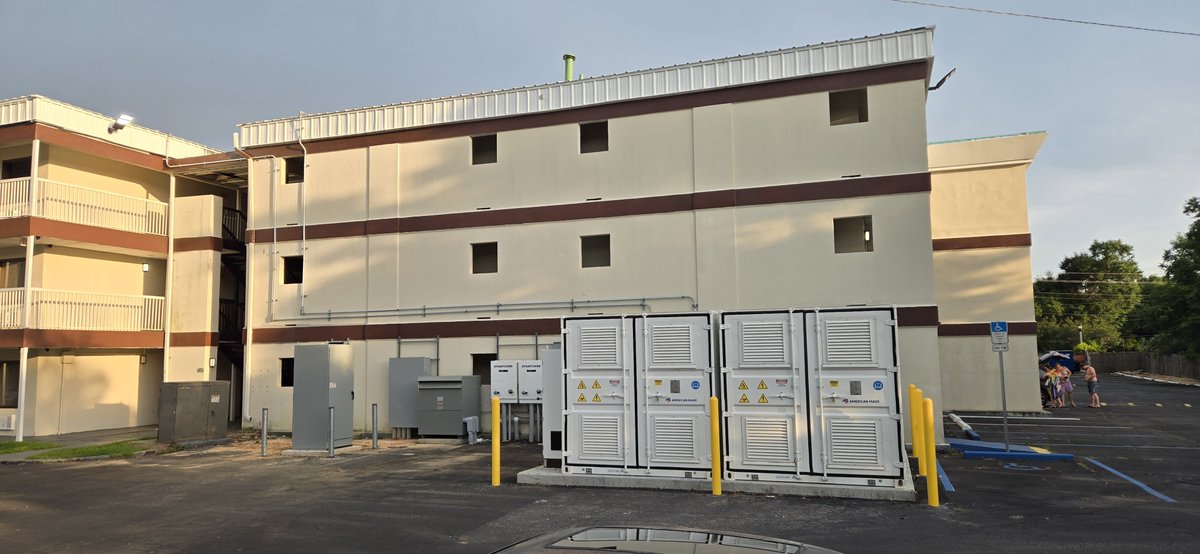
$EOSE
Eos needs an Investor Day 2.0 & the true vision towards 2030. Showcase your line of sight.
The “Black Box” has gotten way too large.
$24B in “Pipeline” to just $645M in backlog. If you unpack it that’s over 100GWh that’s been ‘identified’.
->>> Yet I can’t model 2027.
Something I keep noticing on X, not just with $EOSE but across almost every investment I follow.
People dig deep. They research obsessively, share findings, cross-reference numbers, debate every data point. I genuinely appreciate that. I learn from it. The community finds things I would miss.
But two patterns emerge almost every time, and both quietly undermine the entire effort.
First: when you focus this hard on details, the details themselves become your thesis. Every piece of information becomes load-bearing. When pieces are missing, which they always are, the whole structure feels unstable. You start filling gaps with assumptions. Those assumptions create anxiety. And then the question is no longer "is the direction right?" but "which of the things I believe is actually still true?"
Second: detail-focused investors inevitably bake a timeline into their thesis. Because the details suggest one. Joe says Q2, so Q2 becomes part of the model. When Q2 becomes Q3, it is not just a delay. It is a crack in the foundation. The thesis was built on those details and the details moved. Most of the frustration on X traces back to this. Not to the actual state of the business, but to expectations that were always derived from a level of precision the situation never warranted.
The alternative is to start not with details but with tectonic plates. The large, slow, undeniable forces reshaping the world. And to ask one question: is everything still moving in that direction?
For EOSE, those plates are obvious if you zoom out far enough.
Everything is going electric. Transport. Industry. Heating. All of it. AI is growing at a pace that genuinely surprises even the people building it. Power is the bottleneck. The grids across the western world are not remotely capable of handling what is coming. And the dominant current solution, short-duration lithium, does not solve this problem. It manages it. There is a fundamental mismatch between what the world needs and what currently exists at scale.
Call it what it is: a shift that has been in motion for years and is now undeniable to almost everyone.
The second plate: there is no good, scalable solution yet. Eos is not finished either. But every time you check, they are closer. DawnOS brought round-trip efficiency from the 30s into the 70s. Indensity is not just an improvement, it is a product designed for the TAM that actually matters at scale. Line 2 is about to go live carrying every lesson from Line 1. Frontier Power USA is directly addressing the financing and insurance problem that has blocked this entire sector, not just Eos. These are not incremental updates. These are structural bottlenecks being removed one by one.
Most people try to assemble a puzzle without seeing the picture on the box. They need every piece to understand what they are looking at. When pieces are missing, the whole thing stalls. But when the tectonic plates are clearly moving in one direction, the details always find their place. Anyone who has watched long cycles knows this. The plates move, the details follow.
None of this is fast. It cannot be fast. If you expected faster, the honest question is whether your expectations were calibrated correctly, not whether execution is slow.
And then there is Cerberus. They had a 5 to 10x return available and walked away from it. Twice they extended their lockup instead of exiting. They are now building FPUSA as a long-term infrastructure platform. You do not extend lockups twice if you are chasing a quick exit. You do it when you believe the destination is worth the wait. Behavior is data. And that data is loud.
The concern I hear most often is that there is too little guidance on the next 1 to 2 years. That Eos is not making it easy. And that is fair. They are not making it easy. But consider what is actually being asked here. A small-cap American manufacturer is solving a problem that trillion-dollar companies have not solved. In a sector where technology, financing, insurance, permitting, and execution all have to work at the same time. Hard is the point. Easy investments do not produce asymmetric returns.
Zoom out. The picture is still there.
It will be interesting to see how these SaaS companies adjust to the AI play that is threatening their business.
Salesforce Cuts Jobs Again As AI Threat Lingers - Business Insider https://t.co/pbwtoSyO6s
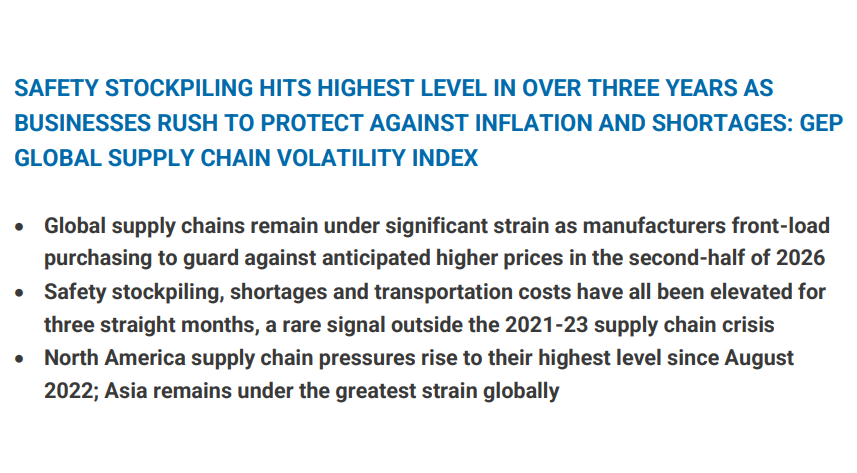
Supply chain 201…
This is great to see this focus on reducing the cash conversion cycle.
Very important step to get to free cash flow positive @PoweredByEos and growing cash