Happy to share my post-doc work studying the role of autism and neurodevelopmental disorder genes in regulating interneuron development. Immense gratitude to my mentor @Sergiu_P_Pasca for the guidance and all the co-authors for being so supportive!
There are now hundreds of genes associated with autism & neurodevelopmental disorders but what
key processes in brain development they each disrupt remains unknown.
In an article in @Nature today, we start tackling this question by combining forebrain #assembloids with CRISPR screens to map >400 disease genes onto stages of human cortical interneuron development.
Using engineered lines, regionalized neural #organoids and over 1,000
#assembloids, we discovered a group of disease genes that interfere with GABAergic neuron generation or migration, including some surprising disease mechanisms. Check out the video below for details.
This work was led by the fearless @XianglingM in the lab!!
In collaboration with Bassik lab & @panagiog lab!
Article here: https://t.co/hAKHSEGjVv
Supported by the @BrOrganogenesis@StanfordBrain@StanfordBioX@nyscf@cziscience
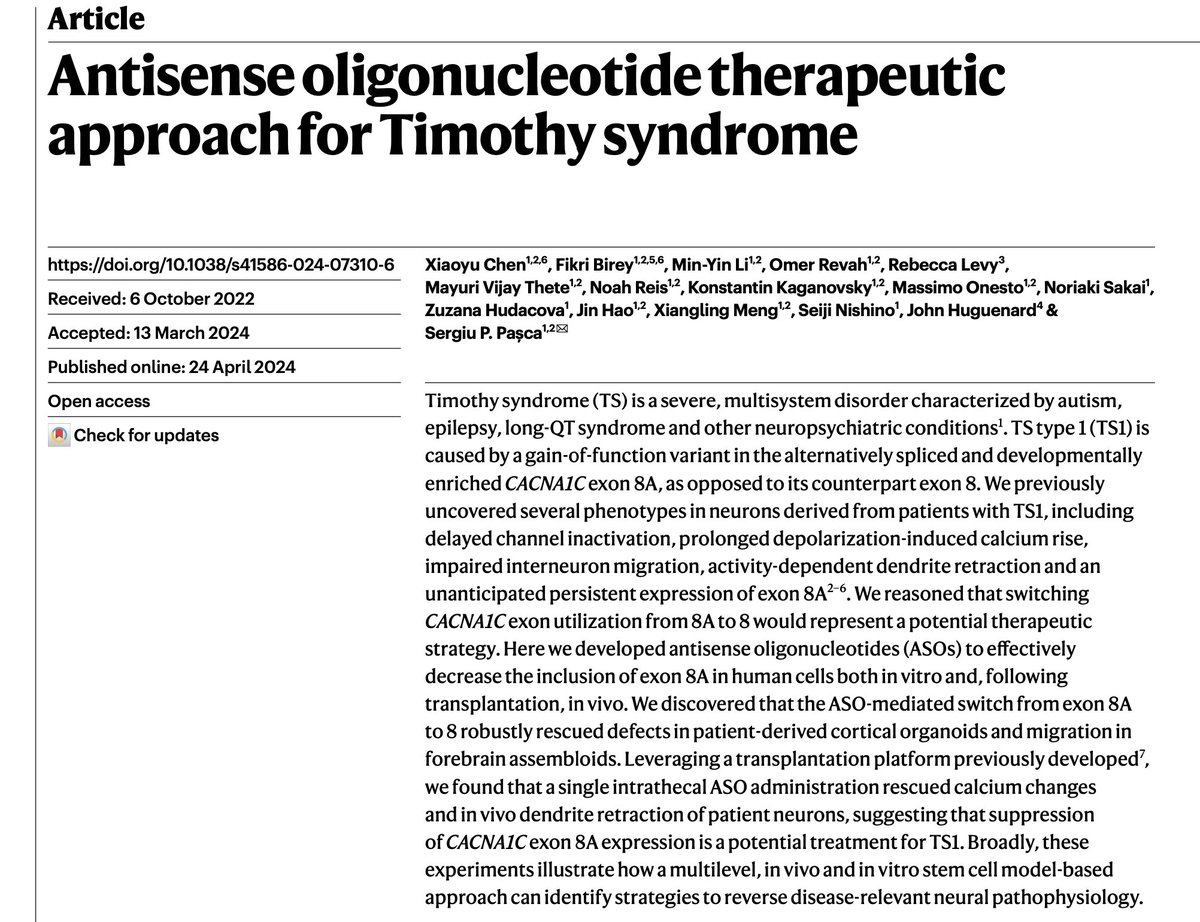
In our @Nature paper published last week, we identified a potential therapeutic for Timothy Syndrome (TS) using human neural #organoids, #assembloids and neurons from TS patients transplanted into rats.
Here’s a more detailed description of what we found 👇
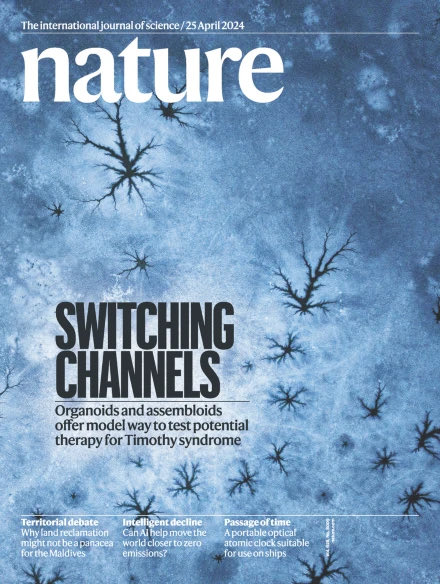
Today, I’m thrilled have our lab’s work featured on the cover of @Nature
In this article, we have developed a therapeutic approach for a severe condition called Timothy syndrome. This has been a long journey. It started with making hiPS cell-derived neurons in 2D cultures 15 years ago when I was a postdoc and continued with later creating in the lab #organoid and then #assembloid models of this disease caused by a mutation in a calcium channel.
Over time, these human cellular models and the biological insights we gained enable us to design a therapeutic strategy, which we validated in vivo following circuit integration of patient-derived organoids into the rat brain.
Grateful for the incredible work led by @XiaoyuChenxy and @fikribirey in the lab! And the many close collaborators who participated to this line of research over the years.
The Zhou lab is now officially open in @EmoryUniversity@EmoryMedicine@EmoryGenetics! We are actively recruiting at all levels. Come and join us if you are passionate about neurodevelopment and dedicated to finding a cure for autism! https://t.co/atV9HSCk1i
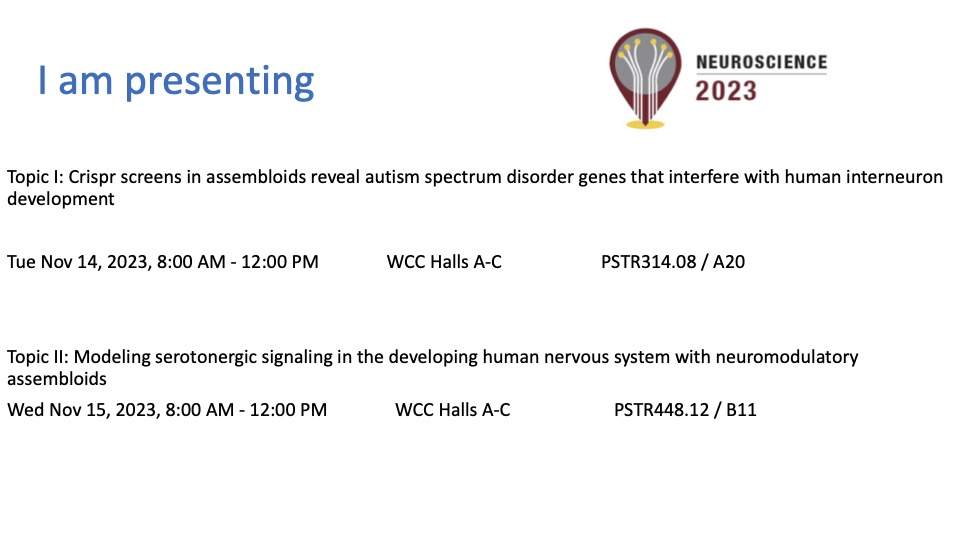
I am presenting two posters at the coming SFN. Please stop by if you are interested in combining CRISPR screening and brain organoids to study Autism or using brain organoids to study neuromodulation.
"We have a longer and longer list of genes associated with [autism], and we need to find a way of mapping or grouping them to see what processes they impact," says @Sergiu_P_Pasca.
By @IsabelRuehl.
@biorxivpreprint: https://t.co/IaNskZP9Qi
https://t.co/1ZRQcgaPXn
Delighted that our @Nature consensus article on #organoids#assembloids#transplantation is now open access!
Grateful for our incredible working group and hopeful that this short piece covering nomenclature & misconceptions will reach more readers
https://t.co/HbdJsZdSRR
What makes humans unique? In our new preprint from the @KriegsteinLab, we generated a cross-species proteomic map of synapse development in the human, macaque, and mouse neocortex. Here is a brief summary of what we found: (1/8)
https://t.co/LwqFHkclRp
Today is a great day for my lab. Our paper (before proof correction) has been published in @jclinicalinvest!
Meningeal dendritic cells drive neuropathic pain through elevation of the kynurenine metabolic pathway in mice https://t.co/1vinyJgwc8
Teaching & implementing methods is as important as developing them
Glad to announce another international hands-on course on human models of neural development in our @Stanford@BrOrganogenesis
Come learn how to make & probe #organoids & #assembloids
Deadline Nov 1
Please RT
Self-organizing systems have been one of the most exciting recent advances in stem cell research
However, many names & classifications are used making it challenging to convey the science
We now got together as a field to provide a nomenclature framework
Out in @Nature today👇1/9
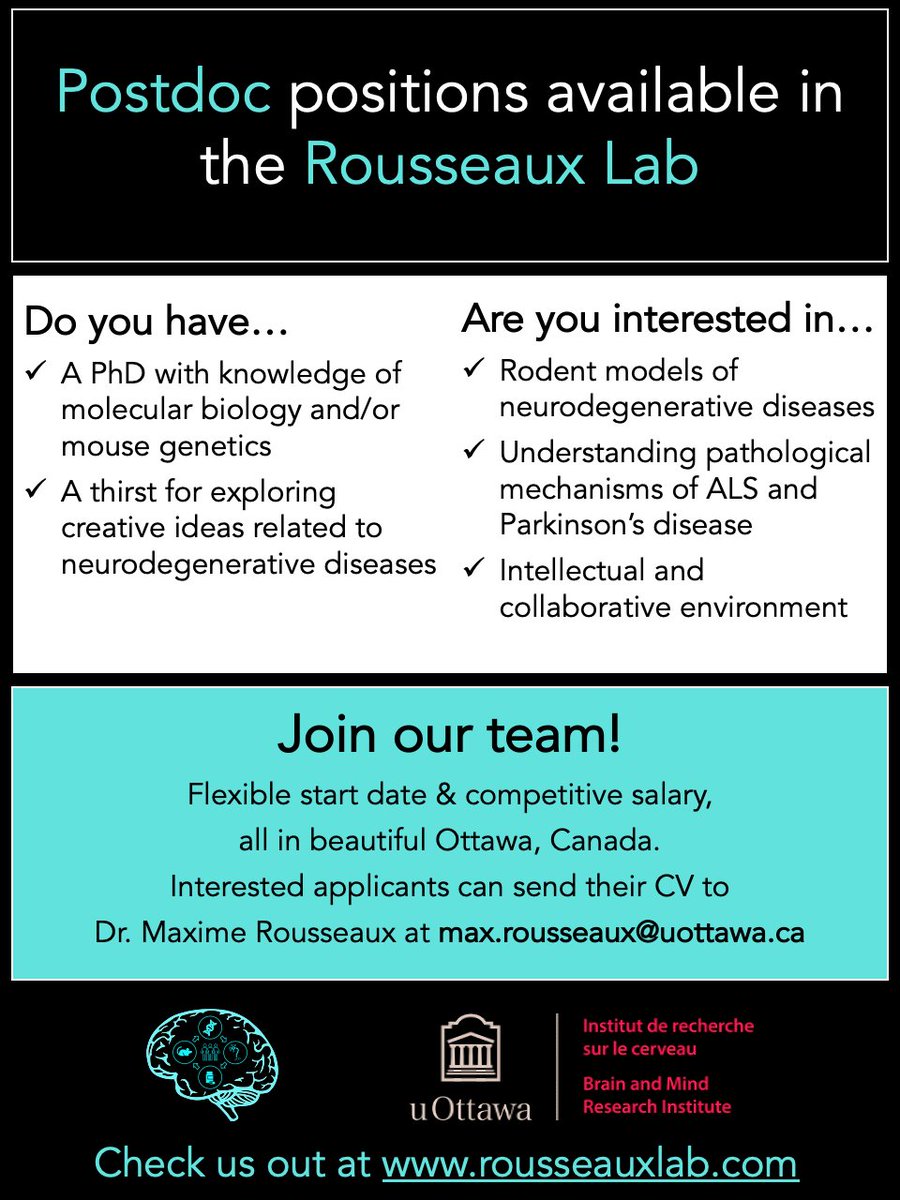
🧠We are hiring! Are you a recent PhD grad 🎓👩🔬 with interests in #Parkinsons#ALS#Neurodegeneration#Mousemodels#Synuclein#TDP43? Join our vibrant team! We are actively seeking out postdocs to work on some really exciting projects in the lab. Please share broadly/RT!
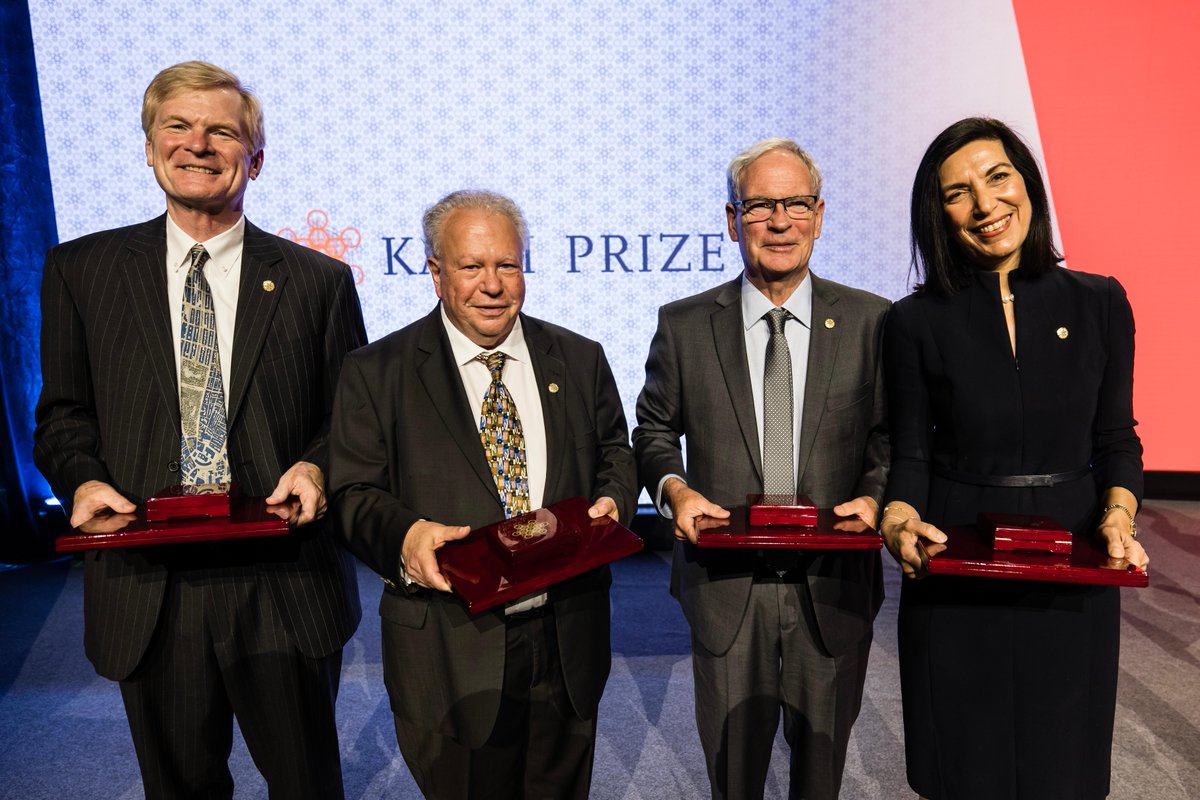
Congratulations to Dr. Huda Zoghbi who was presented the prestigious @KavliPrize in Oslo, Norway for her contributions in the field of neuroscience. His Majesty King Harald V presided over the awards ceremony where 11 laureates were honored. Learn more: https://t.co/cwaV8bMgvH