Professor of @HarvardBiostats & @HarvardStats, (Bio)statistics,Data Science,Genetics Genomics,Epidemiology,Health, Education,COVID19 analysis,Views are all mine
The Harvard Statistics dept & Applied Math area seek applicants for a joint tenured professor position in AI for Science. We seek outstanding candidates to advance principled AI grounded in math and stat theory to accelerate scientific discovery.
https://t.co/NFoUEgzqJD
The Harvard Statistics Department is seeking applications for Tenure-Track Professor and Tenured Professor in Statistics in the area of statistics and AI. Please distribute the ads:
https://t.co/wx8prQZLwJ
https://t.co/8kSBuRb7Nw
2026 Harvard PQG Conference: Unleashing the Power of Integrated Multimodal Genomic and Health Data, Oct 29-30, 2026
Session 1: Multi-modal Genomics Data
Session 2: Multi-modal Health Data
Session 3: Multimodal AI Systems: Scalable & Trustworthy Integration
https://t.co/xfvMPhGcd0
Very excited to share a powerful new method, graphREML, for common-variant heritability partitioning and enrichment from GWAS sumstats, now published in @NatureGenet
Led by 1st author Hui Li, co-supervised with @XihongLin
We’re excited to share our latest publication in @NatComputSci “MetaSTAARlite: an all-in-one tool for biobank-scale whole-genome sequencing meta-analysis” 🧬
Sincere thanks to Yohhan Kumarasinghe (UNC, co-lead), Jacob Williams (NCI, co-lead), Yuxin Yuan, Wenbo Wang, @AlexiaDiasF, @AndrewHaoyu, @muzizimumu1, and the study participants from @uk_biobank and @AllofUsResearch.
Biobank-scale WGS/WES studies are transforming rare variant discovery, but pooled individual-level analyses across biobanks are often limited by data-sharing restrictions. MetaSTAARlite is designed to overcome this challenge by providing a scalable, resource-efficient, summary statistics–based pipeline for functionally informed rare variant meta-analysis across the coding and noncoding genome.
MetaSTAARlite provides an all-in-one workflow to:
• Generate resource-efficient study-specific summary statistics, including variant-level summary statistics + sparse LD matrices
• Perform functionally informed coding, noncoding, ncRNA, and custom-mask rare variant meta-analysis
• Dynamically incorporate multiple variant functional annotations to improve power and interpretation
• Exactly reconstruct the variance-covariance matrix of score statistics (referred to as the LD matrix), so meta-analysis results closely mirror pooled individual-level analysis
• Account for population structure and relatedness using sparse GRM / mixed-model framework
• Support conditional analysis, Manhattan/QQ plots, and analytical follow-up to identify annotations and variants driving associations
A key advantage of MetaSTAARlite is scalability. By leveraging sparse GRM and directly operating on sparse genotype dosage matrices, MetaSTAARlite greatly reduces runtime, memory, and storage. Benchmarking on UK Biobank WES data for TTN missense variants (the largest gene in the human genome) and total cholesterol phenotype:
• At n = 300K, MetaSTAARlite achieved 332× and 1,386× lower peak memory than MetaSTAAR and Raremetal2, respectively
• It also achieved 24× and 2,206× lower computation time than MetaSTAAR and Raremetal2
• At n = 446K with 22,994 variants, summary statistics generation finished in 48.82 seconds with <1 GB peak memory
Another important challenge in rare variant meta-analysis is the storage of LD matrices. MetaSTAARlite substantially reduces this burden. In a UK Biobank WGS total cholesterol benchmark, we randomly partitioned 190,110 participants into three studies and generated genome-wide summary statistics with 12 functional annotations. MetaSTAARlite required only:
• 0.48 GB total storage per mask for genome-wide coding meta-analysis summary statistics
• 1.67 GB total storage per mask for genome-wide noncoding meta-analysis summary statistics
Notably, the sparse LD matrices accounted for only 7.7% and 17.8% of the total storage for coding and noncoding analyses, respectively. This means that, in MetaSTAARlite, LD matrix storage is no longer a bottleneck for rare variant meta-analysis.
In UK Biobank WGS total cholesterol analyses, we compared MetaSTAARlite meta-analysis with pooled STAARpipeline analysis using the same individual-level data. The results were nearly perfectly concordant:
• Pearson r² > 0.999 for log10-transformed P values across genome-wide significant and suggestive masks
• 58 genome-wide significant coding associations
• 88 genome-wide significant noncoding associations
• Signals included known lipid biology: PCSK9, APOB, APOA5, LDLR and APOE clusters
We further applied MetaSTAARlite to cross-biobank meta-analysis of UK Biobank (in the Research Analysis Platform) and All of Us (in the Research Workbench) data for five traits: total cholesterol, height, eGFR, calcium and elevated LDL-C (a binary trait). These analyses included up to 692,445 diverse participants. Across these traits, MetaSTAARlite identified 165, 536, 117, 38 and 94 genome-wide significant coding associations, respectively, while keeping average peak memory below 1 GB.
For these cloud-based analyses, in the UK Biobank RAP, for example, the genome-wide summary-statistics generation per trait had theoretical costs of ~£3.60–£3.90 and actual costs typically below £7, never exceeding ~£8.20, for a total of 5 masks across the genome.
We hope MetaSTAARlite will make cross-biobank rare variant discovery more accessible, scalable and privacy-preserving for large WGS/WES consortia.
Software and tutorial are open source:
Paper: https://t.co/igDbXpx513
MetaSTAARlite: https://t.co/4QQ2ke3sCR
Tutorial: https://t.co/fGntgdVR4V
Manuscript code: https://t.co/s4wioFwH3W
Our review article on harnessing synthetic data from generative AI for statistical inference. We discuss generative models for synthetic data & their principled use for valid downstream statistical inference, esp when generative models are misspecified.
https://t.co/izflz6bKkx.
GATE-STAAR: Rare variant association tests for survival analysis of time-to-event phenotypes, e.g., age at diagnosis in the UK biobank. It fits frailty models by incorporating variant functional annotations and accouning for relatedness, and ancestry PCs
https://t.co/Tz17LvaT1I
Our cellSTAAR method incorporates single-cell-sequencing-based cell type specific functional annotations to boost the power in rare variant association testing of noncoding regions in large scale Whole Genome Sequencing Studies https://t.co/zLoqY1Yb37
We’re excited to share our latest publication in
@CellGenomics: “Streamlining Large-Scale Genomic Data Management: Insights from the UK Biobank Whole-Genome Sequencing Data”. Sincerely thanks to @drarwood, @muzizimumu1, @XihongLin, Yuxin Yuan, Gareth Hawkes, Robin Beaumont, Michael Weedon, all collaborators and study participants from the @uk_biobank Program.
We highlight the annotated Genomic Data Structure (aGDS) format, the vcf2agds toolkit, and the STAARpipeline, which together:
• Seamlessly integrate genotypes + functional annotations in an all-in-one compact file for downstream analyses 🗃️
• Reduce UKB 500k WGS storage from 1473.85 TiB (GraphTyper pVCF, #23374) to 1.10 TiB (aGDS); and from 17.87 TiB (ML-Corrected DRAGEN pVCF, #24311) to 1.65 TiB (aGDS) 🗄️
• Enable scalable, functionally informed WGS association analyses across coding & noncoding genome 🧬
• Empower open-source, RAP-integrated genomic analyses for hundreds of thousands of samples ☁️
Applying STAARpipeline to the UKB 500k WGS data for total cholesterol, we identified 480 genome-wide significant rare variant associations, including 200 coding and 280 noncoding functional categories. These signals encompass lipid biology mainstays (e.g., PCSK9, APOB, NPC1L1, LDLR, APOE) and regulatory variants mapped to promoter, enhancer, and UTR regions, demonstrating the power of biobank-scale WGS for genomic discovery.
All tools are open source and freely available:
🔗 vcf2agds toolkit: https://t.co/9hFl9Ux5h1
🔗 STAARpipeline: https://t.co/occB9MbYG5
🔗 See the paper for complete links to software repos: https://t.co/vEkKRi9MwI
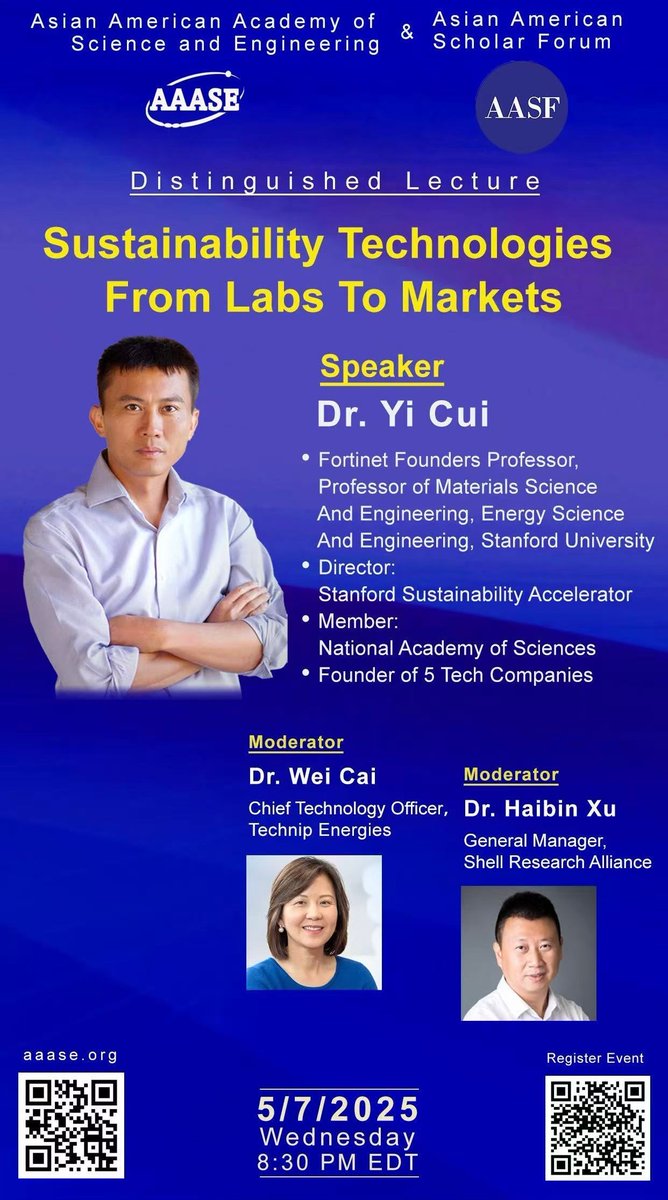
You are invited to an engaging webinar on March 7 hosted by @AAASE_ORG and AASF, featuring Professor Yi Cui, a member of the AASF Board & a leading innovator in sustainability technologies.
Register: https://t.co/PTGaq1iWSq
Our review article on Causal Mediation Analysis for Integrating Exposure, Genomic, and Phenotype Data has appeared in ARSIA. We give an overview of methods for large-scale tests for mediators, which require testing for a large number of composite nulls.
https://t.co/U42dTokbBX
The Department of Biostatistics is seeking candidates for two open faculty positions. Deadline to Apply: December 1.
1. Professor of Biostatistics and Director of CBAR
https://t.co/ApOeYBHHon
2. Assistant/Associate Professor of Biostatistics:
https://t.co/3TVwTh9NdH
Excited to share our preprint, describing a method for heritability partitioning with GWAS sumstats that significantly improves upon S-LDSC
Led by the fantastic Hui Li, and co-supervised by @XihongLin#ASHG24 poster 4089F
https://t.co/RHE6Es1Joi
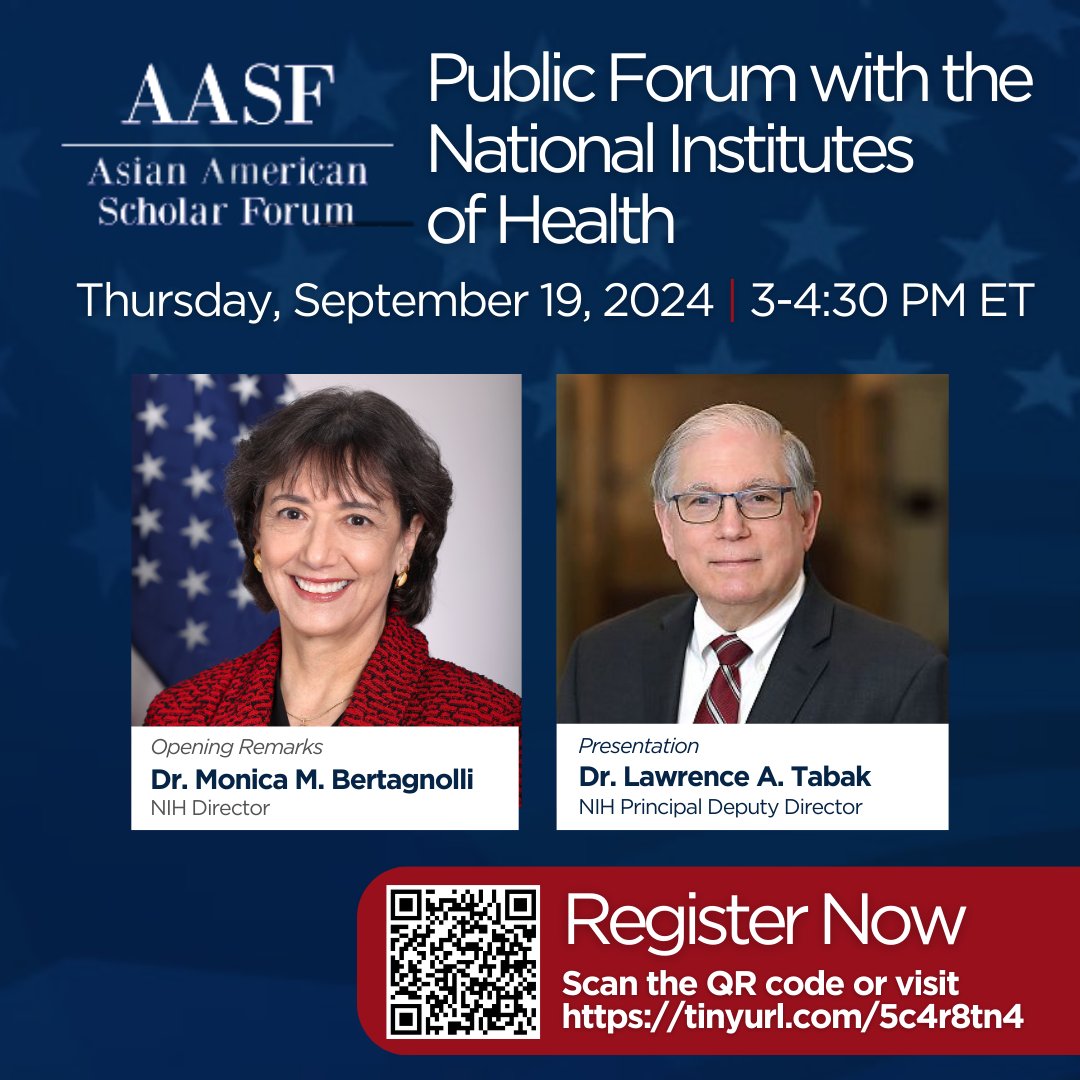
At this time tomorrow, we’ll be kicking off our conversation with @NIHDirector and @NIH Principal Deputy Director. If you haven’t registered to join us for this public Forum, there’s still time to join us. Click here to RSVP: https://t.co/5lop91ByvR
Our new paper on semi-supervised machine learning method for predicting homogeneous ancestry groups to assess HWE in diverse whole #genome sequencing studies. The work was motivated by NHGRI Genome Sequencing Program - CCDG data. Applied to HWE QC of 60,000+ diverse whole genomes
📢Online now!
📰Semi-supervised machine learning method for predicting homogeneous ancestry groups to assess Hardy-Weinberg equilibrium in diverse whole #genome sequencing studies
🧑🤝🧑@xihonglin @bmneale @mczody & co
https://t.co/0rAce5EFkM
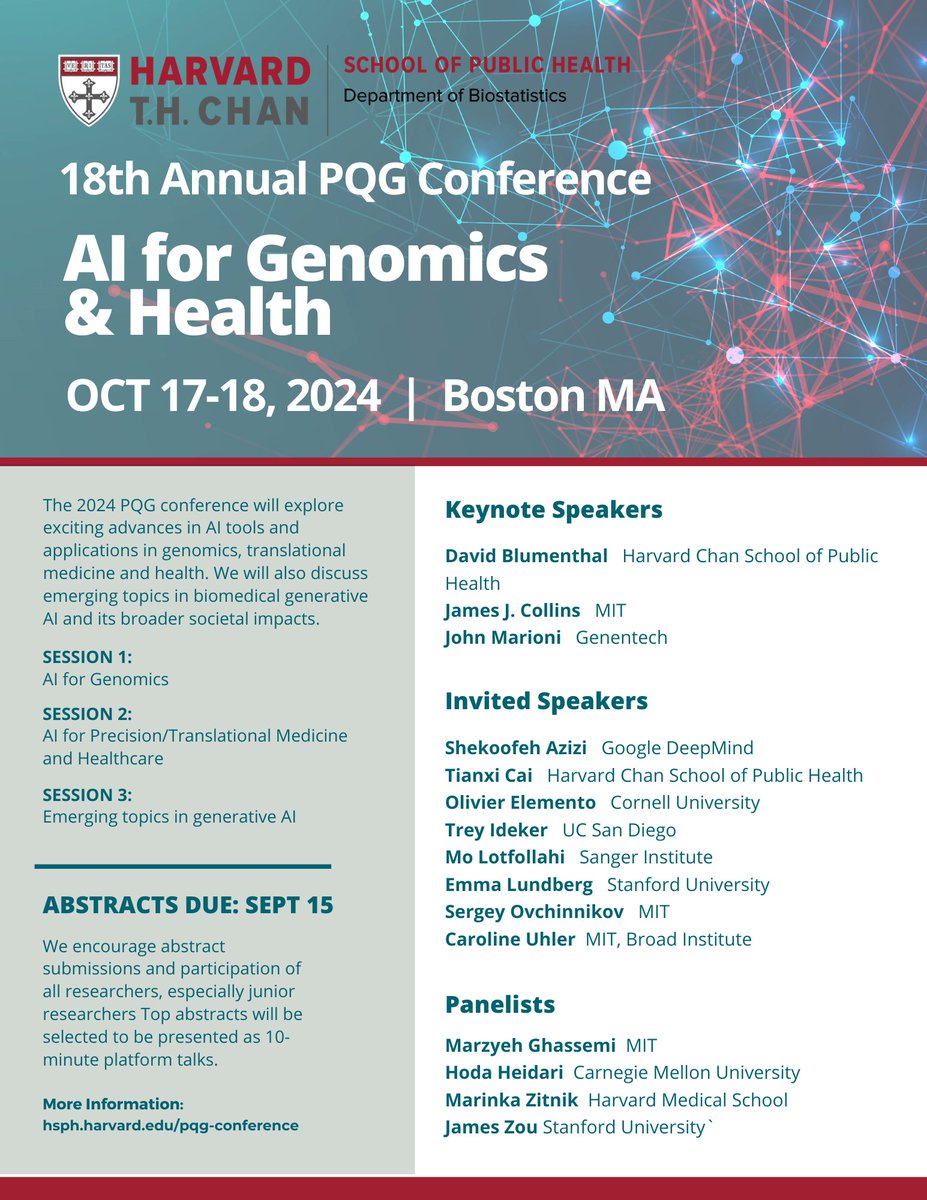
Join us for the 2024 Harvard PQG conference on "AI for Genomics and Health" in Boston on Oct 17-18, 2024. A fantastic lineup of speakers. See three topics below. Early bird registration and abstracts due on 9/15. Stellar abstract awards. Pls RT https://t.co/iN3P3JvzYS
Third keynote speaker at #KDD2024! ✨
@XihongLin, professor at @HarvardBiostats & @HarvardStats, is giving a talk on "Empowering an End-to-end Scalable and Interpretable Data Science Ecosystem using Statistics, AI and Domain Science" 📊