I stayed. We went out for groceries and cooked enough for leftovers.
Since then, I’ve called every Thursday. Sometimes we talk for twenty minutes. Sometimes he’s watching a game and tells me to call later.
Last week, he said the woman had left the call center. She’d called to say goodbye, and he finally admitted he didn’t own a home.
“She knew,” he told me. “Apparently, I complained about my landlord the second time we spoke.”
I asked what they’d talked about after that.
Her new job. His garden. The phone he still couldn’t quite work.
That evening, Dad sent me a blurry photograph of a tomato beside a ruler.
I started typing a thumbs-up.
Then I called and asked how big the others were.
Last Saturday, I took my father to buy a new phone. His old one barely lasted until lunchtime, but he insisted it was fine.
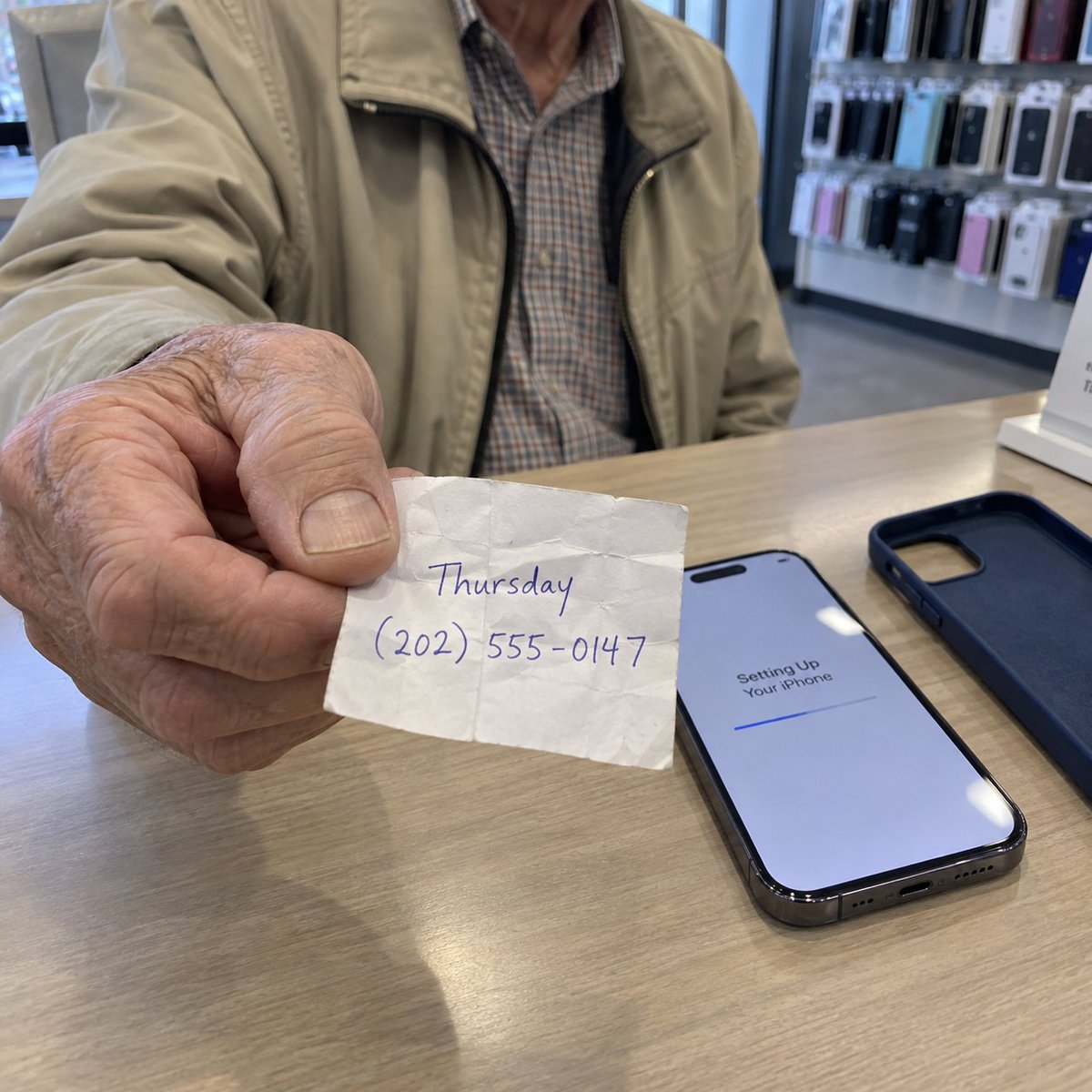
While the employee transferred his contacts, Dad handed me a folded piece of paper.
“Make sure this one goes in.”
It was a woman’s number.
Mom died three years ago. I tried not to smile as he explained that they talked most Thursdays, sometimes for nearly an hour.
Then he asked whether he could keep his own number.
“She won’t know where to find me if it changes.”
While he chose a case, I searched the number.
It belonged to a call center selling homeowners insurance.
My father had been renting the same apartment for twenty years.
In the car, he admitted he’d never told her.
During their first call, she’d asked how his day was. He’d told her about the tomatoes growing on his balcony.
The following Thursday, she remembered to ask whether they’d ripened.
So he kept saying he was thinking about the policy.
“Dad, why don’t you call me when you want to talk?”
He looked out the window.
“You usually ask if it’s urgent.”
I started to disagree. Then I remembered his last call. I’d been in the supermarket, standing beside the milk, and those were almost my exact words.
At his apartment, I offered to stay for dinner.
He checked the fridge, took out two eggs, then put one back.
“Are you sure you’ve got time?”
Last Sunday, I helped my mother clear out a kitchen cupboard.
Since Dad died, she’d kept everything, including instruction manuals for appliances we’d thrown away years ago.
Behind the plates, I found a notebook.
Inside, under my name, she’d recorded every dollar I’d sent. $40 for groceries. $120 for electricity. Even $15 for a taxi.
I felt terrible. I hadn’t realized she thought she needed to pay me back.
“Mom, you don’t owe me any of this.”
She reached for the notebook before I’d finished turning the page.
There was another column under my brother’s name. Bigger amounts. Car payments. Insurance.
I looked back at mine.
My column was money coming in. His was money going out.
She said a neighbor had fixed it. I canceled the appointment and called my brother.
She’d promised him money for the kids’ school clothes. He’d already declined.
The following Sunday, Mom barely spoke while I put her groceries away.
Then my aunt called.
“Your mother shouldn’t have to beg her own son for help.”
I explained the notebook. She defended Mom until I mentioned the washing machine.
“I sent her $300 for that on Thursday.”
This time, we called Mom together. She admitted there hadn’t been a breakdown. She returned my aunt’s money the next morning.
I still visit. My brother and I now split the bills Mom actually needs help with.
Last week, she asked me not to discuss her finances with him.
“Then stop making us compare stories,” I said.
Last Sunday, I helped my mother clear out a kitchen cupboard.
Since Dad died, she’d kept everything, including instruction manuals for appliances we’d thrown away years ago.
Behind the plates, I found a notebook.
Inside, under my name, she’d recorded every dollar I’d sent. $40 for groceries. $120 for electricity. Even $15 for a taxi.
I felt terrible. I hadn’t realized she thought she needed to pay me back.
“Mom, you don’t owe me any of this.”
She reached for the notebook before I’d finished turning the page.
There was another column under my brother’s name. Bigger amounts. Car payments. Insurance.
I looked back at mine.
My column was money coming in. His was money going out.
I’d been working extra Saturdays because she said she was struggling to afford groceries.
She said my brother had children.
“You’re single. You can manage.”
That evening, he called to say I’d made her cry. I asked why he was accepting money from someone who couldn’t afford food.
He went quiet.
“She told me it was Dad’s savings.”
We compared transfers. Twice, money I’d sent for an urgent bill had reached his account that afternoon.
He stopped accepting it. I told Mom I’d buy groceries and pay genuine bills directly, but I wouldn’t send cash.
A month later, she called about her broken washing machine.
I offered to book a repair.
Suddenly, she didn’t want anyone coming.
Last Saturday, I found my wife’s old camera while clearing out the storage room.
When we first met, she carried it everywhere, wrapped in a cream scarf. Once, I reached for it on a restaurant table, and she took it from me so quickly she nearly knocked over her drink.
I assumed it was expensive.
Nine years into our marriage, it was sitting under a box of Christmas decorations.
I charged the battery, thinking I could get it working before she came home.
There were only twelve photos.
In the first, she was on a beach beside a man I didn’t recognize. In the next, she was kissing him.
They looked young. I told myself not to be ridiculous.
Then I reached the last photograph.
Same beach. Same man. My wife holding up her left hand, showing off a ring.
When I proposed, she’d cried and told me, “Nobody’s ever asked me that before.”
사진관에서 일하는데 졸업식 다음 날 고등학생 세 명이 찾아왔어.
졸업 단체사진 한 장을 보여주더니 이상한 부탁을 하는 거야.
"아저씨, 이 사진 다시 찍을 수 있을까요?"
사진은 멀쩡했어.
학생 서른한 명이 전부 웃고 있었고 담임 선생님도 계셨거든.
왜 다시 찍으려냐고 물었더니
"중요한 사람이 한 명 빠졌어요."
그러면서 휴대폰 사진을 보여줬어.
낡은 작업복을 입고 빗자루를 들고 있는 할아버지였어.
학교에서 청소하시는 분이래.
"이 아저씨를 왜 졸업사진에 넣으려고 해?"
학생이 잠깐 망설이더니 말했어.
"저희가 졸업하기 전에 학교를 그만두셨거든요."
처음엔 그냥 정이 많이 들었나 싶었어.
그런데 학생이 다음 말을 하는 순간 생각이 달라졌어.
"사실 저 아저씨가 없었으면 우리 반은 서른한 명이 아니라 서른 명으로 졸업했을 거예요."
그 말을 하던 학생이 갑자기 울기 시작했어.
I slept in the spare room that night.
The next morning, she put the camera on the kitchen table and said she could delete everything.
“Please don’t,” I told her. “But don’t offer me that instead of telling me the truth.”
Over the next few weeks, she told me about the funeral, the canceled wedding, and the apartment she’d packed up alone. I told her how it felt to discover all of it through a camera I’d found by accident.
We started counseling. We stayed together.
The photographs are still there. The camera is in a drawer with his letters, and I know where she keeps it.
A few months later, we drove to the cemetery together. I stayed by the car until she asked me to come over.
On the way home, she asked if I regretted finding it.
“No,” I said. “I regret that you thought you had to wait until I did.”
Last Saturday, I found my wife’s old camera while clearing out the storage room.
When we first met, she carried it everywhere, wrapped in a cream scarf. Once, I reached for it on a restaurant table, and she took it from me so quickly she nearly knocked over her drink.
I assumed it was expensive.
Nine years into our marriage, it was sitting under a box of Christmas decorations.
I charged the battery, thinking I could get it working before she came home.
There were only twelve photos.
In the first, she was on a beach beside a man I didn’t recognize. In the next, she was kissing him.
They looked young. I told myself not to be ridiculous.
Then I reached the last photograph.
Same beach. Same man. My wife holding up her left hand, showing off a ring.
When I proposed, she’d cried and told me, “Nobody’s ever asked me that before.”
She came home carrying groceries. I handed her the camera before I’d worked out what to say.
She looked at the screen and sat down without taking off her coat.
“His name was on the wedding invitations,” she said quietly. “We’d already mailed them.”
He’d died in a car accident two months before their wedding. The camera had been his.
She’d met me almost three years later.
“Why did you tell me nobody had proposed?”
She said she’d panicked. Then I’d looked so happy that she couldn’t bring herself to correct it. Every year afterward made telling me harder.
I asked why the camera was in storage.
She’d started looking at the photographs after I fell asleep. Eventually, she put it away because she was staying up for hours.
As she folded the scarf around it, I noticed two embroidered initials in the corner.
I remembered holding that scarf for her outside our wedding reception.
“Was that his too?”
She nodded.
My brother replied with the dates worked, the wages paid, and the shifts still available.
The organizer called the man herself, then updated the appeal.
She left it open for housing support but removed the claim that nobody would employ him.
He was furious.
He told me I’d made him look dishonest over “a few missed shifts.”
I asked why he had told her there was no job.
He said people were more generous when they thought someone had no options.
That was the first answer he gave me that didn’t blame somebody else.
My brother eventually filled the vacancy. The support centre continued helping the man with housing, but I stopped giving him money personally.
I still donate there. His behaviour hasn’t changed what I’ve seen other people struggle with.
But it changed how I respond when someone says that questioning their story means I don’t care.
The fundraiser could have honestly said he needed somewhere safe to live. Instead, it described an opportunity he’d been denied when he had actually chosen to stop taking it.
If people are free to ask strangers for help, shouldn’t those strangers be free to decide based on the truth?
If a homeless says all he needs is a job, what should happen when someone actually finds him one? How many obstacles should you help remove before you’re allowed to question his choices?
Earlier this spring, I started talking to a man who collected discarded cardboard behind the supermarket near my flat.
He said he wanted warehouse work. He had done it before, but without an address, transport, or decent clothes, applications went nowhere.
My brother managed a small packing warehouse.
He offered paid shifts, accepted a contact address arranged through a support centre, and organized lifts for the first fortnight.
I bought work boots. Another volunteer helped replace his missing identification.
He completed three shifts.
My brother said he was punctual, capable, and good with the other workers.
Then he stopped answering calls.
I checked the supermarket and contacted the support centre, worried something had happened.
That night, a friend sent me a fundraiser.
His photograph was at the top.
Underneath it: “He keeps asking for work. Nobody will give him a chance.”
A regular customer had created the fundraiser after hearing his story.
By Monday, it had collected more than he would earn in several weeks at the warehouse.
When I finally reached him, I asked whether something at work had gone wrong.
He said no.
Was the work too physical? Were the hours impossible? Had someone treated him badly?
Again, no.
He said he wanted to concentrate on the fundraiser while people were still sharing it. He could return to the warehouse when donations slowed down.
I reminded him that my brother needed someone he could depend on.
He said my brother already had a business. He could afford to wait.
Then I asked whether the woman running the appeal knew about the job.
He told me there was no reason to upset her when she was doing something kind.
A few minutes later, my brother received an email from her.
She was asking him to confirm that he had been unable to offer the man any work.
That was apparently what the man had told her.