A new @NatureComms study from Jiang Zhu's lab reports a structure-guided strategy to stabilize influenza hemagglutinin (HA) trimers for nanoparticle vaccines. In preclinical models, the nanoparticles showed prolonged lymph node retention and elicited more robust immune responses.
More: https://t.co/Ax0kIHi3us
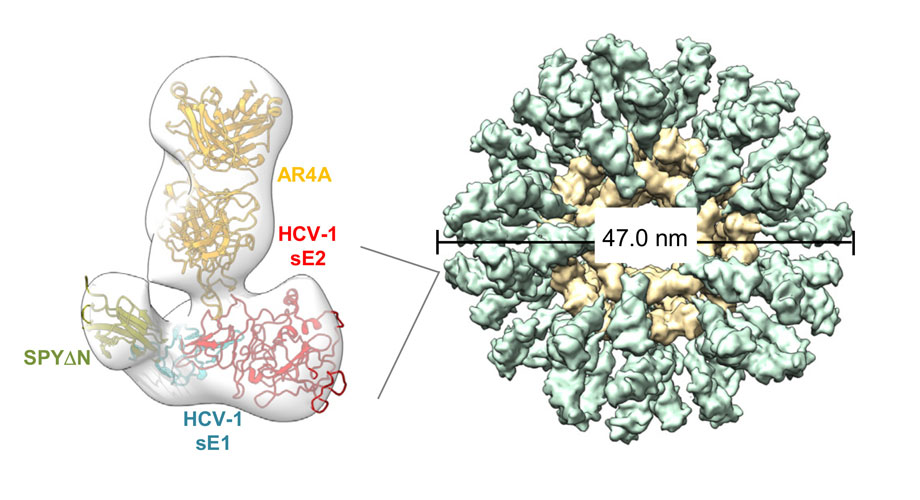
Stabilizing the hepatitis C virus E1E2 glycoprotein complex—long a barrier to HCV vaccine design—Scripps Research scientists displayed engineered proteins on self-assembling nanoparticles, eliciting immune responses in a new @NatureComms study. More: https://t.co/eswPGJb2L1
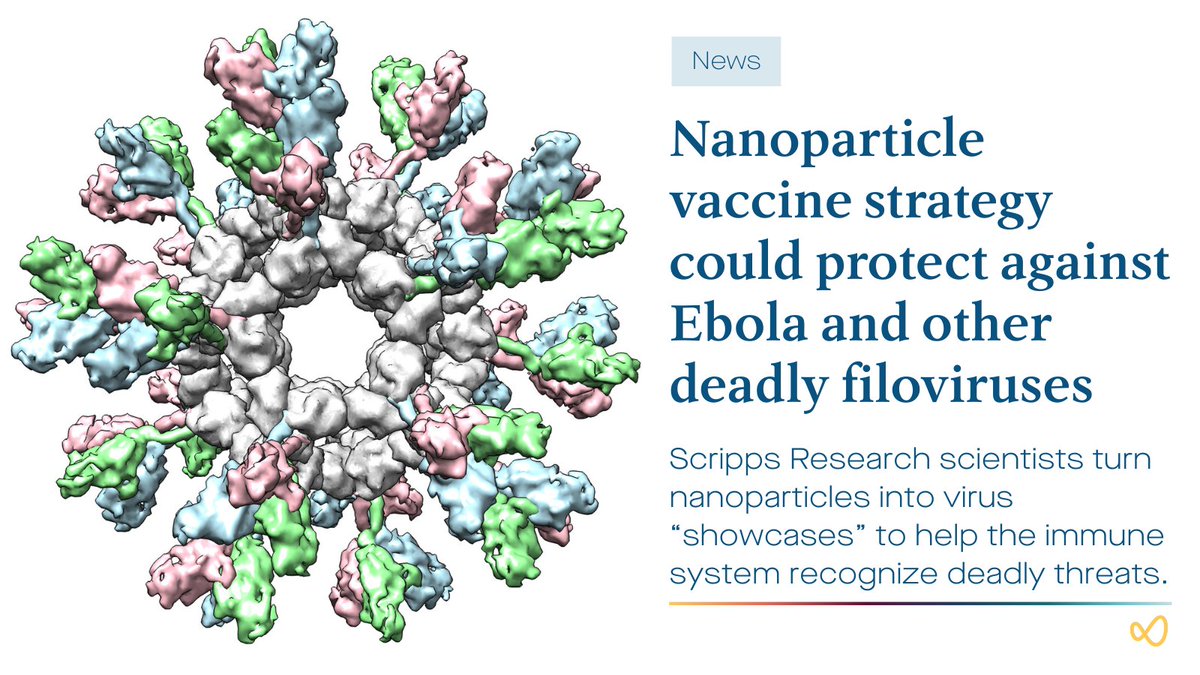
A structure-guided nanoparticle designed by @lab_zhu and published in @NatureComms (currently an Article-in-Press) stabilizes Ebola and Marburg surface proteins in their pre-fusion shape—prompting a strong antibody response in preclinical models and laying the foundation for a universal filovirus vaccine. More: https://t.co/Or5I8tgDSp
Our filovirus nanoparticle vaccine paper "Rational design of next-generation filovirus vaccines combining glycoprotein stabilization and nanoparticle display with glycan modification" has been published. Congrats to the team @lab_zhu@scrippsresearch.
https://t.co/3rp7lIG6PB
Former Scripps Research assistant professor Shimon Sakaguchi has been awarded the 2025 #NobelPrize in Physiology or Medicine for his discovery of regulatory T cells that drive peripheral immune tolerance, a mechanism of the immune system that prevents autoimmune disease and reveals how cancer escapes immune attack.
His work launched a new field of research on peripheral immune tolerance, paving the way for therapies now in clinical trials for cancer, autoimmune disease and transplant complications.
A former assistant professor at Scripps Research (1989–1991), Sakaguchi leaves a lasting impact on biomedical science and the institute’s legacy. Congratulations to Professor Sakaguchi and all of this year’s Nobel laureates.
More: https://t.co/fGsDBKTtU6
A milestone moment: our HIV-1 protein nanoparticle vaccine candidates move to the human trial in US, adjuvanted with 3M-052-AF + Alum, sponsored by NIH/NIAID😀 @lab_zhu
https://t.co/0dWcFI62VK
We found that antigen deposition on follicular dendritic cells is the key in driving strong germinal center response. | Science Translational Medicine https://t.co/OsbUyhJHmO
Our HCV nanoparticle vaccine paper "Native-like soluble E1E2 glycoprotein heterodimers on self-assembling protein nanoparticles for hepatitis C virus vaccine design" was published on bioRxiv. @lab_zhu@scrippsresearch😀
Native-like soluble E1E2 glycoprotein heterodimers on self-assembling protein nanoparticles for hepatitis C virus vaccine design https://t.co/ZtCgp4KoDR #biorxiv_micrbio
🚨New Paper 🚨
Bram et al. identified how nanoparticle charge interfaces with the cellular glycocalyx, dramatically affecting nanoparticle delivery. This enabled a new approach to improve nanoparticle targeting!
🔗 https://t.co/y3T3JNpSJA
📣Efforts to advance the first-ever vaccine against the deadly Middle East Respiratory Syndrome are progressing, with a new CEPI investment moving a promising vaccine candidate created by Uvax Bio into preclinical trials.
https://t.co/LCJeFH2QQ1
🚨🚨NEW PAPER ALERT🚨🚨
@jamielywu et al. discovered the pathways tumour endothelial cells use to transport nanoparticles.
Link to paper: https://t.co/omGzAiJUzx
Below is a thread by Dr. Jamie Wu summarising the method and results:
🚨New Paper🚨
@MladScientist et al. utilized 3D electron microscopy to visualize and study the transport of nanoparticles across tumour blood vessels.
Link to paper: https://t.co/rRYfsoNNmF
Below is a thread summarising the method and results:
Our filovirus vaccine paper "Rational design of next-generation filovirus vaccines with glycoprotein stabilization, nanoparticle display, and glycan modification" appears on bioRxiv. Congrats to Zhu lab team @lab_zhu, @scrippsresearch 😀
In a new op-ed for @sdut, Scripps Research President & CEO Pete Schultz explains how changes to federal science funding could impact biomedical research, innovation & San Diego’s life sciences ecosystem. https://t.co/qOXAdP4uam
Unstable F proteins have hindered RSV and hMPV vaccines, but after analyzing their structure, the @lab_zhu uncovered instability caused by an “acidic patch” and re-engineered RSV F proteins to enhance stability and efficacy in pre-clinical models. More: https://t.co/IU7Okj40Jy
Our RSV and hMPV vaccines' paper "Rational design of uncleaved prefusion-closed trimer vaccines for human respiratory syncytial virus and metapneumovirus" was published. 😀Congrats to Zhu lab team
@lab_zhu, @scrippsresearch.
https://t.co/geGDHKVgec
BREAKING NEWS
The Royal Swedish Academy of Sciences has decided to award the 2024 #NobelPrize in Chemistry with one half to David Baker “for computational protein design” and the other half jointly to Demis Hassabis and John M. Jumper “for protein structure prediction.”