Characterizing AI-designed proteins requires quantitative biochemistry at massive scale. Enter Amplicon/Protein Bead Display (APB-Display), a fully in vitro platform that quantifies Kd's for >100,000 variants in <3 days (preprint link below!) @Stanford_ChEMH@czbiohub (1/n)
We are searching candidates for two positions in the lab (@GurdonInstitute& @GeneticsCam,@Cambridge_Uni ): Research assistant (starting Sep 2026 https://t.co/Wdq1VqguIH) and Postdoc(https://t.co/CGX4s6hvGD). Please visit University's webs for details and apply. Please spread!
Many experiments in biology happen one protein at a time, which means synthesizing DNA one gene at a time. This is fine for tens of genes. For thousands, the cost is unsustainable.
Introducing uSort-M: a method to isolate and sequence-verify thousands of genes at low cost
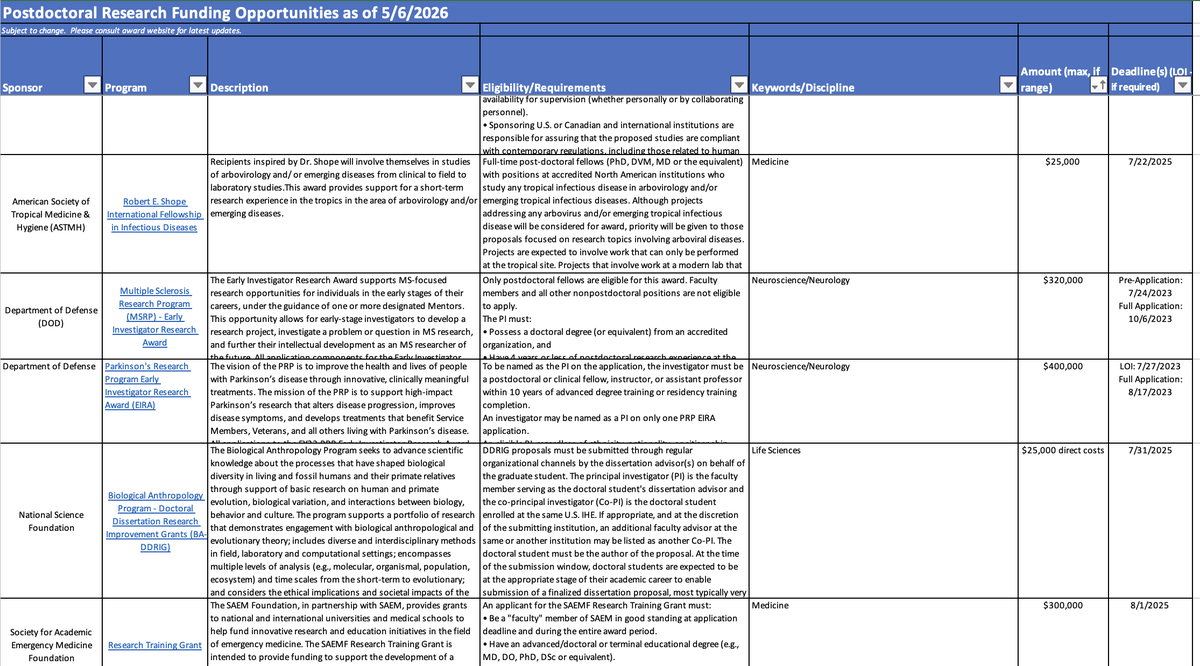
Download our updated database of postdoc fellowships from different foundations and agencies.
We identified 275 fellowships. For each entry, we provide description of the fellowship, focus, amount, deadline, eligibility, etc.
Download this database here: https://t.co/EbTahdzbkp
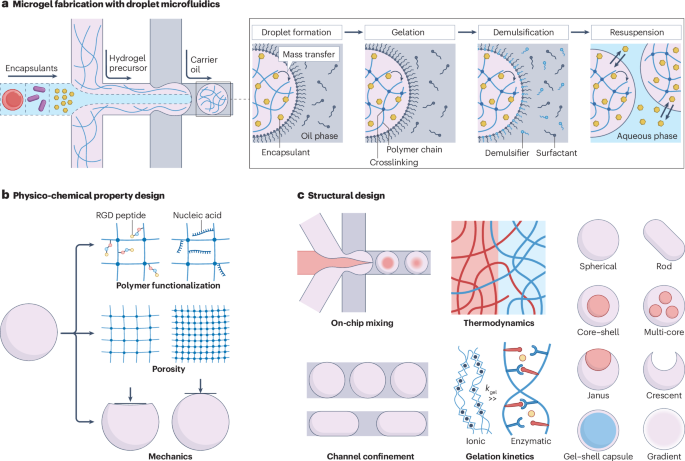
Our April issue is live! Microrobots for pulmonary drug delivery, the status of extracellular vesicles, organoid analytical toolkits, biomaterials with droplet microfluidics, artefacts in continuous neuromonitoring, and more
Read it here: https://t.co/ggxk1MIINg
Not fully completed; but if someone is interested in the #rheology of granular hydrogels, I have made some interesting findings:
https://t.co/BP9BVJtXNm
New issue alert👉https://t.co/7FRErzTZZr
Yoshida et al. present 3D, single-cell-resolution atlases of multiple adult mouse organs and of the entire neonatal mouse. The artwork reimagines Klimt's decorative motifs to reflect the organization and vast scale of individual cells.
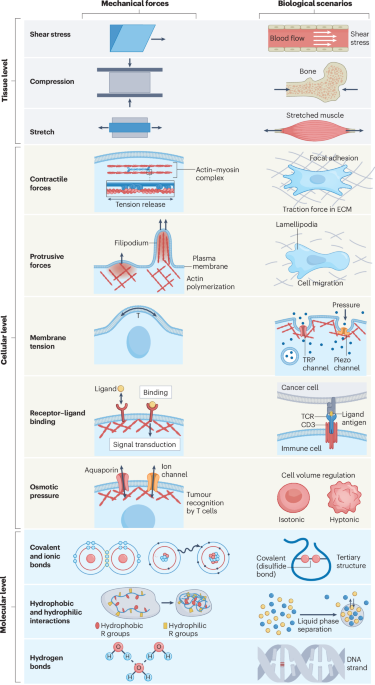
Once largely a basic science discipline, mechanobiology has evolved into the field of mechanomedicine, shaping new approaches to disease detection, targeted therapies and tissue repair
Read our new Editorial: https://t.co/0enzBMEsQQ
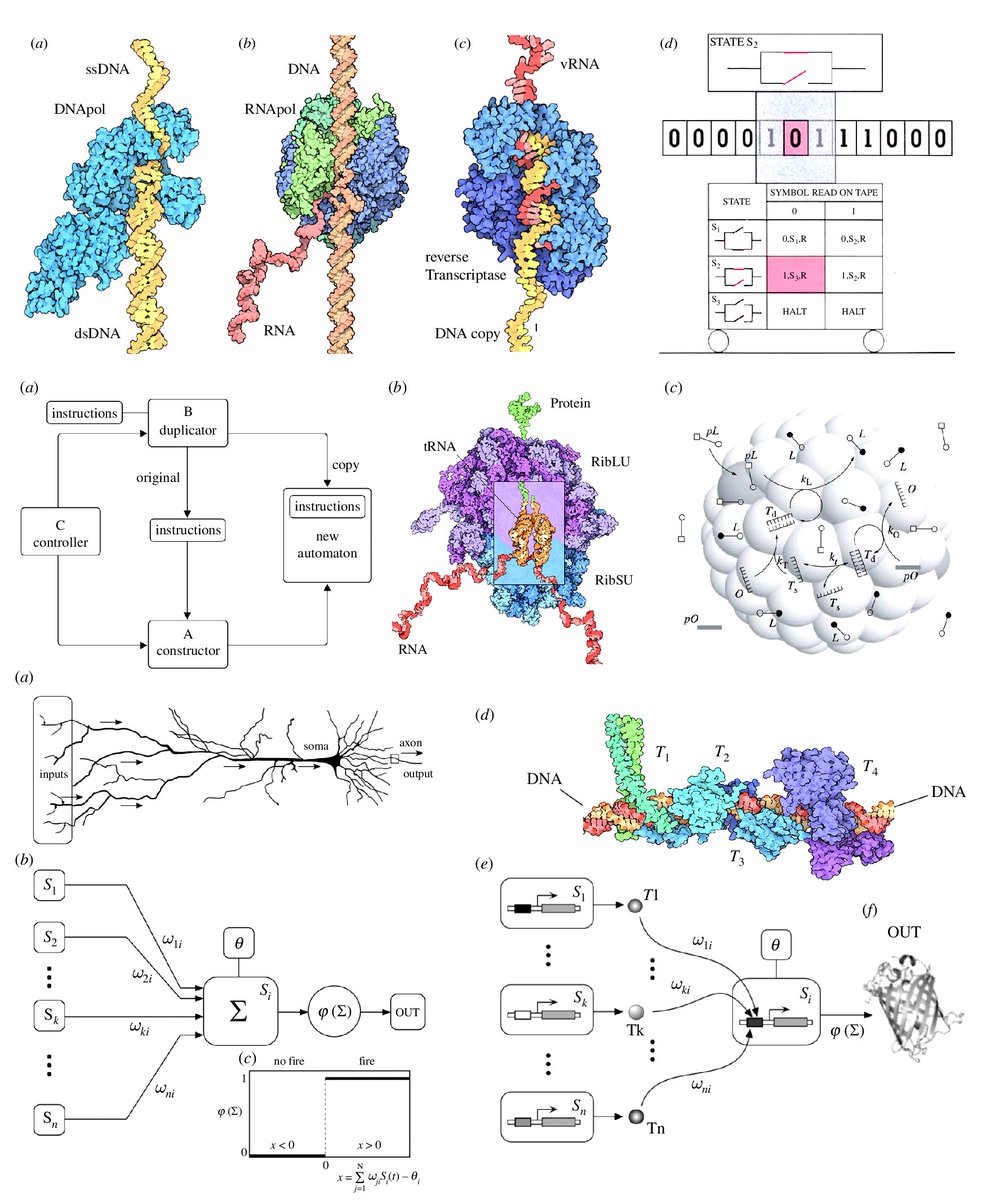
Excellent review in which Solé et al. explore how physical/mathematical constraints may determine what subset of biological systems could theoretically evolve in the universe. Link "Fundamental constraints to the logic of living systems": https://t.co/GbOGHBTIoN
Excited to share our new work. Over the past decade, single-cell genomics has transformed our ability to map cellular systems. But a major question remains:
Can we predict how perturbations reshape cellular trajectories over time?
In 2018, we first showed that it is possible to predict cellular responses to perturbations — ranging from disease signals to chemical treatments — even in unseen contexts. In 2022, we introduced CPA (MSB 2022; NeurIPS 2022), extending this idea to predict responses to unseen chemical and genetic perturbations, including their combinations.
Since then, the field of perturbation modeling has grown enormously. The community has pushed the space forward with many creative ideas and powerful models. It’s exciting to see how fast things are moving — even though many fundamental challenges remain.
One of the biggest is that cells are not static. They move through trajectories during development, immune responses, and disease. Yet most current models still predict perturbation effects within a single state, rather than how early perturbations propagate across future states and reshape downstream outcomes.
To address this, we developed PerturbGen, a trajectory-aware generative AI model that predicts how genetic perturbations reshape downstream cellular states.
Huge credit to the people who made this work possible. Thanks to co-first authors @lifeisscience_5, @Adib_m_, @Tomo_Isobe, @Amirhossein Vahidi, @delshadveghari & Anthony Rostron. Special recognition to @lifeisscience_5 and @Adib_m_ for driving this work over the finish line.
Grateful for our outstanding collaborators from @HaniffaLab, @BertieGottgens lab @GosiaTrynka and many others — a true cross-institute effort across @SCICambridge, @OpenTargets ,@sangerinstitute and @Cambridge_Uni.🎉
PerturbGen learns transcriptional dynamics across cellular trajectories. By introducing perturbations at an early source state, it can simulate how these effects propagate into future states along differentiation trajectories.
Scaling this across genes enables the creation of dynamic in silico perturbation atlases — maps of how perturbations reshape biological trajectories over time.
We explored this idea across three biological questions.
First, in a human in vivo LPS immune challenge, PerturbGen predicted that perturbing a transient IL1B signal dampens downstream inflammatory programs in myeloid cells, with pathway changes reversing signatures observed in an independent IL-1β stimulation experiment.
Second, in human hematopoiesis, PerturbGen predicted transcriptional responses to CRISPR transcription factor knockouts and enabled construction of perturbation atlases revealing lineage- and age-specific regulatory programs. These programs could also be linked to human genetics and blood diseases, including recapitulation of signatures associated with ETV6-related thrombocytopenia.
Finally, we asked whether perturbation modeling could help improve complex tissue models.
We built a dynamic perturbation atlas of human skin organoids to identify perturbations that could guideorganoid cells towardhuman fetal skin states.
PerturbGen prioritized activation of Wnt signaling via GSK3β inhibition. Experimental validation confirmed the prediction: treatment with CHIR99021 induced stromal gene programs and shifted organoid fibroblasts toward transcriptional states observed in fetal skin stroma.
Together, these results show how trajectory-aware perturbation modeling can connect gene perturbations to developmental programs, human genetics, disease mechanisms, and experimental interventions.
More broadly, we think these point toward a future where single-cell atlases become predictive systems.
As atlases expand across tissues, developmental windows, and modalities, models like PerturbGen could enable dynamic, virtual perturbation atlases— allowing us to simulate interventions, generate hypotheses, and design experiments before stepping into the lab.
Preprint
https://t.co/3peW7du2qM
Code
https://t.co/cmK0ymY5X7
Excited to see how the community builds on this work.
First preprint of the @fordycelab and @Dunn_Lab collaboration! We used high-throughput microfluidics for sequence-strength mapping at the single-molecule level. Our new tech allowed us to discover a fundamental nonequilibrium property of multivalent systems. 1/13
New publication alert! We use theory and experiment to demonstrate that glassy adhesion dynamics can predict anomalous migration on viscoelastic substrates. Grateful to have worked with Vivek Sharma, Ze Gong, @theChaudhurilab, and Vivek B Shenoy 🙏 !
https://t.co/k5g5IOOKnu
🔬 pertpy: a unified, scalable framework for single-cell perturbation analysis, now out in Nature Methods
Designed for modern perturbation data - CRISPR, drug screens, patient treatments - scaling to millions of cells and 1000s of conditions.
👉 https://t.co/PiPxIwlbHk