June 11: Japan’s lower house passes bill moving crypto from payments law to financial-product rules, effective within a year.
June 12: Metaplanet acquires 100% of Siiibo Securities, adding a regulated Type I securities platform to build and distribute BTC-linked yield products.
The strangest oil trade of 2026 isn't happening at sea.
It's 700 tanker trucks a day crossing the Iraq–Syria desert.
The biggest winner is a government that barely produces oil at all.
Hormuz shut → Iraq lost 90% of export revenue.
Baghdad will take ANY outlet.
So 2 land corridors opened: al-Waleed in Anbar (31 March) and Rabia/Yarubiyah (20 April) the latter sealed since 2013.
Destination: Baniyas, Syria's Mediterranean port. Then by sea to Europe.
The numbers are medieval and massive at once:
500–700 trucks/day, 30 tonnes each.
Baniyas unloading capacity up 30%, 120k bpd flowing. Baseline 150k bpd, target 350k.
Moving just 50k bpd of crude takes 1,000 trucks running nonstop, this is a pipeline made of wheels.
💰The economics
Here's the desperation premium: SOMO is paying $20–22 per barrel to move fuel oil by land.
By sea it costs cents.
Iraq signed for 650k tonnes/month anyway because the alternative isn't a cheaper route.... It's zero.
Damascus collects on every barrel: transit fees, storage, port charges, plus cheap Iraqi fuel.
At $2–3/bbl that's $8–13M/month, rising to $21–30M at full flow.
For al-Sharaa's empty treasury, possibly his most reliable hard-currency stream.
The worse Iraq's crisis gets, the more Syria earns.
The structural irony is that Iran shut Hormuz to punish its enemies.
Result, Iraqi oil money now flows to a Damascus government Tehran calls an adversary while Iraq, Iran's closest Arab partner, sits on life support.
Chokepoints don't choose their victims, Geography does.
Secular bull markets always end with a valuation reversal, either because they reach bubble levels unsupported by fundamentals (1929 and 2000) or because they get derated by inflation (1968). Whenever the current trend comes to an end (hopefully not anytime soon), it will likely be for one of those two reasons. Perhaps it will even be both, if the two tail risks manifest at the same time. But for now, valuations are supported by the fundamentals of margins and credit spreads, so let’s enjoy the ride while we can.
Ich habe schon öfter über das Bitcoin Power Law gesprochen. Dabei geht es nicht um irgendeine Linie im Chart, sondern um die Frage, wie sich Bitcoin über mehr als 16 Jahre historisch entwickelt hat.
Bitcoin wächst langfristig nicht linear, sondern eher entlang eines logarithmischen Wachstumspfades.
Aufbauend auf der Arbeit von @Giovann35084111 gibt es weitere Modelle, unter anderem von @moneyordebt
Eine spannende These daraus:
Bitcoin bewegt sich nicht einfach in einem starren 4 Jahres Zyklus, also nicht alle 4 Jahre exakt Bubble und danach nach 4 Jahren exakt der Boden, sondern eher log-periodisch.
Übertreibungs- und Abkühlungsphasen scheinen sich eher abhängig vom Alter und Wachstum des Netzwerks zu verschieben. Deshalb kann jeder Zyklus anders aussehen.
Anhand ihrer Arbeiten und Informationen die Öffentlich zugänglich sind, habe ich (natürlich mit KI) einen Indikator für Trading View bauen lassen.
Die weiße Linie zeigt das Power Law, also den langfristigen Wachstumspfad. Die grünen Linien sind Sigma-Bänder. Bereiche um -1 oder -2 Sigma waren historisch oft Phasen starker Unterbewertung oder Marktstress.
+1 und +2 Sigma dagegen eher Bereiche zunehmender Überhitzung, im Bild in rot und orange zu sehen
Wichtig zu erwähnen, es handelt sich nicht hier um garantierte Böden oder Tops, aber historisch auffällige Zonen.
Die türkise Linie zeigt eine mögliche log-periodische Bewegung um das Power Law herum. Also eine Modellkurve dafür, wann Bitcoin historisch eher zu Übertreibung oder Abkühlung tendierte.
Wichtig Info...Das ist keine Glaskugel!!!
Das Modell zeigt keine exakten Tops oder Bottoms, sondern eher Wahrscheinlichkeitsphasen.
Interessant dabei ist folgendes:
2020 bis 2026 wirkt in diesem Modell eher wie eine längere Übergangs- oder Abkühlungsphase.
Bitcoin konnte zwar 2021 und 2025 über seinen mittleren Wachstumspfad steigen, aber ohne die extreme Übertreibung früherer Zyklen. Das könnte erklären, warum viele enttäuscht sind. Es gab starke Kursanstiege, aber keine klassische Bubble wie 2017.
Ab 2027 bis 2029 würde das Modell wieder eine Phase höherer Übertreibungswahrscheinlichkeit anzeigen (und das sollte GANZ BESONDERS mit Vorsicht angeschaut werden.)
Dennoch sollte das >>nicht als sichere<< Prognose übernommen werden, sondern als mögliche Struktur, falls Bitcoin sich weiterhin ähnlich verhält wie bisher.
Für mich persönlich ist das ganze eher als eine Landkarte zu betrachten. Sie zeigt uns zwar nicht die exakte Zukunft, sie hilft uns zu verstehen, wo wir uns gerade befinden.🫡
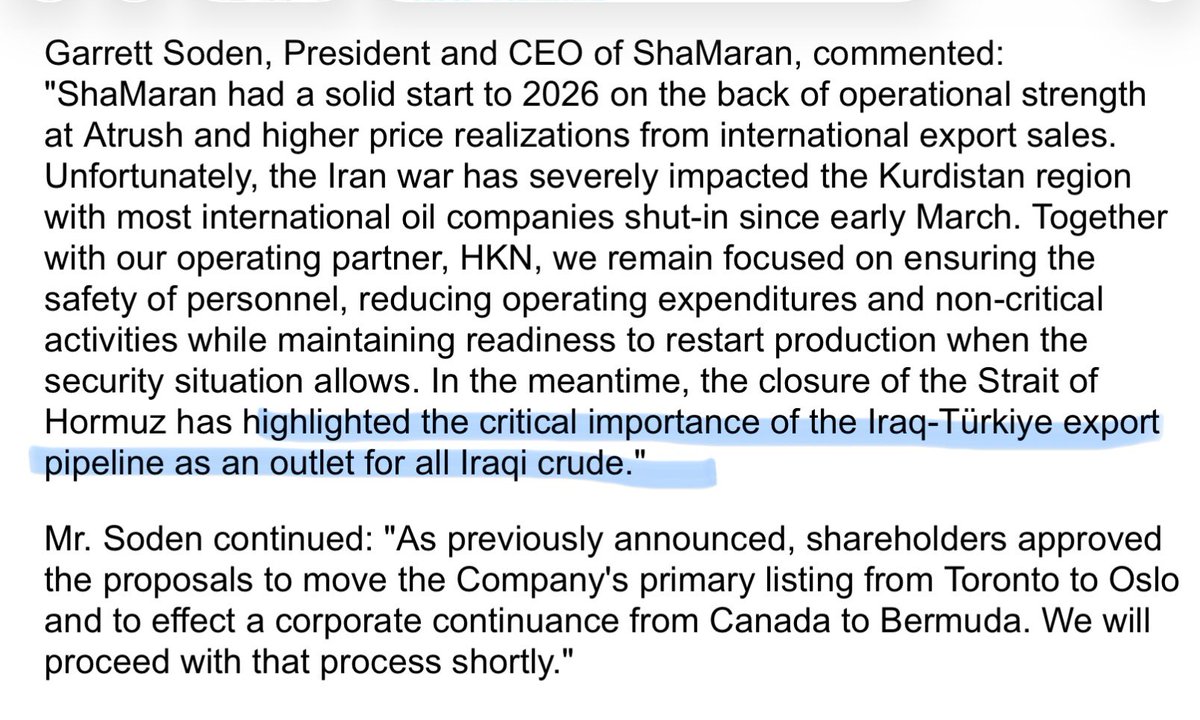
Kurdistan Region Prime Minister Masrour Barzani on Thursday said that Iraq’s newly elected Prime Minister Ali al-Zaidi and political forces want to “turn a new page” with Erbil, noting continued efforts to resolve outstanding disputes with Baghdad.
A KRG delegation met Iraqi Prime Minister Ali al-Zaidi today to discuss restarting KRG oil exports, which were largely halted during the Iran war and subsequent attacks on the Region’s oil fields.
Under the latest arrangement, the KRG is expected to resume production and deliver 200,000 barrels per day to SOMO. The oil would be exported through Turkey’s Ceyhan port, with the revenue transferred to Iraq’s Ministry of Finance.
At current prices of around $95 per barrel, 200,000 barrels per day would amount to roughly 6 million barrels per month. That would generate about $19 million per day, or $570 million per month, equivalent to nearly 850 billion Iraqi dinars.
Baghdad also expects the KRG to transfer 120 billion dinars in monthly domestic revenue. Together, the oil revenue and domestic revenue would bring the KRG’s monthly contribution to Baghdad to around 970 billion dinars.
In return, Baghdad would send the Kurdistan Region 970 billion dinars per month for salaries, as well as payments to cover the production costs of oil companies operating in the Region. The federal government allocates $16 per barrel for those companies, which would amount to about $96 million per month, or roughly 140 billion dinars.
In effect, the arrangement is designed as a revenue-for-salaries mechanism: the KRG sends around 970 billion dinars per month to Baghdad through oil and domestic revenue, while Baghdad sends back 970 billion dinars for salaries and an additional 140 billion dinars for oil-company costs.
KRG oil exports through Ceyhan had already fallen sharply before the latest effort to restart them. In March 2026, exports stood at 1.271 million barrels, but by April they had dropped to just 339,064 barrels, reflecting the disruption caused by the Iran war and attacks on the Region’s oil infrastructure.
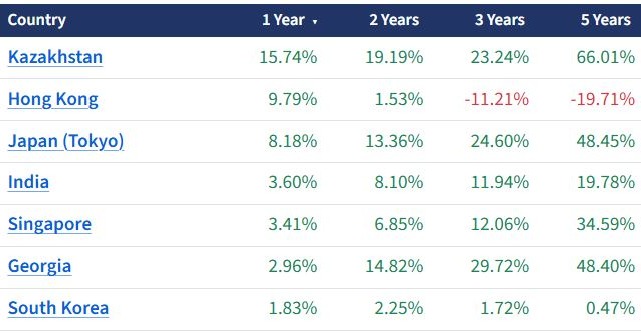
1-Year House Price Change in Asia (Nominal, Latest Data):
Vietnam: 24.3%
Hong Kong: 9.8%
Japan (Tokyo): 8.2%
India: 3.6%
Singapore: 3.4%
South Korea: 1.8%
Malaysia: 1.7%
Philippines: 1.6%
Thailand: 1.2%
Indonesia: 0.6%
Source: National statistics offices and central banks
The new French have completely destroyed Paris tonight all because of a football game (that they won by the way)
Round every single one of them up and deport the entire bloodline - ungrateful third world SCUM has NO PLACE in Europe.
#gkp#gkptakeover
Wood Mackenzie completed their report.
Costs for IOC now calculated, IOC reps about to arrive in Baghdad to gain security assurances, so soon prodn restart at PSC terms on the way , as is the takeover deal .
🚀
https://t.co/4OwTOtCFHc
@ChicagoJack5 Massive hidden accumulation ! 📊
82% of trades are "off-book" micro-orders. The smart money is loading up in the shadows to avoid moving the price. 🤫
The public breakout is just a matter of time. Stay patient. 🚀
#gkp#SmartMoney
A lot of pieces are being put in place right now at Metaplanet. Individually, none of them tell the full story. Together, they will. We are working harder than at any point I can remember to get them right. I wish I could share more. Soon enough, the picture will speak for itself. We are building this company for the long term, and for every shareholder who is along for that journey.
いまメタプラネットでは、様々な取り組みが少しずつ形になりつつあります。個別に見ても、全体像は見えてきません。すべてが揃ったとき、初めて意味を持ちます。私たちは、これまでにないほど真剣に、その一つひとつに向き合っています。今はまだ多くを語れないのが歯がゆいですが、時が来れば、自ずと見えてくるはずです。私たちはこの会社を長期視点で築いています。そして、その歩みを共にしてくださるすべての株主の皆様と共に。
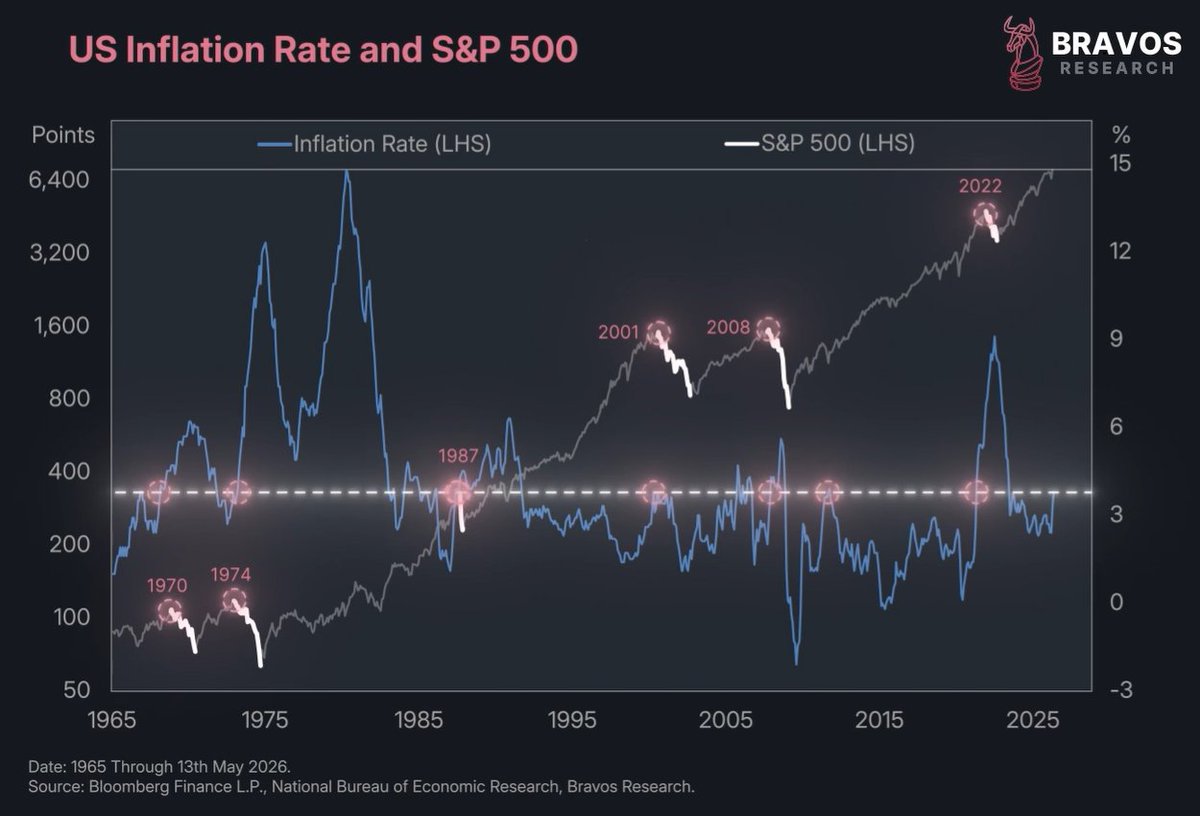
Inflation spikes above 4% have systematically triggered vicious market bear markets
We saw this in 1970, 1974, 1987, 2001, 2008, and 2022
Is History about to repeat itself?
A thread 🧵
العراق يعلن استعداده لبدء تصدير النفط عبر منفذ جيهان التركي خلال الأيام القادمة
عودة المباحثات بين الوزارة والشركات الأجنبية لاستئناف العمل في الحقول النفطية
المصدر: تصريحات المتحدث الرسمي لوزارة النفط العراقية
#العراق#تركيا#النفط
My attempt at explaining Power Law in 90 seconds.
@Giovann35084111 how did I do?
Bitcoin Power Law predicts $10 million price in the next 2 decades.
Don’t miss our full interview, linked below.
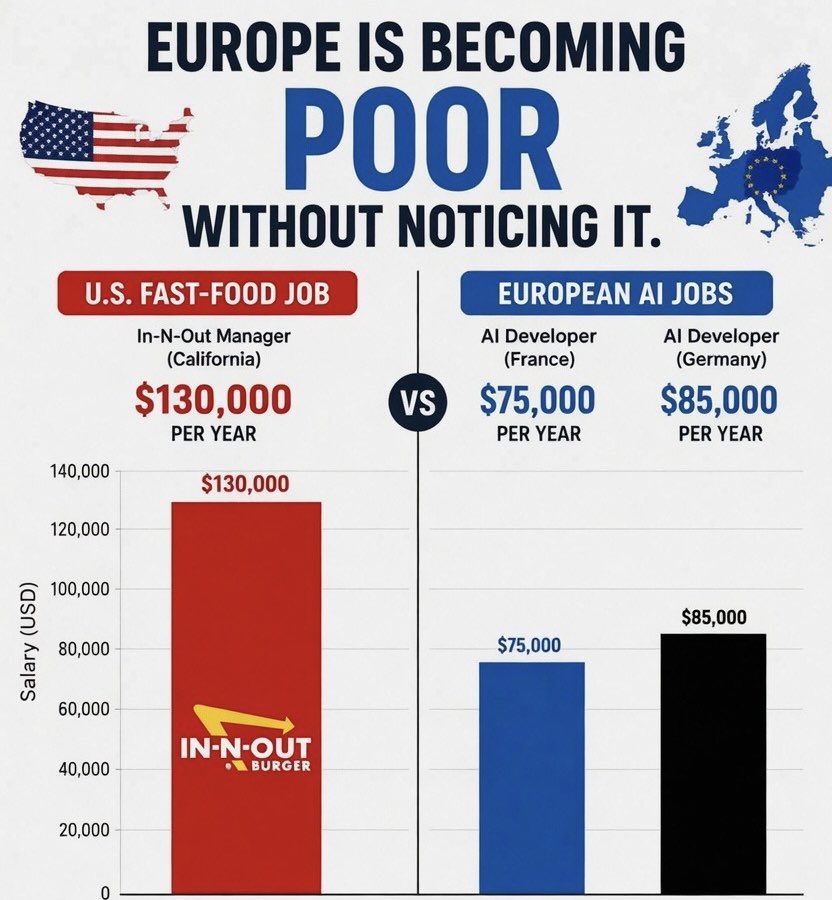
This is eye-opening. A fast food job in the US pays significantly more than AI developer jobs in France or Germany, which have higher salaries than most other European countries.
Europeans simply don’t notice how poor they become compared to others. Choices have consequences.
JAPANESE NEWSPAPER WARNS CITIZENS TO PREPARE FOR HYPERINFLATION
A major warning is now coming out of Japan.
Takeshi Fujimaki, former Japan head of Morgan Bank (now JPMorgan Chase), says Prime Minister Sanae Takaichi’s shift away from fiscal consolidation could accelerate inflation and pave the way for a full scale “inflation tax” to erase Japan’s massive debt burden.
Japan’s government debt now sits at roughly 1,342 trillion yen.
According to Nikkei, an “inflation tax” works by reducing the real value of government debt through inflation:
“Inflation reduces the value of money, effectively lightening the burden of government debt repayment.”
But while that benefits the government, it devastates citizens holding cash savings and institutions loaded with government bonds.
In other words:
The government owes enormous debts.
Citizens are the creditors.
Inflation destroys the value of what citizens are owed.
Wealth is silently transferred from the public to the state.
That is why it is called an inflation tax.
Fujimaki warns that if inflation remains around 7% for a decade, the real value of Japan’s debt could be cut by more than half through compound erosion of purchasing power.
He argues the groundwork for this has already been laid through years of aggressive monetary easing and that Japan may now be entering the next phase.
For governments drowning in debt, inflation can become the politically easiest path forward.
For savers, wage earners, and retirees, it can become financial hell.