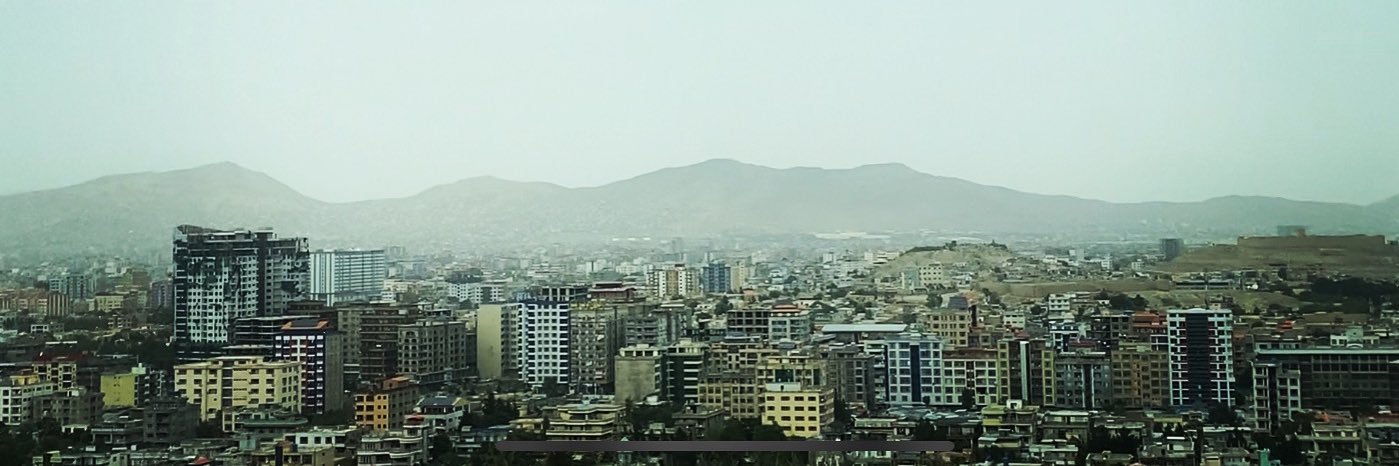
I, like many of you, have been following the ongoing fighting by local militia forces, or the so-called Ma'awisley, against #alShabaab. As the Ma'awisleys' successes against al-Shabaab garner more attention, a long thread of lessons from #Afghanistan, and what NOT to do. 1/N
After many months of research, data collection, analysis, and writing, I am pleased to share that GLAFPOL will launch the inaugural 2026 Somali Stability Index report on Thursday, June 11, 2026.
To attend, please register here: https://t.co/8QTrXXPGBf
Join us for the launch of the 2026 Somali Stability Index report.
Developed by GLAFPOL, Somali Stability Index provides a new data-driven framework for assessing the political and governance conditions shaping stability across Somalia.
Register here: https://t.co/MxDhkBuyf6
Join us for the launch of the 2026 Somali Stability Index report.
Developed by GLAFPOL, Somali Stability Index provides a new data-driven framework for assessing the political and governance conditions shaping stability across Somalia.
Register here: https://t.co/MxDhkBuyf6
The violence unfolding in Mogadishu is reckless. Somali leaders on all sides have a responsibility to preserve stability and resolve differences through peaceful means.
Actions taken in the coming hours and days may have lasting consequences for Somalia’s security, unity, and future.
We published this today. Heightened tensions and clashes in South West State, alongside deepening rifts between the federal government and several Federal Member States, point to a more confrontational turn in Somali politics, with growing risks of instability and escalation.
Israel’s recognition of Somaliland is a significant development (and that is an understatement). As of today, the Horn of Africa as we know it has changed. A domino effect is likely to happen. Ethiopia will likely follow. Curious to see what the AU’s, EAC & FGS response will be.
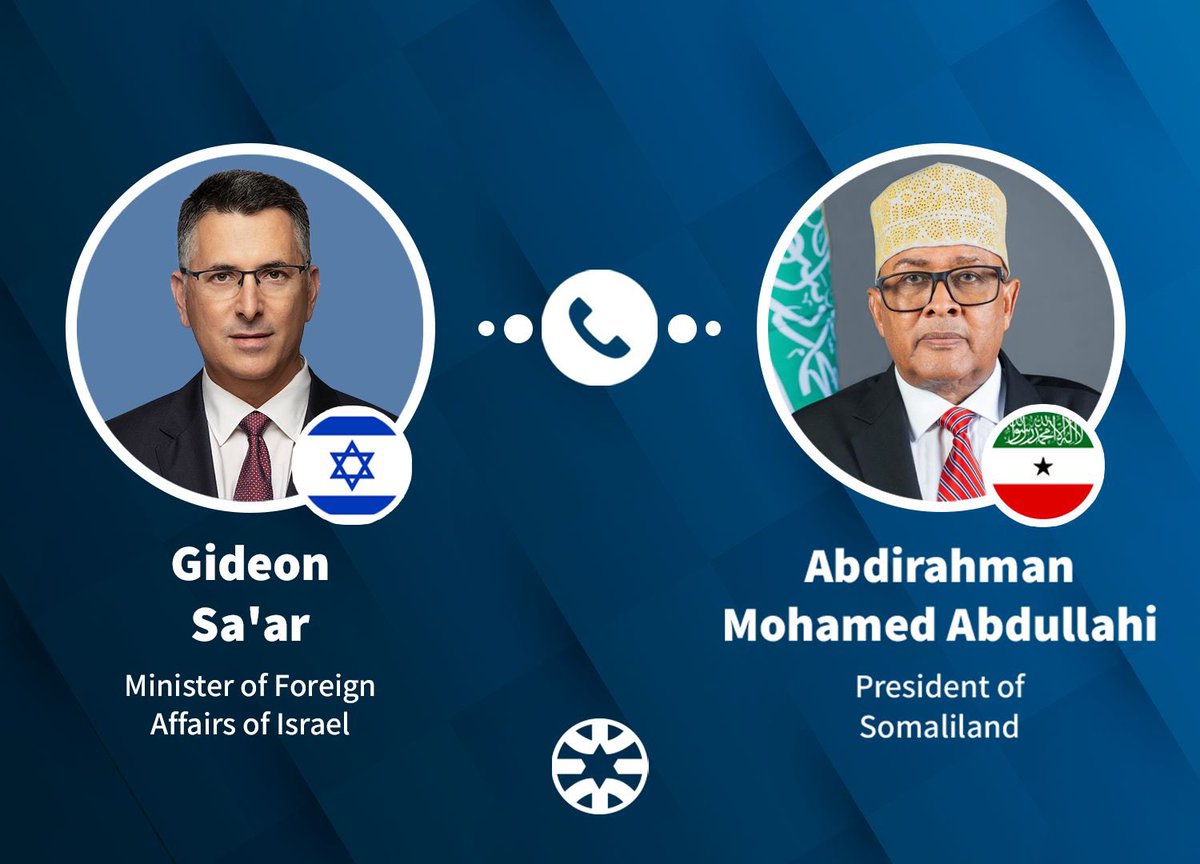
I was glad to speak just now with the President of Somaliland Abdirahman Mohamed Abdullahi, on this important day for both countries.
Over the past year, based on an extensive and ongoing dialogue, relations between Israel and Somaliland have taken shape. Following the decision of @IsraeliPM Benjamin Netanyahu and the President of Somaliland Abdirahman Mohamed Abdullahi, today we signed an agreement on mutual recognition and the establishment of full diplomatic relations, which will include the appointment of ambassadors and the opening of embassies.
We will work together to promote the relations between our countries and nations, regional stability and economic prosperity. I have instructed my ministry to act immediately to institutionalize ties between the two countries across a wide range of fields.
1/2 Khatarta ka dhalanaysa in aanan si mas’uuliyad leh u maareyn arrimaheena qaranka way noo caddayd dhammaanteen. Si kastaba ha ahaatee, halkii aan ka qaadi lahayn tallaabooyin mas’uuliyadeed...
Somalia’s federal system is stuck in a cycle of crippling political deadlock. What should be the urgent priority for Somali leaders to finally break the governance paralysis?
When Somalia adopted its Provisional Constitution in 2012, it laid out the vision of a federal state. Yet the most difficult questions; how power is shared, how resources are allocated, and how disputes are resolved remain unanswered. The result has been recurring political conflict, mistrust between political elites and selective Fedral-State cooperation.
Today, there is a growing disillusionment on Somalia’s statebuilding process - both nationally and internationally - over how the state is being imagined and governed. For more than a decade, the same cycle repeats: FGS and FMS clash over power, resources, representation and how elections should be managed? Each time it ends with the same story of agreements collapsing, reforms stalling, partners grow in frustration and citizens losing faith in the promise of a functional state.
The cost is heavy and multi-layered: governance paralysis, halted development and weakened security efforts drains energy and resources from the bigger picture of stability. These are not isolated issues; they are symptoms of a federal system that has no credible and permanent way to manage political conflicts. Unfortunately, Somali political culture remain driven by personalities rather than anchored on predictable institutions.
Puntland state has walked away from the table when its interests are ignored; Jubaland has resisted federal oversight, specially over elections and security and at times erupting into violent clash; and even states like Southwest, Galmudug, and Hirshabelle, often aligned with Mogadishu, have had moments of serious tension.
Somalia has relied on temporary fixes like the National Consultative Council (NCC) to ease tensions briefly but vanish with each new administration. There’s no continuity, no enforcement, no trust and no legitimacy. At best, it offers short-term relief. At worst, it reinforces the belief that disputes are only ever managed through brinkmanship and bargaining, not institutions and rules.
For the #InternationalPartners, cycles of repeated political crises has led to diminishing confidence in Somalia’s ability to sustain reforms, fueling frustration and fatigue. With each breakdown, the willingness of partners to underwrite Somalia’s progress weakens, not because of a lack of resources, but because of doubts that agreements will hold. This erosion of confidence risks undermining long-term support for peace and development, leaving Somalia more vulnerable to instability.
The #solution isn’t another meeting, another national dialogue; it’s structure and institutions based on constitutional mandates. Somalia needs:
1) A permanent Intergovernmental mechanism to mediate federal–state disputes, backed by clear rules and shared FGS-FMS ownership.
2) The establishment of the Constitutional Court that serve as the ultimate referee; interpreting the law, enforcing agreements, and ensuring fairness between the center and the states.
Those twin institutions would transform Somalia’s federalism from rivalry to cooperation by stabilizing politics, restoring trust, and keeping leaders focused on public service, security and development. Without them, Somalia risks endless brinkmanship, donor fatigue, and widening security vacuum that extremists and external proxy agendas will exploit.
This should form part of the main agenda for future administration with the support of partners on a clear accountability frameworks. It’s time to build institutions that outlast leaders by turning fragile bargains into lasting peace and stability.
#Somalia #Federalism #Governance #Peacebuilding #Security
Day 2 of the 2nd edition of the Lomé Peace and Security Forum, held in Lomé under the patronage of His Excellency @FEG.
Follow the proceedings of panels 4 and 5 live via the official website https://t.co/2ynSm22AyF
@rdussey@GouvTG@PnudTogo
Here is my take on Al-Shabaab attacks
This is based on conversations with multiple security and local officials; and observers:
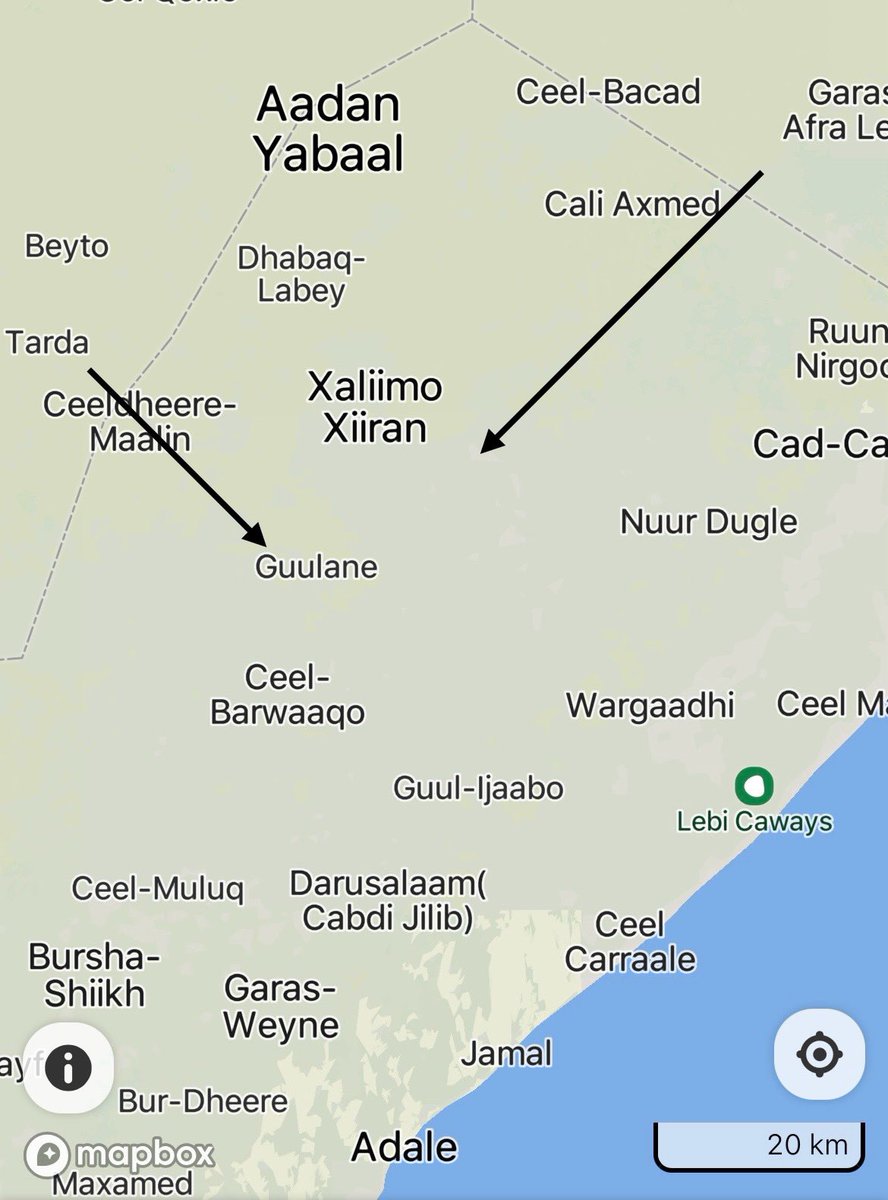
For weeks, the Somali military supported by local fighters have been holding off two Al-Shabab offensives - launched from southwest and north - from linking up in Middle Shabelle and Hiran regions.
The militants launched the offensives in an attempt to open a supply route either in Middle Shabelle or the neighbouring Hiran region. The attack in Hiran took place in Beera Yabaal twice in January and in February where local fighters with government forces fended off the militants with high casualties.
The militants failed to open that route. More than a hundred people died in the two clashes, most of them militants.
After the failure in Hiran region, the militants crossing from a makeshift bridge built near the village of Oobaale, turned east, passed north of Mahaday district and sent lots of fighters into Middle Shabelle region. Another al-Shabab colum passed through Yaaqle as Al-Shabaab entertained the AU and Somali forces in Bal’ad town with an attack, thought to have been a decoy on Feb 26.
The second Al-Shabaab offensive from central Somalia was by fighters who have been besieged in Mudug and Galguduud regions for nearly three years. These militants reached the outskirts of the main town of Adan Yabaal which is now besieged.
Militants have forced government forces to pull back from several villages including Al-Kawthar, Daru Nicma, Ceel Cali Axmed, Boos Hareeri, Ceel Baraf, Biyo Cadde and Mirtaqwo. The militants fired mortars on Adan Yabaal but government troops are holding on.
On March 18, Al-Shabaab detonated a huge bomb on the president’s convoy in an attempt on his life. The following day, Al-Shabaab offensives from southwest and north (from central regions) managed to link up for the first time in the vicinity of Guulane village. Al-Shabaab is now in the process of moving fighters into Galmudud to relieve those besieged for 21/2 years who will head south and southwest. The Al-Shabaab attack on Masaajid Cali Gaduud on March 26 poses another risk for the government forces. It could put pressure on government soldiers in Masagaway and Ceel Dheer who will now have to fight to secure the coastal supply route from Mogadishu-Cadale-Nur Dugle to Galmudug.
With large mobilisations taking place in Middle Shabelle and Hiran region spearheaded by @HassanSMohamud, the government wants to turn the tide. There have been increased airstrikes against al-Shabaab. Ethiopian fighter jets, drones by Turkey, and US and helicopters have been active.
To occupy the government from committing more troops into Middle Shabelle, Al-Shabaab opened another front in Lower Shabelle, launching a major attack on Awdhegle town on March 15. This is widely believed to have been an offset attack but it gave Al-Shabaab another strategic advantage - it now controls one of the bridges that are vital to keeping Mogadishu safe from VBIEDs, which is a big security concern.
Al-Shabaab fighters were sighted in the Mogadishu suburb of Elasha Biyaha on the day of the attack in Awdhegle, primarily to ambush reinforcements. More sightings followed the next days, which were interpreted by some commentators as “Al-Shabaab advancing towards Mogadishu.” But it’s important to highlight that Al-Shabaab sightings, ambushes, IEDs and propping attacks in Elasha Biyaha area have been continuing for many years. The militants have been intruding these area from Basra (north of Mogadishu) and Gendershe area (southwest of Mogadishu) for years. To portray this as a fresh “advance” towards Mogadishu is premature. Will Al-Shabaab have more chances of smuggling VBIEDs into Mogadishu? Highly likely. Will Al-Shabaab contemplate bringing fighters into Mogadishu for a conventional war? Highly unlikely.
This is how you wage and win a counterterrorism operation — with community support. It’s really that simple.
The federal government and other FMS need to learn from this.
Civilians in Bosaso apprehended and handed over to the police a foreign individual, reportedly of Moroccan origin, in the city of Bosaso. The militant is said to have come from the mountains after Tuesday's fighting.
@AnalyticaCamil1@LaurenBinDC Yes, but they also play a critical role in holding key areas. Without the ENDF, many districts in SWS & JL would fall to AS. We (@GLAFPOL) will be publishing a paper next week that uses machine learning & incident data to project the risk if the ENDF were to exit.
Had a chat with @agmutambo for this @NationAfrica piece, which also references @Glafpol’s recently published briefing on Somalia’s electoral changes.
Insights from @JustAwHirsi and @FaroleJr are also featured.
https://t.co/x8TgEI9P7B
We're excited to launch GLAFPOL's cutting-edge analytical platform this week! Our comprehensive database tracks political, social, and security events across Somalia, providing actionable insights and predictive analysis for informed decision-making. With data going back to 2020, you can access the platform at https://t.co/mYmNcw25MO
If you're interested in getting an account, reach out to us via email: [email protected].
#DataDriven #Fragility
We're also organizing an online briefing next week —if you're interested in joining, there's a sign-up box at the bottom of the publication page. 👇
https://t.co/469Xi72g86
Excited to share our September analytical briefing!
This might be one of the most timely and in-depth analyses we've produced, examining the ongoing electoral changes in #Somalia. Have a read and let me know what you think!
NEW ANALYSIS: Our September briefing delves into Somalia’s ambitious electoral reforms and the significant political, structural, and security challenges they face. Can this bold shift from a clan-based system to direct elections reshape governance or deepen divides? 1/6
https://t.co/mkXeNIgyKa