I wrote about the practice of #soppinabetta - collection of forest resources to bolster areca nut cultivation, and how betta lands are in urgent need of conservation for @MongabayIndia . Learn more.
https://t.co/55O1cC8rJ8
I visited plant biologist, Dr P.V.Shivaprasad, winner of the Tata Transformation Prize 2025, at his lab in the @NCBS_Bangalore. His research uses small RNA modification and epigenetic regulation to develop 'climate-smart' rice. Learn more. @MongabayIndia https://t.co/vDrXiBVKIY
My latest article for @MongabayIndia examines the findings of a research study published earlier this year that dives into the complexities of farmer cropping decisions. Please read the full story to know more.
@AshwiniChhatre@shrinibadiger
https://t.co/sn8HQOhTdF
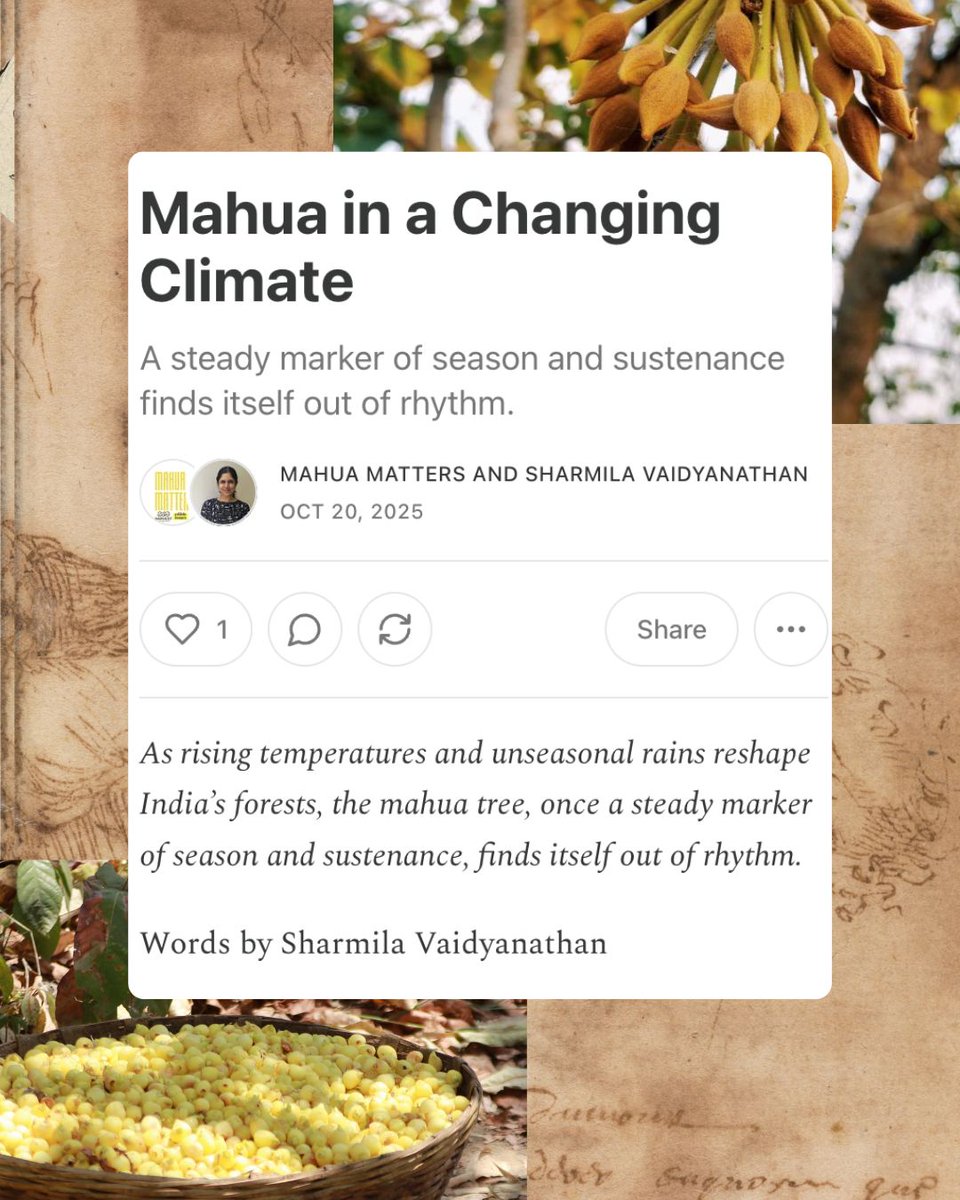
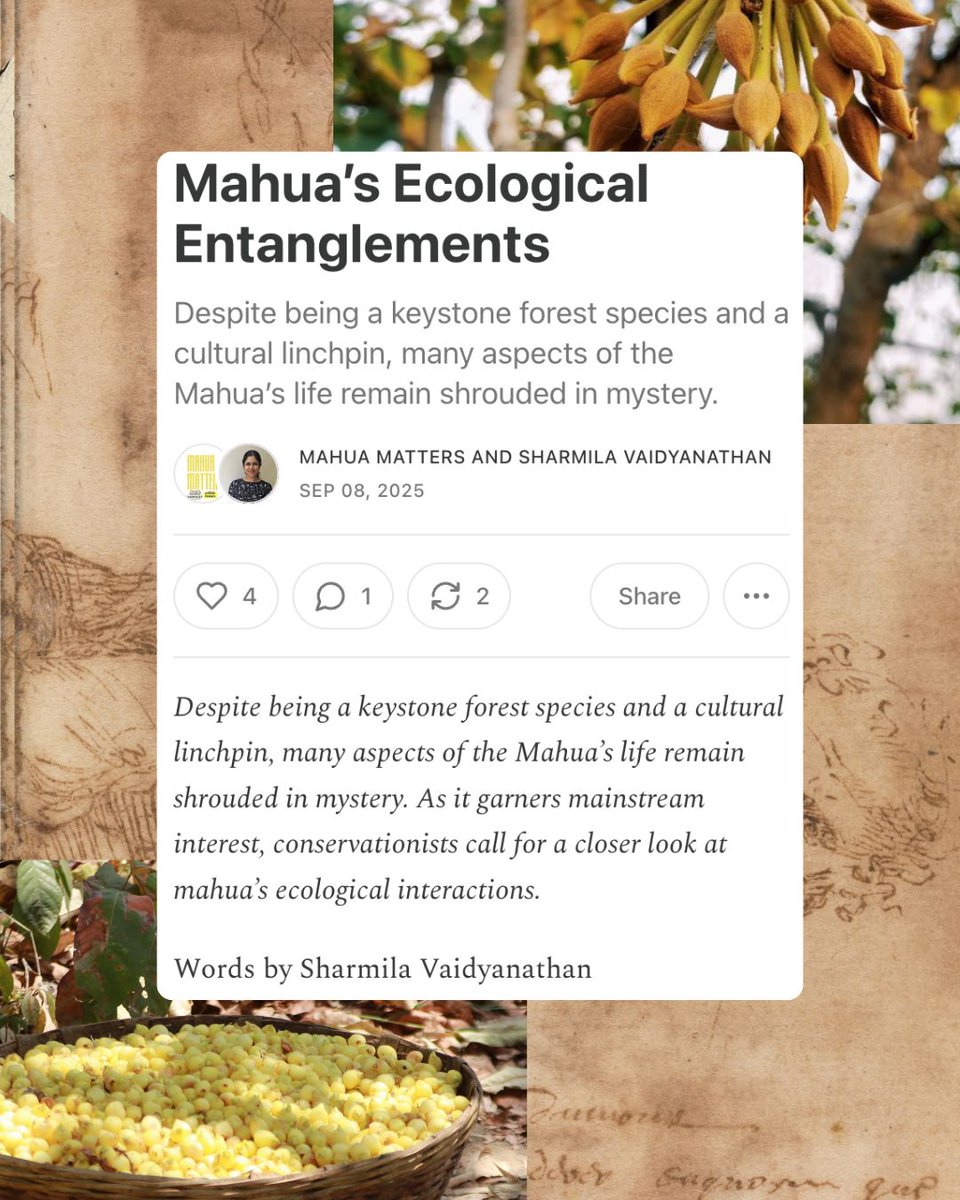
My articles examine #mahua's role in the ecosystem, how indigenous communities interact with the tree, and how climate change is reshaping these relationships. Please subscribe to #MahuaMatters on #Substack to learn more. https://t.co/SF5mZyKM7Y
For the past few months, I have been working with Shivani Unakar, @EdibleIssues & Team #WildHarvestIndia to bring #mahua-centric narratives to the fore. #MahuaMatters project has been an incredible learning experience for me, giving me the opportunity to unearth its many facets.
For India, satellite-based mapping tools must be used along with additional field observations and biophysical data for a comprehensive understanding of deforestation drivers. Story by @YellowTurmeric.
https://t.co/MqpTGDAtpE
India's daily solid waste output exceeds 170,000 metric tons. A significant amount of urban waste ends up in landfills. But startups like @recircle_in@WeVOISLabs@TrashConLabs and #Skrap are making a difference. My latest article for @nikkeiasia. https://t.co/OXBK7iVwMR
Dr. Sulochana Gadgil, who has just passed away, was one of India's finest climate scientists. Her research over almost five decades greatly enhanced our understanding of the Indian monsoon.
After her doctoral work at Harvard and post-doctoral work at MIT, she returned to the Indian Institute of Science, Bengaluru, in 1973 where she was to play a key role in establishing its Centre for Atmospheric and Oceanic Sciences.
Her life was devoted to advancing academic scholarship. At the same time, she was also a field scientist who investigated the practical relevance of her work, especially on farming systems in rain-fed areas. Her ability to communicate scientific research to the larger public was remarkable.
She was an outstanding personality in her own right. Even so it would not be out of place to mention that she and her husband - India's famed ecologist Madhav Gadgil - made a formidable duo who both individually and jointly mentored, guided, and inspired many.
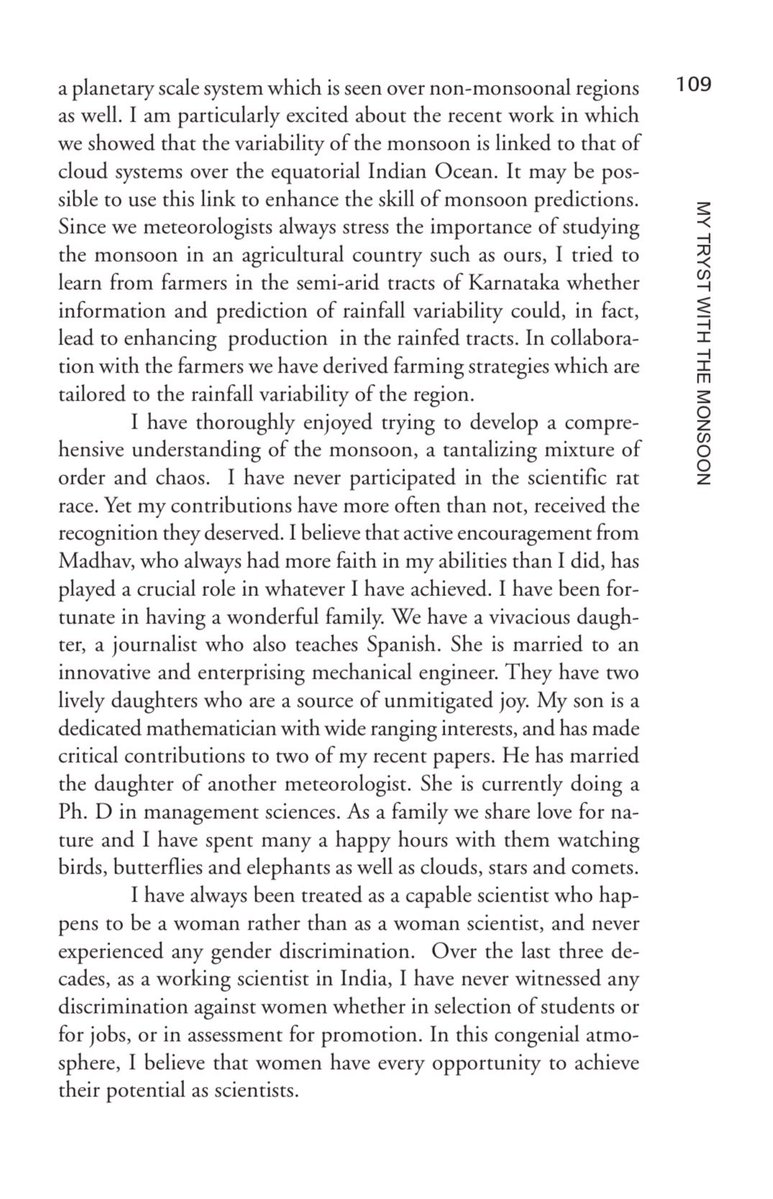
She wrote prolifically. A short piece of hers captures her life beautifully.
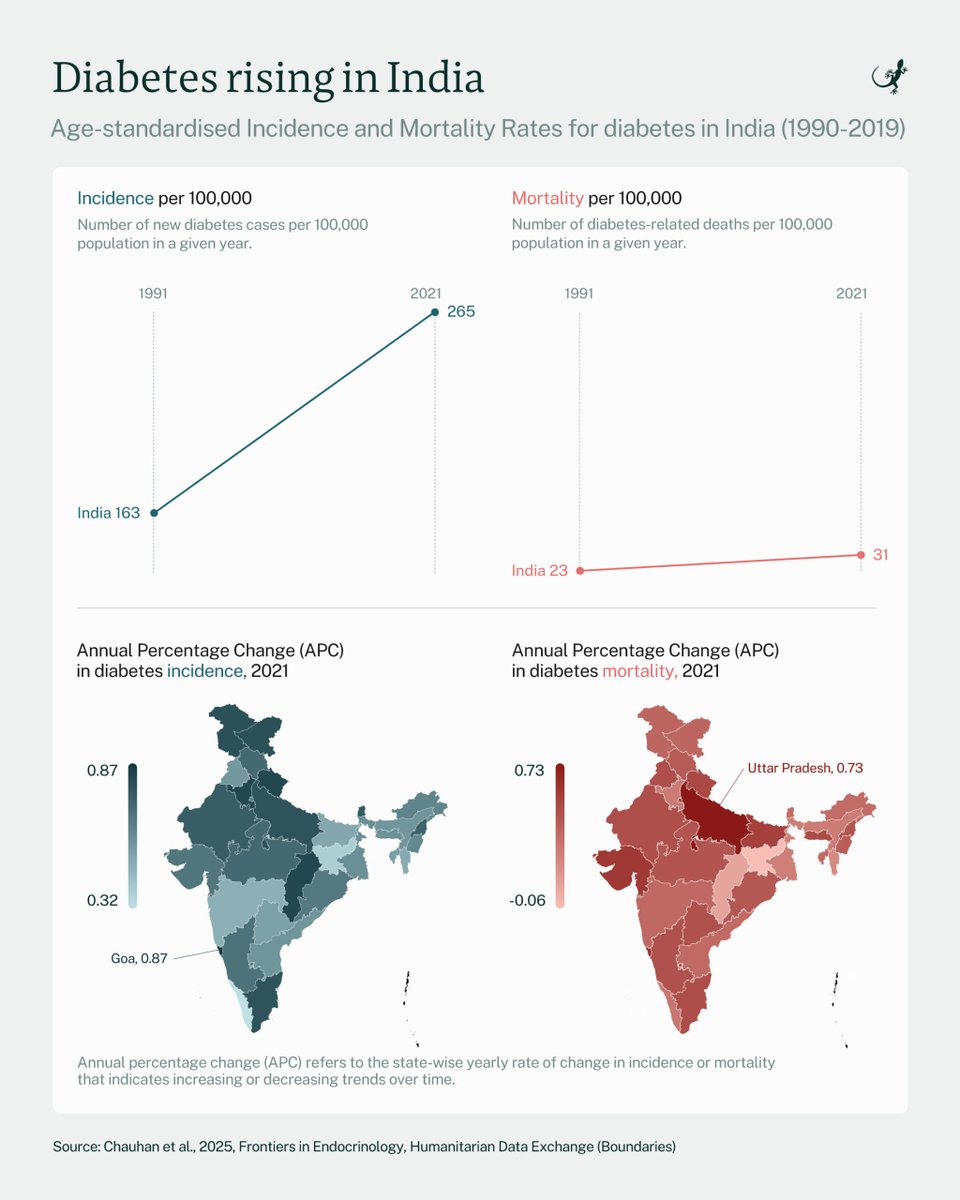
@CE_Leonard@CHART_TSB@IntDiabetesFed@OffCMCVellore Existing research shows that climate change can further complicate the pathophysiology of diabetes and its management in patients. However, significant gaps exist in our understanding of these interconnections, reports @YellowTurmeric. 2/2
The challenges of a diabetic living under the shadow of climate change:
Unable to walk outside because of rain (or heat), can't afford increasingly pricey fruits and veggies.
+ comorbidities.
@CE_Leonard@CHART_TSB@IntDiabetesFed@OffCMCVellore
1/2
https://t.co/bazHgKj09n
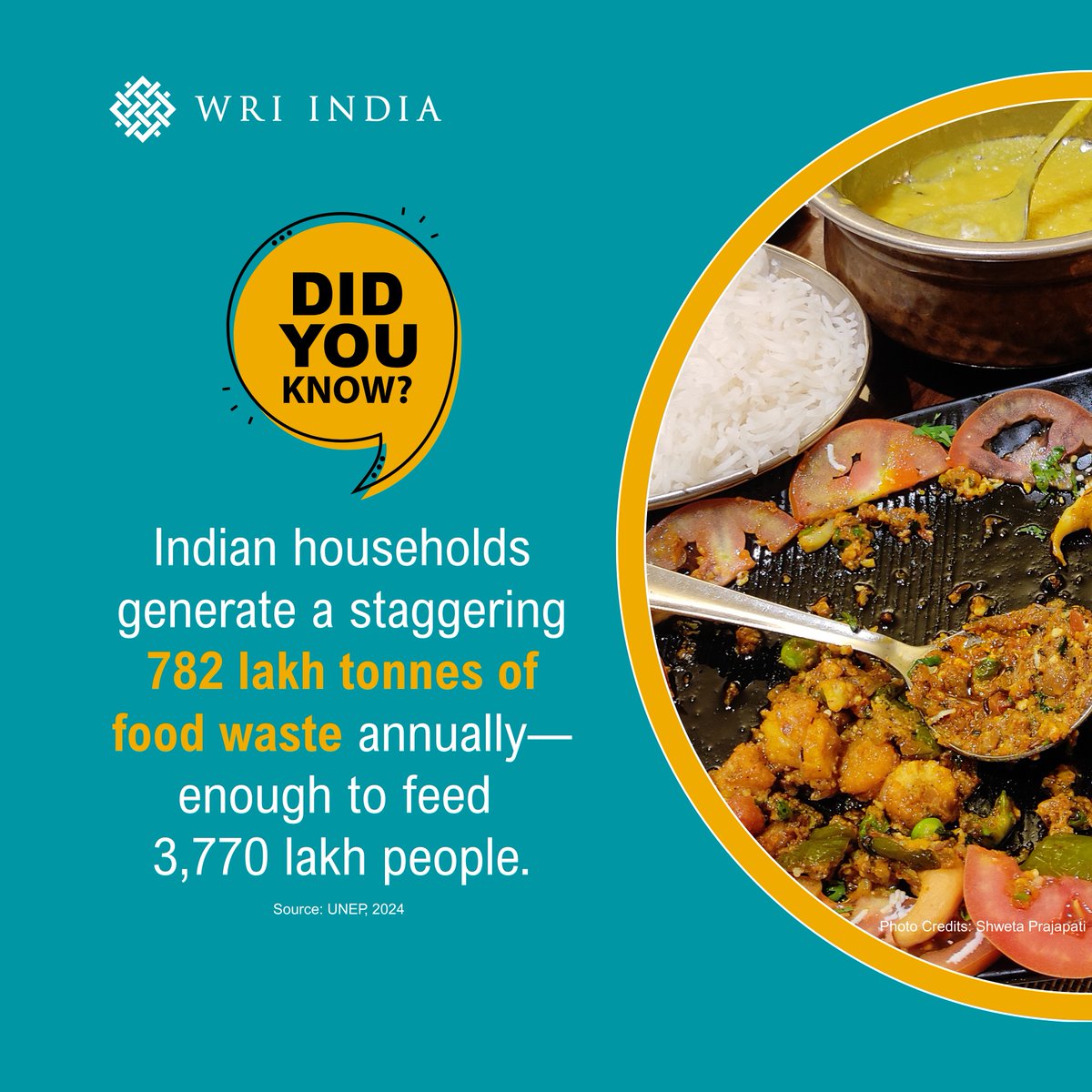
India’s food surplus is a huge opportunity waiting to be tapped! Join #FoodForward2025 Session 2 to explore how donation networks, composting, and upcycling create social & business value from food waste.
🗓️17 July | 🕓4–5 PM IST
🔗 Register: https://t.co/RXOyoBpwte
Globally, several studies have examined the links between climate change and diabetes. In India, however, the data is lacking. My latest for @MongabayIndia looks at why this is concerning.
https://t.co/13Bfa03sPy
My latest for @TheHinduScience is about the key findings of the recent #Lancet Commission on adolescent health and wellbeing. The report calls for urgent focus in this area and warns that the wellbeing of adolescents worldwide has reached a tipping point.
https://t.co/MQKJj1RQRg