Have you ever heard of 𐩧𐩢𐩣𐩬𐩬 or Raḥmānān?
It was the way Southern Arabs called God or Allah, according to archaeology and Late Sabaic inscriptions.
"Al-Rahman" (الرحمن) is most probably an arabization of this name of God.
Les guerres idéologiques entre la Mecque/Médine (sous l'influence de Abdallah Ibn Zubayr) et le Sham ont donné ce genre d'aberrations.
Quant aux fameux 27 degrés à la mosquée, il fallait absolument que les gens soient là pour avaler la soupe des conteurs
https://t.co/Wo9TCoKbM4
وقالت العلماء: هذه الآية في الحرائر؛ وأما الإماء فإن ع��ر بن الخطاب رأى أمة عليها قناعاً فعلاها بالدرة وقال: اكشفي عن رأسك لا تتشبّهي بالحرائر. ذكروا عن أنس بن مالك قال: كُنّ جواري عمر (2) يخدمننا كاشفات رؤوسهن تضرب ثديهن، بادية خدامهن
Initially from the shore, one sees the pure message and core principles.
Then you dive and you discover hadiths, traditional rulings, clergy and all the crazy stuff :)
A very useful AI prompt I urge you to try, with Claude or GPT4 for example:
(try it with "clergy concept and religious authorities" for example)
I wish to explore the Quran on the theme of [...], based solely on the Quranic text itself, without any reference to hadiths, tafsir, or other secondary sources. Please:
- Identify all verses (ayat) that directly address this topic
- Present these verses in their immediate textual context
- Analyze the key Arabic terms used in these passages
- Examine how this theme develops across different surahs
- Note any nuances or variations in how the subject is treated
- Identify internal textual connections between different passages
- VERY IMPORTANT: You must absolutely avoid the trap of anachronism by projecting post-Quranic meanings of words onto their Quranic context. This is fundamental - you must always start from scratch.
This is intended to understand how the Quran itself addresses this theme, letting the text speak for itself.
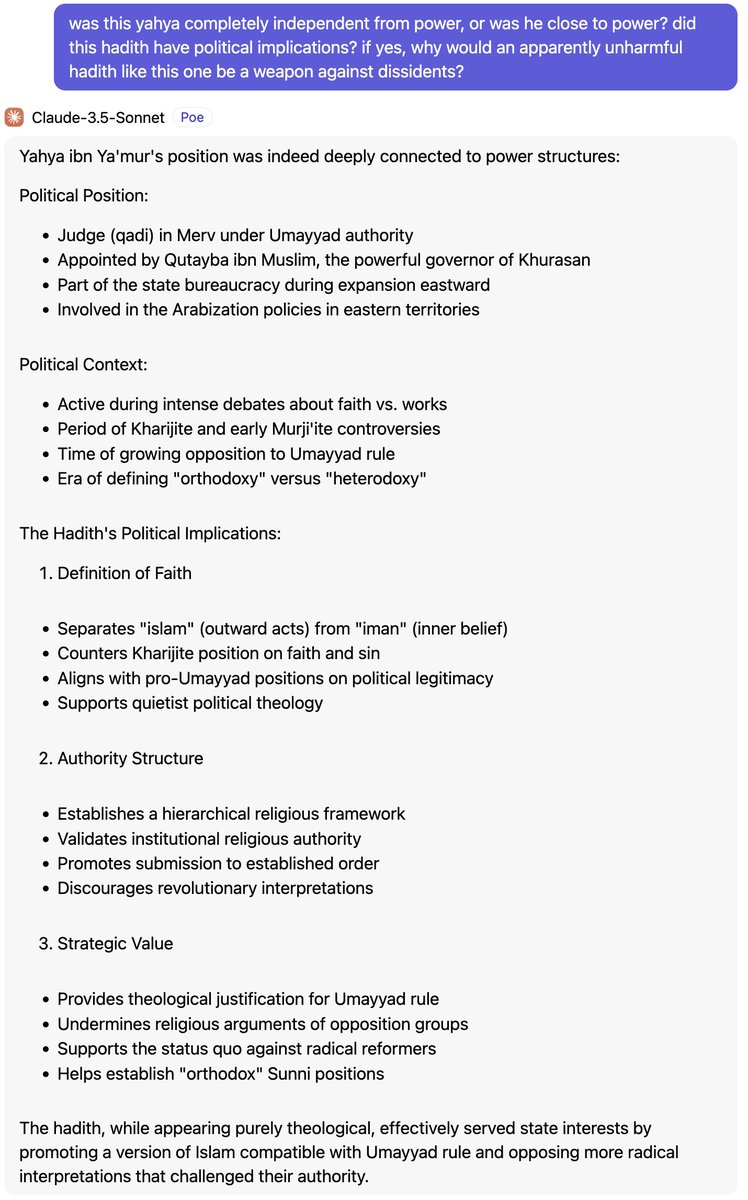
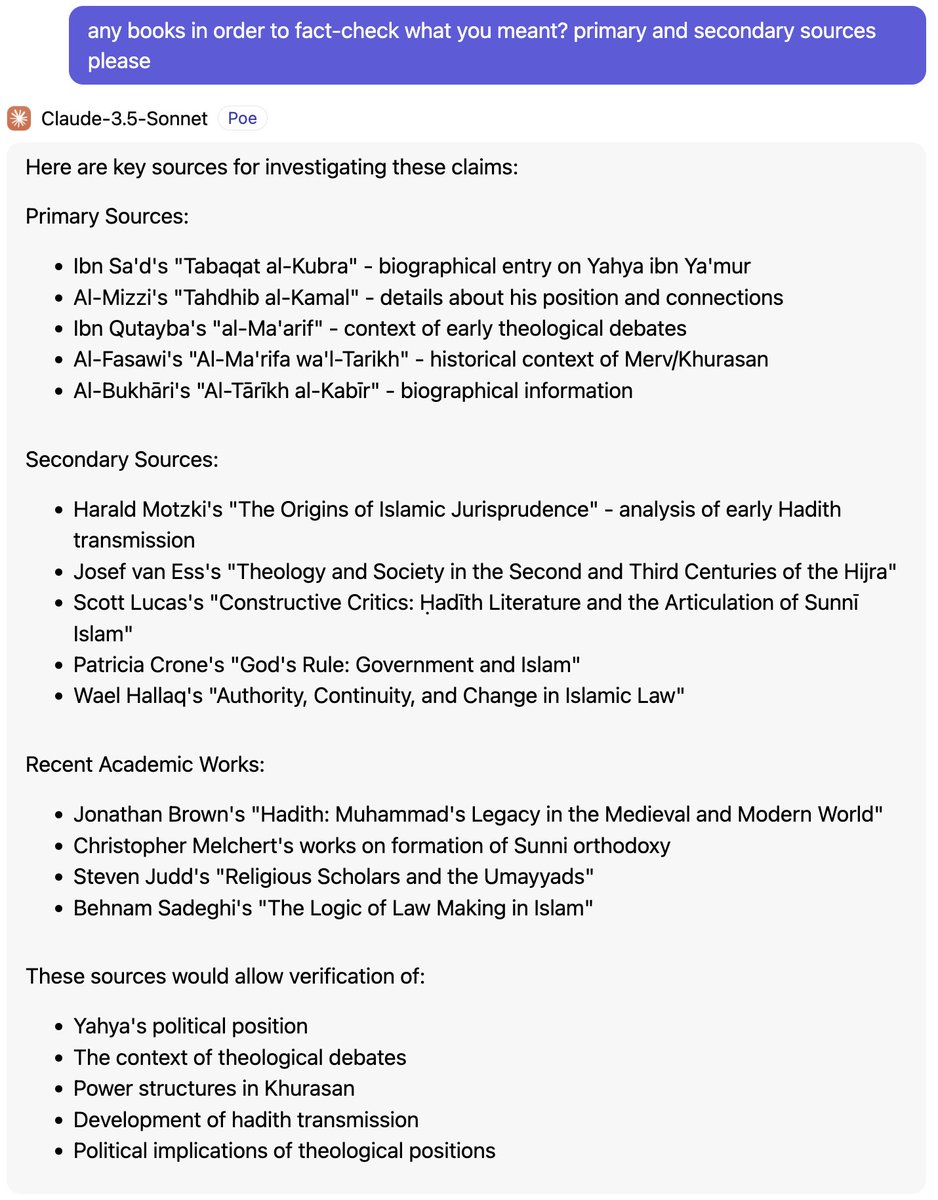
This story is featured in Tahdhib al-Kamal, quoting Tarikh Al-Bukhari, but you reject it?
You claim to follow hadith sciences yet reject Al-Bukhari's own methodology? Pick a side.
Unlike me who came to the conclusion hadith science is a joke, you claim to respect and follow it. Then respect how Al-Bukhari and Al-Mizzi - the actual masters - used different standards for historical narratives vs legal hadiths.
You're using legal hadith criteria to reject historical narratives that the founders of your own methodology accepted. Classic Twitter-scholar move.
Either follow the masters of your own science properly or admit you're cherry-picking rules to match your preferences.
Or join the awoken ones.
@YetAnthrStudent This narration comes through Musa Ibn Yaqub.
Ahmad Ibn Hanbal & Ali ibn al Madini amongst others rejected him.
It’s not authentic.
Sleeping with your buddy and your wife, altogether under the same blanket, you say astaghfirullah I say mashallah.
This is what close friendship looks like 🫶
https://t.co/OxBY3cpzgk
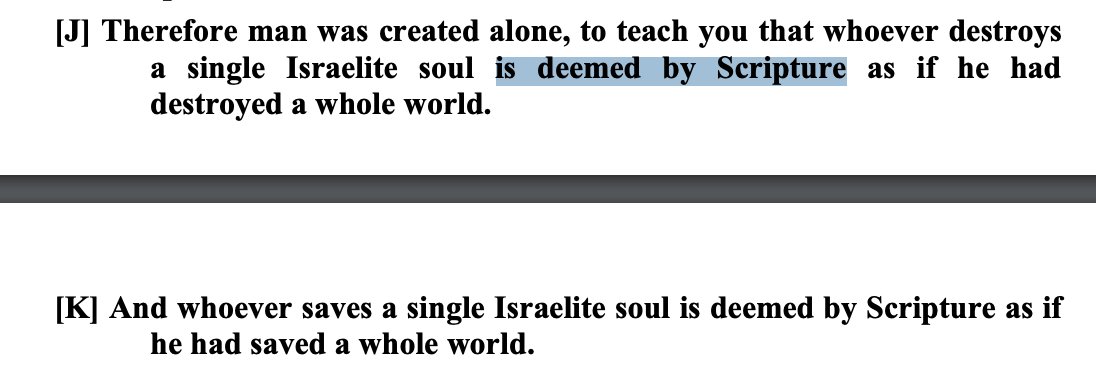
I'm not a specialist, but I recently learned about herem in Deuteronomy. This article seems balanced and highlights the tension among commentators.
https://t.co/NH1HvYkvCW
If you need God to tell you that it is wrong to kill people and otherwise you literally would not know that that is the case, you're either a psychpath or obviously deluding yourself.
This is why I block every galaxy brain person that asks "how do you know murder is wrong?"
Je parcourais mes signets et je retombe sur cet échange.
En fait à la base ce hadith, régulièrement cité par le courant majoritaire, n'a rien à voir avec ce qu'on lui a fait dire par la suite et comment on l'a utilisé.
Sa'id ibn Abdelaziz (policier dimashqi) d'après ibn halbas (commissaire de police dimashqi) que bashir ibn abi mas'ud ("wa kana min ashab al nabi!" = qui était un compagnon!) a dit : "alaykum bil jama'a fa inn Allah la tajtami'u 'ala dalalah, iyakum wa talawun".
"Craignez Dieu et attachez-vous à la communauté, car Dieu ne réunira pas la communauté de Muhammad dans l'erreur. Et gardez-vous de changer de couleur (c'est-à-dire de varier) dans la religion de Dieu, car la religion de Dieu est une. Et attachez-vous à l'obéissance au sein de la communauté jusqu'à ce que le pieux trouve le repos ou que l'on soit débarrassé du méchant."
https://t.co/1a9CcuYHeJ
https://t.co/yd6lvIMUic
Quelle erreur... Nous on croyait que le hadith était machallah et qu'il y avait une sorte de baraka sur le groupe, la majorité.
Mais en fait c'est encore un autre hadith politique, moche qui vise à appeler à l'obéissance aux injustes, comme d'habitude quand ça provient du Sham.. 😔