@brady_h Related to #4, 1) RED-S and difference in carbohydrate needs for Men vs Women, 2) Women at key stages of life related to hormone status; 3) deeper dive on fueling strategies for ultra events - high carb vs keto
@BiggestComeback Just looked at your pic and bio. Your BMI is fine (lean mass not fat) and you clearly are fine with resistance training/lean mass :-) If low carb/keto is working keep it up! Your VO2 is superior- just maintain for next 30 years and you’re set ( and my role model)
@BiggestComeback Similarly blood biomarkers will correct themselves over time- with age appropriate cardio respiratory, resistance and diet. That’s why it’s important for CAC/CCTA- to determine urgency to correct these if needed
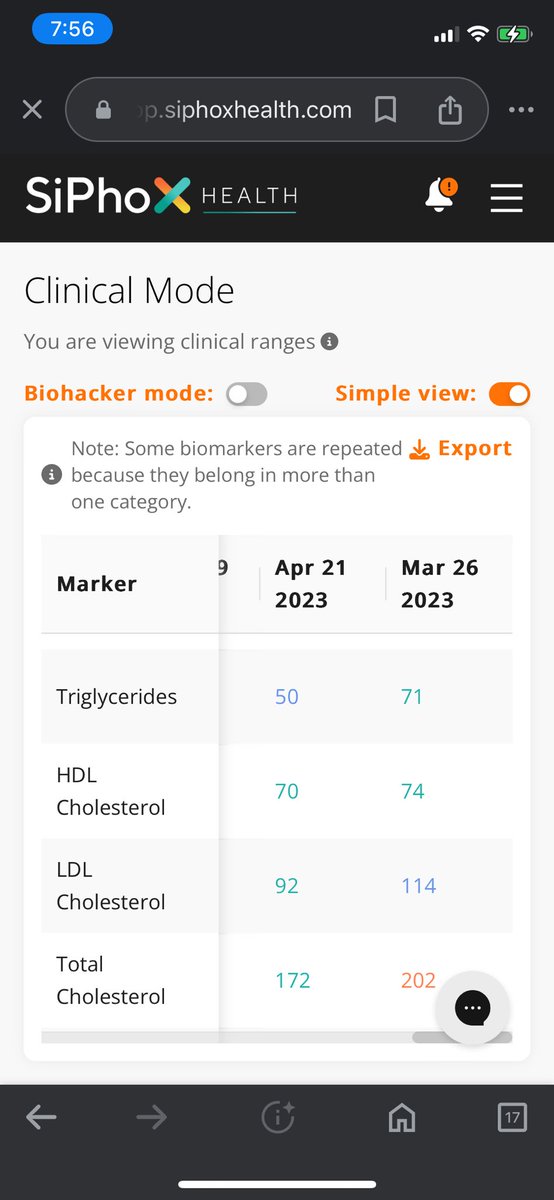
@nicknorwitz@bryan_johnson@Oreo In April 2023 I decreased my LDL-C 20% in 2 weeks by decreasing saturated fat intake (not eliminating) to 90 mg/dL. This is when I got interested in using @siphoxhealth for N=1 testing. Started 5 mg Crestor and LDL-C plummeted to 50-60 mg/dL as expected.
@nicknorwitz@bryan_johnson@Oreo@siphoxhealth In April 2024, my LDL-C was 72 mg/dL off statin 3 months. So a 47% decrease in 1 year with gradual but sustained improvement in diet and activity. Intermittent VitD and B-complex only (dosing based off @siphoxhealth homocysteine and Vit D levels)
@nicknorwitz@NEJM It's interesting pts don't gain weight on resmetirom (mentioned; but data in suppl material I think). MoA~ increased thermogenesis/energy expenditure(?). If so may make less likely for LDL-C to increase due to inc VLDL export in LMHR (Hypothesis 2)
1/12 Saturday Morning Class #27 Update on ongoing trials for treatment of elevated Lp(a):
We will review Lp(a) drugs in development.
Pelacarsen- brief story:
The field of RNA therapeutics for Lp(a) started with this paper from a collaboration of our lab at UCSD and @IonisPharma starting in 2006.
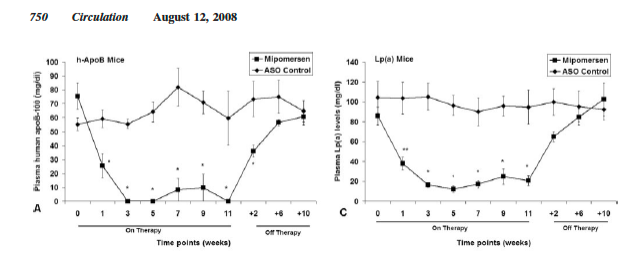
As Lp(a) is composed of 2 major proteins (apo(a) and apoB-100)) tightly linked together like conjoined towns, The idea was to disrupt Lp(a) assembly by inhibiting the apoB-100 portion with a new approach to drug development, antisense oligonucleotides. Mipomersen, targeting apoB-100 was already in clinical development, therefore we decided to try to reduce Lp(a) by inhibiting apoB-100. We had transgenic mice that make human Lp(a) (mice don’t have Lp(a) normally) and used mipo in this context.
This worked great, see figure below from 2008 paper-
https://t.co/wNiQTxSMMe
However, when we looked in the plasma, we found the mice made “free” apo(a), and this apo(a) contained OxPL, therefore, we did not think this was an ideal approach (back to this later on the Lilly drug).
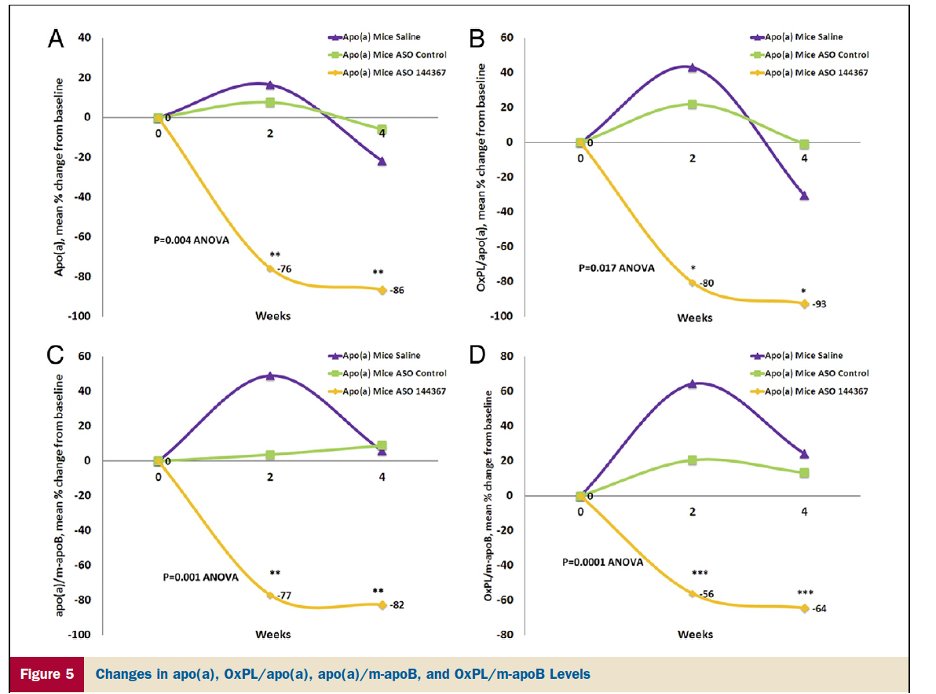
So, back to the drawing board, Ionis made a drug to apo(a) component, and lo and behold, this worked better as it decreased both ‘free” apo(a) and Lp(a). Then, off to the races to bring this new invention to patients.
See fig from 2011 paper in @JACC- https://t.co/sGWtyNpL6S
The drug was optimized and ultimately called pelacarsen. The first version had no Galnac, i.e. not liver targeted and 2 studies were published.
One tree, one insect, one mammal and a number of sea creatures that out lived dinosaurs: “Living fossils: 12 creatures that look the same now as they did millions of years ago” https://t.co/ZLlVL0hgKG
@tferriss@kevinrose Wonderful clip between 2 dear friends. I literally had just started watching the full length conversation on you tube when this popped up. Funny what a 1/2 bottle of tequila does to your speech cadence. But you both held it together and kept it real. HNY to you both
@nicknorwitz 3. When is 5-yr f/u readout for MiHeart planned? W/o knowing rate of ASCVD change in MiHeart or LMHR study- no conclusions can be made. Could argue that a proportion of LMHR participants had accelerated progression in mean 4.7 yrs vs. longer/lifetime MiHeart matched controls (?)
@nicknorwitz 2. Unfortunately- no CAC or CCTA @ baseline prior to starting keto diet in study. There were non-zero scores- no way of assessing how quickly these progressed which is the question at hand. Is 1 year sufficient event horizon for paired F/U CTA?
@nicknorwitz 1. What proportion of individuals on keto diet w elevated LDL-C are LMHR vs. individuals with met. syndrome, inc. inflammatory markers, T2DM, etc. The latter are the ones of greatest concern for ASCVD. Having internal control (w 0 CAC) in study would have been helpful .