Glad to share our work published today: AIF3 splicing variant elicits mitochondrial malfunction via the concurrent dysregulation of electron transport chain and glutathione-redox homeostasis. https://t.co/Q3T1vgqj8t;
@UTSW_Pathology; @UTSWNeurosci ; @GDDgradprogUTSW@UTSWBrain
· AIF3 variant disrupts mitochondrial complex assembly, functions and brain development via dysregulating respiratory chain functions and glutathione-redox homeostasis
· NDI1 restores mitochondrial functions partially and protects neurons in vivo
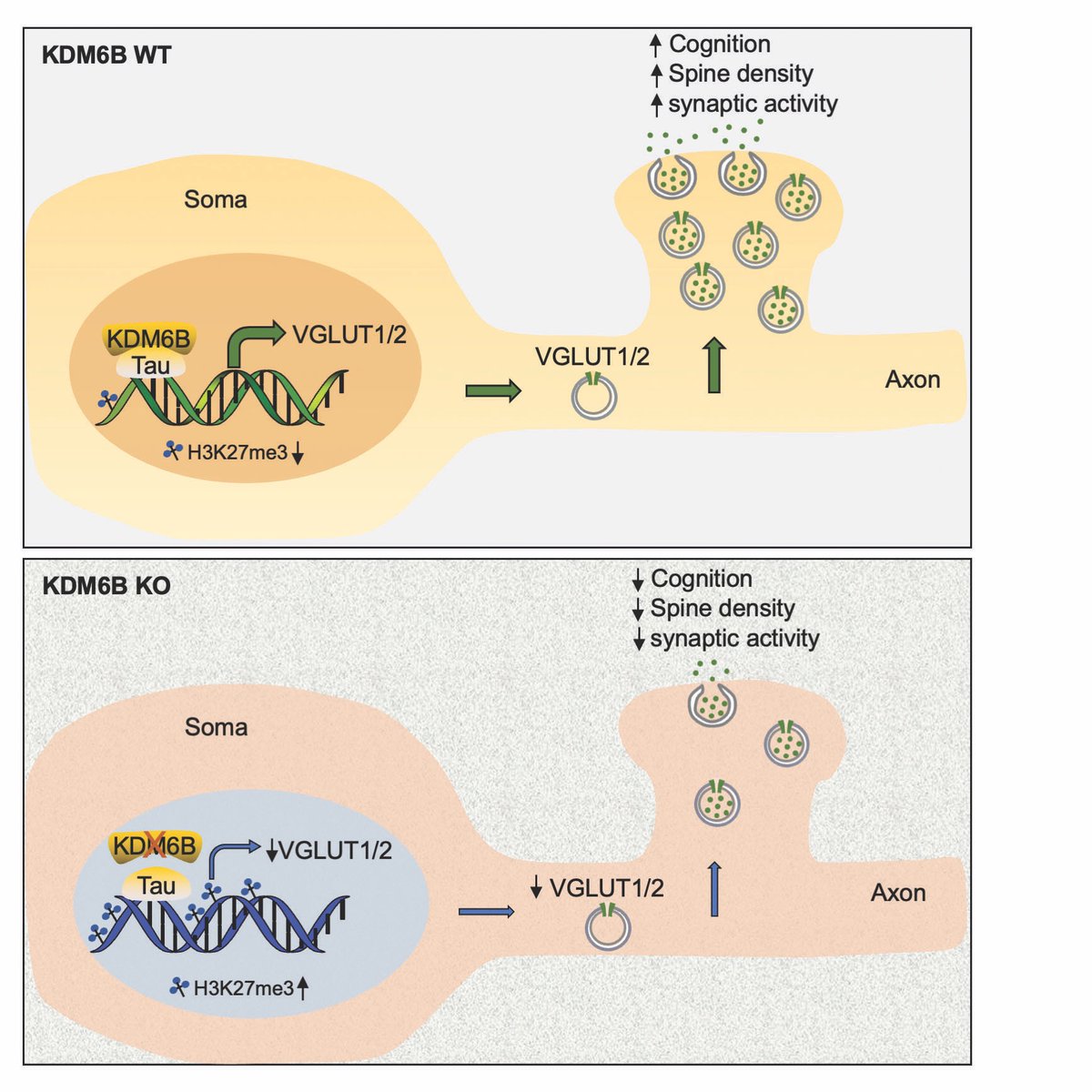
Our findings on the physiological role of KDM6B in synapse plasticity and cognition may help understand the involvement of KDM6B in neurological diseases like Alzheimer’s disease and autism.
Excited to share our latest work published online in Molecular Psychiatry today: KDM6B cooperates with Tau and regulates synaptic plasticity and cognition via inducing VGLUT1/2 (https://t.co/LdanR3RGAG).
@UTSWBrain;
@UTSW_Pathology;
@UTSWNeurology
We revealed a fundamental mechanism underlying epigenetic regulation of synaptic vesicle numbers, synaptic activity and spine density contributing to learning and memory.