FWIW, some preliminary thoughts on China's ICBM test:
As I analyze in a recent @CarnegieEndow report, internal considerations are often just as significant in driving China’s nuclear policy decisions as the signals intended for foreign countries. 1/
https://t.co/jDihya1Bq0
I am pleased to publish an @AsiaSociety Center For China Analysis (CCA) report, "Understanding China's Perceptions and Strategy Toward Nuclear Weapons: A Case Study Approach," sponsored by @doddtra. The study is one of the first open-source analyses that examines Chinese writings and thinking regarding past nuclear crises, to understand how they could inform Beijing’s thinking in future crises. https://t.co/X834dGBhC7
A 🧵on the findings and implications.
First, why the study?
China is in the midst of an unprecedented nuclear modernization effort. Yet critical gaps remain in understanding how China views nuclear deterrence. Most importantly — and most urgently — there is limited insight into China’s nuclear weapons calculations in potential confrontations with another nuclear power — in this case, the United States.
How we addressed the issue:
We examined Chinese writings and analyses regarding past crises between nuclear weapons states — including those in which China was involved — to understand what lessons Beijing took from them and how those lessons inform PRC thinking in future crises. Specifically, this report seeks to answer the following questions:
How do Chinese experts characterize the cause and nature of historical nuclear crises?
What do Chinese experts view as the major strategic decisions that foreign leaders (or Chinese leaders) made during Cold War nuclear crises, and to what extent did leaders have control over nuclear escalation?
Do Chinese experts recognize the dangers of dramatic nuclear escalation versus incremental escalation?
What do Chinese experts identify as the major strategic mistakes or correct decisions that foreign or Chinese leaders make?
Do Chinese experts view nuclear weapons as mainly useful to deter adversaries from crisis involvement or military escalation, to inflict countervalue or counterforce damage, or for other purposes?
What do Chinese experts take from U.S. behavior patterns during historical nuclear crises or escalations?
What are Beijing’s views of U.S. extended deterrence assurances toward its key allies and partners during conflicts?
Our main findings are:
Nuclear deterrence mattered little in China’s use of force calculus. China assesses that the historical role of nuclear weapons, for the most part, played a minor factor in its calculus to use force and, similarly, in other countries’ decisions to use force.
Nuclear coercion against China was ineffective after the onset of hostilities. In conflicts involving China, Chinese scholars are fairly uniform in their assessment that after the initial use of force in a conflict, nuclear coercion, or “saber-rattling,” by the adversary was generally not effective in managing escalation.
Strategic balance calculus was influential in the outcome of certain conflicts. Chinese assessments of the Cuban Missile Crisis stand out for their realpolitik flavor, suggesting that the strategic balance between two adversaries before and during a military conflict matters.
Fears of nuclear “blackmail” remain a powerful narrative in modern Chinese thinking. Preventing the nuclear “blackmail” of China closely followed the deterrence of nuclear aggression as a strategic objective, in large part because Beijing felt itself victimized by U.S. and Soviet nuclear threats at various moments during the early Cold War when it did not have nuclear weapons.
Retaining a “minimum means of reprisal” matters to deter adversary behavior. After 1964, Chinese scholars assessed that a minimum nuclear deterrent, by its very presence and irrespective of specific vulnerabilities, serves to induce caution on the part of stronger rivals like the United States and the Soviet Union even during serious crises.
China’s lack of experience in nuclear escalation may lead to miscalculation. Most Chinese historians conclude that China successfully emerged from crises having achieved its limited war aims while controlling escalation in the nuclear domain. However, such confidence may be misplaced and may fail to account for the myriad factors influencing the decision of foreign actors not to retaliate with nuclear weapons.
The potential to misread nuclear signals remains worrisome. Several assessments by Chinese scholars who expressed skepticism that Chinese leaders received the intended nuclear signaling by the United States raise questions over a “perception gap” within China’s strategic bureaucracy.
The appendix case study, written by Ambassador Rakesh Sood, on the border conflicts between China and India of 2017–20, provides a comprehensive analysis on China and India's nuclear calculations during that period.
Special thanks to my CCA colleagues Jie Gao, Jing Qian, Ian Smith. Inger Marie Rossing, and @rorrydaniels for their edits and feedback. Thanks also to @DavidSantoro1@C_P_Twomey@zhaot2005 @RalphCossa, and Brad Roberts for their reviews and feedback on earlier drafts.
A special shout-out to @lylegoldstein and Nathan Waechter for providing Chinese academic sources on the Cuban Missile Crisis and for discussions about Chinese nuclear strategy.
Finally, a special thanks to @batesgill1, who advised and assisted in the project’s conceptual phase and provided guidance throughout its lifecycle, and to @davidclogan for sharing his unpublished draft on the 1969 Sino-Soviet border conflict, coauthored with @JosephTorigian, which provided helpful context and research on that case study.
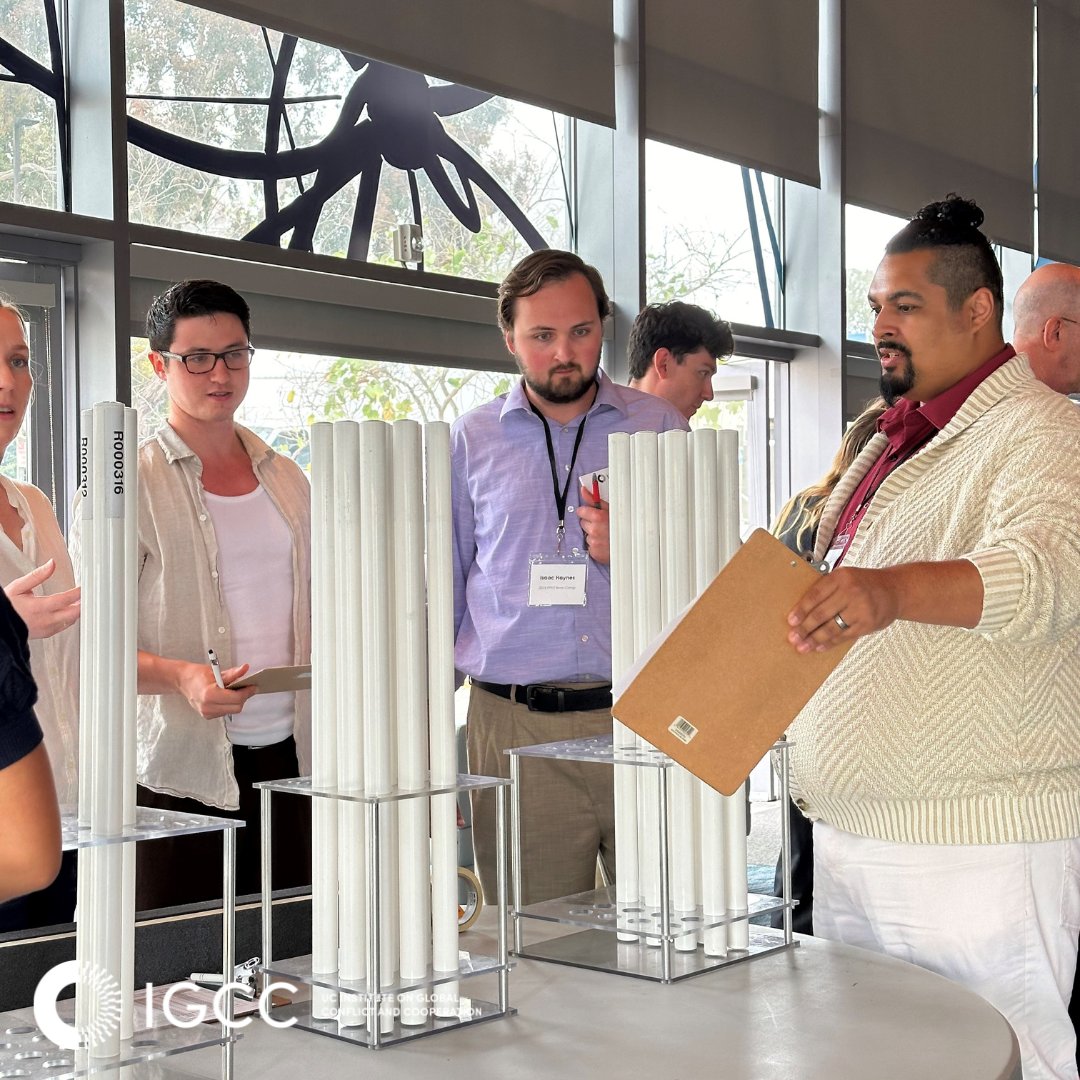
Today's PPNT events included a hands-on activity on fuel cycle verification and monitoring led by Dr. Mark Schanfein (Idaho National Laboratory) & a presentation on the international nonproliferation regime from Laura Rockwood (Vienna Center for Disarmament and Non-Proliferation)
Indigné par les frappes israéliennes qui ont fait de nombreuses victimes parmi les déplacés à Rafah.
Ces opérations doivent cesser. Il n'y a pas de zones sûres à Rafah pour les civils palestiniens.
J'appelle au plein respect du droit international et au cessez-le-feu immédiat.
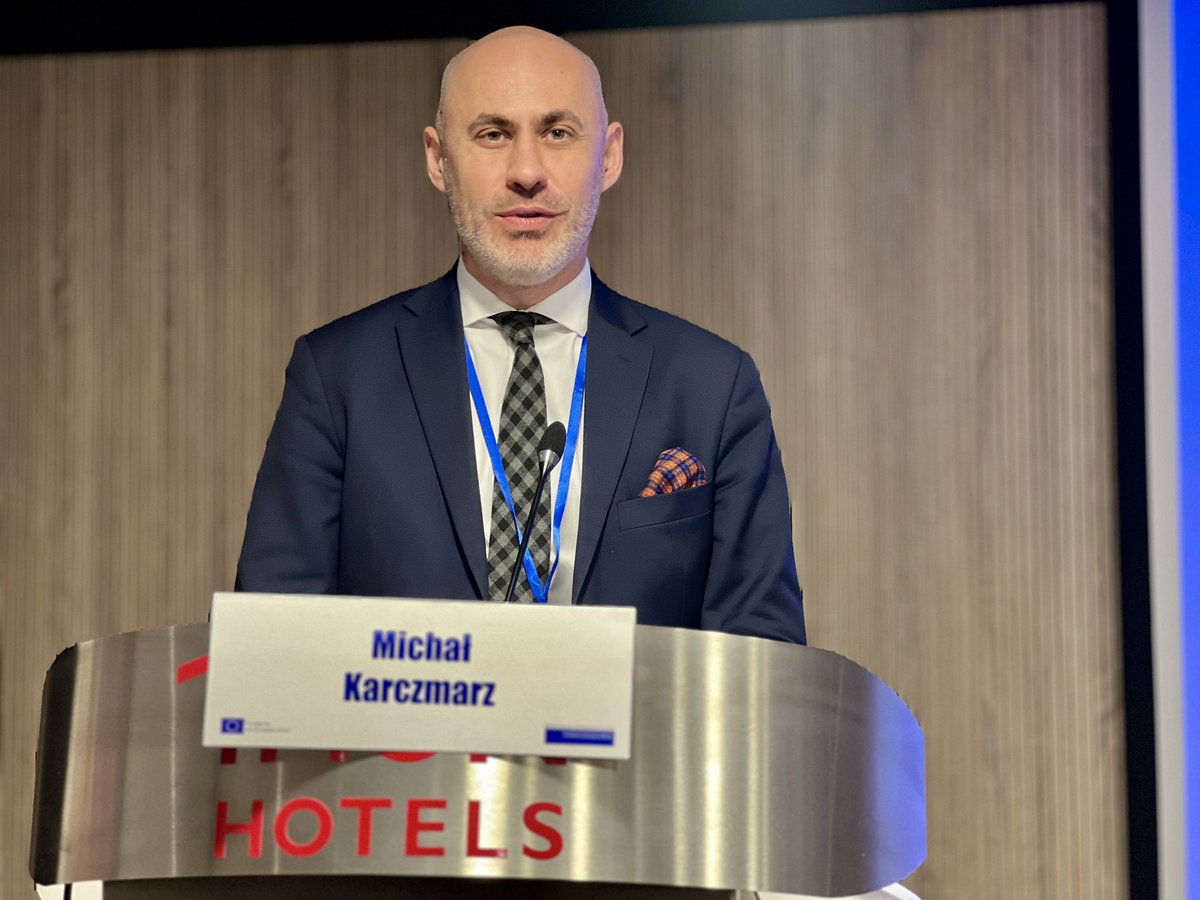
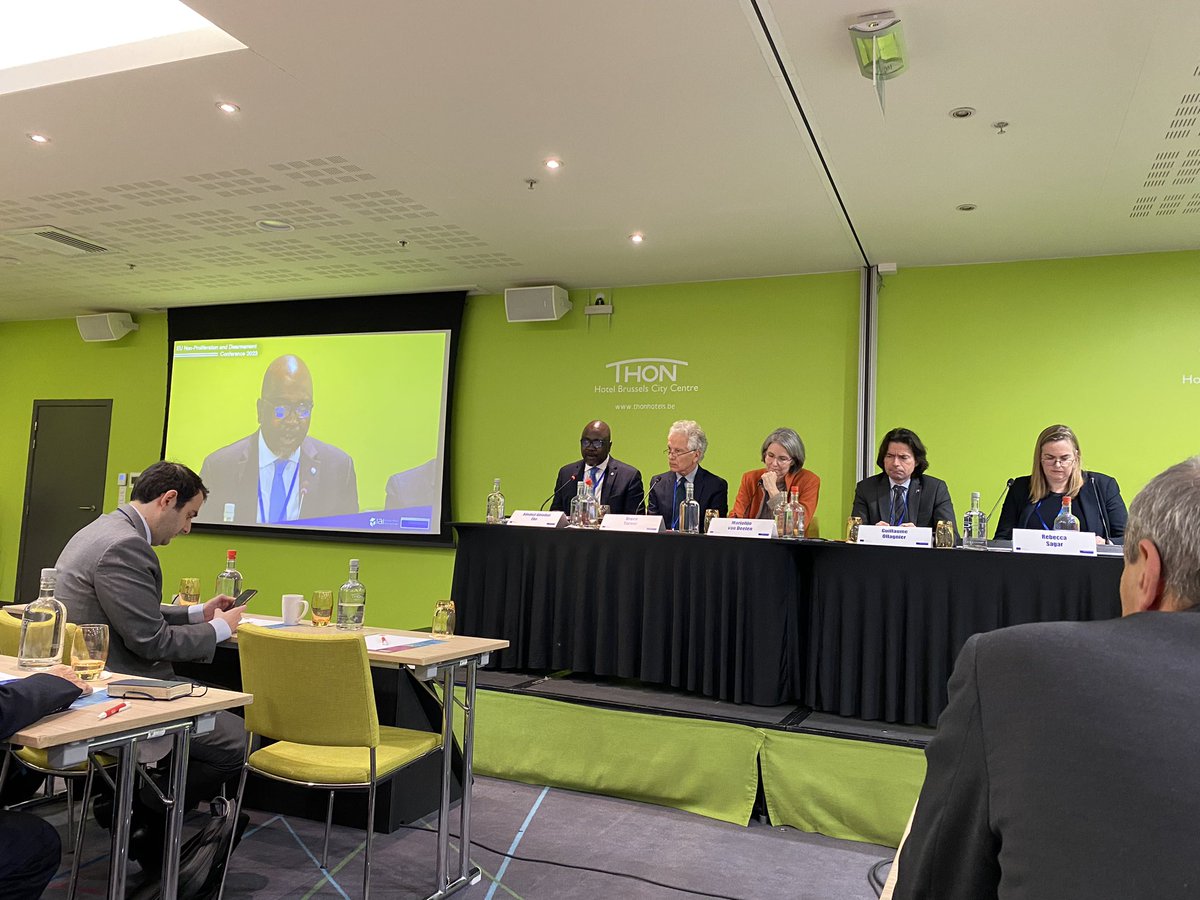
💡Last December, experts, policymakers and members of the civil society gathered at @EU_NonProlif's Annual Conference 🇪🇺 #EUNPDC.
A few highlights of this event organised by @IAIonline, on behalf of @EU_NonProlif, thanks to EU 🇪🇺 support @EU_FPI@eu_eeas 🧵⬇️
Many thanks to @ArmsControlNow for publishing my piece on "Underlying Challenges and Near-Term Opportunities for Engaging China" on nuclear arms control, in the most recent issue of #ArmsControlToday.
It is now available for free access at https://t.co/vjvLNYB4yJ
The @EU_NonProlif#NextGeneration Workshop preceding this afternoon's #EUNPD Conference just ended! An enriching morning of insightful discussions on conflict dynamics & security in East Asia, nuclear proliferation & the future of NPT, and new emerging technologies & arms control
When @esokova@EttGreco MaraZarka & I established #YWNGI w/ @EU_NonProlif in2021, we had no idea what an incredible community of amazing&inspiring people we were going to create. Safe to say,we're proud!Thanks SybilleBauer @MJvanDeelenEU & the 🇪🇺 for believing in & supporting us!
🇬🇧 Rebecca Sagar @FCDOGovUK addressed the significance of confidence building and risk reduction, such as facilitating communication to manage competition in arms. #EUNPDC@EU_NonProlif
🇫🇷 Guillaume Ollagnier @francediplo@FR_Desarmement explored the wider impact of #Ukraine war, divergences between Western and non-Western countries on arms controls; highlighting the need to view such as common interests. #EUNPDC@EU_NonProlif
🇫🇷 Guillaume Ollagnier @francediplo@FR_Desarmement explored the wider impact of #Ukraine war, divergences between Western and non-Western countries on arms controls; highlighting the need to view such as common interests. #EUNPDC@EU_NonProlif
#EUNPDC 🇺🇸 Amb. Bruce Turner @USAmbCD@USUN talked about shifting geopolitical tensions and high #tech incl. #AI, #space and new #biological weapons and addressed the importance of multilateral institutions and tools in his speech. @EU_NonProlif
#EUNPDC 🇺🇸 Amb. Bruce Turner @USAmbCD@USUN talked about shifting geopolitical tensions and high #tech incl. #AI, #space and new #biological weapons and addressed the importance of multilateral institutions and tools in his speech. @EU_NonProlif
4. in face of contested information, it’s necessary to learn how to trust/verify. She also addresses broader concerns on #China#Iran alongside the panel’s discussion on #Ukraine conflicts. @EU_NonProlif@IAIonline
Dr. Wendin D. Smith, Director of @NATO#ACDC draw lessons from arms control history: 1. arms control instruments can’t prevent war but can bring people to negotiation; 2. #NATO needs credible partners; 3.traditional arms control structure needs new components i.e. verification;