1. Our erebosis paper is out @PLOSBiology. PhD students Hanna and @HIroshi5Nishida contributed. Apoptosis has been believed to mediate the gut turnover. We discovered a new cell death, erebosis, mediates the gut cell turnover. Erebos means "deep darkness".
https://t.co/Tfx7ndCD8D
What is a mechanism of intestinal stem cell exhaustion during aging? Saki Naito, a PhD student, addressed this question focusing on changes of chromatin and transcription during aging.
https://t.co/q3KrWMlxJC
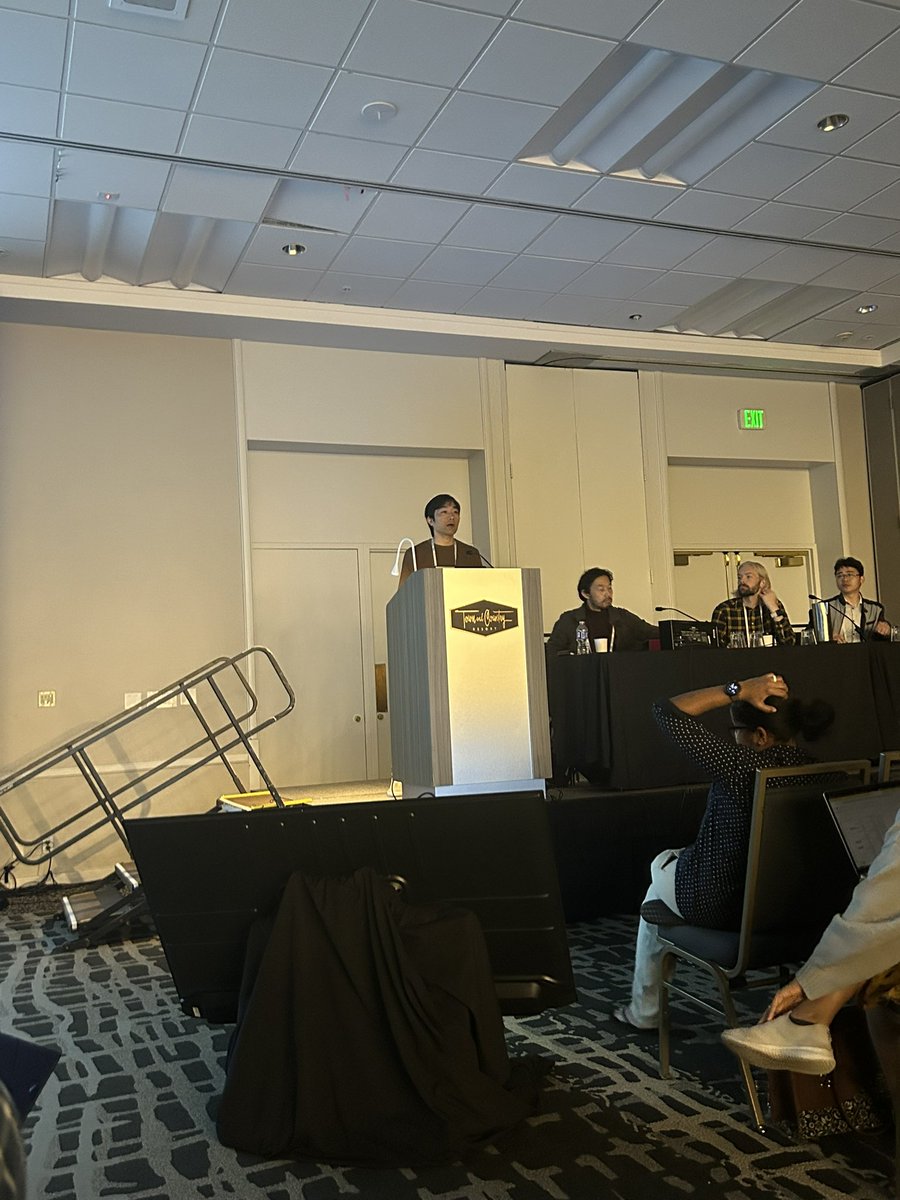
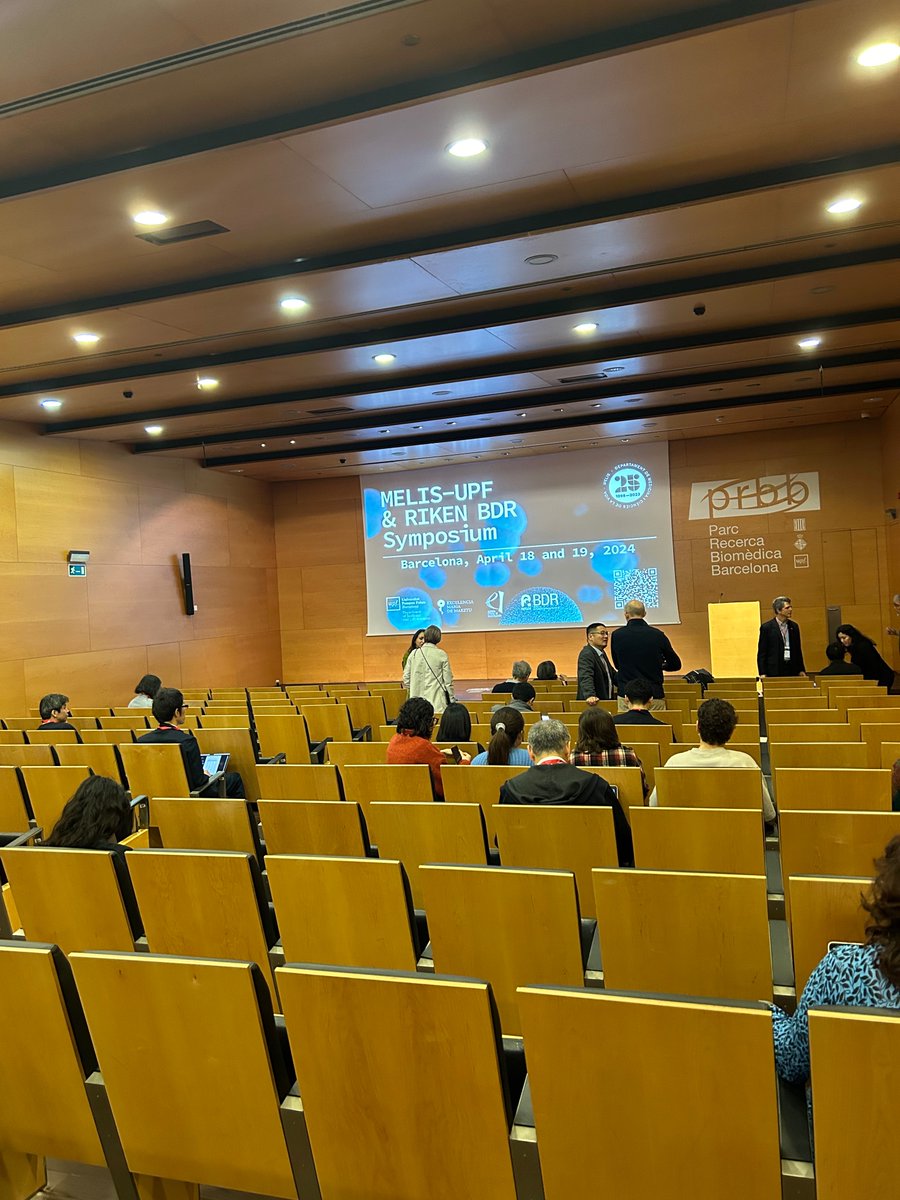
🗣️Join us next week in our seminar by Sa Kan Yoo, MD, PhD (@Yoo_Lab_RIKEN-@Yoolab_JC) from @RIKEN_BDR👇
📜"Erebosis, a new cell death mechanism during homeostatic turnover of gut enterocytes"
🤝Host: Dr. @MarcoMilanIRB
Register here➡️https://t.co/7nJfdpo1n8
#BarcelonaBiomed
5. GALDAR1/2 is relatively slow due to its dependency on transcription/translation/maturation. So, @hitsujican came up with GALDAR3, where 1) Gal3 is localized in the nucleus, 2) Gal80 is fused with GFP, 3) Gal80 mutant that can't bind to Gal4 was used.
6. In addition to using GALDAR as a biosensor, GALDAR1/2 can be used a gene-inducible system in cells that uptake galactose readily (in fact, that was the original, initial purpose of this project).
GALDARs were sent to the Bloomington stock center, and will be available soon!
4. Using GALDAR1/2, we found that ISCs (arrows below) don't uptake galactose. We also confirmed ISCs don't uptake glucose either. Since the same transporters transport galactose/glucose, in some situations demonstrated here, GALDAR can be used for glucose flux analysis.
1. GALDAR, a genetically encoded galactose sesor in flies @PlosBiology. A PhD student @hitsujican did a great job! GALDAR1/2 incorporates the yeast's Gal system Gal3/Gal4/Gal80. GALDAR3 doesn't depend on Gal4-UAS. With GALDAR, we found that ISCs don't uptake galactose/glucose!
2. In flies, Gal4-UAS was introduced in 1993 (Perrimon lab), followed by introduction of Gal80 in 1998 (Luo lab). We transferred the yeast whole Gal system, by adding Gal3/galactose, to flies. This is the basis of GALDAR1/2.
One year ago, a student at my lab was not confident whether she could handle fruit flies because she's not a fan of bugs. Today, she attended a graduation ceremony with a fly on her head (Cyo wings!) 🥳
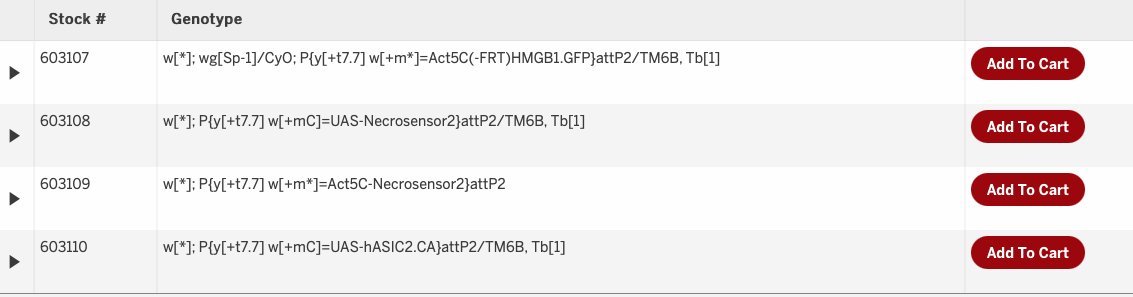
Now our Necrosensor stocks are available at the Bloomington stock center. With this simple sensor, you don't have to hassle with live staining with propidium iodide anymore!
A proofed version of our necrosensor paper is published now. I've already received multiple requests of the stocks. They will be available at the Bloomington stock center within a few weeks. I guarantee this simple necrosis sensor will be super useful
https://t.co/eHr0RYzkCe
7. This study has 2 major findings:
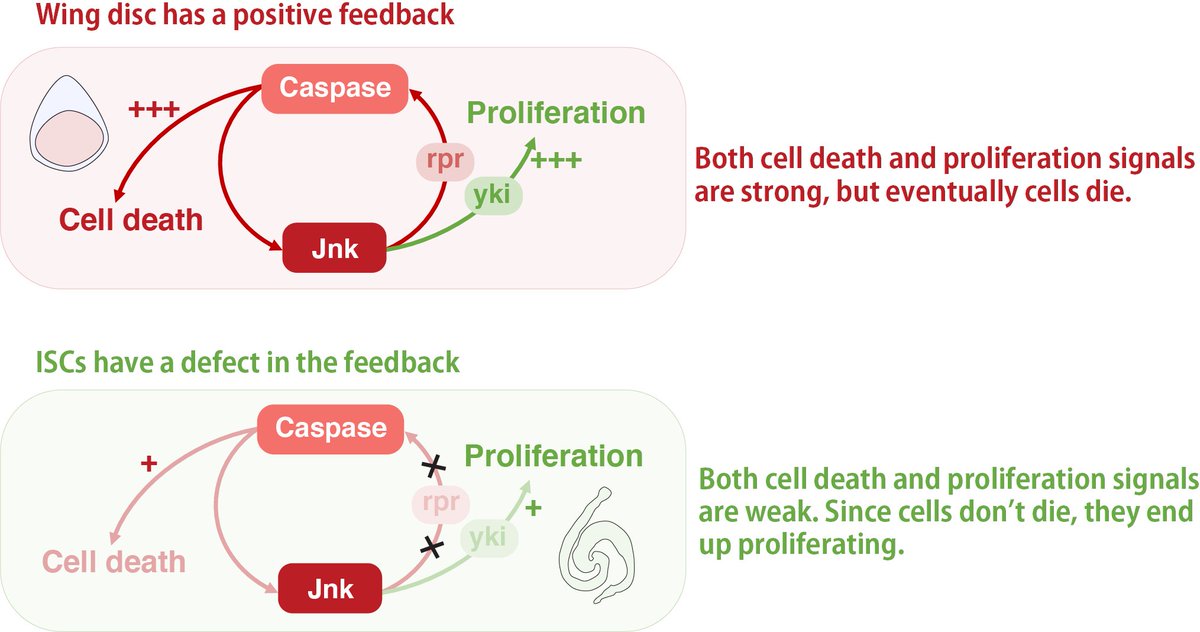
1. caspase-JNK feedback loop that promotes cell death and proliferation simultaneously
2. A defect of the feedback leads to resistance of ISCs to apoptosis.
Many thanks for helping FACS of ISCs! @IchiroHiratani
4. On the other hand, we found that ISCs have a defect in this positive feedback loop of caspase activation. With weak caspase activation, cells cannot die, so they end up proliferating.
6. Finally, we examined effects of "ISCizing" wing disc cells (making wing disc cells similar to ISCs): combination of the feedback loop inhibition and caspase activation induced overproliferation in wing disc, which is similar to ISCs.