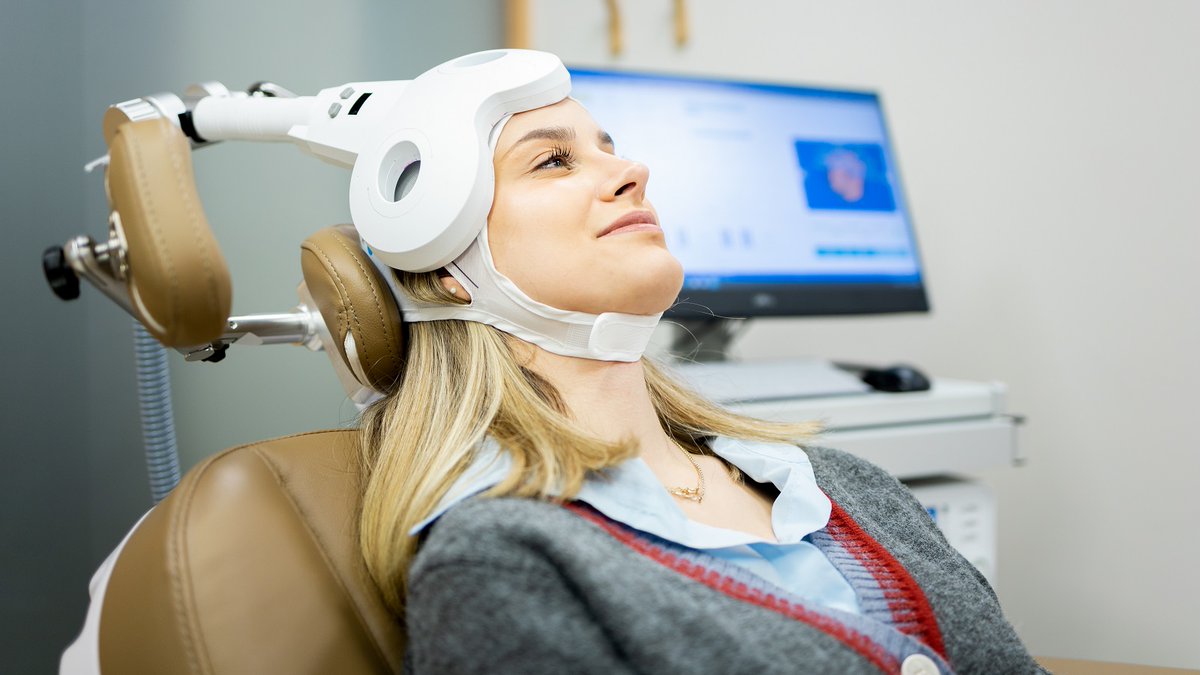
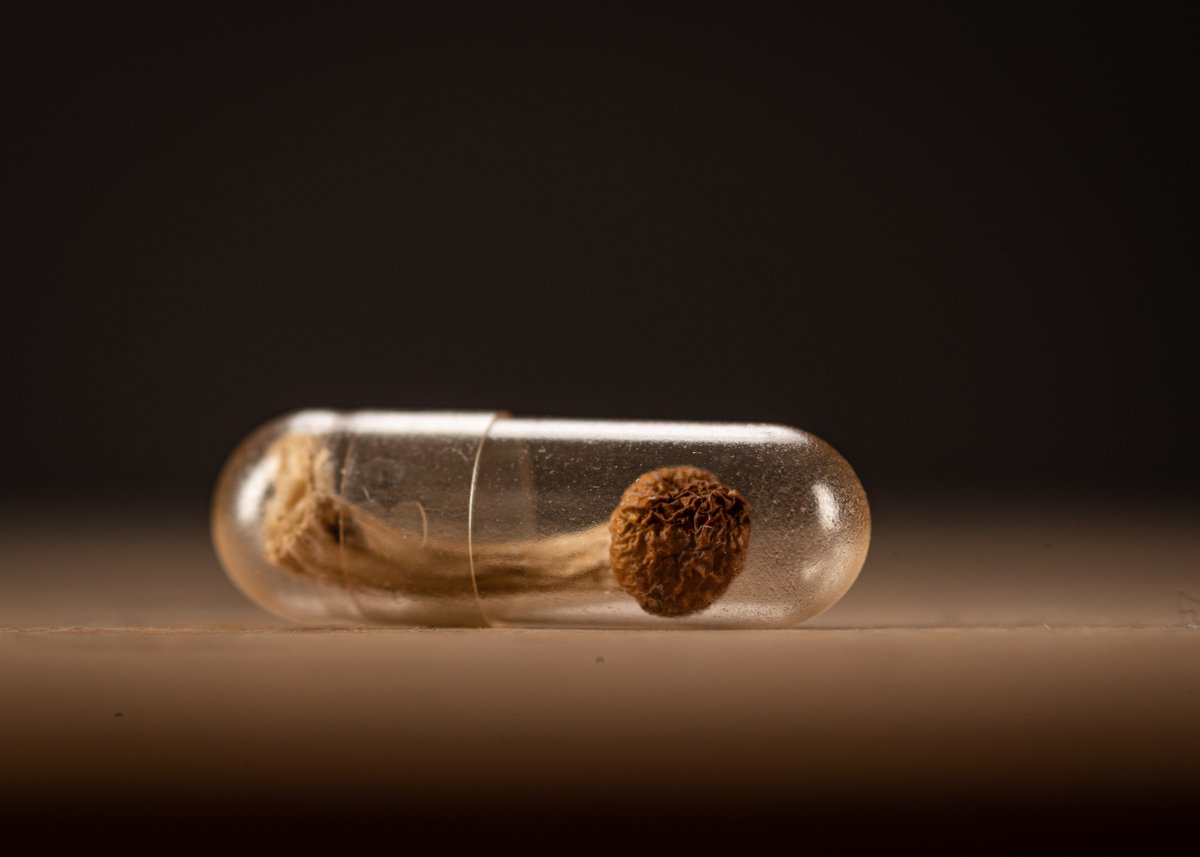
Just published: Why health authorities should endorse rTMS for treatment-resistant depression.
https://t.co/5y3n3chCtt
Nice overview of the current evidence for both the efficacy and effectiveness of TMS in the treatment of depression. Note that TMS is one of the few treatments where effectiveness in clinical practice is better than efficacy in controlled trials! Which is the opposite for treatments like CBT and antidepressants...
Congrats Jean-Marie Batail and colleagues.
The @DeptVetAffairs has announced a new clinical trial of MDMA-assisted therapy at @VAProvidence. The trial will be led by Drs. Christy Capone and Erica Eaton.
More:
https://t.co/2q0sFrYSLJ
@RCarhartHarris I think this is conceptually very similar to frequentist equivalence testing. In both cases, the goal is to demonstrate that any effect is smaller than a practically meaningful threshold, rather than simply failing to reject the null.
@RCarhartHarris I believe it is impossible to demonstrate that the expectancy effects are actually zero, but it is possible to demonstrate that the effects are below a certain margin and could be considered negligible and clinically insignificant using equivalence testing.
@RCarhartHarris I think the short answer is no with 1H MRS. The signal from protons on a few milligrams of psilocin molecules would be very tiny compared to protons from other sources. Other forms of MR spectroscopy have been used to measure signal from exogenous lithium and fluorine molecules.
New TMS Research: Effectiveness of transcranial magnetic stimulation for posttraumatic stress disorder: A multisite, propensity-matched cohort study of treatment parameters #ptsd
https://t.co/Guxqf92zm1
Can psilocybin therapy be clinically scalable?
Join Mar 4 Psychiatry Grand Rounds with Andrew Novick, MD, PhD, on a feasibility-focused pilot trial in treatment-resistant depression.
1.5 CME/CE • Live Zoom • Pre-reg required:
https://t.co/7RLSSKYS5h
#Psychiatry#Psychedelics
VA research (from my group!) shows three different transcranial magnetic stimulation (TMS) protocols produce significant PTSD treatment responses, with nearly half of Veterans achieving remission — the largest study to show benefits across all three methods. #VeteransHealth #PTSDResearch @VAResearch
https://t.co/irHGHNDBt6
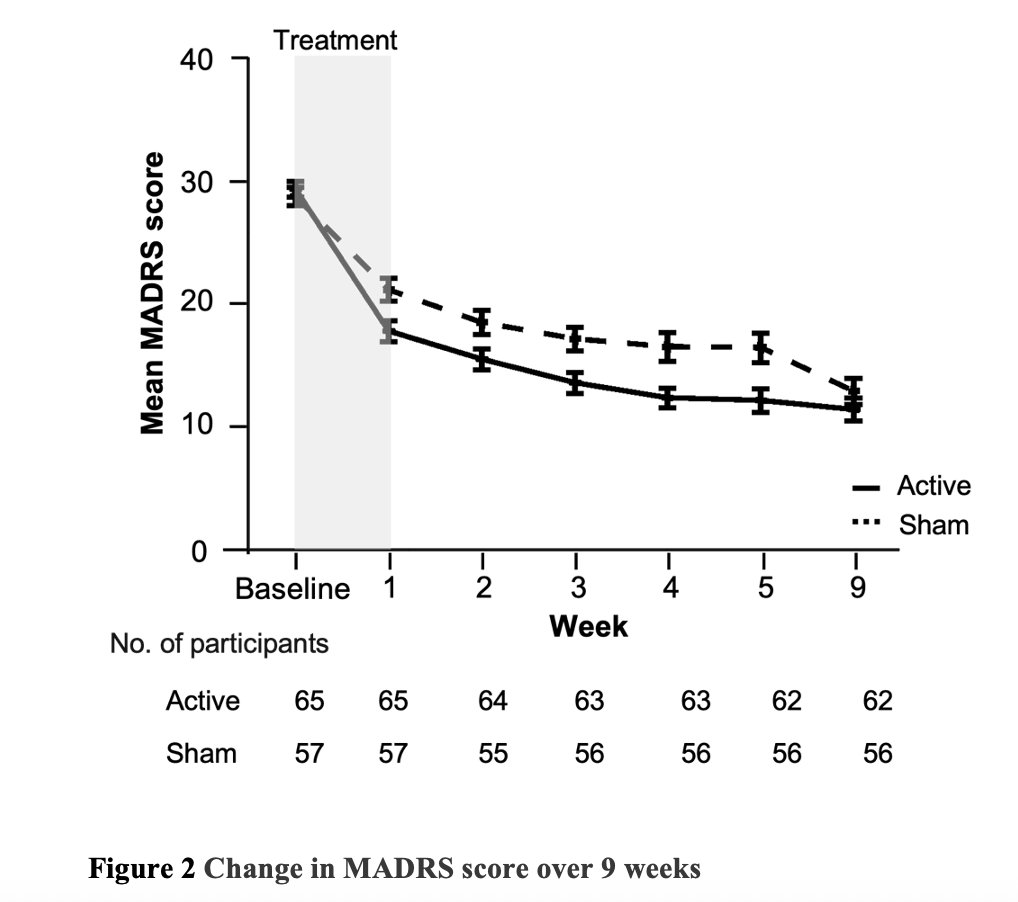
The Stanford Accelerated Intelligent Neuromodulation Therapy (SAINT) for major depression, delivering 90,000 TMS pulses over 5 days, has received FDA clearance. Our multicenter, double-blind sham-controlled trial showed it did not yield immediate remission or response after 5 days of treatment as originally reported, but it did lead to a delayed effect at week 5. https://t.co/p993nG8Qvr
@ndosenbach@foxmdphd@NoahSPhilipMD
Could depression treatment be done in one day? 🤔 Our new preprint shows accelerated TMS + (putative) neuroplastogen augmentation led to better outcomes compared with standard daily TMS.
Exciting data with the HUGE caveat this is a preprint.
Link here:
https://t.co/TKx8yJW7KI
Excited to share our new preprint!
Single-day (ONE-D) TMS showed higher remission and response rates than once-daily TMS in a propensity-matched sample, with delayed but robust improvement over weeks. This could change how we deliver TMS!
https://t.co/3DQxATD2tD
@algekalipso https://t.co/UIcAyFPrK5
Not DMT, but this study used hypnosis to induce MDMA like states with implications that other states could be induced as well.