🧠Can we test brain interventions in silico before applying them in humans? We present an intervention-capable digital twin of the human brain that integrates individual neuroanatomy with task-evoked dynamics, enabling controlled in silico perturbations and predictions.
4.Using an independent pharmacological fMRI dataset, we show that predicted baseline-dependent response structures are mirrored in vivo and that mappings learned in silico generalize to forecast drug-induced circuit changes from baseline connectivity.
3.Scalable digital twin simulations in large cohorts stratify individuals based on their virtual perturbational response profiles and predict longitudinal symptom trajectories via a DTB-derived “behavioural restoration” index, extending beyond baseline symptom measures.
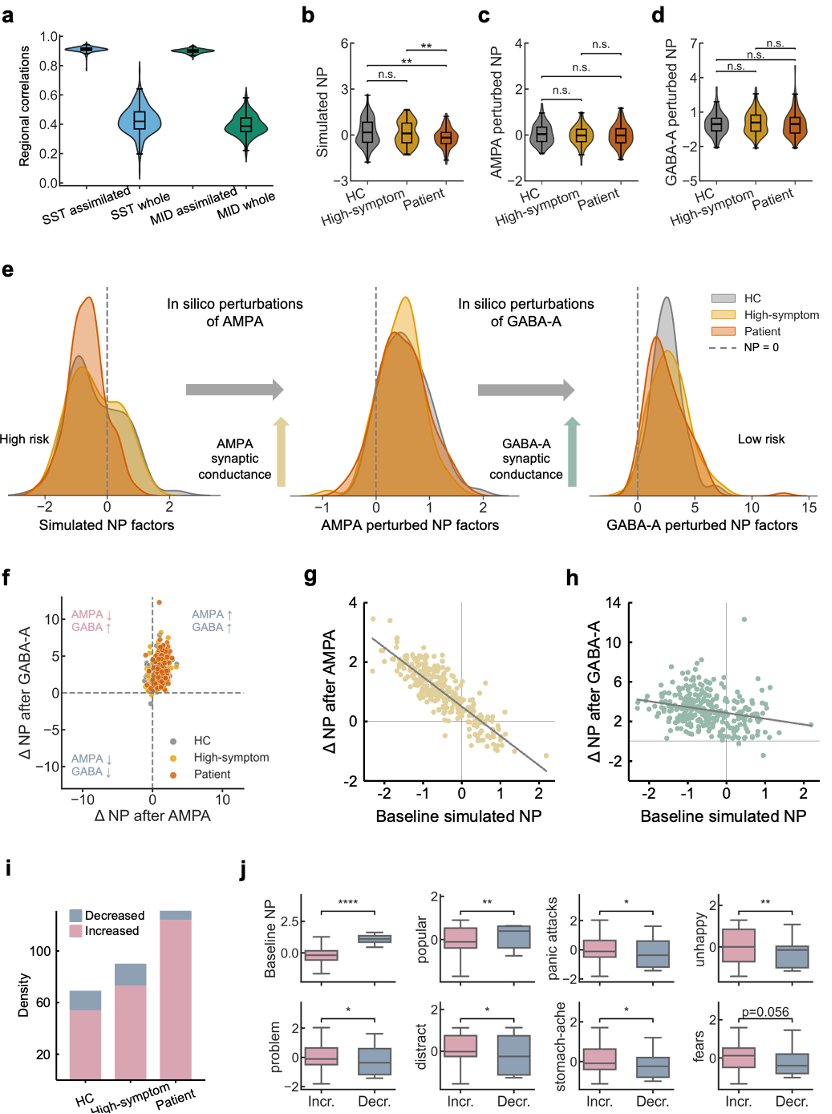
2.Individualized DTBs reproduce participant-specific NP circuitry and enable systematic modulation of excitatory- and inhibitory-leaning synaptic gain parameters. These perturbations reveal robust baseline-dependent and bidirectional network responses across individuals.
1. We define a task-evoked cortico–subcortical functional connectivity phenotype that captures transdiagnostic psychopathology across population cohorts.
At the request of Dr. Hu Xiaomeng, the editor-in-chief of Psychology New Youth, I interviewed 15 experts in the field during the 2023 and 2024 OHBM conferences. I invite you to read it and hope it provides some inspiration to students/scholars conducting brain imaging research."
📢 Great news! Due to high demand, we have increased the capacity for the Artificial Intelligence in Mental Health Summit on July 1st. Secure your spot now and join the conversation on AI's impact in mental health!
https://t.co/DZILawb9HA
conn2res: a toolbox for connectome-based reservoir computing | https://t.co/5SOOaa1Wtc
Computational phenotyping of neural wiring: convert biological networks to artificial networks.
by @Laura_E_Suarez ⤵️
Check our latest preprint led by @XuanB152940 !
https://t.co/MmnmtuBJo3
Using normative models of cortical morphology in > 1,000 children, we identified anatomically distinct, clinically valuable, and biologically informed ADHD biotypes. (1/4)
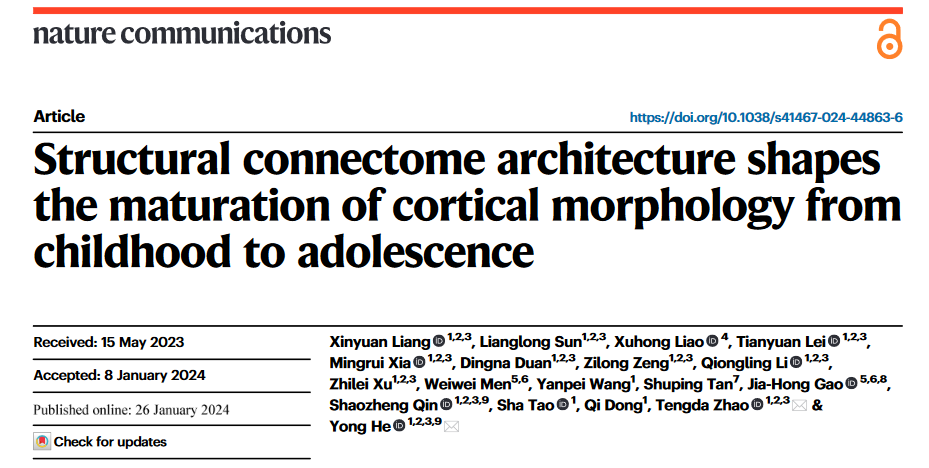
Our article “Structural connectome architecture shapes the maturation of cortical morphology from childhood to adolescence” is now published online at Nature Communications🎉
https://t.co/5ddKJC3ret
Many thanks to all collaborators!!
Out in @TrendsCognSci. We rethink brain health/disease with a synergetic framework tackling complex Est-Func, phenotype heterogeneity, transdiagnostic pathophysiology & a continuum from lab to cognition in the wild. W Kringelbach & Gus Deco. 👉 https://t.co/ZEeGd7va5u & 1/7🧵👇
Check out our latest work! https://t.co/za6HT2C4LI
Led by @YunmanX
We report the development of the connectome gradients in preterm and term babies aged 31-42 postmenstrual weeks (PMW) using task-free functional MRI, and its association with postnatal cognitive growth. (1/8)
I am beyond excited to share a new preprint from my lab ‘The Conceptual Structure of Human Relationships across Modern and Historical Cultures’. We discovered a universal representational space of social relationship concepts. https://t.co/jx3xesH7tC
Check our latest preprint led by @longong4!
https://t.co/gXEHGNid6P
Using the largest resting fMRI dataset across 119 sites, including 32,328 individuals aged from 32 postmenstrual weeks to 80 years old, we delineate life-course growth charts of the functional connectome. (1/7)