Check our latest preprint!
https://t.co/8KoPwroSNe
We present the first population-specific brain charts for China, developed through the Chinese Lifespan Brain Mapping Consortium (Phase I) using high-quality MRI data from 43,037 participants (aged 0-100 years,384 sites). (1/6)
We present the LARGEST normative model of the brain’s white matter microstructure: 54,583 subjects, 4-91 yrs, 19 datasets. We derived lifespan centile curves for DTI FA, MD, RD, AD, detecting anomalies for dementia, and Mild Cognitive Impairment: https://t.co/1xDgqXN9Ao ⤵️
🔥MASSIVE CONGRATS to Julio Villalón + an incredible international team on their 7+ years of work that led to today's monumental Nature Communications paper 🔥
🔥"Lifespan normative modeling of brain microstructure" charting white matter development and decline throughout life
🔥54,583 individuals; age: 4–91 years
🔥19 international diffusion MRI datasets
🧠🧠Detects profiles of microstructural deviations in mild cognitive impairment, Alzheimer’s disease, and 22q11.2 deletion syndrome 🧠🧠
🧠🧠Try it out ! Github: https://t.co/JzLmfu2EDN
🎇@JulioVillaln1@njahanshad@NirTalia@ClaraMoreau9@smkia83@USCLONI@KECKSchool_USC@USC@enigmabrains
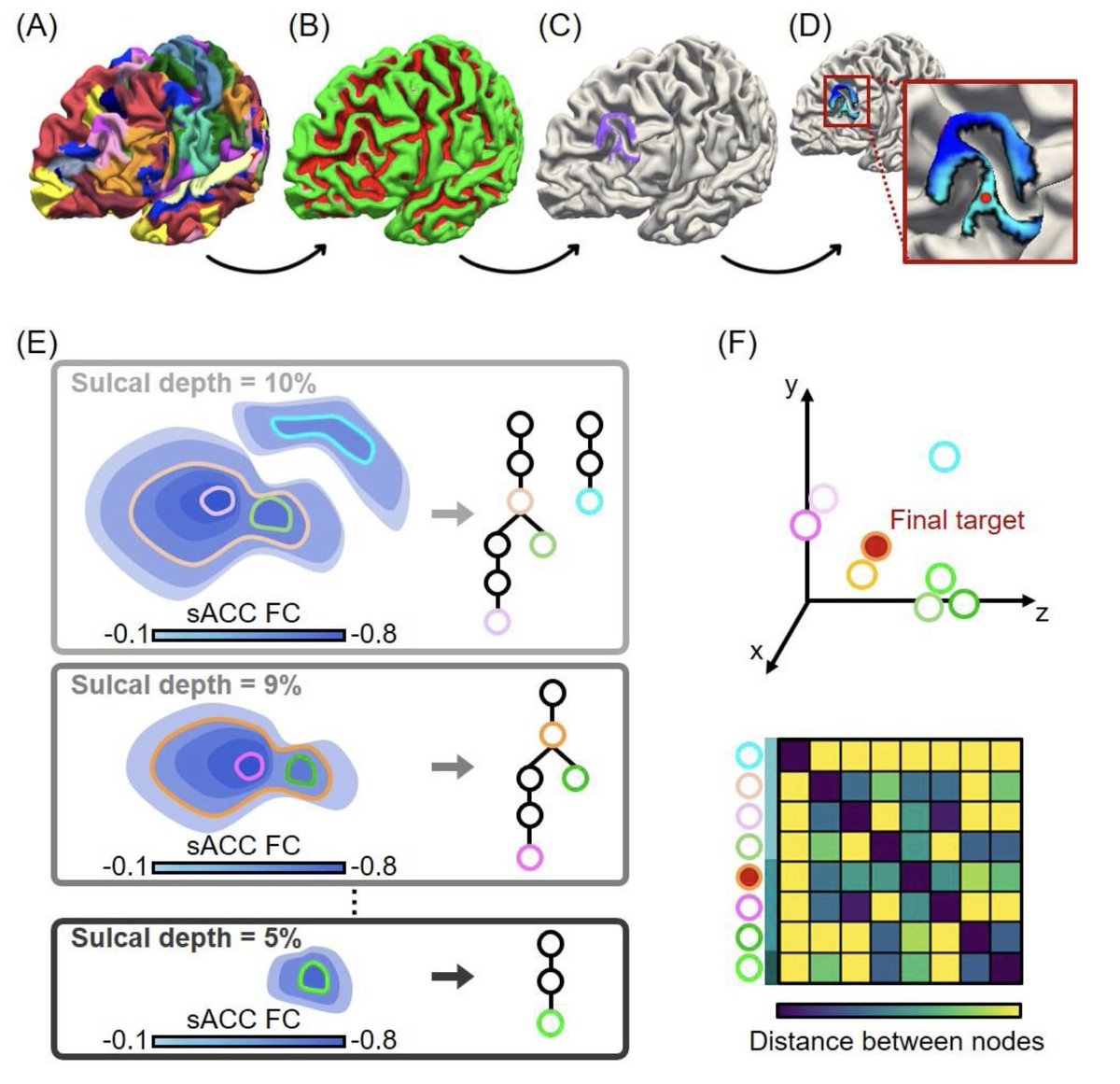
🧠 I'm so happy to share our personalized circuit-guided neuromodulation targeting platform UNITE, led by @iamzhangvv, is out in @NatureProtocols!
📄 Protocol: https://t.co/P0GzDl02Pg
🔬 Nature: https://t.co/cg366rj3Ow
Excited to share our latest work, "Mapping the spatiotemporal continuum of structural connectivity development across the human connectome in youth," now out in @NatureComms! Congrats to @chocoxu0925 on this beautiful work: https://t.co/5MsidnrELX.
MULTIORGAN networks across the human body over the course of aging & disease
A rapidly developing field shaped by @yetianmed & @JunhaoWen
Check out our Perspective in @NatureAging
https://t.co/mpoOQVaQhX
Concepts, priorities & recommendations to get started in the field
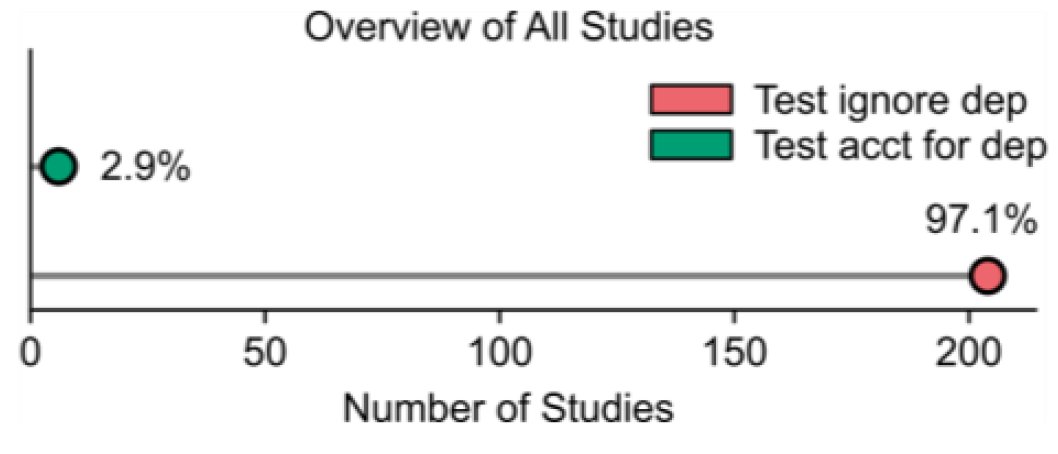
In a meta-analysis of 210 biomedical AI studies that statistically compared models under cross-validation, 97% used invalid statistical tests.
Here's our new preprint https://t.co/OG58Vkeu49 led by @tianchuzeng@kkli20111@ZShaoshi@ten_photos 1/N
Cognitive #neuroimaging once made a leap: task-vs-rest → task-vs-task. Specific functions isolated.
rLNM makes the same leap, contrasting related conditions (e.g., PD vs. dystonia), to isolate symptom-specific networks.
Coming soon: another intriguing application. Stay tuned.
Lesion network mapping (LNM) has been powerful in linking symptoms and brain functional circuits, but ongoing debates highlight that it is still hard to isolate symptom-specific effects. We came up with a new method, robust LNM (rLNM) — a unified framework combining null models and selective specificity to reveal reliable, symptom-specific networks from background structure. https://t.co/6WHpBRNuQn
@bttyeo@foxmdphd@ndosenbach@club_scan
Huzzah for @stevenmeisler.com, whose preprint on our new fully-processed ABCD dMRI data resource is now out. The super-clear results from this monumental effort will undoubtably change the way we approach studies of white matter development going forward.
Polysynaptic routes in the WHITE MATTER CONNECTOME reveal neuroanatomical basis for TMS therapy
Shorter anatomical routes between stimulation site & deep brain target predict superior response
A step fwd for Network Neuroscience!
Out now: @NatureNeuro
https://t.co/iAhLrkuJAA
We develop a new TMS targeting algorithm and test it in an open label trial in a treatment-resistant depression population with high comorbidities. Preprints by @rubykong92@Torphernchern
1. https://t.co/BEQF3DHyz1
2. https://t.co/JIZVzOoZcm
Our new approach ...
Beyond delighted to see this paper -- our first from the SYPRES initiative -- now out at Nature Mental Health. Check out Parker's awesome explainer below, w/ links to dashboard + all code + data.
Updated preprint: https://t.co/ijlAcpFtVA
We have improved DELSSOME and showed that we can accelerate the estimation of two new biophysical models. By collating 12,005 individuals, we derive normative trajectories of cortical E/I ratio across the lifespan ...
The lab's first published paper is here and I could not be more excited!! If you're interested in proteomics, AI or both, it could be an interesting read. Congrats @anlijuncn for a great piece of work, and big shout out to our collaborators at @_neuroproteome and @biofinder_study
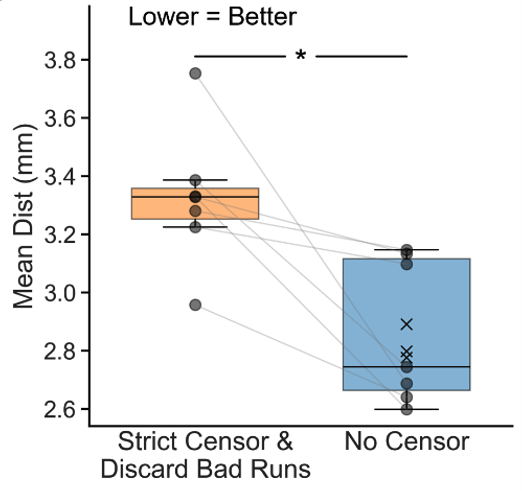
Do you censor high motion frames in fMRI? In two preprints by @twktan@mandyfmejia, we find that we may be censoring too much!
https://t.co/kSTADNYy93
https://t.co/TaQtTipAm3
In personalized TMS, strict censoring leads to worse targets than no censoring even with high motion!
Today we report in @Nature how the human brain evolves functionally from birth to old age—revealing a continuous trajectory of maturation, specialization, and later-life reorganization. 🧠
Paper: https://t.co/6mloH3QdLw
N & V: https://t.co/4rw0rdjg0R
@UNCRadiology@BRIC_UNC
1/ Excited to share our new Nature paper: Functional hierarchy of the human neocortex across the lifespan
We built a continuous normative reference for the brain’s major functional connectivity gradients from 16 days after birth to age 100.
https://t.co/PqeN4tvbde
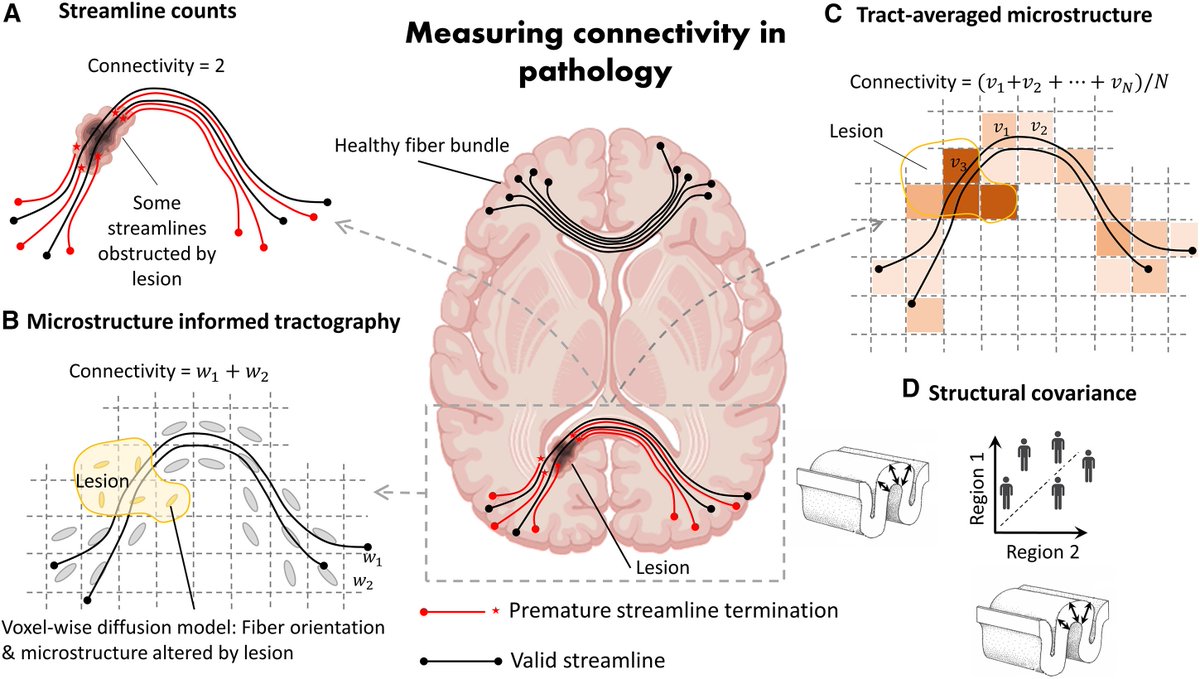
Mapping connectomes in disease?
Check out our article on clinical connectomics in @NeuroCellPress
- Tractography behavior in disease
- How to measure connectivity
- How pathology impacts each stage of connectome mapping
- Multiscale connectomics
https://t.co/u4CcFuPjPL