@Camp4 Love all of this! Grateful that Niraj shared a link to this.
I would just add:
Come back constantly to a Pronoia mindset; the Universe is always conspiring in your favor!
Today I turn 55.
I’m the fittest, sharpest, and happiest I’ve ever been.
If I’m an outlier, it’s not because I’m built different or discovered a secret formula. The truth is far less glamorous:
It’s a million tiny choices, compounded over decades.
Here are 55 of them:
1. Walk 15+ miles a week, even if you do other exercise. Humans are uniquely made to move slowly over long distances—it’s critical to longevity.
2. Develop a writing practice. It’s the single best way to sharpen your mind. And remember, you don’t have to be a good writer to write. Start with 10 minutes a day.
3. Swap out your toothpaste, deodorant, lotions, soap, shampoo, and other personal care products for natural versions. Here’s a rule of thumb: Don’t put anything on your skin that you couldn’t safely eat.
4. If you have a positive thought about someone, don’t keep it to yourself—share it immediately. Encouragement defies the laws of physics: When you give energy, you also receive it.
5. Wear shoes with a wide forefoot (I like Topo Athletic) and wear toe spreaders around the house (search “yoga toes” on Amazon). Spine health begins with the feet.
6. Get sunlight regularly. Moderate sun exposure (without sunscreen) is hugely important for overall health.
7. Do a 3-minute deep (“ass to grass”) squat every morning. Deep squats are often called the anti-aging exercise. It’s been said that, “It’s not that you can’t do deep squats because you’re old, it’s that you’re old because you can’t do deep squats.”
8. Explore minimalism (it’s not what you think it is).
9. Set boundaries on toxic relationships. We tend to cling to relationships past their expiration date, and it takes a bigger toll on our health than we recognize.
10. Eat real food. Not too much. Don’t eat garbage. Binge occasionally. Fast occasionally. That’s the diet.
11. Learn about FIRE. It’s a great framework for financial success.
12. Don’t take antibiotics except in emergency situations. They’re massively over-prescribed and aren’t needed in most cases. Antibiotics have done untold damage to our guts, which is where health begins. Great natural alternatives are out there.
13. Get 8 hours of quality sleep each night. To optimize sleep:
—Don’t eat after 6pm
—Get blackout shades and cover LEDs with black tape
—No screens 2 hours before bed
—Try ashwagandha (an herb) to calm the nervous system
14. Stop drinking, even in moderation. People find all sorts of ways to justify drinking, but there’s no escaping the simple fact that alcohol is a toxin and it limits your potential.
15. Travel as much as possible. Nothing expands the mind like seeing the world. And travel doesn’t have to be expensive—the best experiences happen outside of fancy resorts, when you live like a local.
16. Let go of resentment. When you forgive someone, you release the prisoner, and the prisoner isn’t them… it’s you.
17. Show up on time, every time. Poor time management limits success more than most people realize. If you struggle with punctuality, stop everything else and fix that first.
18. Spend lots of time in nature and touch the earth. Humans evolved over 300k years to live in harmony with nature, and only recently have we retreated indoors. If you don’t spend time outside, you’re fighting biology (hint: You won’t win.)
19. Stop doing dumb things. As Leo Tolstoy said, “People try to do all sorts of clever and difficult things to improve life instead of doing the simplest, easiest thing—refusing to participate in activities that make life bad.”
20. Find your happy place and (eventually) move there. Most people live where they live because... that's where they live. We are products of our environment—choose yours carefully.
21. Find a hobby and pursue mastery. You can’t have a happy life without a passionate pursuit that isn’t your vocation. Your work—even if you enjoy it—isn’t enough.
22. Avoid mainstream medicine except as a last resort. The results are in—our healthcare (or more appropriately, sick care) system is badly broken and only makes people sicker.
23. Have a mindset of abundance. There is no advantage to being a pessimist—even if you’re right, it’s a miserable way to live. In a very real way… whatever you believe, you’re right!
24. Do hard things. Choose courage over comfort. Everything you want is on the other side of fear and hard work. As Jerzy Gregorik said, “Hard choices, easy life. Easy choices, hard life.”
25. Ignore haters. Hurt people hurt people. Negative/toxic people live in a prison of their own design. Don’t join them!
26. Say no. Protect your time and energy like it’s your most precious asset… because it is.
27. Become a water snob. As an alien said on Star Trek, humans are “ugly bags of mostly water.” You are what you drink—literally! We have Mountain Valley Spring water delivered in glass 5-gallon jugs and also have whole-house water filter (Aquasana Rhino).
28. Stop drinking sodas and sugary energy drinks. After a few weeks you won’t miss them, and a few months later they’ll seem disgusting. Refined sugar causes inflammation, which is the root of most disease.
29. If you’re over 35, find a good functional/longevity medicine doctor and start tracking your hormones. Modern life is hell on the endocrine system and restoring healthy hormone levels can change your life. As we get older, we either accept a slow decline in performance or we do something about it—choose the latter!
30. Develop a morning routine and follow it faithfully. Win the morning, win the day!
31. Invest in experiences, not things. People frequently regret buying things, but rarely regret investing in great experiences (especially when shared with loved ones). Remember, there’s nothing you can buy in a mall that you’ll remember in ten years.
32. Explore spirituality. It’s arrogant and small-minded to believe there’s nothing going on in our universe that is beyond our comprehension. We know less about our universe than an ant meandering on a sidewalk understands about this planet.
33. Have a strong bias toward action—doing rather than talking. If you ask a bunch of old people about their regrets, they’ll talk about the things they *didn't* do—the shots they didn’t take—more than the things they did do (even if it went wrong). As Wayne Gretzky famously said, “You miss 100% of the shots you don’t take.” Most people don’t take enough shots.
34. Stay lean. Men in particular are obsessed with muscle mass these days, but bulk doesn’t age well. The goal is to be strong but lean. The fittest guys in their 50s and beyond aren’t meatheads, they’re lean guys who are serious about a sport.
35. Curate your inner circle carefully. Surround yourself with people you admire and who challenge you to grow. Remember, we’re the average of our 5 closest relationships.
36. Be the fittest version of yourself. Your body is your only vessel for experiencing life—so treat it as such. Fitness isn’t working out a few times a week, it’s a lifestyle. The older you get, the more time you need to devote to your health.
37. Take the time to appreciate art and beauty in all its forms.
38. Think globally, but act locally. Too many people put their energy into far-away problems they don’t understand and can’t impact, while ignoring problems right under their nose. Want to change the world? Start at home.
39. Try psychedelics. It’s one of those things everyone should do at least once, and it might be the breakthrough you’ve been looking for.
40. Limit bad habits, including unhealthy thought patterns. We all have them—practice avoidance and find substitutes. Get professional help if needed.
41. Be a lifelong learner. Your brain is just like a muscle—if you don’t feed and flex it regularly, it will atrophy.
42. Find your purpose. People with a strong sense of purpose are happier and live longer. Lack of purpose sucks energy and magnifies depression.
43. Only take advice from people who embody the traits you want to have. Talk is cheap—emulate those who have DONE it.
44. The goal is not to retire and do nothing, it’s to build a great day-to-day life that you don’t need to escape. A life of leisure is a slow death. Happiness isn’t possible without a little struggle, uncertainty, and skin in the game.
45. Have fun! Do frivolous and silly things that make you smile. As George Bernard Shaw famously said, “We don't stop playing because we grow old; we grow old because we stop playing.”
46. Whatever you want to do or achieve in life, start NOW. Don’t fall victim to “someday thinking” because someday never comes.
47. Accumulate assets—things that grow in value over time. It’s the #1 habit of rich people, and it can be done in tiny chunks. Instead of spending $100 on an impulse purchase that has no lasting value, put that money into an index fund or Bitcoin. It becomes addictive (in a good way).
48. Don’t ignore the big 3 canaries in the coal mine for health:
—Low libido (and ED)
—Frequent sinus & respiratory issues
—Depression
These usually aren’t medical conditions in themselves, they’re symptoms of an underlying problem. Find a good doc (outside of the mainstream) and figure out the root cause.
49. Have a clear vision for your future. How can you decide which direction to go if you haven’t clearly defined the destination? It sounds obvious, but 95% of people haven’t defined their “Ideal End State” in detail and in writing. (Check out my thread on this topic.)
50. Make your own decisions. We live in an era where most of what society tells us is wrong. Don’t be afraid to break from societal norms—if people say you’re crazy, it’s a sign that you’re doing something right.
51. Get hardcore about mobility exercise. As you age, it’s usually the knees, hips, and lower back that limit physical performance. 30 min a couple times a week can spare you a lifetime of pain. YouTube is a great resource.
52. Go all in on family. Get married, stay married, have kids. Burn the boats. In the end, family is all that matters.
53. Be ruthless with your time. Money comes and goes. Time only goes. Audit your calendar ruthlessly—cut the trivial, double down on the meaningful, and spend your hours like your life depends on it. (Because it does.)
54. Have a strong bias toward action. Be curious, try things, meet people—it’s how you increase your surface area for serendipity, the most powerful unseen force in our lives.
55. Reinvent yourself every decade. Over time, we slowly drift off course from our priorities, values, and true identity. Take stock and don’t be afraid to hit the reset button. Bold, calculated moves made for the right reasons almost always pay off—usually even more than you can imagine.
🎁 P.S. If you enjoyed this post, would you give me a birthday gift? Repost or comment with the item number(s) you liked best?
"If we educate kids the next 10 years the same way we have for 100 years, they go into an AI world with no skills that matter.
There is no better time to be a 5-year-old. Because AI gives kids superpowers.” - @jliemandt
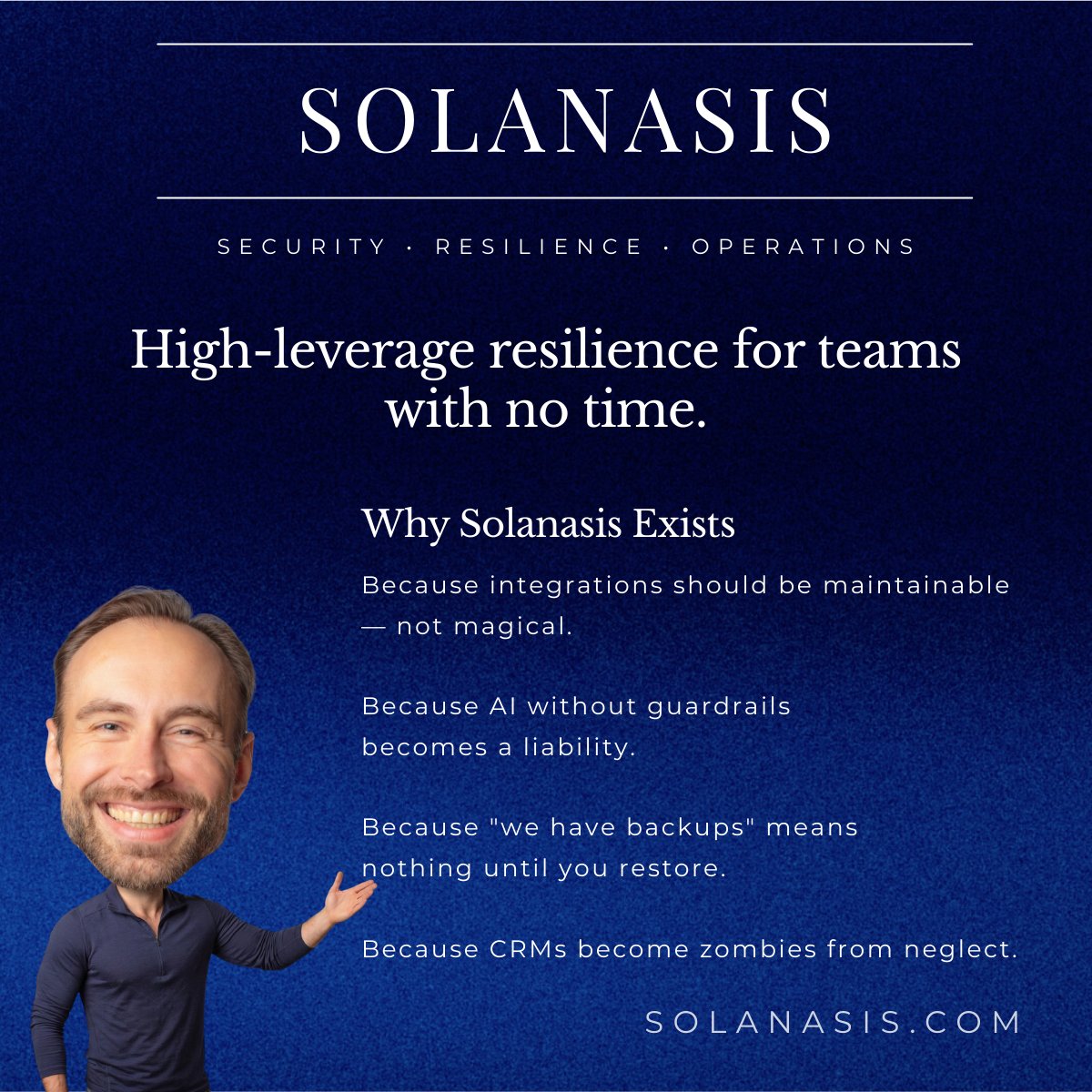
2026 looks like the year of shitshows, so I launched Solanasis: a make-the-basics-solid firm for cybersecurity, disaster recovery, responsible AI, and systems that actually work together. If a precarious org just came to mind, I’d really appreciate an intro.
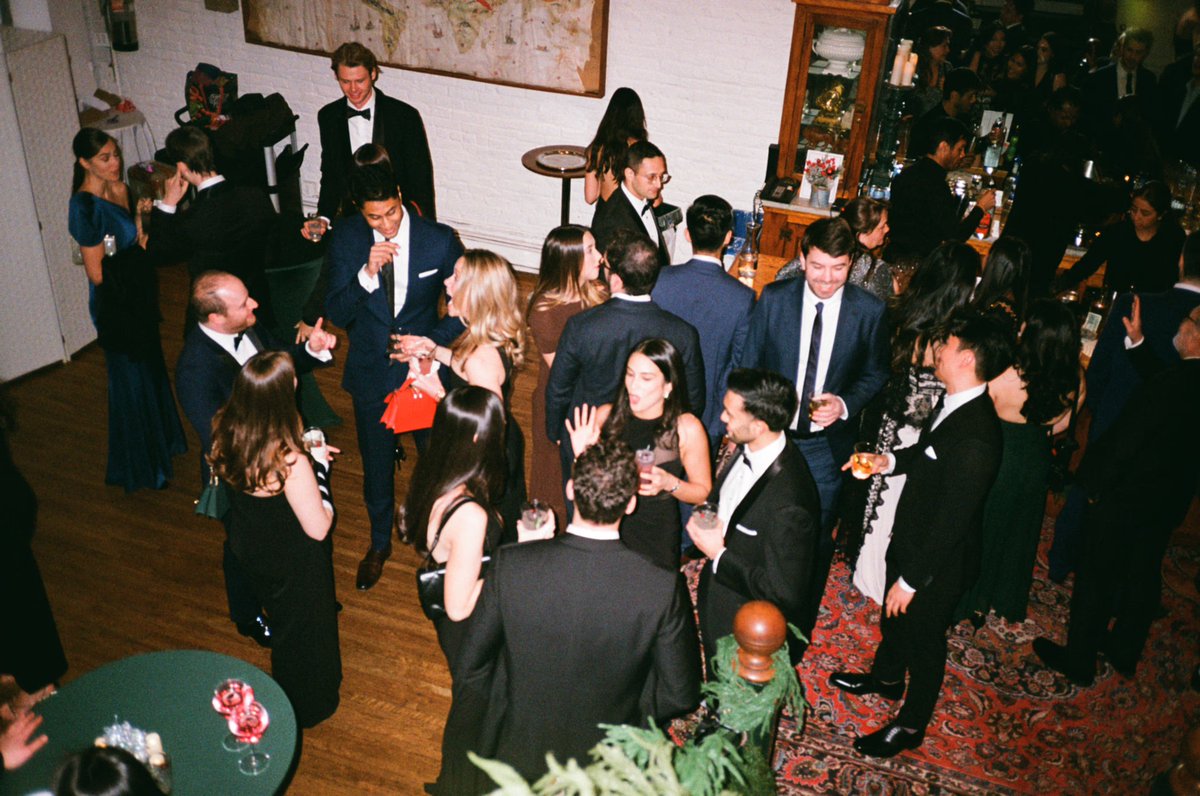
IRL is going to crush AI over the next 5 years.
In the last 3 months, $750M+ in capital was deployed on "anti-AI" bets.
Big players are doubling down on their investments in events, experiences and in-person connection.
Here's what I'm seeing:
@cornerapp, a social map app for Gen Z, has grown to 60K+ users helping people curate and share places to meet IRL—"Google Maps but social." Everyone ik in NYC loves them.
@partiful, @poshvip_, and @LumaHQ have raised a combined $60M and are exploding. Partiful hit 500K+ MAU, Posh hit 6 million registered users, and Luma has over 2 million users signing up for events.
Harvard alum @aidaxbaradari just launched @be_inaudible, the first smart device to stop unwanted audio recordings and keep IRL conversations private.
@mcuban made a massive bet, investing in Burwoodland, a NYC-based live-events company behind IRL experiences in the US, Canada, and Europe.
Former COO and CPO of Hinge officially launched Rodeo to help people spend more time IRL with friends.
@a16z keeps doubling down on IRL via investments and a16z Build — a dinner series and community for founders / operators figuring out their next move. @nazzari, @katiekirsch, @eriktorenberg.
Billion-dollar companies are paying $$$ for community and events leads:
- @AnthropicAI: Events Lead - $320k
- @Substack: Events Lead - $190k
- @VaynerMedia: Head of Experiential - $250k
- @Spotify: Global Experiential & Content - $175k
- @BiltRewards: Director of Events & Experiences - $150k
Investors are pouring billions of dollars into AI.
But smart money is quietly deploying millions into IRL at the same time.
a16z backs both OpenAI and Partiful. ElevenLabs and Substack.
The nuance is - it's not AI vs. IRL.
It's that the more we live online, the more premium real-life connection becomes.
They're not competing investments.
They're a hedge on each other.
At this point, it's common knowledge that "the body keeps the score."
But our capacity to process suppressed emotions still feels pretty random vs. precisely targeted.
What if we had a map that laid out exactly where each unprocessed emotion lived?
I recently chatted with @DougTataryn to discuss our suppressed emotional mapping and how we can release them.
Doug is the creator of the bio-emotive framework which is one of the most comprehensive and powerful teachings I've seen on working with emotions.
His findings are fascinating:
- Anger tends to hide in your forearms, fists and jaw
- Inadequacy and burden hide in your shoulders and upper back
- Fear and anxiety hide in your chest and diaphragm
- Helplessness hides in your lower back
- Suppressed expression hides in your throat and neck
Releasing these experiences is aided not just by feeling, but by identifying and including the specific "feeling word."
Without the precise language, you might get temporary relief, but the pattern will recreate itself.
To check out the full convo, you can listen below or head to the link 👇
I journal every single morning for at least 30 minutes.
But when I want to do some deeper reflection, my normal process doesn't cut it. Instead, I pull out these 7 questions that have given me elite self-awareness and mental clarity for 15+ years:
Question 1: ”What was I doing a year ago?”
This helps to keep things in perspective.
Looking back one single year reminds me that I have so much to be thankful for.
Question 2: ”Do I enjoy how I'm spending my time?”
If you're not enjoying your day to day, no amount of money or external rewards will make you feel more fulfilled.
So, question what really makes you feel alive and what feels like a burden.
Then, ask how you can remove those burdens in the weeks and months to come.
Question 3: “Who do I spend the most time with?”
I am such a firm believer that you are a direct reflection of the 5 people you spend the most time with.
Ask yourself if you're spending time with:
• True friends
• People who enrich your life
• Or people who are always asking for more and giving you less
Your friends should be people who inspire you to become a better version of yourself.
Question 4: ”How is my money being spent?”
I see money as fuel.
It's what powers your airplane and allows you to do the things you want to do in life.
There are two ways to make more money:
• Work harder and earn
• Spend less
(Consumerism tends to encourage us against the latter.)
Do a quick audit of your spending habits, and see if you can control some impulse purchases.
Question 5: ”What do I want to learn next?”
Most people reach a plateau when they stop being curious and instead fixate on doing things purely for financial gain—or the approval of others.
But curiosity never leads you astray.
Ask yourself:
• What you want to learn next
• What will help you grow beyond where you're at
And then nurture that curiosity.
Question 6: ”How are my 5 buckets being filled?”
Each of us has 5 buckets that we fill with our time:
• Career
• Fulfillment
• Community
• Relationships
• Personal health
It's worth taking time to question how each of these 5 buckets is being filled (on a regular basis).
Sometimes, you'll find you are spending far too much time being social and too little time working toward a project or a goal.
Other times, you'll find you haven't spoken to your family in months because you've been so busy.
Audit how your time is being spent, so that you can keep those 5 buckets balanced.
Question 7: ”How can I be more helpful to those around me and to myself?”
You can't spend all your time trying to make everyone around you happy.
You have to prioritize keeping yourself happy too.
Which is why it's worth questioning both.
• How can you be more encouraging and more patient?
• What can you do to be more helpful to those around you?
• And at the same time, how can you do those same things toward yourself?
Personal development is your ability to continuously ask yourself these questions on a daily basis, and slowly improve over time.
Like water over rocks, who you are is sculpted over years and years.
I’ve kept my daily journaling habit going since 2010.
And it’s one of the reasons I’ve been able to generate over $20,000,000 as a writer.
Want to get all my journaling frameworks so you can make the 1 big decision that will change your life in 2026?
Then click here to get my Decision Journaling system: https://t.co/UBOyL0NSzq
(But you only have 3 days left to get it... doors close Monday at midnight EST!)
I used to train indoors like most people.
Then I spent 5 years training outdoors year-round—including winters in Berlin & Warsaw at 52° latitude.
Now I can't go back.
Not because outdoor training is "nice."
Because once you understand what indoor gyms do to your mitochondria, it's hard to ignore.
The irony of indoor training?
You go to the gym to build mitochondria.
But you're training under blue LED light which impairs mitochondrial function.
Glenn Jeffrey's research from UCL shows blue light makes you pre-diabetic & damages your retina.
So you’re trying to trigger mitobiogenesis while damaging the very mitochondria you’re trying to multiply.
It's like training for a marathon while smoking.
In summer, it's tolerable. Natural light still leaks in.
In winter? Zone 2 cardio under LEDs at 6pm is a full circadian mismatch.
Every time I step under bright artificial blue light, my body knows something's wrong.
You feel stressed—just like mice exposed to 420–450 nm blue light that develop anxiety-like behavior.
But avoiding blue light is only one piece.
Outdoor training gives you benefits indoor gyms simply can’t.
Scott Zimmerman—the optical engineer with 80+ patents—& Russel Reiter—the most cited melatonin researcher—found something wild:
Mitochondria produce far more melatonin during the day when exposed to near-infrared light. Orders of magnitude more than at night.
Melatonin is a cascade antioxidant. One molecule neutralizes up to 10 ROS.
Step outside, even in winter, & half the spectrum is infrared & near-infrared penetrates clothing.
Result?
More daytime melatonin, better sleep at night, better post-workout recovery, better disease resilience.
Indoor training under artificial light? Zero near-infrared.
And it doesn’t stop there.
Infrared light from the sun charges your cellular water—structured EZ water—term coined by Gerald Pollack.
But it’s not only the light.
When you train outdoors you can take your shoes off & ground. Bare feet on earth give you electrons.
Together—light + electrons—you convert more liquid water into structured EZ water.
EZ water acts as a battery.
You’re literally charging your body.
Indoors? None of it.
But it goes even further.
Your body is designed to adapt to seasons.
Your biology expects cold in winter.
If you live at 22°C year-round, you give it no signals.
For example, cold exposure improves insulin sensitivity.
A 2015 Dutch study: type 2 diabetics spent 6 hours a day at 14–15°C, T-shirts & shorts, for 10 days straight.
Insulin sensitivity improved by 43%. Higher fat oxidation, better metabolic flexibility.
Training outside in the cold doesn’t just build resilience—it activates brown fat, which is packed with mitochondria.
You’re building new mitochondria on top of the Zone 2 benefits.
Climate-controlled gyms remove all seasonal signals.
You stay soft.
But here’s what I didn’t expect: the biggest benefit of training outdoors is the mood shift.
You start aligning with nature.
You notice sunset times—5:00pm, then 4:45pm, then 4:30pm.
You develop awe for the small things—light, cold, wind, clouds.
You become attuned to cycles.
Your biology recognizes: “This is what I evolved for.”
Sunrise. Sunset. Cold. Warmth. Light. Dark.
Indoor gyms strip all of this away.
You train at 7pm under the same LEDs whether it’s June or December.
Your mitochondria get no signal. No rhythm. No context.
That’s the hidden cost nobody talks about.
And there’s a final reason. The philosophical one: freedom.
You saw it during COVID, gyms closed.
Everyone panicked—"How will I train?"
I kept training. Parks, pull-up bars, gymnastic rings.
That's when I realized: outdoor training isn't just about health.
It's about sovereignty.
You're not dependent on:
- Gyms being open
- Equipment availability
- Membership fees
- Someone else’s rules
You can train anywhere, anytime.
That's freedom.
"But I don't have all the equipment."
This is the biggest objection.
Here's the truth: you don't need it.
Legs? Pistol squats. Nordic curls. Single-leg Romanian deadlifts with a kettlebell.
Back? Pull-ups, rows on rings.
Chest? Push-ups, dips.
Shoulders? Handstand push-ups, pike push-ups.
Progression? Change leverage. Add time under tension. Use a weighted vest or kettlebell.
Pro tip: Buy gymnastic rings (~$40).
Wood, not metal—stays warm in winter. Hang them anywhere.
There’s a purist way & a pragmatic way.
I'm not saying never train indoors.
If I want to do boxing, I need a heavy bag. That's in a gym with blue lights.
If I'm traveling & it's -20°C, I might use a hotel gym.
But the principle is simple: minimize indoor training under artificial light.
Move 80% of your training outdoors.
If you want to go full purist: 100%.
By moving training outdoors, you get:
- Better sleep (daytime melatonin production)
- Faster recovery (antioxidants)
- More energy (infrared charging EZ water)
- Seasonal adaptation (cold, brown fat)
- Better mood (sunlight, air, nature)
- Freedom (train anywhere)
Your mitochondria don’t care about convenience.
They care about signals.
Give them what they evolved for.
The seriously negative consequences of not pursuing our higher calling, and the incredible consequences of when we do. What’s your higher calling? The thing you are most resisting to pursue. Steven Pressfield on the Huberman Lab podcast out now.
Sauna is a sunlight replacement.
Not metaphorically. Literally.
In harsh northern winters, when the sun disappeared, the sauna was invented.
Not for detox. For energy.
The Finns, Slavs & Balts figured this out a thousand years ago.
When the sun is gone for months, your body loses its primary energy source.
Mood crashes. Energy collapses. You survive winter, but barely.
The Finns, Slavs, Balts—they didn’t accept that.
They built saunas.
Now, I’m 100% Eastern European (per my 23andMe DNA), born in Belarus.
My grandfather took me to the banya as much as he could from age five.
This wasn’t spa time.
It was 100°C heat until you couldn’t take it, then straight into freezing water.
Western science silos saunas into 'cardiovascular' or 'longevity' studies.
But they miss the essence: it's an energy source, not a treatment.
Here’s what actually happens:
A traditional sauna surrounds you with full-spectrum infrared, mostly mid & far wavelengths (2,000–20,000 nm).
Your body is roughly 70% water & much of that water sits next to membranes & proteins, forming structured layers.
What Gerald Pollack calls Exclusion Zone (EZ) water.
These layers act like tiny biological batteries.
They store charge when exposed to infrared light.
And water absorbs strongly above ~1,150 nm.
Pollack’s lab showed that infrared light around 3,000–3,100 nm drives this ordering process.
In his experiments, shining mid-infrared light expanded EZ layers by over 40% & released trillions of protons into nearby water.
That means mid- & far-infrared light doesn't just heat you—it ORDERS the water in your tissues, expanding those structured zones & storing electrical energy.
So how does it connect to traditional Finnish saunas?
Traditional saunas Finnish saunas emit infrared from 3,000 all the way up to 20,000 nm.
That includes the exact 3,000-3,100 nm range where Pollack saw the strongest EZ expansion.
But it doesn't stop there.
Finnish saunas go way beyond 3,100 nm—into ranges no one has tested yet.
The physics suggests the effect continues at those longer wavelengths too.
Which means a Finnish sauna might be doing even more than Pollack measured.
Conventional physics says mid-infrared only penetrates a few micrometres of water.
Yet Pollack's team observed something different:
Even when the infrared light was aimed below the water's surface—away from the structured zone—that zone still expanded.
The energy spread through the water, almost like ripples after you drop a stone.
Once one area got charged, nearby regions started organizing too.
Similar to Glen Jeffery's finding—shining infrared light at a small part of your back had a whole-body effect because your mitochondria communicate with each other.
The heat doesn’t just warm your skin — it can send that organizing effect deeper, helping the water inside your cells hold more charge.
That’s why after a sauna, you don’t just feel warm. You feel re-energized.
You’ve literally charged your intracellular batteries.
But hot alone is incomplete.
The real magic happens when you add cold.
After 10–15 minutes at 100°C, you plunge into ice water, take a cold shower, or roll in snow.
The hot gives you infrared from without. The cold makes you emit infrared from within.
Your core radiates heat as it cools—another infrared flux through your tissues.
That contrast floods your system with dopamine, norepinephrine & growth hormone.
It’s why winter depression rates in sauna-heavy cultures are lower than latitude predicts.
You see, most people get it wrong.
They treat saunas like spas—60–70°C, comfortable, relaxing.
Useless.
A real sauna is 80–100°C (176–212°F).
Traditional Finnish. Russian banya. Eastern European style.
The kind where you can’t stay in longer than 15–20 minutes.
The kind where your heart rate hits 120-140 bpm.
The kind where you're thinking "I need to get out soon.”
That discomfort is the signal.
Without it, you’re just sitting in a warm room.
And if you skip the cold, you get only half the benefit.
Now, I live in Poland.
Here, saunas are always paired with cold. Always.
The contrast is what resets everything—circulation, hormones, mood, sleep.
Three rounds is ideal: Hot → Cold → Hot → Cold → Hot → Cold.
You finish with cold.
I like to start with cold too.
By round three, you reach a state most people never access.
Present. Calm. Recharged at the cellular level.
For Slavs, this isn’t “wellness.” It’s culture.
You don’t go alone. You go with friends. Family.
You sit. You talk. You suffer together. Then you laugh together after the plunge.
The nervous system responds differently in community.
The ritual becomes a weekly anchor.
And this isn’t new.
The Romans had the same pattern—tepidarium, caldarium, frigidarium.
Starting in the tepidarium (warm room to acclimate), moving to the caldarium (hot room for sweating & cleansing with a strigil) & ending in the frigidarium (cold plunge pool to refresh & close pores).
Warm → Hot → Cold.
Same principle. Same physiology. Same wisdom.
Thermal stress isn’t new. It’s Lindy.
That’s why the Finns, Slavs & Balts never called sauna “therapy.”
It was winter sunlight for the body—encoded as culture.
Western science can box it as cardiovascular, hormetic, or longevity training.
But the essence is simpler.
The sauna & cold are winter sunlight.
A ritual that recharges your body when nature withdraws its light.
My advice? Get brutally hot once a week. Then get brutally cold.
Repeat until spring.
That’s what northern Europeans discovered a thousand years ago.
They didn’t call it biohacking.
They didn’t cite studies on heat shock proteins.
They just knew: when the sun disappears:
You need hot.
You need cold.
That’s how you survive winter without losing your mind.
This is Thomas Campbell.
A former NASA physicist who developed his Theory of Everything—unifying quantum physics & consciousness.
His model explains out-of-body experiences, remote viewing & dreams.
These 13 insights will shift how you see reality forever:🧵
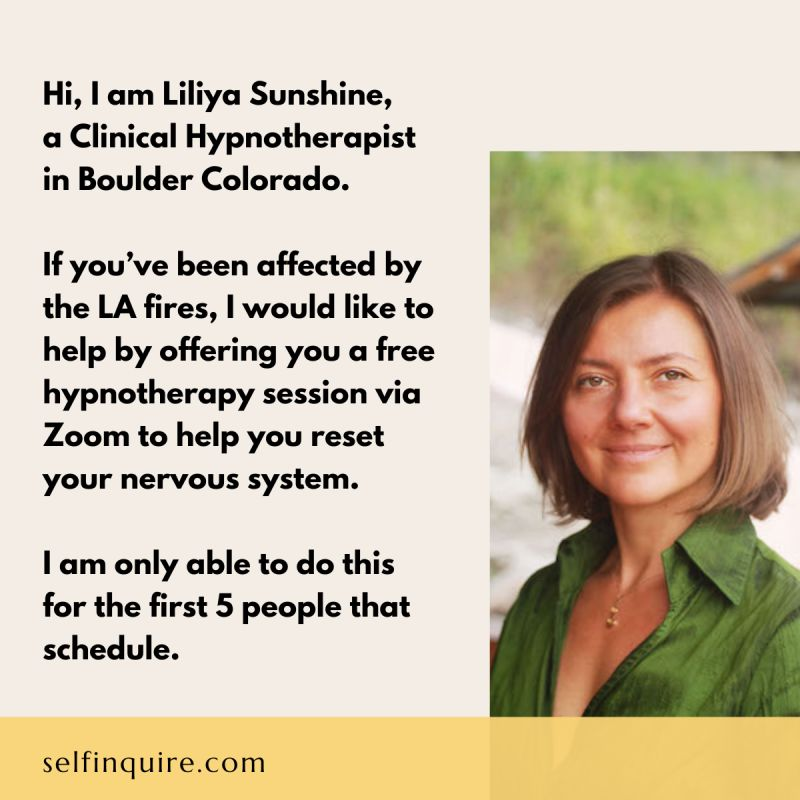
My lovely wife who is an amazing clinical hypnotherapist is offering free sessions to LA fire victims to help with nervous system decompression.
She also does sessions for leaders to gain clarity and insights on how to break through their roadblocks.
There are so many startup accelerators & incubators out there, but I still haven't seen any that teach the fundamentals of biohacking and emotional regulation to make founder more resilient to stress and burnout...