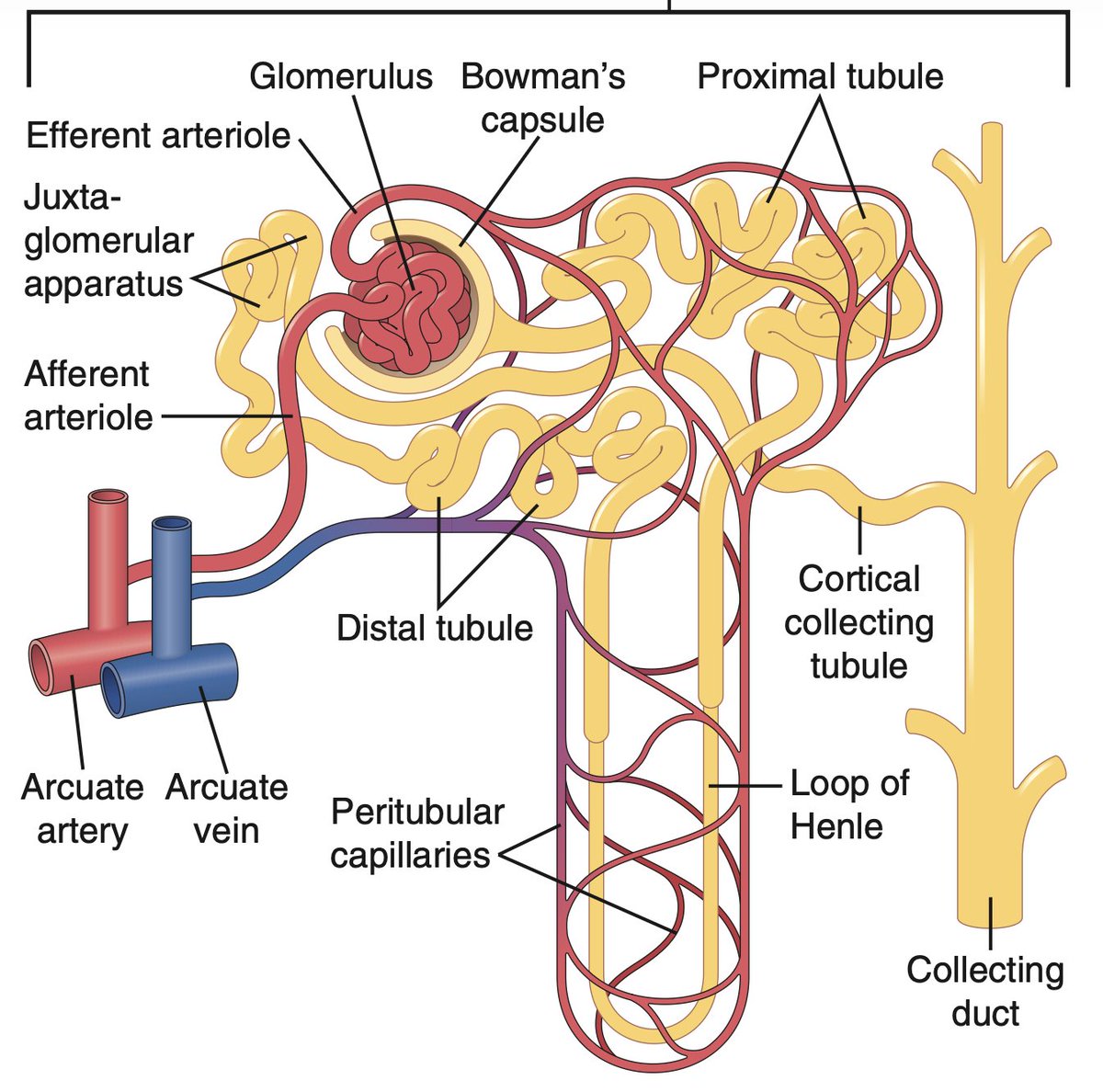
This is the most sophisticated machine in the human body.
The nephron is not a passive filter, but an energy-intensive microfluidic processing system: less a simple tube than a miniaturised biological machine that spends blood flow and ATP to transform a crude filtrate into the precise internal stability we call homeostasis.
At rest, the kidneys receive a strikingly disproportionate blood supply: roughly 20–25% of cardiac output, about 1–1.2 L of blood per minute in an adult, despite representing well under 1% of body mass.
That flow is not there mainly to “feed” renal tissue, but to sustain filtration and the enormous transport workload of the nephron. About 180 L of filtrate are generated per day, and almost all of it must be selectively reclaimed.
Metabolically, the kidneys account for roughly 7–10% of whole-body oxygen consumption at rest, which is remarkably high for such a small organ.
Most of that energy bill is tubular, not glomerular: two thirds or more of renal oxygen use is spent on the Na⁺/K⁺-ATPase, the engine that powers sodium reabsorption and, with it, water, glucose, amino acids, bicarbonate, and countless coupled transport processes.
In practical terms, this corresponds to a continuous ATP demand on the order of several millimoles of ATP per minute across both kidneys, overwhelmingly devoted to solute transport rather than biosynthesis or contraction. This is why the nephron is best understood not as a passive filter, but as an energy-intensive microfluidic processing system.
What makes it extraordinary is the paradox: one of the body’s best-perfused organs is also one of its most metabolically constrained, because so much of its function depends on converting blood flow into vectorial transport with exquisite spatial precision.
In that sense, each nephron is less a tube than a miniaturised biological machine: a structure that spends blood flow and ATP to turn a crude filtrate into internal homeostasis.
Is fish oil supplementation associated with lowe cardiovascular risk in patients receiveing hemodialysis? This #ASNKidneyNews article explores a recently published addition to the evidence: https://t.co/ruRrgcLUwV
In celebration of #WorldKidneyDay on March 12, this special collection highlights kidney disease research from around the world:
https://t.co/3SWaIdbXrJ (FREE)
@worldkidneyday
Kidney diseases can affect almost anyone and often go undetected, making awareness especially important. Learning your risk can help prevent serious complications and protect both kidney and heart health.
Know your risk. Take action. #LoveYourKidneys and learn more: https://t.co/VHpvODI7xO
1 in 7 adults have kidney diseases—and 90% don’t know it. #HeartHealth and #KidneyHealth are closely connected. When kidney health declines, heart risk rises.
Know your risk. #LoveYourKidneys and learn more: https://t.co/szc4b9BLtM
IgA nephropathy is the most common cause of immune-mediated glomerular disease worldwide.
📌 This Review summarizes the pathophysiology, epidemiology, clinical presentation, diagnosis, treatment, and prognosis of primary IgA nephropathy in adults.
https://t.co/9KNkN8Cxsl
The numbers are in.
This year's most popular JAMA content spans a range of topics, from coffee and #AFib to #osteoporosis to #SepticShock. What was your favorite article in 2025—and did other readers agree?
🔗 https://t.co/ZY1fq8A4pZ
Recent estimates suggest that chronic kidney disease affects nearly 800 million adults worldwide.
In this Q&A, conference cochair Katherine Tuttle, MD, shares clinical research highlights from Kidney Week 2025.
https://t.co/GHXA3WWMXn
Among more than 800 000 CKD-PC participants, discordance between cystatin C and creatinine eGFR values was associated with increased risk of death, cardiovascular events, and kidney failure. 🧵
#KidneyWK@ASNKidney
https://t.co/Q1al5TUlO2
Association of Volume Overload With Kidney Function Outcomes Among Patients With Acute Decompensated Heart Failure
https://t.co/iPvSQiCNiS
#VisualAbstract@Htighiouart@KiJungLee7
Global prevalence of chronic kidney disease (CKD) is approximately 9%, and patients with CKD are at increased risk of morbidity and mortality.
This JAMA Clinical Guidelines Synopsis summarizes the 2024 KDIGO recommendations for managing CKD in adults.
https://t.co/ZiSY7r4jOp
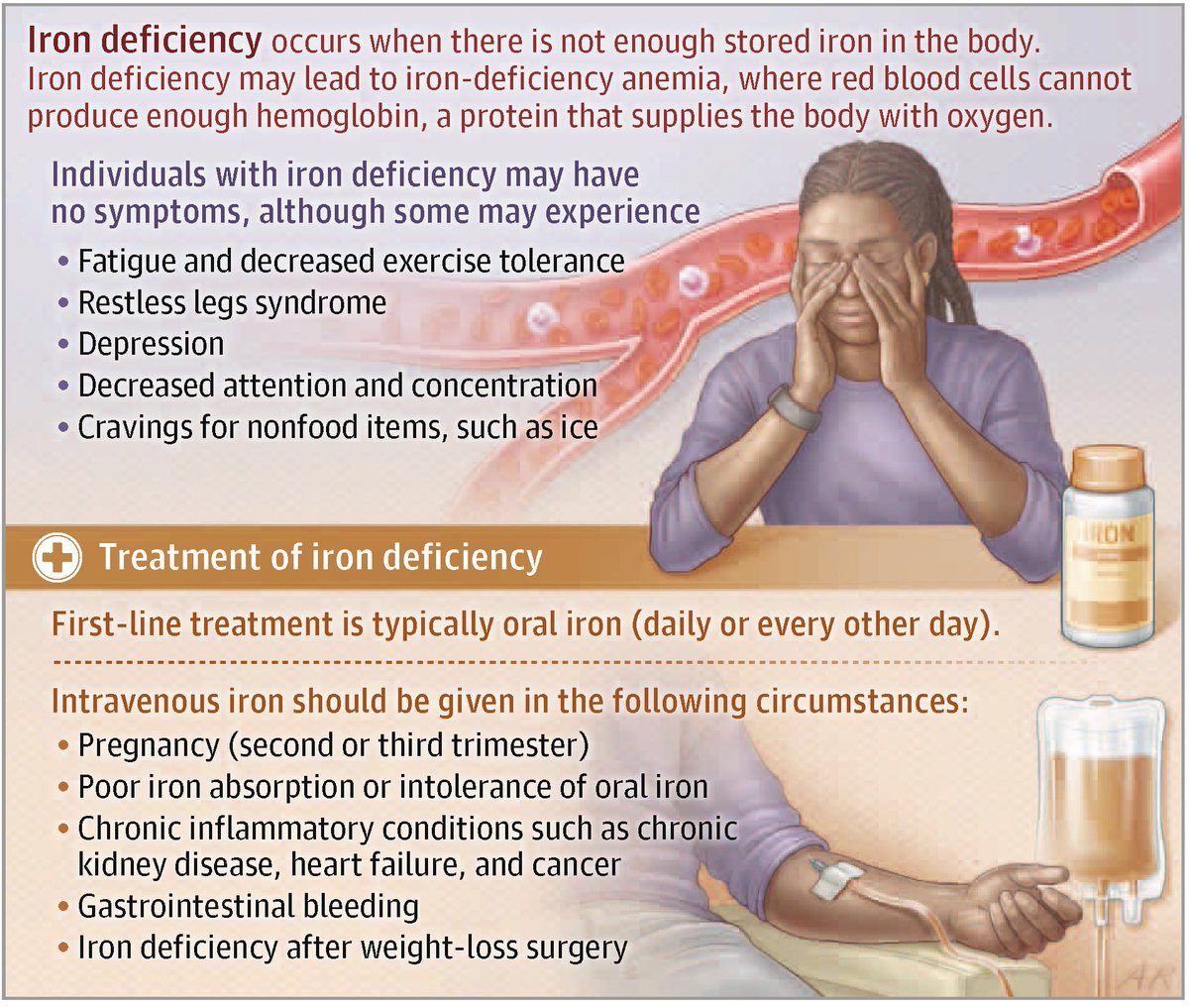
🩸 Iron deficiency occurs when the body does not have enough stored iron.
Worldwide, about 2 billion people have #irondeficiency and 1.2 billion people have iron-deficiency #anemia.
Learn more in this JAMA Patient Page: https://t.co/pUQASjLMyl
CONFIDENCE trial: In persons with chronic kidney disease and type 2 diabetes, combination therapy with finerenone and empagliflozin led to a greater reduction in the urinary albumin-to-creatinine ratio than either drug alone. Full trial results and Research Summary: https://t.co/4Gf0LboOCp
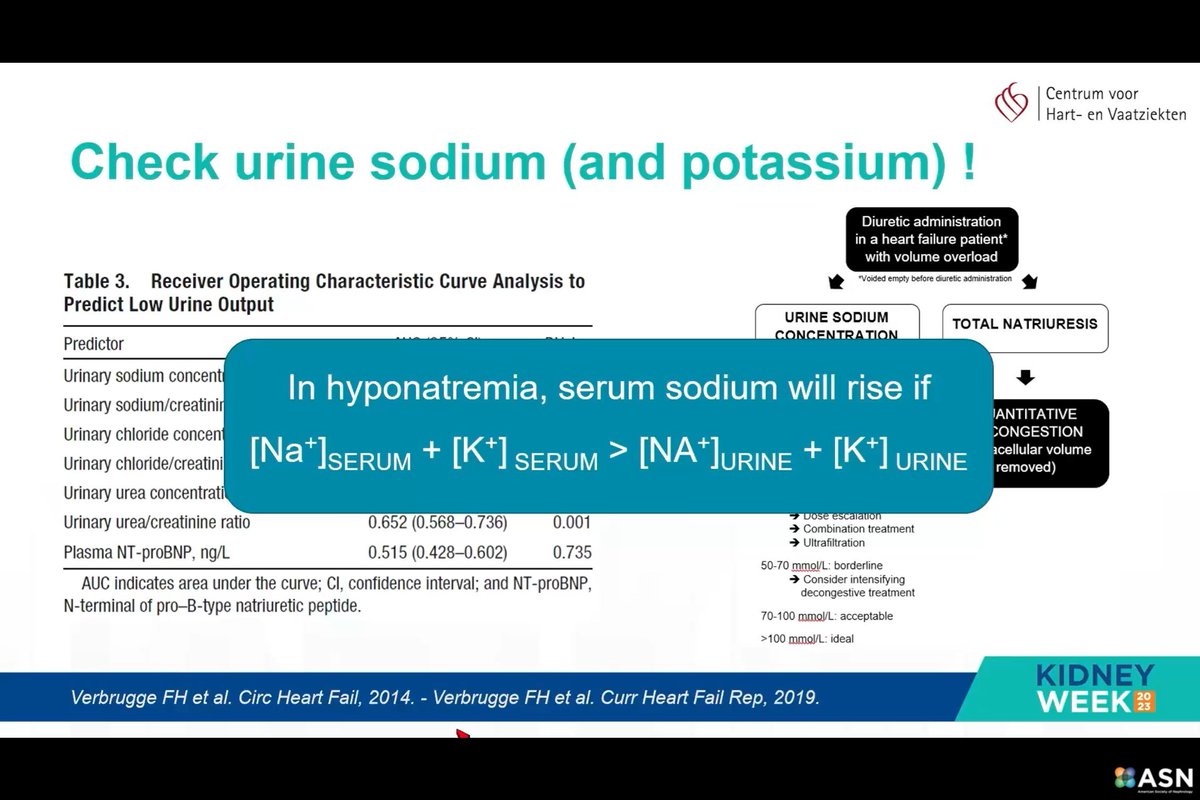
Management of hyponatremia in the patient with heart failure: Use of urine sodium (and urine potassium) to assess diuretic response from @FH_Verbrugge#Nephpearls#Cardiorenal#KidneyWk 2023
👉 https://t.co/IRrNueIxct
Understanding how diabetes affects the kidneys and exploring new treatment options is of critical importance.
We present a special collection of articles on Diabetes and Kidney Disease: https://t.co/tlX3kOSfmz (FREE until July 1, 2025)