Can conflict be the very foundation of humanity's social existence? This question might be answered with a "yes" if one looks at it from a historical point of view. But from a sociological one, it may be contested - especially today. However, once one recognises that sociological facts are historical facts and vice versa, both are, by extension, simultaneously anthropological facts - and it is from this vantage point that the question must be asked anew.
If we look to the sociological tradition from its origins, Karl Marx, Georg Simmel, and Max Weber all treated conflict as a self-evident truth, each holding a social ontology of struggle. The only sociologist of comparable stature to diverge from this view was Émile Durkheim.
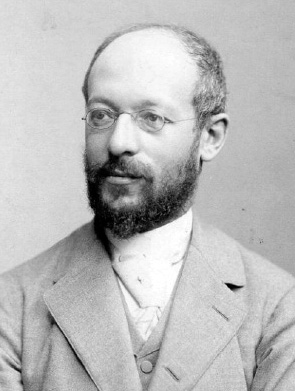
But does conflict have a social function? It was Georg Simmel who first gave this question systematic form. In his 1908 work Soziologie, the chapter titled Der Streit - Conflict - identifies conflict not as a pathology of social life but as one of its fundamental forms: a mode of sociation in its own right. For Simmel, a group without conflict is barely a group at all. Its function lies in a simultaneously binding and differentiating force that constitutes social units in the very act of opposing one another.
The German-American sociologist Lewis Coser would later systematise Simmel's original insight in his 1956 work The Functions of Social Conflict, translating it into a series of more precise propositions. Coser concludes that conflict with an outgroup strengthens the internal cohesion of the ingroup; that internal conflict can operate as a kind of safety valve for accumulated tension; and, most crucially, that conflict functions to define group boundaries and thereby reinforce collective identity. He further distinguishes between two forms of conflict: realistic conflict, the struggle waged over genuinely scarce resources, and non-realistic conflict, driven by a group's need to discharge internal stress.
Ultimately, for both Simmel and Coser, conflict is functionalist in a precise, technical sense: it serves an existing system, that system remains the point of reference, and its stability is - implicitly, and perhaps paradoxically - the very end that conflict serves. Conflict, on this account, is teleological: it always exists for something beyond itself.
Despite the brilliance of both thinkers - and especially that of Simmel - there is a certain unease that comes with this rather "positive" conclusion. If conflict is not merely a historical and sociological fact but one that recurs across all epochs and social formations, then the claim that it exists for something beyond itself begins to seem rather untenable. The perpetual presence of conflict strains any reading that would subordinate it to a simple stabilising function.
It is Panajotis Kondylis who had the courage to go further than either Simmel or Coser. Kondylis refuses all comfort, all consoling conclusions derived from an analysis of the human condition. His conclusion is simultaneously Hobbesian and Nietzschean in spirit: conflict is preservation. This may appear as a subtle distinction from the conclusions reached by his predecessors, but it is a significant one. For Kondylis, there exists no system above the struggling parties that stands to benefit from the conflict. Struggle, in the end, is all there is. This conclusion becomes possible because Kondylis takes a radical step that Simmel and Coser do not: where they treat conflict as a sociological and historical fact, Kondylis insists it is so precisely because it has anthropological roots - because it is written into the very constitution of the human animal.
Before his untimely death in 1998, Kondylis had been working on what was to be his magnum opus, his Social Ontology. Only the first volume was completed; what remained were approximately four thousand notes sketching the contents of what was to follow. Among these, I want to draw particular attention to note 3571 and its bearing on everything discussed above. Like all that Kondylis committed to paper gives us a great deal to chew on.
"An organisation secures its continuation through the mutual antagonism of its constituent parts, each of which strives for growth on its own account. This is particularly evident during periods of explicit expansion. Even when a part contributes something to the whole, it does so in pursuit of its own drive for power. Preservation, then, is the outcome of this striving for dominance and enhancement. Should the antagonism cease, what follows is not mechanical preservation but outright collapse. Were preservation not itself a striving for power, there would be no internal shifts, no diminution, no growth. What an organism strives for outwardly is determined by the outcome of its internal conflict. What ultimately endures is not the organism as a fixed or rigid subject, but the very process of struggle through which it is constituted. To preserve oneself in life is to preserve oneself in the will to power - in the continuous growth of power. Nietzsche speaks of conditions of preservation and enhancement: that is, he treats preservation and enhancement not as distinct ends, but as one and the same."
Link to an article (in German) covering the above-mentioned notes, with particular focus on those concerning the problem of violence, rule, and power:
https://t.co/dcxDpSS8v9
“In spite of the flux of phenomena, life is indestructibly powerful and joyful ... With this chorus the profound Greek, so uniquely susceptible to the subtlest and deepest suffering, solaced himself.”
— Nietzsche
@JalalHussein14@AladawiMechal يعني أنت كحدا منتاك ربّك، حرفياً وليس مجازياً،، كيف متوقّع العالم تحكي معك؟!!!! 🤦♂️
عم يقلّولك "عوّي" مفكرين رح ترتاح نفسياً (من باب الشقفة)، ما عرفانين أنو أزمتك وجودية مستعصية ما إلها حلّ (انتياك الربّ)
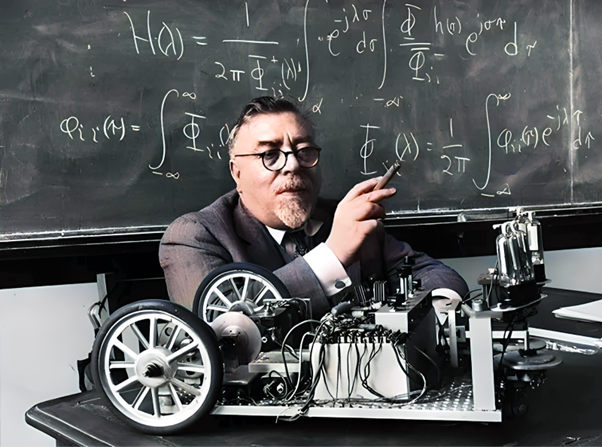
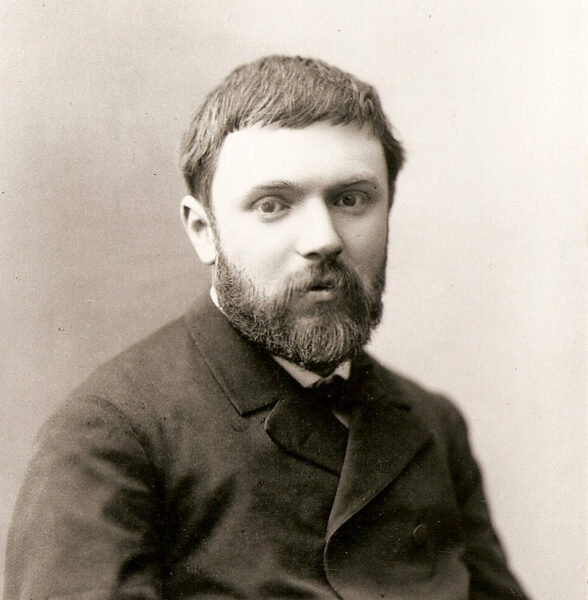
@Euryvice@ArtemisConsort Here we have 4 soulless high-conscientiousness robots🤖:
1. mining engineer
2. civil engineer
3. mechanical engineer
4. control engineer
Also all were brilliant philosophers!
“Men follow their sentiments and their self-interest, but it pleases them to imagine that they follow reason. And so they look for, and always find, some theory which, a posteriori, makes their actions appear to be logical. If that theory could be demolished scientifically, the only result would be that another theory would be substituted for the first one, and for the same purpose.”
Vilfredo Pareto, The Mind and Society
@ArtemisConsort Can a simple-minded mathematician, theoretical physicist & engineer do some philosophy before retirement though? (He might die young!)