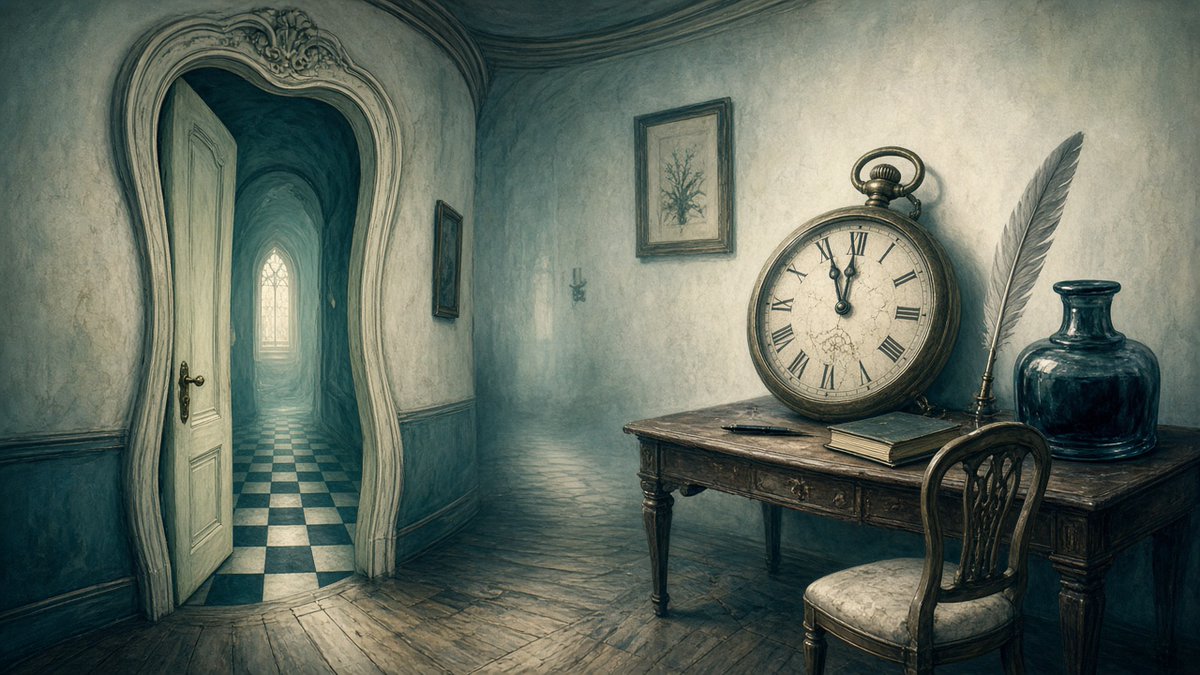
Most people have never heard of Alice in Wonderland syndrome. Brief episodes where your own hands look huge, walls stretch, or time feels wrong — often tied to migraine, epilepsy, or infection. Not a metaphor. A real perceptual disorder first described in the 1950s.
In 1547, a boy from Tenerife whose face and body were covered in fine hair was presented at the French court of Henry II.
His name was Petrus Gonsalvus. He was educated as a nobleman, married, and several of his children inherited the same condition.
Congenital hypertrichosis is an extremely rare disorder of excessive hair growth from birth. It isn't the same as common hormone-driven excess hair. The portraits of Gonsalvus's family at Ambras Castle in Austria later gave one form its name, Ambras syndrome.
Follow for stranger physiology, without the folklore.
Imagine knowing sleep will never come back, and that the reason is written in your genes.
Fatal familial insomnia is an extremely rare inherited prion disease. A mutation in the PRNP gene damages the thalamus, the brain's sleep-regulation hub.
Over months, deep sleep disappears. People stay awake through worsening confusion, a racing heart and sweating, and physical decline. There is no cure.
It has been found in only a few dozen families worldwide, and it was first described in detail in 1986.
Follow for more rare diagnoses that change what "tired" means.
Imagine breaking out in hives from a shower, from sweat, even from your own tears.
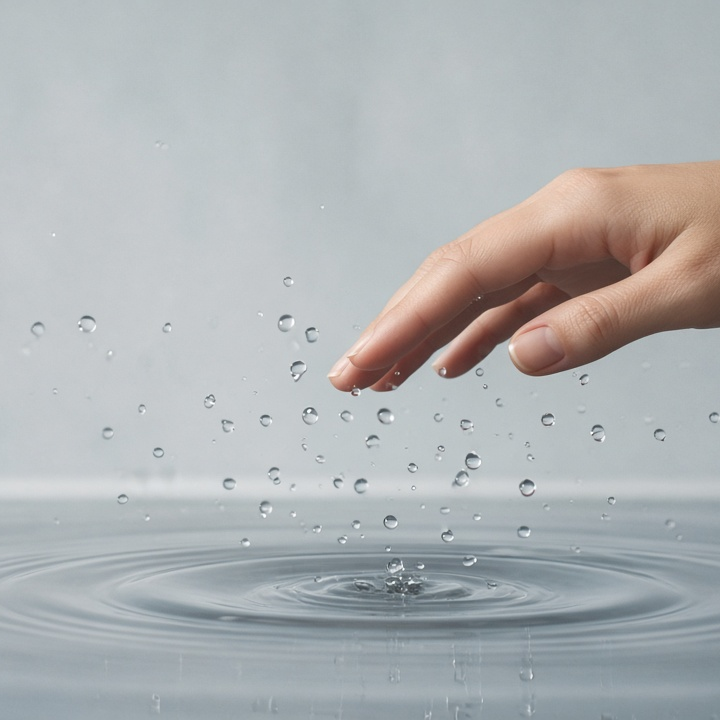
Aquagenic urticaria is an extremely rare condition where contact with water, even sweat or tears, triggers hives, itching or burning within minutes, whatever the temperature.
It isn't a reaction to something in the water. Water itself is the trigger, and researchers are still working out the mechanism. Only a small number of confirmed cases appear in the medical literature.
Follow for more strange physiology, explained.
@FrontNeurosci Parkinson's research got an unexpected push in the 1980s, when people exposed to the drug contaminant MPTP suddenly developed parkinsonism. MPTP turned out to poison mitochondria, and that tied the two together.
@ScienceMagazine Consonants carry most of the meaning in human speech too, which is why you can often still read a sentence with the vowels removed. Fun that dogs may lean on the same shortcut.
@PsyPost That reversal is a classic dementia-research trap. Weight loss often begins years before diagnosis, so late-life weight can look protective when it's really an early sign of the disease.
@newscientist This pairs nicely with hemispherectomy in humans. Children who have half the brain removed for severe epilepsy often keep remarkable function, because the young brain can rewire so much.
@PsyPost Nice history twist. Albert Hofmann first made LSD in 1938 while hunting for a circulatory stimulant, and only found its effects by accident in 1943. More than 80 years later, we're still taking the molecule apart.
Some people with vision loss see vivid scenes that aren't there, and they know it.
Charles Bonnet syndrome can cause complex visual hallucinations (people, animals, patterns) in people with significant sight loss, often from eye disease.
Many stay silent because they're afraid of being labeled psychiatric. The key clue is that insight usually stays intact. They know what they're seeing isn't real.
It's named after 18th-century naturalist Charles Bonnet, who described it in his own grandfather.
Follow for more rare diagnoses that sound made up.
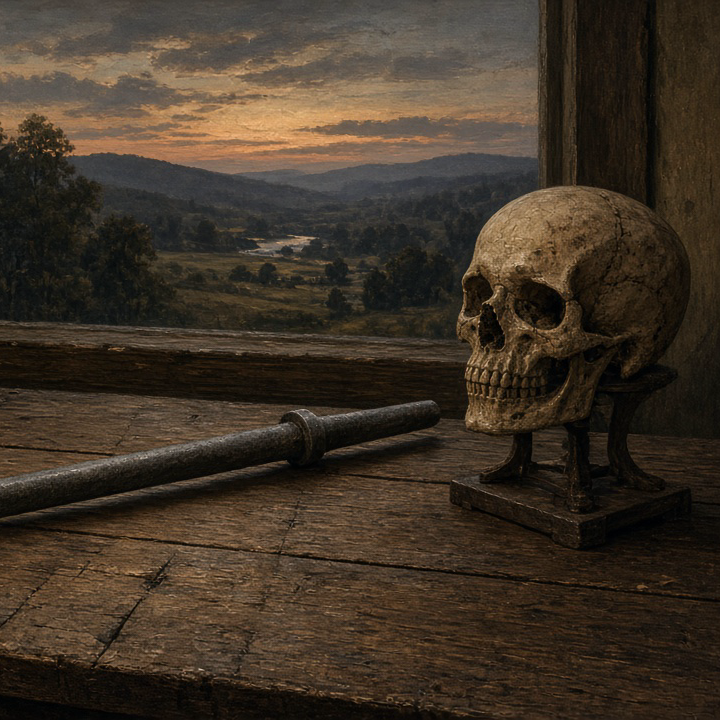
In 1848, a Vermont railroad foreman named Phineas Gage was packing blasting powder when it went off early.
A 13-pound iron rod, more than 3.5 feet long, shot up through his left cheek and out the top of his skull.
He was talking within minutes. Friends later said he was "no longer Gage" because his personality had changed so much.
But he lived 12 more years, and later records suggest he regained much of his social ability, even working as a stagecoach driver in Chile.
Neuroscience's most famous patient is still being reinterpreted.
Wait… that's a real diagnosis?
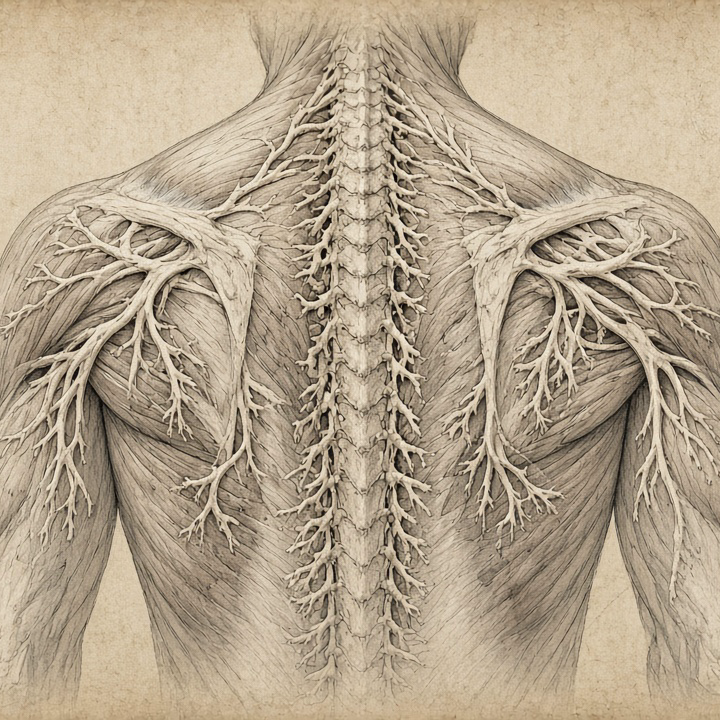
Fibrodysplasia ossificans progressiva (FOP) slowly turns muscles, tendons and ligaments into bone, building a second skeleton over the years.
The cruel twist is that bumps, injections and even surgery to remove the extra bone can trigger new growth.
It affects roughly 1 in 2 million people. The first clue is often visible at birth: malformed big toes.
Follow for more medicine that sounds made up but isn't.
You shower. You scrub. The fishy smell stays.
Trimethylaminuria ("fish odor syndrome") is a rare metabolic condition: the body can't properly break down trimethylamine (often via FMO3 enzyme issues), so it exits in sweat, breath, and urine.
Genetic or secondary. Invisible to exams. Harsh on social life — not a hygiene failure.
Physiology can be stranger than folklore.
Follow @ZebraChasing for fringe medicine — not advice.
Your hand just unbuttoned your shirt.
You didn't tell it to.
Alien Hand Syndrome (anarchic hand): after stroke, brain injury, or callosotomy, one hand can make involuntary, purposeful-looking moves — grasping, interfering, even opposing the other hand — while you can't stop it.
Not possession. Not a metaphor. A rare neurological glitch in motor control and agency.
Wait… that's a real diagnosis.
Follow for more fringe medicine — not advice.
They look exactly like your spouse.
But Capgras delusion says they're an impostor.
Named after Joseph Capgras (1923): a rare misidentification syndrome where familiar faces are recognized — yet feel emotionally "wrong," so the mind concludes a double replaced them.
Face recognition and emotional familiarity come apart. Seen in some psychiatric and neurodegenerative conditions.
Wait... that's a real diagnosis.
Follow for more rare syndromes — @ZebraChasing
@BrianRoemmele The evolutionary “jammed together” metaphor is memorable. I’m curious how much of the evidence is developmental cell-lineage tracing versus adult functional asymmetry—those answer different versions of “two organs.”
@brainmindlife Threat simulation is the interesting bit: imagined and real events can recruit overlapping alarm circuitry, even as context and prediction modulate the response. The gap between rehearsal and reality is where the wry neuroscience lives.
@Tim_Denning Pattern recognition is useful until it starts seeing signal in noise—the same engine behind expertise and some perceptual syndromes. The hard part is knowing when to zoom out and test the pattern.
@StarowNiklas Those apothecary shelves are a time capsule—before standardized packaging and antibiotics, the bottle itself was part of diagnosis, dosing, and trust. Museums make medicine’s material culture visible.
@anishmoonka Interesting association, especially in a cohort of 4,435 adults followed for 20 years. The caveat is that “cat ownership” may stand in for lifestyle or socioeconomic factors—not a prescription, but a good hypothesis generator.
@MarcusVPinto The enduring point is that localization still outranks gadgetry: the exam turns a scan into a hypothesis rather than a verdict. Even the strangest zebra usually starts with where the lesion could be.