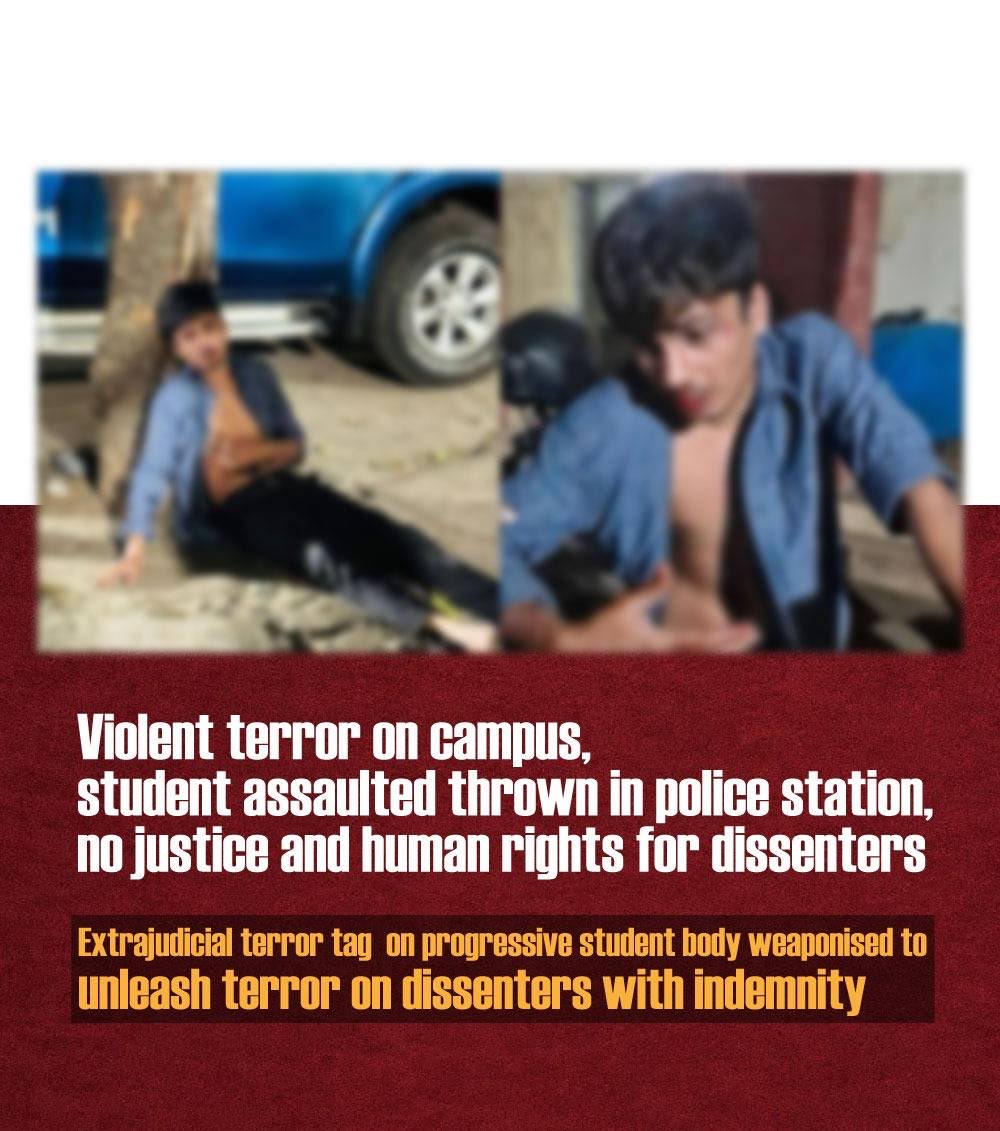
Bangladesh has been weaponised by terrorists to inflict terror on liberal students deemed as dissenters.
For hours Rahid khan Pavel, a student of Dhaka University, was tortured. Even the attackers used motorbike lock pads and sticks to inflict damage on his body. He was dragged through several places before the attackers left him in front of police station in Shahbagh. And the cops did not arrest any of the attackers. Yet these fanatical activists justified this brazen rights abuse under facade of anti discrimination platform, projected as representative of Gen Z that brought regime change in Bangladesh in 2024. After regime change, this very militia group has been carrying out atrocities including mob killing of dissenters.
#Bangladesh
Within a week of leaving office, advisers of the former interim government led by Muhammad Yunus are facing an unprecedented wave of complaints at the Anti-Corruption Commission (ACC).
Allegations against Yunus include misappropriation of funds from Grameen Telecom and Grameen Bank, tax evasion through trusts, and money laundering. Former Law Adviser Asif Nazrul faces claims of influencing bail, case filings, and judicial appointments, including one allegation involving a 200 million taka bribe.
Complaints have also been filed against former advisers for environment, energy, health, student affairs, and information, with accusations ranging from tender irregularities to multi-billion taka corruption and bribery linked to TV licenses.
Transparency International Bangladesh says no one should be above the law if evidence supports the claims. The ACC is now reviewing the submissions.
#YunusRegime #Corruption #CorruptYunus
The Speech That Awakened a Nation
March 7 is more than a date in history. It is the moment a nation found its voice.
On this day in 1971, Bangabandhu Sheikh Mujibur Rahman stood before millions at the Racecourse Ground in Dhaka and delivered a speech that changed the course of history. In just 18 minutes, he united a people who had endured decades of political exclusion, economic exploitation, and cultural repression.
With remarkable courage and strategic wisdom, Bangabandhu inspired a nation to prepare for its struggle for freedom while avoiding immediate repression from the regime. His words mobilized millions and laid the foundation for Bangladesh’s Liberation War.
In 2017, the historic speech was recognized by UNESCO and added to the Memory of the World Register.
March 7 was not just a speech. It was the awakening of a nation.
Joy Bangla. 🇧🇩
#Bangladesh #7March #March1971 #Bangabandhu
Allegations Rock Bangladesh’s International Crimes Tribunal Prosecution
----
Fresh allegations have emerged from within Bangladesh’s International Crimes Tribunal prosecution team, raising questions about conduct at one of the country’s most significant judicial institutions.
Prosecutor BM Sultan Mahmud has accused former Chief Prosecutor Tajul Islam of operating what he described as a “syndicate” that allegedly granted state witness status to certain accused individuals in exchange for money.
Speaking to @banglatribune and cited in reports by The Daily Star, Mahmud claimed that financial transactions were linked to decisions involving a former Inspector General of Police, known as Mamun, and an accused named Afzal in the Ashulia body-burning case. According to his account, both were granted immunity or acquittal after being made state witnesses.
Mahmud further alleged that #SupremeCourt lawyer Shishir Monir was present during key stages of questioning at the Dhanmondi investigation office — a claim that, if substantiated, could raise procedural concerns.
Additional allegations include an incident in late November in which, he claims, the wife of an accused person entered a prosecutor’s office carrying a heavy bag. Mahmud says the matter was reported internally but not formally investigated, and that the accused was subsequently granted state witness status and acquitted.
He also raised concerns about other cases, including proceedings in Chankharpul and Rangpur, where he alleges inconsistencies between witness testimony and prosecutorial decisions.
The allegations have not been independently verified. Those named in the claims have not publicly responded.
If proven, the accusations could have serious implications for prosecutorial integrity, due process safeguards, and public confidence in the tribunal system — an institution established to address some of Bangladesh’s most sensitive and high-profile cases.
For now, the claims remain allegations. But they are likely to intensify scrutiny of the tribunal’s operations in the days ahead.
#Bangladesh #ICTBD
Pre-Stamped Ballots to Inflate Turnout?
A voter reportedly received a ballot paper already stamped on the scales symbol. When she asked for a fresh one, the presiding officer allegedly replied: “Whichever ballot I give you will already be stamped on the scales.”
Critics accuse the Yunus administration of manufacturing participation amid boycott claims — inflating turnout instead of ensuring genuine voting.
If every ballot is already marked, what real choice does a voter have?
#BangladeshElections2026 #Bangladesh #BangladeshElections
“Orderly Voting” — But My Vote Was Already Cast
“They said everything would be orderly. But when I went to the centre, someone had already cast my vote. Later, they adjusted the papers and let me vote again.”
📍 Halishahar, Chattogram
If votes can be cast before voters arrive, how orderly is the system really?
#BangladeshElections2026 #Bangladesh #BangladeshElections
As the Election Commission declared that turnout was very low, around~ 14–15% by mid-morning, around 11 am, leading to images of empty polling stations and low participation. By midday, based on reports from a substantial number of centres, the Election Commission reported that 32.88% of voters had cast their ballots nationwide. Just an hour after. This figure attracted widespread discussion, the question is how this can be doubled in an hour.
https://t.co/htK4srYE9y
#Bangladesh #BangladeshElections #BangladeshElections2026
Bangladesh Election 2026 — Mandate or Mystery?
On 12 February 2026, Bangladesh held its 13th parliamentary election and a constitutional referendum. The Election Commission reported 59.4% turnout, calling the vote peaceful and orderly.
But questions remain‼️
In Rajshahi – 4, turnout was first reported at 244%, later revised to just over 72% - an error officials say was technical, but critics say it deepened doubts. Other constituencies, including Netrokona and Sirajganj, have also faced scrutiny over unusual figures.
The referendum ballot design and the high number of rejected ballots have sparked further debate. The election took place without the participation of the Awami League, shaping perceptions of legitimacy.
International observers described the polls as peaceful. Domestic critics call them flawed.
The core question remains:
Was February 12 a democratic milestone - or a crisis of trust?
#Bangladesh #BangladeshElection2026 #BangladeshElection
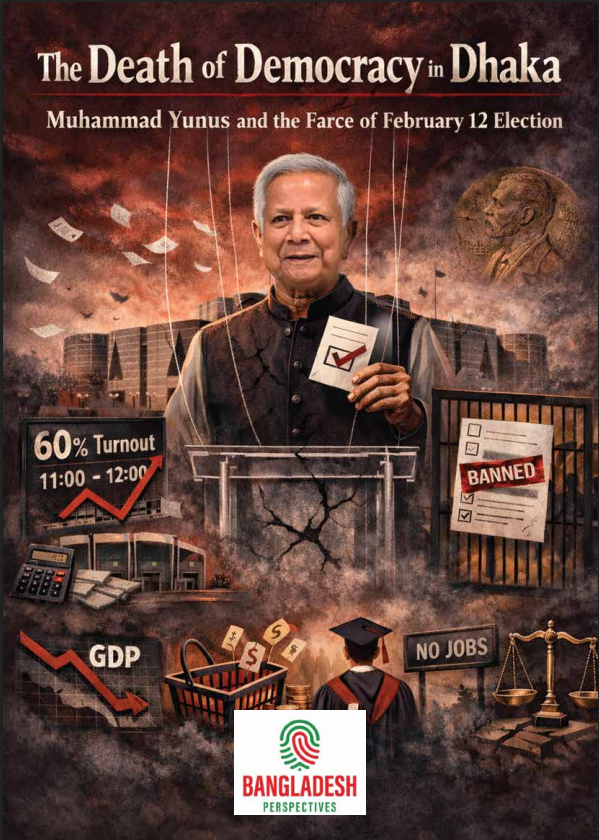
The international community often views Nobel laureates through a lens of deified reverence,
assuming that a Peace Prize in the pocket equates to a democrat in the soul. But in Bangladesh, that illusion has shattered. On February 12, 2026, the world witnessed not a “democratic reset,” but a meticulously choreographed execution of the very concept of popular will.
Under the cold, academic stewardship of @Yunus_Centre , Bangladesh has exchanged a flawed democracy for a sanitized autocracy, draped in the robes of “reform” and enforced by the threat of the mob.
While the Yunus-controlled Election Commission boasts of a “peaceful” vote, the reality is far more sinister. This was an election of the few, by the few, and for the few, a procedural sham that disenfranchised a third of the electorate to install a government that had already been hand-picked in the backrooms of the “interim” administration.
Read and Download ➡️https://t.co/Yi8YHkCoR8
#Bangladesh #BangladeshElections2026
On 12 February 2026, Bangladesh’s promised return to democracy under the interim administration of Muhammad Yunus instead sparked controversy. While the Election Commission reported 59.4% turnout, independent accounts described empty polling centres and estimated participation as low as 10–13%, raising serious questions about legitimacy and public mandate.
👉 https://t.co/myMobpZ09c
#BangladeshElections2026