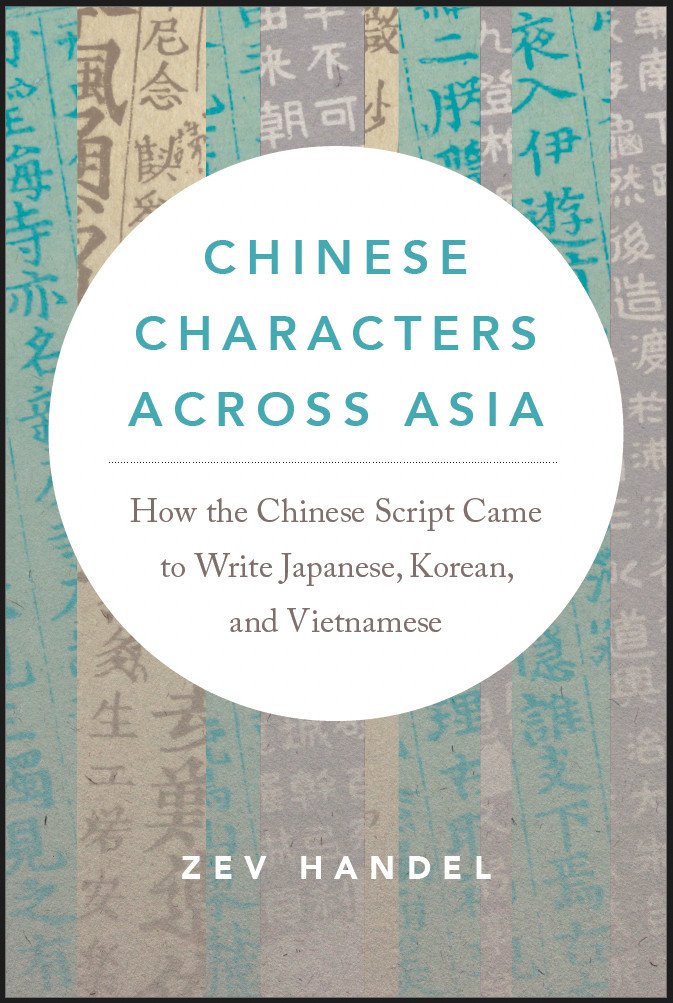
Leaving old posts up here. I’ll be doing new posting over at Bluesky, look for zevhandel there. Check out my new book from @UWAPress at the link below.
The replies to this pinned tweet index my threads on language and linguistics—dealing mostly with sinograms, historical phonology, and etymology.
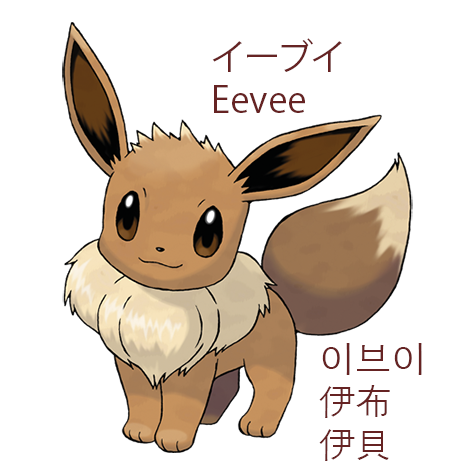
And occasionally Pokémon.
Languages (focus on East Asia): 🇨🇳🇹🇼🇭🇰🇰🇷🇰🇵🇯🇵🇻🇳 etc.
@edwardW2@Hy_KNH@gyankotsu@egasmb I first learned about these materials a few weeks ago. I’m very interested in them. They seem to be limited to a narrow time and region but that is still unclear. On first impression it seems highly likely that they are directly inspired by Japanese kanbun kundoku techniques.
@SvensRekishikan Yes, it is available as an e-book. But University of Washington Press does not sell the e-book version, which unfortunately means their summer sale discount doesn't apply. You should be able to find the e-book at any book retailer that sells e-books.
The big summer sale at University of Washington Press is going for another four days, through July 11. With the code "WARM26" at checkout, get 40% off and free shipping in the US.
Details and links below ...
If you’re interested in reading my book "Chinese Characters Across Asia: How the Chinese Script Came to Write Japanese, Korean, and Vietnamese", but have been waiting to buy it until it was priced as cheap as humanly possible, now is your chance.
2/5
Like the book, this talk will be accessible to everyone—regardless of whether you have any knowledge of Chinese characters or East Asian languages. All are welcome and guaranteed to have a good time.
If you are in the Seattle area, come see me February 3 at the Barnes and Noble UW Book Store. I'm holding a talk, reading, and book signing for my book Chinese Characters Across Asia: How the Chinese Script Came to Write Japanese, Korean, and Vietnamese.
https://t.co/wuIgD4TDK7
Just finished reading _Chinese Characters Across Asia_ by @ZevHandel. It’s the clearest introduction I have read about how the Chinese writing system works—dispelling common, long-held misunderstandings—, and how the script was adapted to Korean, Japanese, Vietnamese, and Zhuang.
@Random832@egasmb Actually this was recently encoded in Unicode, because it was proposed as a male pronoun back in the early 20th century, but it never caught on.
https://t.co/GXJ6wV3P7a
@egasmb ⿰㐅也 (i.e. ⿰X也) is, however, encoded. I did a thread over at Bluesky on the history of 他 and 她 and some of the newer non-gendered written pronouns (the most popular of which is "TA") over at Bluesky: https://t.co/7dPT20ICK6
For example, is ‘toast’ a basic idea? Is ‘toothbrush’ a basic idea? Is ‘dodecahedron’? ‘Disgruntlement’? ‘Romantic love’? Is the slight indentation between the bottom of your nose and your upper lip a basic idea?
***
Come hear more on Tuesday!
https://t.co/eNXJEd5oer
My book talk at Third Place Books in the Ravenna neighborhood of Seattle is next Tuesday!
Below in thread is an excerpt from *Chinese Characters Across Asia: How the Chinese Script Came to Write Japanese, Korean, and Vietnamese*. I'll be reading more at the book event.
Are you in the Seattle area? Come see me at Third Place Books in Ravenna on Sept 16, 7pm. I'll be talking about and reading from my new book, followed by Q&A and book signing. Check out the link for more info, to RSVP, and to preorder a book for signing.
https://t.co/CD8Wal2bEB
Do our spoken languages have single words corresponding to all basic ideas? Are basic ideas immutable, or do they vary across time, space, and cultures?