We (@AinoHosia , Dhugal J. Lindsay and @SariGiering ) are organizing session on Gelatinous Zooplankton in the Ocean Carbon Cycle at upcoming EGU General Assembly, which will be held in Vienna end of April 2025. Call for abstracts open until 15.1.2025. EGU25 - Home, Session OS3.2.
Fascinating study that measured oxygen production in the deep sea. Could the role of mineral-rich nodules on this planet be much more than powering electric vehicles? @NatureGeosci https://t.co/sLZTOTQYtT
Paper from our group @microbialoceanW is published in @NatureComms . We found the taxonomic origin and the expression pattern of the marine microbial protein pool is size fractionated.Check it out: https://t.co/vPGzbVZkh4
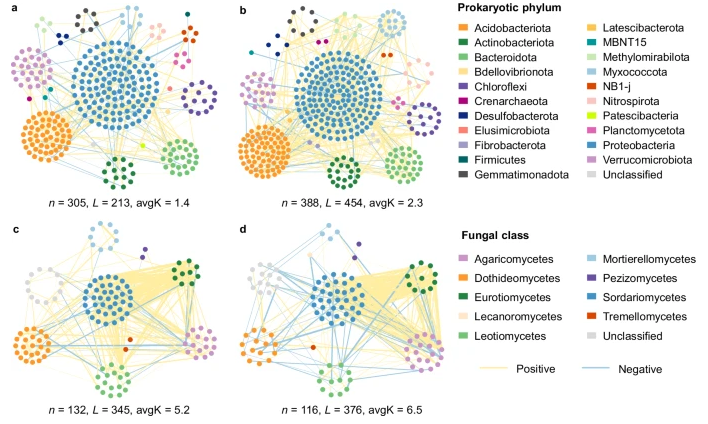
Understanding #microbial responses to #climate warming is crucial for projecting #permafrost#carbon climate feedback. The authors reveal dual microbial roles in promoting both soil carbon release and stable soil carbon accrual under #warming scenarios
https://t.co/7JqaPUu52b
Zhao et al. analyze metaproteomic samples collected from the Pacific, Atlantic, & Southern Oceans to reveal size-fractionated patterns of the structure & function of the marine microbiota protein pool in the water column.
@Zhao_MicroOcean@microbialoceanW
https://t.co/daYZJOGUkS
EUKARYOME: a new SSU-ITS-LSU reference database, well suited for analysis of SSU and LSU short-read amplicons of protists, animals and early-diverging fungi, and long-read amps of all eukaryotes! Curated by specialist researchers.
https://t.co/3QHJL3NLyh
https://t.co/JEJG6wjmxH
NCBI is making improvements to our Taxonomy resource in response to new data and changes in biological nomenclature and classification. We will update the higher-level classification of birds, budding yeasts, prokaryotes, and viruses. Learn more: https://t.co/r4kvfPqLK9