1/ Excited to share our new Nature paper: Functional hierarchy of the human neocortex across the lifespan
We built a continuous normative reference for the brain’s major functional connectivity gradients from 16 days after birth to age 100.
https://t.co/PqeN4tvbde
Using connectome-based predictive models to reveal the systems standardized tests and clinical symptoms are reflecting | Nature Communications
https://t.co/1OYej9ma7B
What matters most for childhood brain organization?
We analyzed 649 variables.
The answer: Socioeconomics (SES); with brain patterns pointing at sleep & stress as drivers.
Even brain-IQ associations were better explained by SES confounding.
In Science: https://t.co/7zDtxSlDBn
Can lesion network mapping predict survival in children with brain tumors? Collaboration with UCL and @Brain_Circuits in @Nature suggests the answer is yes. Cutting the tumor off from this network may confer survival benefit.
https://t.co/CiVAfkLiIv
Our latest, out now in @NatMentHealth led by @IvaIlioska using normative modelling to understand the heterogeneity of atypical FC in autism across different resolution scales:
https://t.co/Tg8mSnXRx5
🧠 I'm so happy to share our personalized circuit-guided neuromodulation targeting platform UNITE, led by @iamzhangvv, is out in @NatureProtocols!
📄 Protocol: https://t.co/P0GzDl02Pg
🔬 Nature: https://t.co/cg366rj3Ow
Our new preprint is out! "Cerebellum-ventral tegmental connectivity as a mechanism-informed target for apathy in schizophrenia"!! https://t.co/59M1wFuKL0
The world must urgently address the silent epidemic of poor #sleephealth.
Our new "One Sleep Health" framework calls for systemic action.
#OneSleepHealth#Onehealth#Exposome
📖 https://t.co/Zb1sVtbRQE
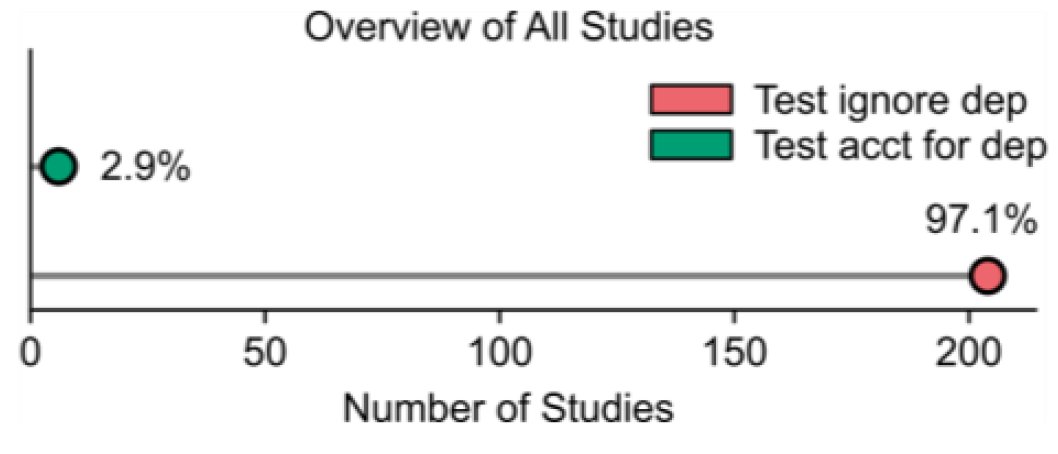
In a meta-analysis of 210 biomedical AI studies that statistically compared models under cross-validation, 97% used invalid statistical tests.
Here's our new preprint https://t.co/OG58Vkeu49 led by @tianchuzeng@kkli20111@ZShaoshi@ten_photos 1/N
@AndrewZalesky@hesheng3 This looks extremely thorough and great work! But I still don't understand exactly why this method (and others proposed after the van den Heuvel paper) are necessarily superior to existing LNM methods that have always used specificity testing?
ROBUST Lesion Network Mapping
Very beautiful work showcasing the power of permutation to address potential LNM concerns
Testing LNM existence is a critical 1st step, and the findings indicate that migraine lacks an LNM signature
Nice work @hesheng3 and team!
Some interesting moments from my conversation with neuroscientist @loopyluppi :
- LLMs already proved one thing: language alone isn't magic. Many philosophers thought language required consciousness, but LLMs decoupled the two.
- Scientists can now wake anesthetized monkeys by stimulating a single tiny spot deep in their brain. The same region exists in the human brain, which means coma patients may one day be woken the same way.
- Under high-dose ketamine, a person can undergo surgery (same effect as anesthesia) and have vivid dreams like flying over a city. Interestingly, their brain scans look nothing like anesthesia and everything like an LSD trip.
- Consciousness seems to live in a middle zone: too much coupling in the brain = unconscious (anesthesia, coma); too much decoupling = altered or psychedelic state.
- This raises an interesting idea: using psychedelics to wake coma patients. Early clinical trials are running, but results are mixed, since the brain has more than one dimension governing consciousness.
- Andrea doesn't rule out the emergence of consciousness in AI: flight evolved differently in birds, insects, and helicopters — same phenomenon, very different mechanisms. Consciousness might similarly arise in non-biological systems.
Link to the full interview below.
1/ I’m excited to share our new @NatureHumBehav paper “Social Functioning in Autism: A Systematic Review & Meta-analysis” https://t.co/UajbwhSp94
We synthesized 35 yrs autism res. to ask a fundamental Q.:
How is social functioning organized, developed, and altered in autism?🧵
Disease biology is heterogeneous, but most research reduces it to group means
NEW WORK characterizing HETEROGENEITY in BRAIN and BIOCHEMICAL biomarkers across >1/2 million people & >30 disorders:
https://t.co/lNfZH48hTJ
Check out the online resource:
https://t.co/azWezh0mAe
💤 🫀 🫁 🧠 👁️ 💪 🫘
Today marks a meaningful milestone for LABS — our SleepChart paper, “Sleep chart of biological ageing clocks in middle and late life,” is now online in @Nature.
In this work, we link sleep patterns with biological aging clocks across the brain and body, highlighting how sleep may reflect broader systemic aging processes.
Key takeaways:
🧠 Sleep and biological aging clocks show a coordinated brain–body U-shaped pattern; this relationship extends beyond the brain alone and involves multiple organ systems and at multiple omics layers.
🧬 Sleep disturbances are linked to disease risks and shared genetic architecture: Short sleep appears to have a broader systemic impact, while long sleep shows a more focal, brain-enriched disease burden.
💤 Late-life depression provides an important example. Brain and adipose aging clocks mediate the relationship between long sleep and late-life depression, while short sleep appears to exert a more direct effect. As always, inverse causation cannot be fully excluded (potentially a sleep-LLD bi-directional relationship).
We are excited to share both the paper and the interactive SleepChart portal with the community (including GWAS summary statistics, etc.).
Paper: https://t.co/94FTh7B8b2
SleepChart portal: https://t.co/iQ2LvMlbpx
Great collaboration from our partners: @chrisdav66 at the University of Pennsylvania, @AndrewZalesky from the University of Melbourne, #PaulAisen and #MichaelRafii from the University of Southern California, #LuigiFerrucci, #KeenanWalker, and others from the @NIHAging, and many other collaborators!
https://t.co/94FTh7B8b2
#SleepResearch #BiologicalAging #AgingClocks #Neuroscience #PrecisionHealth #BrainHealth #AIinMedicine #LABS
A nice real example of such non-ergodicity in behavior is the speed-accuracy tradeoff. When people go faster they become less accurate. But in many tasks, people who are faster are more accurate. [5/12]






![NKBranigan's tweet photo. A nice real example of such non-ergodicity in behavior is the speed-accuracy tradeoff. When people go faster they become less accurate. But in many tasks, people who are faster are more accurate. [5/12] https://t.co/RUMyKkqmvc](https://pbs.twimg.com/media/HHFmhDoaAAAvGbc.png)





