The Chinese call their century of weakness the "Century of Humiliation." They teach it in schools. They built the machine specifically to never be humiliated again.
Muslims teach colonialism as a wound to nurse.
The Chinese taught it as a debt to repay, with interest.
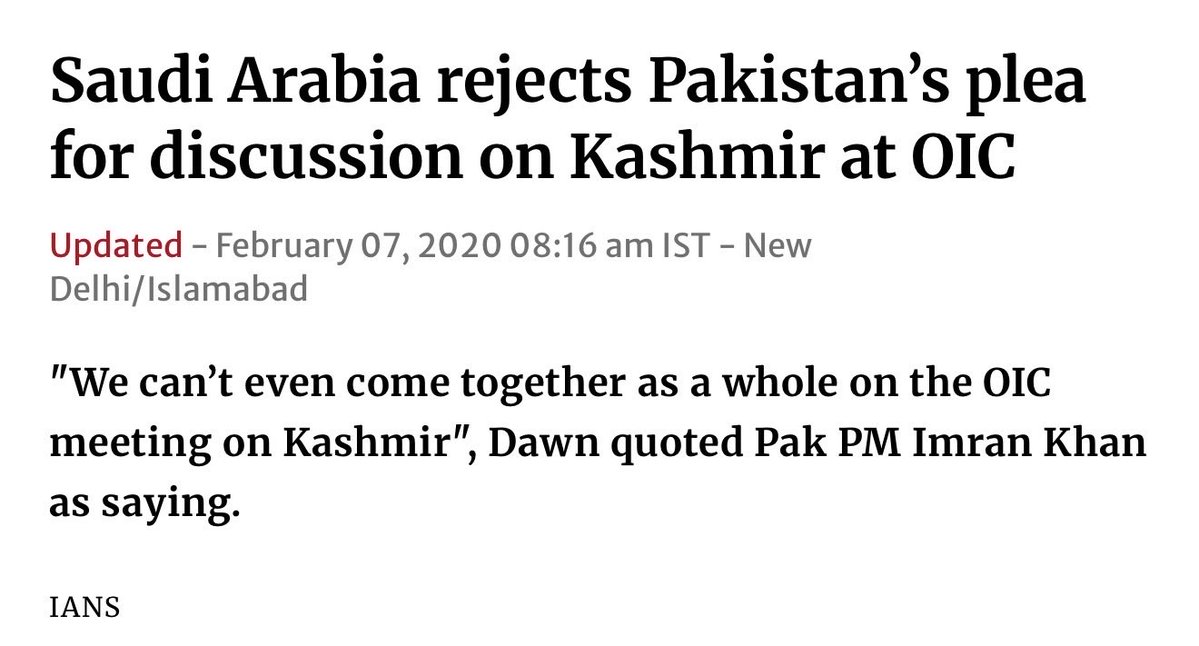
wondering if Saudi Arabia, which literally refused to hold an OIC conference when India abrogated article 370 in kashmir, would actually attack India if India attacked pakistan
More than seven centuries ago, Imām Shihāb al-Dīn al-Qarāfī recorded almost this exact objection to the Qurʾān's account of the Crucifixion and answered both parts of it.
The objection today is essentially:
1. The Crucifixion is established by history; Islam only denied it centuries later.
2. If someone else was made to resemble Jesus, then God deceived people and destroyed the reliability of human perception.
Remarkably, these are precisely the first two questions al-Qarāfī treats in this section of al-Ajwibah al-Fākhirah.
He first records the Christian argument:
“They said: The Jews and Christians are two immense nations spread throughout the eastern and western regions of the earth, and all of them report that the Messiah was crucified. They are of such number that their collusion upon a lie is impossible; and the Gospel likewise reports the Crucifixion…” (al-Ajwibah al-Fākhirah, p. 179)
Their argument is if Muslims dismiss testimony of this magnitude, then the very principle of tawātur, mass transmission yielding certainty, collapses. One could then deny reports about places such as Baghdad or Damascus and ultimately undermine even Muslim appeals to mass transmission themselves (pp. 179–180).
He distinguishes the enormous number of people who eventually believe and repeat a report from the number and independence of those from whom the report actually originated.
For genuine tawātur, he writes, the condition must exist not merely at the end of the chain but at both ends and throughout its intermediary stages:
“The second condition: that the two ends and the intermediary stages be equivalent [in satisfying the conditions of mass transmission].” (p. 181)
If millions of later believers ultimately depend upon a small or non-mutawātir originating body, their later multiplication does not travel backward in time and transform the original report into mass eyewitness testimony.
His principle is simple:
A million repetitions of a report are not a million independent witnesses to the event.
Or, put differently:
the size of a belief’s descendants cannot automatically be transferred to the strength of its ancestral evidence.
That is why al-Qarāfī insists that if the evidentiary condition fails at the root, multiplying the branches cannot retroactively repair it (pp. 181, 184–185).
He then makes another important distinction.
What does sight itself establish?
Al-Qarāfī argues that perception may establish:
“A man is being crucified upon this cross.”
But the further proposition:
“This particular man is certainly Jesus son of Mary.”
is an additional judgment of identity. The event perceived and the identification of its subject are logically distinguishable (pp. 182–184).
So even before debating the miracle itself, al-Qarāfī separates two propositions that are often collapsed into one:
someone was crucified
≠
it has therefore been established with infallible certainty that the crucified individual was Jesus.
One may still construct a historical argument for the Crucifixion using other evidence; al-Qarāfī’s point is more precise, which is that the later numerical universality of Christian belief cannot simply be projected backward and called continuous independent eyewitness tawātur.
Then al-Qarāfī records the second objection and it is astonishingly close to the modern “Allah is a deceiver” argument:
“They said: To affirm that the likeness was cast upon someone other than Jesus leads to sophistry, to falling into ignorance, and to conclusions unworthy of rational people.” (p. 190)
The objection then argues:
If God can make another person resemble Jesus, how can I know that my son is really my son? My wife is really my wife? My friend is really my friend? Perhaps another person has been given precisely their appearance.
In other words:
If miraculous misidentification is possible once, has God destroyed the reliability of sight altogether?
Al-Qarāfī answers:
“This is mere rhetorical exaggeration upon which no reliance can be placed.” (p. 190)
Why?
Because the objection illegitimately moves from:
God can exceptionally create a miraculous resemblance
to:
therefore every ordinary perception must permanently be doubted.
Those propositions do not follow from one another.
An extraordinary divine act does not abolish the ordinary course of the world.
And al-Qarāfī turns the argument directly back upon his Christian interlocutors: their own scriptures affirm transformations more extraordinary than one human being resembling another such as Moses’s staff becoming a serpent and other miraculous alterations of created things (pp. 190–191).
If accepting a single miraculous transformation destroyed all empirical knowledge, then Biblical miracles would produce exactly the same skepticism.
Yet no Christian reasons:
“Moses’s staff became a serpent; therefore I can never again know whether the stick in my hand is really a stick.”
The possibility of a miracle is not the presumption of a miracle.
Al-Qarāfī therefore distinguishes:
what ordinarily occurs
from
what God may exceptionally bring about as a miracle.
And, crucially, he does not frame the event as God maliciously manufacturing Christianity.
He frames it as God rescuing Jesus from enemies who intended to seize, humiliate, and kill him, describing such deliverance as:
“that which befits the generosity of His favors in His beneficence toward His chosen prophets and saints.” (p. 184)
So the Qurʾān's narrative is not:
“God wanted mankind to believe a false religion.”
It is:
Jesus’s enemies plotted to kill God’s messenger; God frustrated their plot and rescued him.
Everything later inferred by human beings from the event is not thereby transformed into something God Himself asserted.
Indeed, Qurʾān 4:157 does not say, “God revealed to mankind that Jesus had been crucified.”
It says:
“Rather, it was made confused/resembling to them,”
and immediately adds:
“They possess no knowledge concerning it except the following of conjecture; and they certainly did not kill him.”
So the Qurʾān’s own argument is precisely about the difference between appearance, inference, and certain knowledge.
The irony is that what is presented today as an obvious modern objection
“History says Jesus was crucified, and substitution would make God a deceiver”
was already formulated in a considerably more sophisticated form by al-Qarāfī’s Christian interlocutors over seven centuries ago.
And al-Qarāfī did not answer it with “trust me.”
He answered it by asking what historians and philosophers of testimony still have to ask:
What exactly was observed?
Who observed it?
How independent were the original witnesses?
How was the report transmitted?
When does later consensus constitute evidence for the event itself?
And why should the possibility of an exceptional miracle annihilate the reliability of ordinary perception?
Those are epistemological arguments.
Calling the Qurʾān “a guy 600 years later saying trust me bro” does not answer them.
[Imām Shihāb al-Dīn al-Qarāfī, al-Ajwibah al-Fākhirah, pp. 179–185, 190–191.]
🚨🇨🇳 TRAILER — Chinese film flips Hollywood script, casting America as the invader.
“Once Upon a Time in the Middle East” follows a Chinese restaurant owner fighting to survive a U.S. invasion.
Paul Newman In 1983 stated that the United States disregards the truth, always creating exaggerated enemies to justify wars and massacres for profit, while ignoring crimes committed by other nations like Israel.
Eitan Newman, a 17-year-old Israeli, grills one of Apartheid Israel's most genocidal politicians, on an Israeli TV program called "First Vote" in an August 2, 2026 interview.
It's a rare moment in Hebrew media when a genocidal Israeli politician is forced to defend genocide on live TV. Here's a condensced transcript:
Newman: Call it what you want, ethnic cleansing, transfer, voluntary emigration, fine. So, I want to ask you, what will happen to the Gazan who doesn't want to emigrate? Will IDF soldiers pile him onto a truck and expel him? Where will they take him? What will you do to him?
Feiglin: First of all, the vast majority of them want to leave, okay?
Newman: I asked about those who don't want to leave.
Feiglin: We need to encourage them to leave, because whoever doesn't leave will murder you.
Newman: That's not what I asked. I asked, what will you do to someone you wanted to leave and doesn't leave.
Feiglin: You'll make him leave.
Newman: What does "make" mean?
Feiglin: Every way possible. We'll shut off his water pipes, for example. Just an example.
Newman: And whoever doesn't leave can die, as far as you're concerned?
Feiglin: Then he'll be thirsty. He'll have to leave to drink a cup of water. Just an example.
Newman: So, for example, kind of kill off everyone?
Silence
Newman: Yes? Like everyone should die? Either they go or they die? Are they not human?
Feiglin: It's pretty stunning, excuse me, that after October 7, you treat us like murderers and that Islamo-Nazi terror entity like it's under attack. Forgive me.
Newman: I'm asking about your policy. I'm trying to understand what will happen if you're elected to the Knesset.
Feiglin: You know, I have a grandson your age, okay? His brother lies right now beneath a grave marker because of such questions.
Newman: So, I'm like responsible for his killing? Is that what you're saying?
Feiglin: No, I'm saying that your twisted worldview, which pursues the human rights of that murderous entity, led in the end to that disaster.
Newman: So, everyone should die. Two million people will die. However many you say are there, they should die.
Feiglin: I'm suggesting to you that you also listen to the person you're asking, not only to yourself.
Source: https://t.co/cfE6kSHiA2
It is important for the people of Pakistan to be told what exactly this commits Pakistan to do. Parliament should ask for a briefing
Pakistan, Saudi Arabia, Turkiye sign tripartite defence agreement in Makkah https://t.co/AVtllLHdln
Finkelstein: "Israel has become a nation of child killers. From Daniella Weiss to Benny Morris-from settlers urinating on children to soldiers filming a dying boy and blocking aid."
This is not a few bad apples. This is a citizen army.
When the entire spectrum-from extreme to mainstream-treats Palestinian children as subhuman, it's not an aberration. It's a national character
The funniest part was not that the Chinese girl refused U.S. citizenship.
It was the host’s desperation to prove that because she grew up in America, received an American education, and has family working there, she therefore owed America her highest loyalty.
That was the accusation hiding beneath every question:
How dare you benefit from America and still place your own country above it?
Then he finally asked the question he had been circling around all along:
If China and the United States went to war, which side would you choose?
She barely hesitated.
China.
The entire room went quiet.
She said: I am Chinese. China is my country. Much of my family lives there. I feel comfortable there.
That answer broke him.
He had never even visited China, yet kept lecturing her about “freedom,” Xinjiang, American diversity, and China supposedly being culturally homogeneous.
She calmly corrected him: China is a multiethnic civilization. Northern and southern China already differ enormously, before even discussing its many ethnic groups.
He kept exposing his ignorance.
She kept answering without fear, apology, or the slightest need for his approval.
By the end, he was so shaken that he said seeing her made him think America was “cooked.”
What he failed to understand is that she was not rejecting what American education had given her.
America gave her the tools of argument and inquiry.
China gave her cultural roots, discipline, and the confidence to know who she was.
These things do not contradict each other.
They made her harder to patronize.
Her family did not choose an American education so that she could surrender her identity in exchange for approval. They chose it so she could learn from another system without becoming spiritually annexed by it.
She understood what America could offer—and also understood that accepting an education does not create a debt of national allegiance.
That was what the host could not process.
He mistook education for assimilation, opportunity for ownership, and gratitude for obedience.
She embodied something he had not prepared for:
Western critical thinking.
Chinese cultural depth.
The confidence to learn from America without worshipping it.
She knew America intimately—and still understood that it was not the center of the world.
The age when every foreign student was expected to treat America as humanity’s final destination is over.
America is no longer the only choice.
American identity is no longer the highest prize.
And American approval is no longer the measure of whether a young Chinese person has succeeded.
Here is the question that European civilization has never answered:
At what point, in the five hundred years of colonial practice, should a European person have been expected to know that what was happening was wrong?
Not 1945. That is too easy, and too convenient.
1904, when the German Empire issued a written extermination order against the Herero people and generals carried it out and soldiers followed orders and administrators recorded the deaths and the skulls were shipped to universities for racial science.
At that point, should someone have known?
1890, when the systematic amputations in the Congo were being photographed by missionaries and the photographs were being published in European newspapers and reformers were raising the alarm and Leopold II was receiving those reformers in his palace and explaining that the civilizing mission required certain difficult measures.
At that point?
1830, when the Trail of Tears was a policy debated in the United States Congress and approved by elected representatives and challenged by lawyers and litigated to the Supreme Court, which ruled against it, and then carried out anyway.
At that point?
1619?
1492?
The question matters because the defense of European civilization against the charge that the Holocaust was colonialism coming home always rests on the assumption that colonial violence was invisible, unexamined, a product of its time.
It was not invisible.
It was photographed and debated and reported and litigated.
It was chosen.
At every decision point, by specific people with names and offices and moral agency, the choice was made to continue.
The Holocaust produced Nuremberg because the victims were European and the defendants were the enemies of the victorious powers.
The colonial period produced nothing comparable because the victims were not European and the defendants were the victorious powers.
That is the only reason one has a trial and the other has a museum of natural history.
Same civilization.
Same logic.
Different documentation.