Hard choices, easy life. Easy choices,hard life 🤨What works for one is what one should be concerned with. Biology is a science, medicine is a business - T.Rees
8. No one thinks about you as much as you believe.
That mistake you made years ago.
That awkward comment.
That embarrassing moment.
No one remembers it.
Only you keep replaying it over and over.
You're the only prisoner inside that jail.
This 5 year old boy asked to go outside so he could spend time with his grandma (she's in heaven). ❤️
The innocence of a child's heart is truly touching.
A man goes in for a colonoscopy and he happened to leave his phone recorder running because he wanted to record postop instructions from the doctor. What he captured was the anesthesiologist talking to him while he was under telling him that she wanted to punch him in his face to knock some sense into him and that he was a wuss . She also talks about falsifying his medical report.
It’s really getting scary the number of unhinged doctors that are doing medical procedures on helpless vulnerable patients.
The patient did not report her to authorities however he did sue her for malpractice in 2015. He was awarded $500,000 for malpractice and defamation.. I think he should’ve pursued criminal charges against her as she was way out of line, and was more than likely a danger to many other patients. Dr. Tiffany Ingham left her practice a year after the settlement while only receiving a reprimand from her medical board .
I really like certain professions should require psychological evaluation before allowed contact with the public. Just my opinion.
@normalmadeline look into stopping eating gluten bc celiac/sensitivity can damage the gut's ability to absorb nutrients and causes a bunch of vitamin deficiencies from that, so vitamins don't work well bc of the slowed absorption. it took me years to figure this out so i always try to share
A woman asked an elderly man, "How much do you sell these eggs for?"
The old man replied, "50 cents per egg, lady."
The woman said, "I’ll take 6 eggs for $2.50, or I won’t buy any."
The old seller answered, "You can pay whatever you want. It’s fine. I haven’t sold a single egg today, and I need to sell everything to feed my family."
She bought the eggs at her price, feeling like she had won.
Later, she got into her nice car and went to a fancy restaurant with her boyfriend. They ordered what they wanted, ate a little, and left most of it.
The bill came to €180, and the woman left €200, telling the owner it was a tip.
For the chef of a luxury restaurant, this might seem normal, but for the egg seller, it seems unfair.
The question is:
Why do we always feel the need to show power over a poor seller when we buy from them, yet we are so generous to those who don’t need our help?
I once read something that stayed with me:
“My father would buy goods from the poor at high prices, even when he didn’t need them. He would sometimes pay more than the asking price. I asked him why, and he said, ‘This is charity wrapped in dignity, my daughter.’”
I know most of you might not share this story, but if you’re one of the few who took the time to read it, please consider sharing it. Maybe you’re planting a good seed for someone to see.
red light therapy sounds like complete pseudoscience until you actually read the 5,000+ peer reviewed studies on photobiomodulation. then it sounds like cheating
the mechanism is simple. red and near-infrared light (630-850nm) penetrates your skin and is absorbed by cytochrome c oxidase in your mitochondria. this directly increases ATP production in every cell the light touches. more energy per cell. that's it. that's the whole mechanism
- accelerates wound healing and tissue repair. used in burn units and post-surgical recovery
- reduces joint pain and inflammation. multiple studies on arthritis and tendinopathy
- increases testosterone when applied to the testes. yes really. a study showed 120% increase in T levels with testicular light exposure
- improves skin collagen density and reduces wrinkles. dermatologists use it but charge $300 per session
- enhances muscle recovery and reduces delayed onset soreness
- improves thyroid function in hashimoto's patients enough to reduce medication dosage in clinical trials
you don't need a $1,200 panel. a $60 red light bulb from amazon with the right wavelength (660nm red + 850nm near infrared) works on the same physics
use it 10-15 minutes on target area from about 6-12 inches away. morning is ideal. don't wear eye protection unless pointed at face. consistency matters more than session length
the fitness influencers made this look like a gimmick by posing shirtless in front of $3,000 panels. the actual research is decades old, military funded, and more robust than most pharmaceuticals on the market
A Japanese immunologist spent 20 years proving that the chemicals trees release into the air walk into your bloodstream, hunt down your stress hormones, and arm your immune system in ways no therapist or pharmaceutical has ever matched, and most of the data has been sitting in Japanese medical journals for two decades waiting to be translated.
His name is Qing Li.
He is a clinical professor at Nippon Medical School in Tokyo and the president of the Japanese Society of Forest Medicine. The Japanese government has been funding his research since 2004, and the body of work he has produced is the reason forest bathing is now an officially prescribed clinical therapy in Japan and Korea.
The story actually starts in 1982, when the Japanese Ministry of Agriculture, Forestry and Fisheries coined the term shinrin-yoku to describe the practice of slow, mindful walking in a forest. They did it for a practical reason.
Japan was urbanizing fast, stress-related illness was climbing, and the country had thousands of square kilometers of forest sitting unused. The idea was to give people a reason to walk into the trees... They had no idea what was actually happening to the human body during those walks until Qing Li ran the first proper experiment in 2005.
He took twelve healthy adult men on a three-day, two-night trip to a forest park. They walked for a few hours each day. Nothing strenuous. No prescribed routes or breathing exercises. They simply walked slowly through the trees, breathing the air, looking at the forest.
Li drew blood and urine samples before the trip, on the second day, on the third day, on day seven after returning home, and again on day thirty.
The numbers that came back from the lab were not what anyone expected.
The activity of a specific type of immune cell called the natural killer cell, which is the cell your body uses to hunt down cancer cells and virus-infected cells before they can spread, had jumped by roughly 50 percent during the forest trip. The actual number of natural killer cells circulating in the bloodstream had increased significantly.
Three different anti-cancer proteins that those cells produce, called perforin, granzymes, and granulysin, had all risen sharply. And the effect did not disappear when the men went home. The immune boost was still measurable on day seven and was still partially present on day thirty.
Two hours a day in a forest had upgraded the immune system for a full month.
Li ran the same experiment with women a year later and found nearly identical results. Then he ran it with a control group who took a three-day trip through an urban area with the same amount of walking, the same hotel quality, and the same diet.
The urban group showed no measurable change in natural killer cell activity at all. The forest was doing the work, not the vacation.
The mechanism turned out to be a class of airborne molecules called phytoncides. Trees produce these compounds to defend themselves against insects, bacteria, and fungi. Pine, cedar, oak, and cypress trees release them in particularly large amounts, especially in warmer weather and after rainfall.
When you walk through a forest, you are inhaling those molecules into your lungs and absorbing them through your skin, and once inside your body they appear to directly stimulate the production and activity of the very immune cells Li was measuring in his lab.
Roughly 50 percent of the health benefit of a forest walk, according to Li's data, comes from the chemistry of the air itself. The other half comes from what the forest is doing to your nervous system.
This is where it stops being only about the immune system and starts being about stress.
A separate Japanese research team measured cortisol, the body's main stress hormone, in 84 participants across 35 different forest sites. They drew samples before and after a 30-minute walk in each forest and compared them to control walks in matched urban environments. The cortisol levels of the people who walked in the forest were lower than the cortisol levels of the people who walked in the city by a significant margin. Their heart rates were lower. Their blood pressure was lower.
The activity of their parasympathetic nervous system, which is the part responsible for rest and recovery, had gone up. The activity of their sympathetic nervous system, which is the part that drives fight or flight, had gone down.
Then a researcher at the University of Michigan named MaryCarol Hunter ran the cleanest version of this experiment ever done. She recruited participants from a city and told them to take a nature pill three times a week for eight weeks.
They were free to choose the time, the place, and the duration of the nature experience, as long as it was outside, in daylight, and free of phones, conversations, and aerobic exercise. They sent her saliva samples before and after each session so she could measure cortisol changes accurately and rule out the normal daily drop in stress hormones that happens to everyone.
The result was that participants experienced a 21.3 percent drop in cortisol per hour spent in nature, with the biggest payoff happening between minutes 20 and 30 of the walk.
After that, the cortisol kept dropping, but more slowly. The threshold dose for measurable stress relief was just 20 minutes outside in something that looked and felt like nature.
What none of this means is that nature is a substitute for therapy or for medication when someone genuinely needs them. Therapy treats different things than a walk does, and Li himself has been careful in interviews to call forest bathing a complementary intervention rather than a replacement for clinical care.
But what the research has settled is that the human body has a physiological response to being among trees that operates on the same biological systems modern medicine is trying to reach with drugs and clinical protocols, and that response is fast, measurable, and free.
The strangest part of Li's work is the implication he keeps repeating in interviews. The average person now spends more than 90 percent of their life indoors. Their cortisol stays elevated. Their natural killer cells stay sluggish.
Their parasympathetic nervous system rarely gets a chance to take over. The system that was tuned by millions of years of life under a canopy of trees is being asked to run permanently inside a box made of drywall and screens.
Your body has not forgotten what it is supposed to do in a forest. It is waiting for you to walk into one.
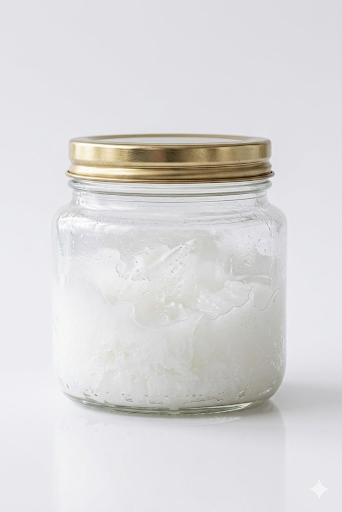
COCONUT OIL may be one of the most powerful foods for reversing cognitive decline.
One doctor documented how just 5 spoonfuls a day helped her husband regain function he had lost months earlier.
Here's why it works (and how to start using it at home):🧵
Across every recorded near-death experience in the scientific literature, one detail never breaks.
The people waiting at the end of the tunnel are always dead.
"There's never been a report of somebody who's gone down the proverbial tunnel and seen a living person at the other end of the tunnel."
That's Dr. Michael Egnor, professor of neurosurgery at Stony Brook.
If these were hallucinations or wishful thinking, he argues, at least once in a while you'd see your living husband or wife. You never do.
What you do find?
Over a dozen cases of people greeting a relative on the other side they didn't yet know had died. Crash victims sent to separate hospitals, one seeing the other, before anyone in the room knew that person was gone.
A dying brain shouldn't have that information. Somehow it did…
To the caregivers nobody checks on…
The wife helping her vaccine injured husband get dressed.
The husband lifting his disabled wife into bed every night.
The parents caring for a medically complex child.
The daughter looking after a parent with dementia.
The son spending every weekend at the nursing home.
The people who haven’t had a full day off in years.
We see the patient.
We see the diagnosis.
We see the wheelchair.
But we rarely see the person carrying it all.
The sleepless nights. The missed vacations. The financial stress. The grief. The exhaustion.
Some of the strongest people on earth aren’t famous, wealthy, or celebrated.
They’re quietly holding someone together while nobody notices they’re falling apart too.
Today, send some love to the caregivers.
They need it more than they will ever admit. ❤️
This is a MUST repost
66% of chronic pain patients became pain-free or nearly pain-free in 30 days with a neuroplasticity protocol.
This was a real study. University of Colorado Boulder. Published in JAMA Psychiatry, 2021.
Some patients had been in pain for a decade. Bulging discs. Herniated discs and still became pain free.
Her body was cooled to 60 degrees. Her heart was stopped. The blood was drained out of her brain. Every monitor in the room said she was dead.
Then she woke up and described her own surgery.
Pam Reynolds had an aneurysm at the base of her brain that couldn't be operated on by ordinary means. So Dr. Robert Spetzler stopped her heart, drained her brain, and gave himself 30 minutes to rebuild the artery.
When she recovered, she told him she had watched the whole thing. He told her she couldn't have. She was under surgical drapes. She was brain dead.
So she described his custom-made instruments. The conversations between the doctors, word for word. The problems that came up mid-surgery.
"She described the music they were playing in the operating room while she was brain dead."
Spetzler's own response: "I can't explain it."
🚨 My dad was diagnosed with Stage 4 Prostate Cancer out of nowhere.
Just a few months ago, he was completely fine. His physical 5 months earlier showed normal labs. Then suddenly he started feeling achy and exhausted.
They ran bloodwork and his PSA came back at 141. It had been 3.4 just months earlier.
Scans showed Gleason 9 Prostate Cancer with widespread bone metastases. Stage 4.
We didn’t waste time. Along with the hormone blockers and chemo, his oncologist started adding:
- Ivermectin 24 mg/day
- Fenbendazole 222mg / day
Three months later, his PSA dropped from 141 to 0.25.
That’s a 99.8% drop.
He’s feeling much better, has more energy, and the numbers are moving in the right direction fast. His oncologist is very happy with how he’s responding.
We’re still waiting on the next set of scans, but right now, we’re extremely grateful for how well things are going.
This isn’t medical advice, just sharing what happened with my dad. If you or someone you love is going through something similar, I hope this gives you a little hope.
Otto Warburg, Nobel laureate, showed a century ago that cancer cells run on sugar. We trust it so completely that hospitals inject radioactive glucose to make the tumour glow, then read the scan to find it.
Oncology ward lunch: jelly, ice cream, fruit juice, a biscuit.
We use sugar to hunt it, then serve it pudding.
The Nobel Committee has not commented.
I finally understand what Machiavelli meant when he said, “Never play fair in a game where others cheat.” It doesn’t mean become evil. It means stop being naive. Stop bringing honesty to people who study manipulation, stop giving access to people who weaponize closeness, and stop expecting clean hands from people who already showed you they’ll throw dirt. Sometimes wisdom is not revenge. Sometimes wisdom is learning the rules of the room before the room uses your goodness against you.
She was 30. He was 40, dying, and had nowhere left to go.
Cicely Saunders met David Tasma in a London hospital in 1947. He was a Polish Jew, one of the few who had escaped the Warsaw Ghetto. Now he was alone, fading away in a crowded surgical ward where doctors had stopped trying. To them, dying meant failure. When patients could no longer be cured, they were moved to back wards, dulled with medication, and their families were told, “There’s nothing more we can do.”
But Cicely did not walk away.
She visited David for weeks. She sat with him. Kept him company. Truly listened. He told her something she would carry for the rest of her life: “I want a place where people like me can die properly.”
Before he died on February 25, 1948, he gave her his life savings: £500. Then he said something else: “I’ll be a window in your home.”
She did not have a home. She did not have a hospice. She had nothing but his words and his money.
But she had a purpose.
For 19 years, she pursued it.
First, she learned about pain. She trained as a nurse, but a back injury changed her direction. She became a medical social worker and saw how hospitals failed people who were dying. Then she watched the nuns at St Luke’s Home in Bayswater do something radical: they gave morphine on a schedule, before the pain came back. Patients remained awake. They could speak. They could say goodbye.
That was when Cicely understood something.
No one was listening to the science.
Doctors would not listen to a nurse. So she became a doctor. At 33, she entered medical school. By 1957, she had earned her degree, with honours in surgery.
For seven years, she studied. She tested morphine doses, timing, and combinations. She proved what many doctors refused to believe: regular pain medication did not create addiction. It created clarity. Patients could live their final months awake, present, and able to be with the people they loved.
She also identified something she called “total pain.”
Pain was not only physical. It was emotional. Social. Spiritual. It was the pain of watching your family suffer. The pain of unfinished business. The fear of what came next. To truly care for the dying, you had to care for all of it.
It was revolutionary.
Medicine had no language for it.
Cicely gave it one.
In 1967, St Christopher’s Hospice opened in Sydenham, South London. It was not simply a hospital. It was a home. Fifty-four beds. Teaching spaces. Research laboratories. Gardens. Windows, real windows, that allowed dying people to see the world one more time.
The glass at the entrance was David Tasma’s window.
Within a few years, St Christopher’s became the model the world would follow. Florence Wald came from Yale, learned from Cicely, and carried the hospice movement to America. By 1974, American hospices were opening. By the 1980s, every developed country had them. Palliative care became a medical specialty.
One refugee’s final words had helped change medicine.
Cicely stayed. In 1980, she married a Polish painter named Marian, because it seemed she could not help falling for Polish men. She continued working at St Christopher’s into her late 80s. She received honours, honorary degrees, and even the Templeton Prize for progress in religion.
But she refused to become a celebrity. When one American visitor asked to touch “the great founder,” Cicely snapped, “No you can’t. I bite. I am not a cult figure.”
On July 14, 2005, Cicely Saunders died of breast cancer. She was 87.
She died at St Christopher’s Hospice. In the home she had built. Cared for by the staff she had trained. Living by the principles she had created.
Here is what matters: before Cicely, dying was treated as failure. After her, it became a stage of life deserving science, dignity, and love.
She spent 60 years proving something the world had forgotten: how we die matters as much as how we live.
Every hospice on Earth exists because one woman refused to accept the words, “nothing more we can do.”
MOST OF US DON'T KNOW WE'RE LIVING THE GOOD OLD DAYS.
by Michael Whelan
I turned 70 recently, and I've discovered something that surprises people.
An authentic hug can still bring me to tears.
Not the quick social hug.
Not the obligatory hug.
I'm talking about the kind where another human being wraps their arms around you and, without saying a word, somehow communicates, "I see you. I know you've been carrying a lot. You don't have to carry it alone for the next few seconds."
Those hugs undo me.
I've survived three cancers. I've endured surgeries. I've sat through chemotherapy. I've buried the love of my life after almost half a century together. I've learned that the human heart can survive things it never should have to survive.
Yet it is often a simple hug that breaks through the walls I've built around myself.
Maybe it's because life has taught me something I wish I'd understood much earlier.
When we're young, we spend so much of our lives chasing what comes next.
The promotion.
The bigger house.
The dream retirement.
The destination we believe will finally make us happy.
But somewhere along the way, if we're paying attention, life changes the question.
We stop wondering whether we're successful enough and start wondering whether we've noticed enough.
The dog sleeping peacefully at our feet.
The friend who calls at exactly the right moment.
The laughter coming from another room.
The hand we've held a thousand times without realizing how precious it truly was.
The hug we almost didn't give.
I've come to believe that happiness rarely arrives as a grand event.
It sneaks quietly into ordinary moments and waits for us to notice.
Most of us spend our lives searching for extraordinary days while standing knee-deep in them.
That's the tragedy.
And that's the miracle.
Because one day you'll look back on this season of your life—the people, the conversations, the ordinary Tuesdays, the hugs, the sunsets, the beautiful chaos—and you'll realize something that was true all along:
These were the good old days.
The secret is learning to recognize them before they become memories.
'Heal your inner child, heal your life. - Carl Jung.'
But wait, how do you do it?
Here are 12 practical methods in one place: 🧵
1. Notice your triggers. They’re not random.