A veces esto se vuelve indescriptible…
La Casa Blanca lanza un sitio sobre “aliens”…como si se tratara de extraterrestres, cuando en realidad se trata de un nuevo episodio de amedrentamiento de inmigrantes.
Como si la vida de millones de seres humanos fuera un (muy mal) chiste.
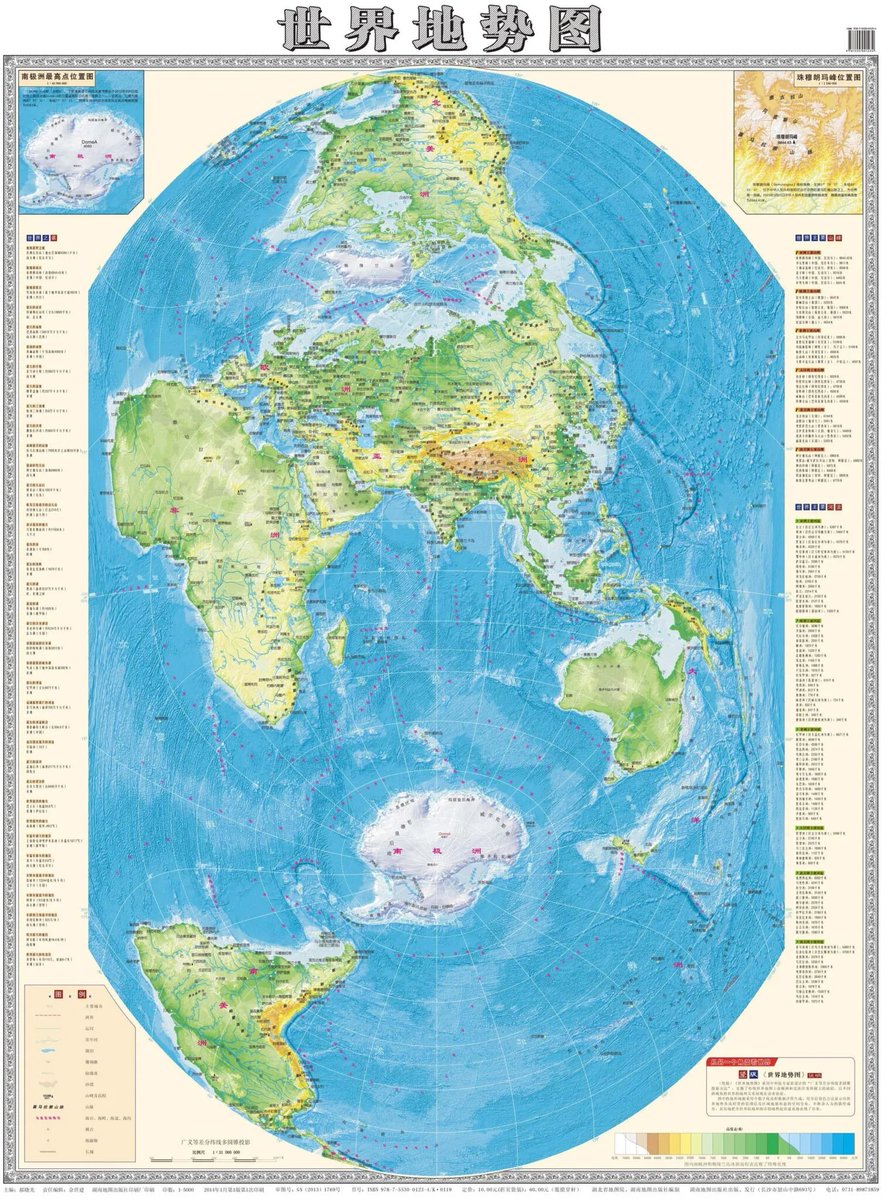
El mapa chino de proyección vertical, oficializado en 2013, tiene varias cosas interesantes. Por supuesto, ubica a China en el centro del mundo, en lugar de Europa. Hasta ahí, lo habitual de toda cartografía soberana, cuyo principio es mirar el mundo desde donde nos ubicamos.
El mapa logra reforzar de forma contundente el par conceptual Norte Global - Sur Global , clave en la narrativa y perspectiva de la política exterior China. Además, divide Norte América de Sur América, mostrando a las "Américas" en posiciones opuestas en el mapa. El océano Índico aparece en el centro y en su margen sur la Antártida cobra un notorio protagonismo.
The Trump phenomenon:
why did half of America believe a liar?
Many people keep asking the same question: how did Donald Trump come to power?
Why did such massive support go to a man widely seen as uneducated, irresponsible, and narcissistically self-obsessed?
Why did intelligence, competence, and experience suddenly carry so little political weight — and what does that say about democracy itself?
• Populism always sells simple answers.
Where experts talk about complexity, risks, and nuance, populists shout slogans. “Build the wall.” “Bring back greatness.” A slogan is always shorter than analysis — and therefore more effective for masses tired of thinking, or who never wanted to think deeply in the first place.
• Emotion defeats argument.
Trump, like every demagogue, spoke not to reason but to emotion. His rhetoric was built on anger, resentment, and fear. He created enemies, promised revenge, and avoided complicated explanations. Like many populists before him, he relied less on programs and more on outrage and emotionally charged narratives.
• Simplicity becomes the language of the “common people.”
Intellectuals almost always lose in mass politics. Complex language irritates people. Many feel uncomfortable when they do not understand something, but instead of admitting it, they blame the speaker. The person who speaks more simply is seen as “one of us.”
• Confidence is mistaken for competence.
Human nature has not changed. People still confuse decisiveness with wisdom and confidence with knowledge. Trump became a perfect example of the Dunning–Kruger effect: a man with limited understanding who presents himself as a genius. Yet this blind self-confidence is exactly what many voters perceive as strength.
• Populists surround themselves with weaker people.
Demagogues and authoritarian-minded leaders fear intelligent independent thinkers. That is why they often surround themselves with loyal but less competent figures. Trump’s first administration was partially restrained by institutional inertia and traditional Republicans. Later, many critics argued he increasingly preferred loyalists, conspiracy theorists, and ideological fanatics over experienced professionals.
• History keeps repeating itself.
A society searching for easy answers repeatedly opens the door to demagogues. Instead of embracing the difficult reality of democracy — compromise, institutions, responsibility — people choose the illusion of simplicity. They want a “strong leader” who supposedly “knows how” and will finally “tell the truth,” even if that truth is largely fiction.
• Knowledge itself becomes a disadvantage.
One of the paradoxes of modern politics is that intellect often appears weak. Thoughtfulness creates doubt, and doubt annoys people. The one who analyzes seems uncertain. The one who promises certainty sounds convincing. For many voters, appearance matters more than reality.
The lesson is simple and brutal: democracy without thoughtful voters is only a shell.
As long as large parts of society continue believing in easy answers to complex problems, the Trump phenomenon — or something very similar to it — will keep returning in different countries and under different faces.
And every time, it comes with the same promise:
“I alone can fix it.”
That is why democracy requires more than voting.
It requires thinking.
Without that, anyone with a slogan can become your master.
Permitir que madre y padre decidan el orden de los apellidos rompe una vieja regla no escrita: que el linaje del padre valía más, pesaba más y debía aparecer primero por costumbre, no por justicia.
La @SCJN no “modernizó formatos”; tocó una fibra profunda del derecho familiar mexicano. El nombre no es una etiqueta administrativa: es identidad, historia, pertenencia y también igualdad. Si el Estado impone primero el apellido paterno, convierte una tradición en jerarquía.
Por eso, si en una oficina todavía dicen “así lo marca el sistema”, la respuesta es clara: ningún sistema está por encima de la Constitución. El apellido materno puede ir primero. Y eso, aunque a algunos les incomode, también es justicia.
https://t.co/S7RIAnR2Nn
The Iranian navy, which has been destroyed eight times, closed the Strait of Hormuz again, because the United States for the seventh time won the war that wasn’t a war, so the United States can open the Strait of Hormuz that was open before the not war.
The not war that started to get the uranium that was completely obliterated, so that the Iranians can’t build the nuclear bomb that they weren’t building for the not war that the United States started.
Then the United States which has nuclear weapons threatening to use nuclear weapons to prevent Iran from having nuclear weapons because having nuclear weapons is dangerous.
If the United States saw what the United States is doing in the United States, the United States would invade the United States to liberate the United States from the tyranny of the United States.
No pagues por programas de PC en 2026.
Ni hace falta que regales tus datos a grandes empresas.
Aquí tienes las 15 herramientas GRATIS y LIBRES que necesitas: