Pretty wild to see the @WVaChamber, who failed to even engage in state judicial races, try to ham-handedly deflect blame onto the @WVGOP.
Instead of owning their mistakes, the increasingly out-of-touch chamber would rather keep up their wrongheaded, impotent attack on conservatives.
West Virginia businesses deserve better than feeble excuses and scapegoats.
The Hope Scholarship actually increases per pupil spending for government-run schools. They keep two-thirds of the funds for a child they’re no longer tasked with educating.
Government schools don’t have a funding problem—they have a funding mismanagement problem. No more bail outs!
From day one, this Governor has faced significant political and media opposition. Too often, only one side of the story is told.
During the last election cycle, there were false attacks against conservative Republicans who supports the Governor’s agenda (the media never reported that). But the reality is that this Governor has shown a willingness to challenge entrenched interests, lobbyists, and the status quo.
Whether people agree with every decision or not, that independence has clearly made some powerful groups uncomfortable.
Do your own research but we, under the Governor’s leadership, are doing great things. Until the Governor was elected, we were measuring economic development in terms of millions. Now we are measuring it in terms of BILLIONS. We are moving the state forward and I invite everyone to bury the hatchets and work together to continue make WV the best place to live and raise a family.
If @WVaChamber and @WVCALA had been in their correct lane focused on Supreme Court races instead of trying, and absolutely failing, to defeat conservative incumbents in the state senate, the judicial races could have gone differently. CC: @AmTortReform
AFP-WV spending and influence played a major role in this primary… It contributed to House Finance Chair Vernon Criss losing his election and Lance Wheeler defeating incumbent (and Morrisey pick) Kevan Bartlett in the Senate. Other races too.
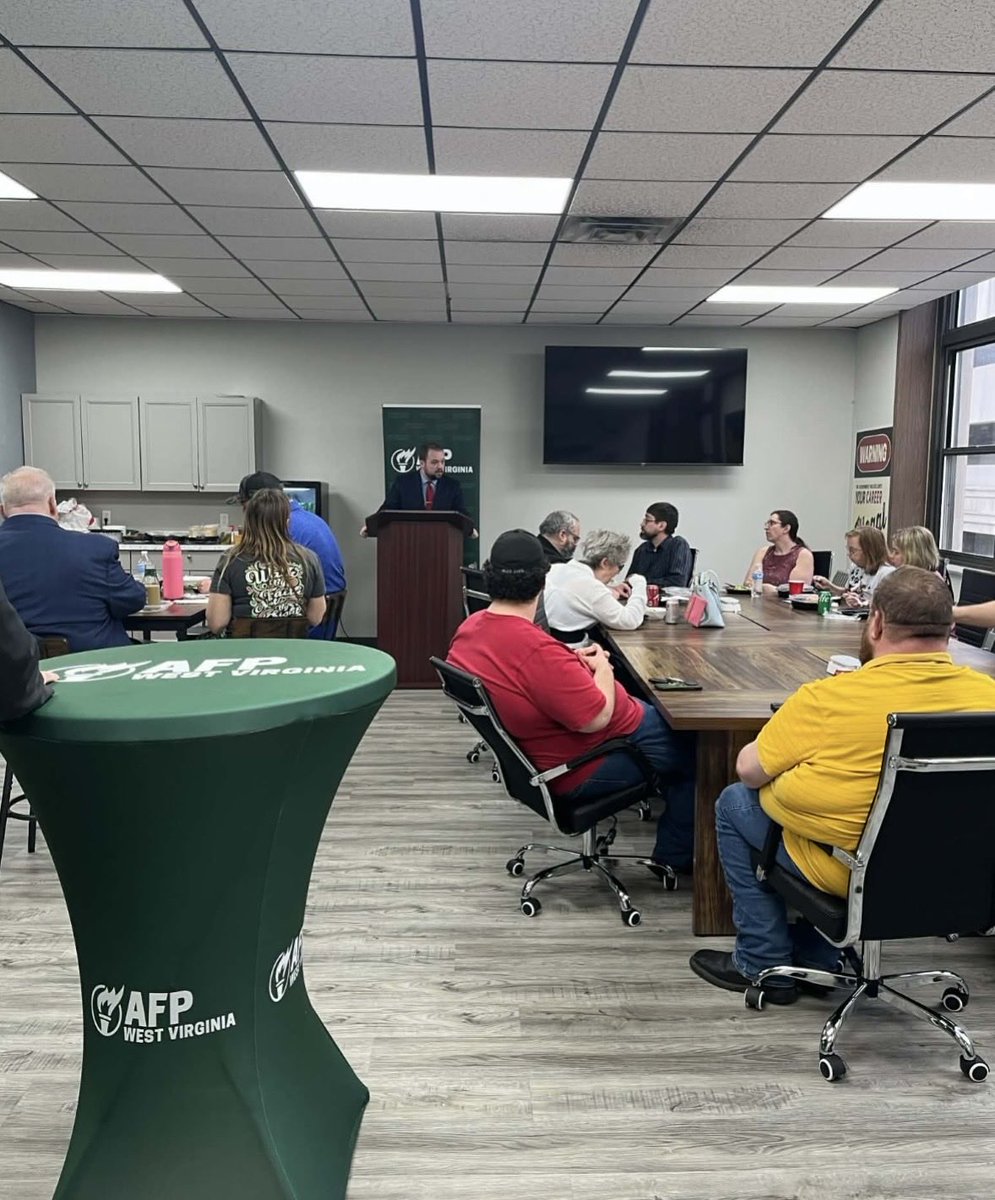
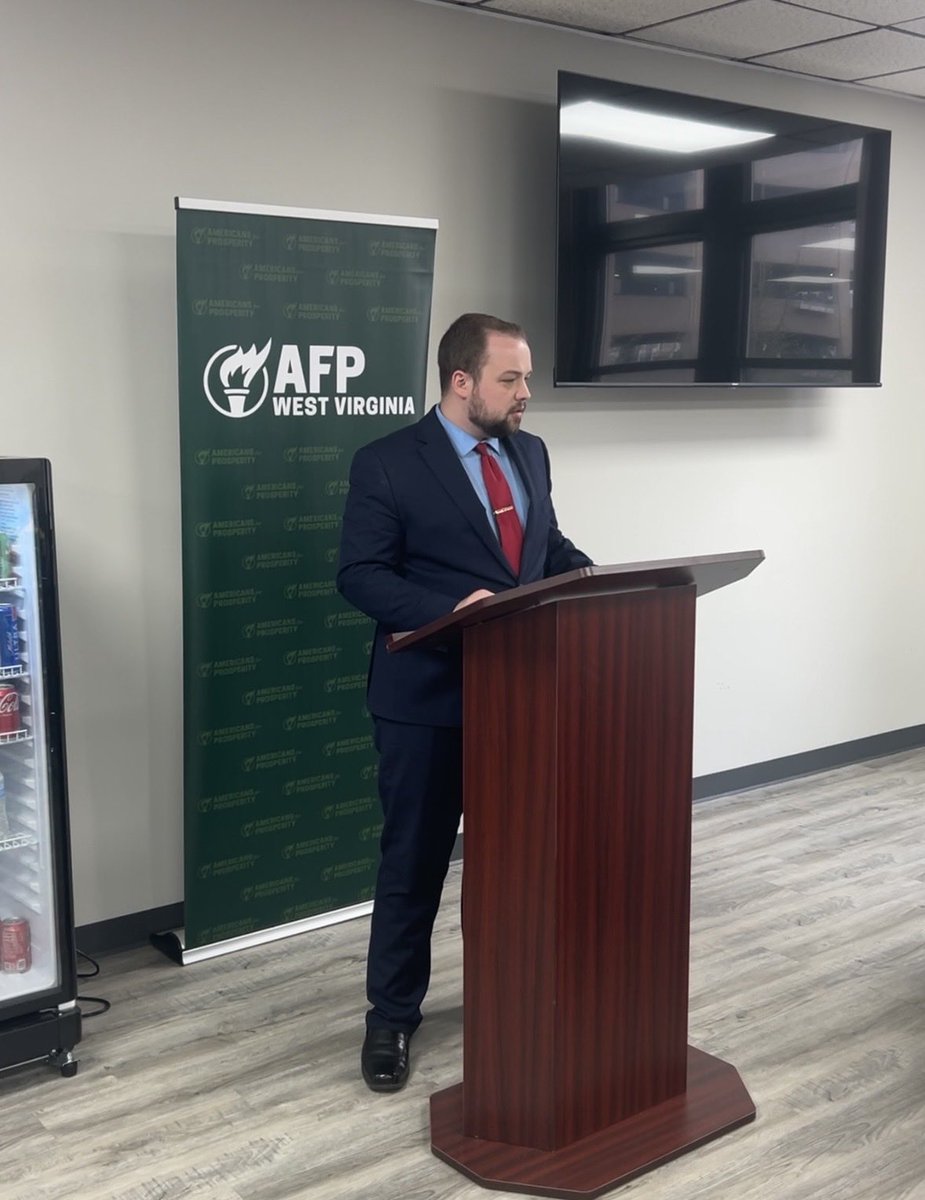
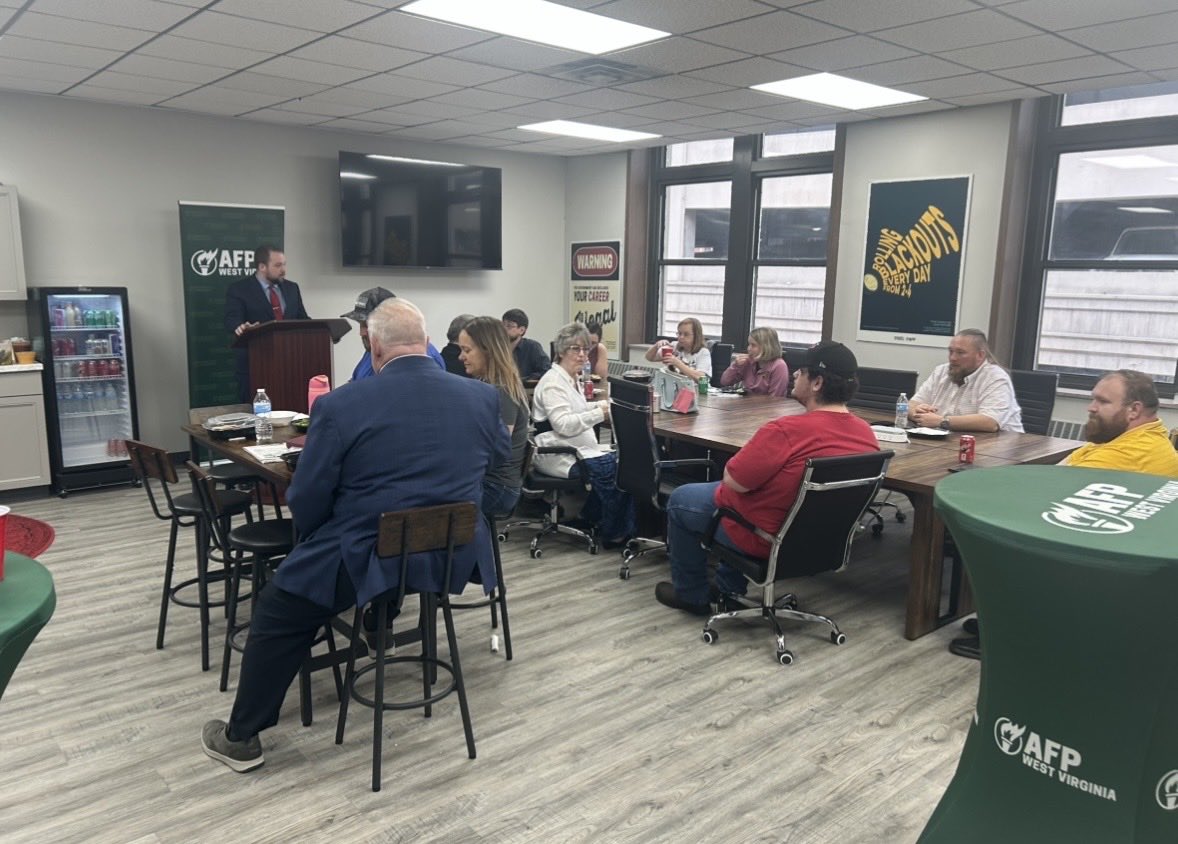
Tonight, grassroots leaders sent a clear message to lawmakers: stand on principle or we will unite the people around new leaders who will. @AFPWV looks forward to uniting this new policy majority around proven policy solutions that will make West Virginia a better place to live, work, and raise a family.
Our state flourishes because of robust and lively elections such as the ones today. And to all those who ran and engaged in these races: thank you. I can tell you from experience, it’s not easy.
Electing those who represent your community is one of the highest of civic duties, and it should not be taken lightly. The decisions we make and those making the decisions matter.
Voters expect more than the status quo when they're trying to put food on the table, get their child to school, or find a good-paying job. Voters want their legislators to accomplish big things and lift West Virginia up in the rankings.
That is why I engaged in these races. We must do better in the future and not settle for second best. That means cutting income taxes, advancing educational attainment, building out our infrastructure, continuing to unleash economic development and maintaining our West Virginia conservative values.
The one thing West Virginians always do after an election is come together. I look forward to working with all West Virginians, regardless of party, political persuasion, or background, to help our state flourish. If you have our state’s best interest at heart, I will fight alongside you to make West Virginia that shining state in the mountains.
“'School choice is a litmus test for Republicans,' said Jason Huffman, state director for West Virginia’s chapter of @AFPWV. The group is backing candidates who will defend the state’s school choice laws, he said."
AI will create more jobs than any other technology in history.
The doomers' fundamental error isn't just the lump of labor fallacy. It's deeper than that.
They assume a finite problem space.
This is the fundamental error of AI and job doomers. They look at the economy and see a fixed amount of work to be done, a pie that can only be sliced thinner as machines take bigger bites. They see humans a competitive resource for a finite amount of work and a finite amount of problems to solve that must be eliminated.
This is fundamentally, totally and completely wrong.
The pie isn't fixed. It never was. And the reason it isn't fixed is baked into the very nature of technology itself.
Technology is nothing but abstraction stacking. And abstraction stacking is infinite. Therefore the work is infinite.
The hammer didn't reduce the amount of work. It moved the work up the stack. And the new work was more complex, more varied, and more interesting than the old work.
Complexity breeds more complexity and more variety.
Once you have houses instead of mud huts, you have a cascade of new problems that didn't exist before. Plumbing. Wiring. Insulation. Roofing materials that don't rot. Drainage systems so the foundation doesn't flood. Fire codes so your neighbor's bad wiring doesn't burn down the whole block.
Each of those problems becomes a job. A plumber. An electrician. An insulator. A roofer. A civil engineer. A building inspector. None of those jobs existed when we lived in mud huts.
They exist because we solved the mud hut problem.
Think of all of human technological development as a stack of abstraction layers, each one built on top of the ones below it.
At the bottom: raw survival. Finding food. Building shelter. Making fire. These are the base-layer problems.
Each major technology wave solved a base-layer problem and in doing so created an entirely new layer of problems above it:
Agriculture solved "how do we reliably eat?" — and created problems of land ownership, irrigation, crop rotation, storage, trade, taxation, and governance.
Writing solved "how do we remember things across generations?" — and created problems of literacy, education, record-keeping, law, bureaucracy, and literature.
The printing press solved "how do we spread knowledge at scale?" — and created problems of intellectual property, censorship, journalism, publishing, public opinion, and democratic discourse.
The steam engine solved "how do we generate mechanical power without muscles?" — and created problems of factory design, worker safety, urban planning, railroad engineering, coal mining, labor relations, and environmental pollution.
Electricity solved "how do we deliver energy anywhere?" — and created problems of grid design, power generation, appliance manufacturing, electrical safety codes, utility regulation, and an entire consumer electronics industry.
The Internet solved "how do we connect all human knowledge?" — and created problems of cybersecurity, digital privacy, online commerce, content moderation, network infrastructure, cloud computing, social media dynamics, and an entire digital economy that employs tens of millions.
Notice the pattern?
Each solution didn't just solve a problem.
It created an entirely new problem space that was larger, more complex, and more varied than the one it replaced.
The stack grows. It never shrinks.
It's turtles all the way down and all the way up.
Jensen is one the smartest and most far seeing folks the world.
"If an AI scientist warns people that AI is going to permeate across radiology and radiologists are going to get wiped out, it might seem helpful but it's hurtful. If we convince everybody not to be radiologists and we now need radiologists, that actually is hurtful to society.
"It is hurtful to convince all the young college graduates not to study software engineering because we are going to need more software engineers than ever.
That's hurtful."
"Scaring people with nonsensical things, which are not going to happen, that this is an existential threat, there's a 20% chance that is is existential, that's ridiculous.
"That it's going to wipe out 50% of college level jobs.
"That is it going to completely destroy democracy.
"These kinds of comments are not helpful. They are made by...CEOS. And you become a CEO, maybe you adopt a God complex and somehow you know everything."
Brutal.
And right.
“‘When those lawmakers decided to try to backslide on educational freedom, obviously we don’t agree with that policy position, so that was definitely a contributing factor to us supporting opponents to their incumbency,’ said Jason Huffman, director of the West Virginia chapter of Americans for Prosperity.”
Extremely sad to hear that former Congressman David McKinley has passed away. He served the people of West Virginia with distinction, humility, grace, and great humor--one of the last true statesmen. His legacy of kindhearted determination will be remembered and he will be deeply missed by many.
Good! @MorriseyWV is right. West Virginians will be very well served by more competition in the Republican Primary.
West Virginia’s legislative political landscape has become increasingly complacent, with few folks challenged in the only election that really matters in a supermajority state: the Primary.
That lack of competition where it counts gave some lawmakers the false impression that they could attack conservative first principles like school choice, put corporate welfare ahead of more meaningful tax relief for working families, or choose to side with the Hospital Cartels over patients all while facing no political consequences for such poor, out-of-touch policy decisions.
They were wrong.
As the adage goes, elections have consequences. But so too should policy decisions that don’t abide the mandate from the voters to prioritize bold, conservative policies. That’s why @AFPWV’s army of grassroots activists is engaged in a historic number of statehouse races. Competition weeds out bad ideas—a very useful trait for the laboratories of democracy.
No other organization in West Virginia will speak to as many primary voters this year as @AFPWV.
Be on the lookout for our activists & staff in a neighborhood near you as we work through connecting with tens of thousands of voters about the issues most important to them.
Grassroots wins. 🇺🇸