If you are a young person looking to pick up a solid technical skill, you should look into this. The president just announced an initiative called The Power Force.
The program aims to train 5,000 young Nigerians as meter installers and technicians. They are partnering with NAPTIN and the Ministry of Youth Development to get it running.
The portal opens on July 4, 2026, at https://t.co/3BqF5Vld8t.
If you have been looking for a pathway to learn a craft and earn cleanly, check the requirements and apply.
No reform is perfect. The question is not whether there are risks, but whether we can build safeguards to manage those risks.
Nigeria's insecurity challenges require bold reforms, not endless hesitation. If we agree the current system is struggling, then refusing every alternative simply guarantees more of the same.
The National Assembly should focus on creating strong oversight, accountability and constitutional checks not abandoning a reform that could bring policing closer to the people.
At some point, Nigerians must decide: do we want solutions or do we just want to keep complaining about the problem? #StatePolice #NigeriaDecides
Q: Why is it so easy to criticise and have a plan till you get into government? 🤔
A: Because outside govt, you see the problem in straight lines. Inside government, you meet the maze.
From outside, failure often looks like a lack of will, competence, courage, or integrity. Sometimes it is. But inside government, plans meet weak institutions, inherited liabilities, vested interests, procurement rules, courts, legislators, budget limits, security realities, civil service inertia, and the politics of timing.
Culture happens, stories begin and self-preservation agendas find life.
The easiest sentence in public life is: “They should just fix it.” The harder truth is that the state is not one person with one button. It is a network of laws, interests, fears, incentives, sabotage, capacity gaps, and consequences.
Still, complexity is not an excuse for failure. Government exists to organise complexity into results. The real test of leadership is whether a plan survives contact with reality, adapts without losing its moral centre, and delivers relief citizens can feel.
So, I have learnt to appreciate progress, momentum and incremental gains..... not the eldorado version.
Yet, criticism keeps power honest, but getting results for desired governance requires more than criticism. It requires getting involved, sequencing, coalition-building, courage, competence, communication, and the humility to accept that the problem was deeper than the slogan.
The code is to win by knowing when to lose, win or compromise.
On a scale we can all relate wirh, we should for example know that the wedding, of which we priotise expenses with, is just an event, while the marriage remains the institution of priority. Even within this family arrangement, optimising value reflects similar challenges.😔 You can read this in a way you get the message.
Be ye circumspect.....
10 Free Online Learning Platforms with Internationally Recognized Certificates (2026)
Looking to enhance your skills, strengthen your CV, or prepare for new career opportunities? Here are ten platforms offering free online courses and professional certifications across a wide range of fields.
1. Google Career Certificates & Skillshop
Fields: Digital Marketing, Data Analytics, IT Support, Project Management, AI, and more.
Website: https://t.co/pFbWTJzcxs
Website: https://t.co/Xe79uK7B57
2. Harvard University Online
Fields: Computer Science, Data Science, Business, Health, and Humanities.
Website: https://t.co/R19PKo0dB1
Website: https://t.co/Y056bFhbKC
3. Meta Professional Certificates
Fields: Digital Marketing, Social Media Management, Front-End Development, and Data Analytics.
Website: https://t.co/HsxGcqZ8aa
4. IBM Professional Certificates
Fields: Data Science, Cybersecurity, Artificial Intelligence, Cloud Computing, and Software Development.
Website: https://t.co/rsEoup76cx
5. Coursera
Access courses from leading universities and organizations worldwide.
Website: https://t.co/JWrf50dJaa
6. UNICEF Agora
Courses focused on humanitarian action, child protection, education, and development.
Website: https://t.co/vcH2NyRXED
7. World Bank Open Learning Campus
Training in development, governance, economics, climate, and public policy.
Website: https://t.co/3TfcewKcNa
8. DisasterReady
Humanitarian and emergency response training for professionals and volunteers.
Website: https://t.co/tY0pp8BxT7
9. HubSpot Academy
Courses in digital marketing, sales, customer service, and content creation.
Website: https://t.co/3Fv3YqHYMK
10. LinkedIn Learning
Professional development courses in business, technology, leadership, and creative skills.
Website: https://t.co/cyBfHUtPfI
This opportunity is shared by the Professor Isa Pantami Foundation (PIP Foundation) as part of its commitment to promoting education, empowerment, and community development across Africa.
#PIPFoundation #EducationForAll #OnlineLearning #ProfessionalDevelopment #CareerGrowth #DigitalSkills #GlobalEducation #FreeCourses #CertificationPrograms
NORTHERN NIGERIA'S COLLAPSED INDUSTRIES
Here is a list of companies and industries in Northern Nigeria that were abandoned or completely shut down over the years:
Nigerian Paper Mill, Jebba (Kwara State) – collapsed in 2005.
Lafiagi Sugar Company (Kwara State) – collapsed in 2003.
Bacita Sugar Company, Edu LGA, Kwara State – collapsed in 2002.
Northern Oil & Allied Industries, Kaduna State – collapsed in 1999.
Kano Mattress Factory – collapsed in 2000.
Kano Plastic Company – collapsed in 2000.
Nigeria Bottling Company plants in Kano, Kaduna, Plateau, and Borno – reportedly shut down in 2004.
Goldline Biscuit Factory, Kano State – collapsed in 2009.
Arewa Metal Containers (AMECO), Kaduna State – collapsed in 1998.
Kano Tanneries Mills – collapsed in 1990.
Kaduna Fertilizer Company – collapsed in 2002.
Arewa Textile Limited – collapsed in 2002.
Finetex Nigeria, Kaduna – collapsed in 2003.
Supertex Ltd, Kaduna – collapsed in 2000.
United Nigerian Textiles (UNITEX), Kaduna – collapsed in 2005.
Nortex Textile, Kano – collapsed in 2001.
Nigerian German Chemicals, Kaduna – collapsed in 2004.
Peugeot Automobile Nigeria (PAN), Kaduna – collapsed in 2007.
Premier Breweries, Kaduna – collapsed in 2000.
Kano Textile Printing (KTP) – collapsed in 1998.
Bagauda Textile, Kano – collapsed in 1995.
Chedi Textile, Kano – collapsed in 1997.
Chalawa Textile Mills, Kano – collapsed in 1998.
Gaskiya Textile Mills, Kano – collapsed in 1999.
Kano Spinning and Weaving – collapsed in 1990.
Daula Textiles, Kano – collapsed in 2000.
Super Textile, Kano – collapsed in 2004.
Hajara Textiles, Kano – collapsed in 2002.
Nigeria Oil Mills (NOM), Kano – collapsed in 1999.
Bayero Pharmaceutical, Kano – collapsed in 2000.
Dala Foods, Kano – collapsed in 2008.
Tofa Textile, Kano – collapsed in 2001.
Mambayya Textile, Kano – collapsed in 1990.
ANCON Textile, Kano – collapsed in 2000.
Funtua Textiles, Katsina State – collapsed in 2005.
Daura Textiles, Katsina State – collapsed in 2000.
Kankara Kaolin Processing, Katsina State – collapsed in 2000.
Gusau Textile, Zamfara State – collapsed in 1999.
Zamfara Textiles – collapsed in 2004.
Sokoto Textile – collapsed in 1993.
Sokoto Ceramic Tiles Factory – collapsed in 2005.
Bauchi Furniture Company – collapsed in 2000.
Bauchi Meat Factory – collapsed in 2003.
Steyr Nigeria (tractor manufacturing), Bauchi – collapsed in 2007.
Gombe Oil Mills – collapsed in 2001.
Ashaka Textile – collapsed in 1990.
According to the author, the decline of these industries greatly affected Northern Nigeria's economy and industrial capacity. The author argues that many of these closures occurred during the administration of former President Olusegun Obasanjo and criticizes Northern political leaders for failing to adequately protect the region's economic interests.
The author concludes with a prayer for leaders who will prioritize the development and prosperity of Northern Nigeria.
Idan ka yi Posting din video na Garbatii kuma ya yi masa mummunar Fasara bisa san ran ka, meye ya hana ka yin posting Wannan shi ma ?
A din ga balancing
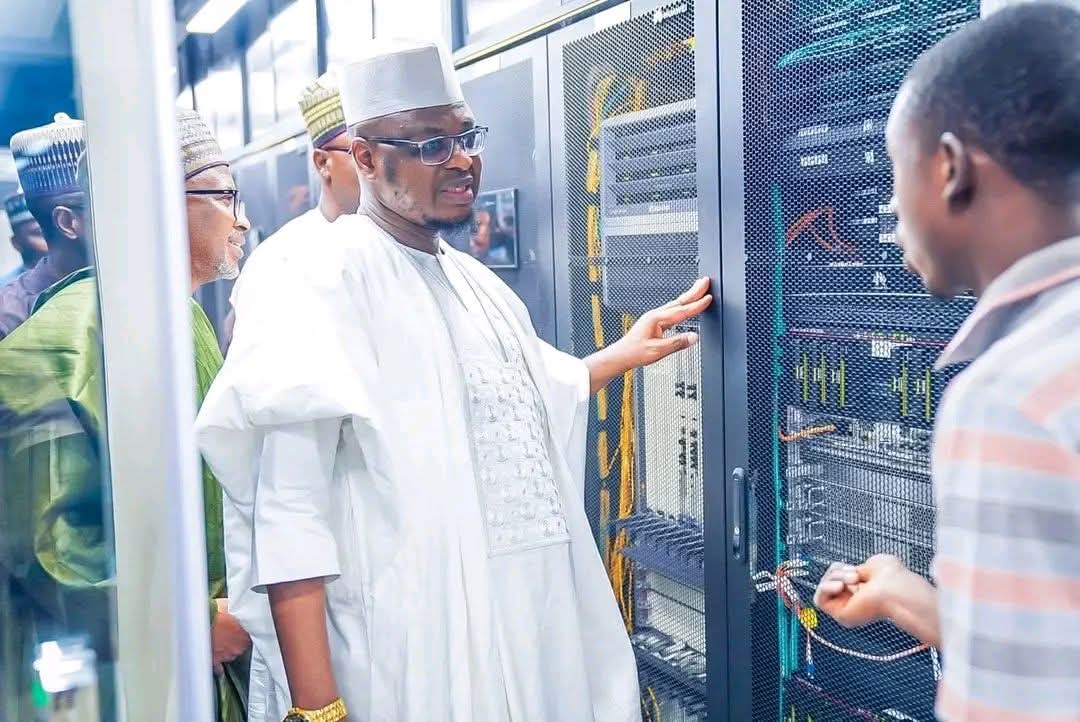
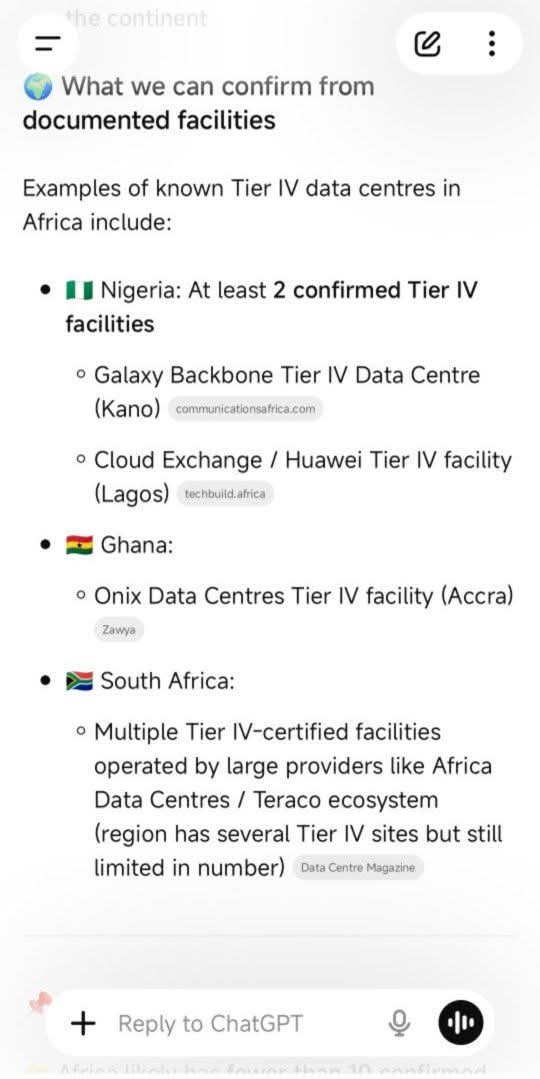
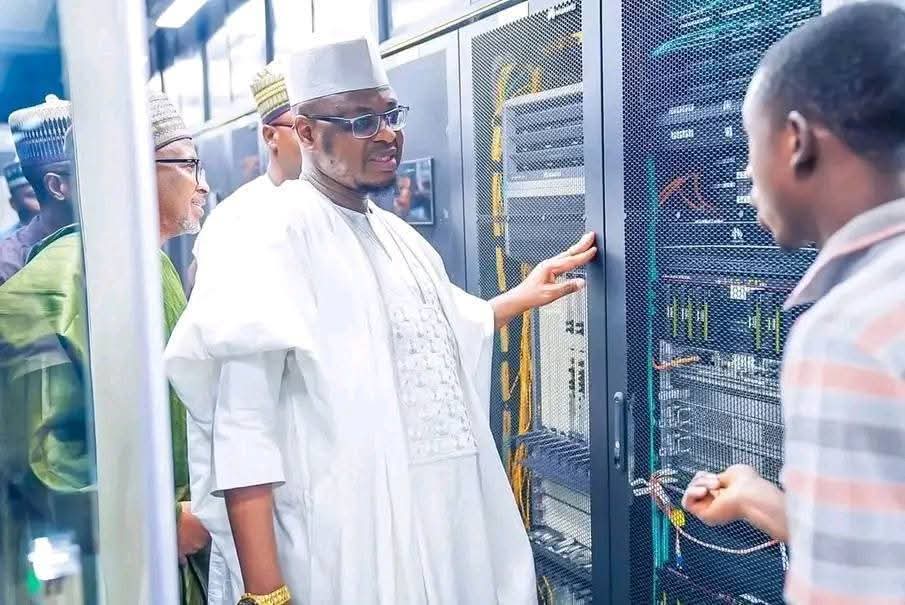
Narantse Idan a Developed Countries Ne Professor Isa Ali Pantami Zai Iya Campaign Din Zama Shugaban Kasa Da Iya Tier IV Data Centre Daya Kawo Wanda Yanzu Haka Take Kano.
Lokacin Da Malam Ya Kawo Tier IV Data Centre Din Nigeria Kaf Africa Itace Best.
Yanzu Haka a African Countries Baifi Kasashe 3 Bane Suke Da Tier IV Data Centre.
Malam Alkhairi Ne.
If this were many developed countries, delivering a world-class Tier IV Data Centre alone would already place among nationally celebrated leaders
By him, 9ja achieved 1 of Africa’s most advanced digital infrastructure milestones at d tym a project only a few African countries
The kind of challenges Professor Isa Ali Pantami faced during his time as Minister of Communications is now unfolding in Gombe State.
A familiar pattern of pressure, resistance, and political tension.
#Gombe#Pantami#NigeriaPolitics#Xviral
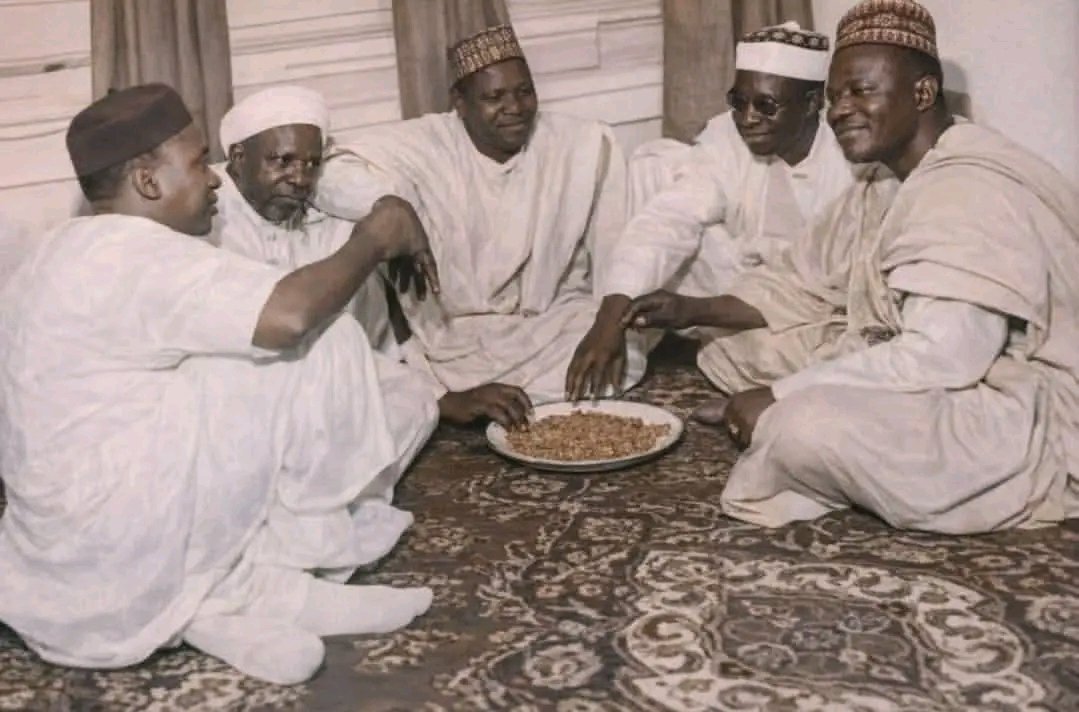
From left to right.
1. Alhaji Waziri Ibrahim. (Cabinet Minister), from Borno.
Alhaji Musa YarAdua. (Cabinet Minister), from Katsina.
Muhammadu Bashar (Emir of Daura), from Katsina.
Alhaji Shehu (Sarkin Maska), from Katsina.
Zanna Bukar Dupcharima (Senior Cabinet Minister) from #Borno.
Eating from single tray, a typical culture of eating in Arewa of Nigeria.
Before anyone comes with the canard that "why did ATIKU and ADC" not register a new party.
It comes with a history.
The APC itself, played the same card, and the then PDP (as claimed by the APC) quickly got INEC to register a party with the same name. African Peoples Congress.
Frustrated, ACN , ANPP and CPC leaders claimed INEC was at work with PDP to frustrate them.
Former Zamfara Governor, Sani Ahmed Yerima on a radio programme in Kaduna threatened that the country would witness a massive protest if the APC merger was frustrated by INEC.
He was subsequently interrogated by Police over his statements.
Alhaji Lai Mohammed, then ACN Publicity Secretary said that Yerima's arrest over his statements about INEC and APC, was an act of "budding fascism".
Alhaji Lai Mohammed then repeated the threat, that if their own APC was not registered by INEC, then the protests in Tahrir Square (Egypt) would be a child's play to what they would do in Eagle Square, Abuja.
He then claimed that PDP was behind the so-called registration of the phantom party.
The First, Second and Third Republics ended because of games like this.
Ibrahim Babangida continued to ban and unban parties, extended transitional process for so long, did elections, in 1992, where Shehu Yar'Adua had emerged in SDP, and Adamu Ciroma and Unaru Shinkafi, were scheduled for a run-off in NRC, he cancelled those elections, then banned the initial winners from participating again.
It led to MKO ABIOLA and Bashir Tofa emerging in SDP and NRC.
When IBB again annulled that General Election, of June 12,1993.
The people had had enough. They revolted. And those massive protests eventually ended IBB's run.
Ironically,Those who went to "war" when June 12 1993 elections were annulled, cry about NADECO, speak of Democratic mandate are today trying undemocratic means of preventing opposition parties from fielding candidates.
Okay Nah.
This is a misappropriation of history. Because someone is wearing a suit and tie on the internet doesn't mean they know what they are saying.
1. That the Rashidun Caliphate was a theocracy does not dismiss the fact that it was a government. And as was the fashion of the time, most strong governments expanded their territories. The motive was mostly political though wth religious undertones as expected of a theocracy.
The Misapropriation: 👇
Before the 7th century, Egypt, Syria, Jordan, Lebanon, and Jerusalem were not Christian countries, they were provinces of the Christian Byzantine Empire ruled from Constantinople.
They were not independent Christian countries.
They were imperial provinces which means that politically they were part of a large empire, not separate Christian nations.
The Rashidun Caliphate conquered the Byzantines in the Battle of Yarmouk, followed by the conquest of Jerusalem and then Egypt in the span of 30 years which earned them those regions by right of conquest, again as was the fashion of the time.
2. “They forced people to convert to Islam”
This claim is outright false.
In the early Islamic empires, Christians and Jews were classified as “People of the Book.”
They were allowed to keep their religion.
They paid a special tax called "jizya" instead of military service.
Conversion to Islam happened gradually over hundreds of years, mainly because:
Muslims did not pay the jizya tax. It was economically comfortable to be a muslim in such a political terrain.
In fact, when Muslims conquered Jerusalem in 637, the caliph Umar ibn al-Khattab issued the Pact of Umar, which guaranteed protection for Christian churches and property.
Another factor was Social mobility in Muslim administration, and Cultural and linguistic change.
If conversion had been forced, these regions would have become Muslim immediately, which did not happen.
3. “Islam is the greatest colonial force in history”
This is false!
Islamic empires did indeed expand widely at their peak, but many empires did expand similarly. The Roman Empire, the Mongol Empire, the British Empire to mention a few.
The British Empire, for example, ruled more territory and people than any empire in history and both the Roman and British Empires can be said to be Christian empires and murdered a lot of people in their wake.
4. “Islam has killed more people than any institution”
False!
There is no evidence for this claim. No historian or dataset supports it.
Large death tolls in history include:
- World War II approximately 70–85 million deaths
- Mongol Conquests approximately 30–40 million deaths
- World War I 20 million deaths
These were not Islamic conflicts. Many wars in Islamic history were political and imperial, not purely religious.
The same is true for wars involving Christian empires, such as the Crusades and European colonial wars.
Why did the Middle East Became Muslims?
It's simple, political rule by Muslim empires, Arabic language spreading, economic incentives, intermarriage and culture, gradual conversion over centuries
It was not a single wave of forced conversions.
I won't let anyone revise history for religious vendetta. Thank you!
🚨 In 40 Years of Preaching, Sheikh @ProfIsaPantami Has Never Delivered A Moment Like This! My Heart is Overwhelmed With Love, Devotion, & Gratitude.
Every Word Touches Me Deeply, Filling me With A Reverence & Joy I’ve Never Felt Before. Truly Unforgettable.
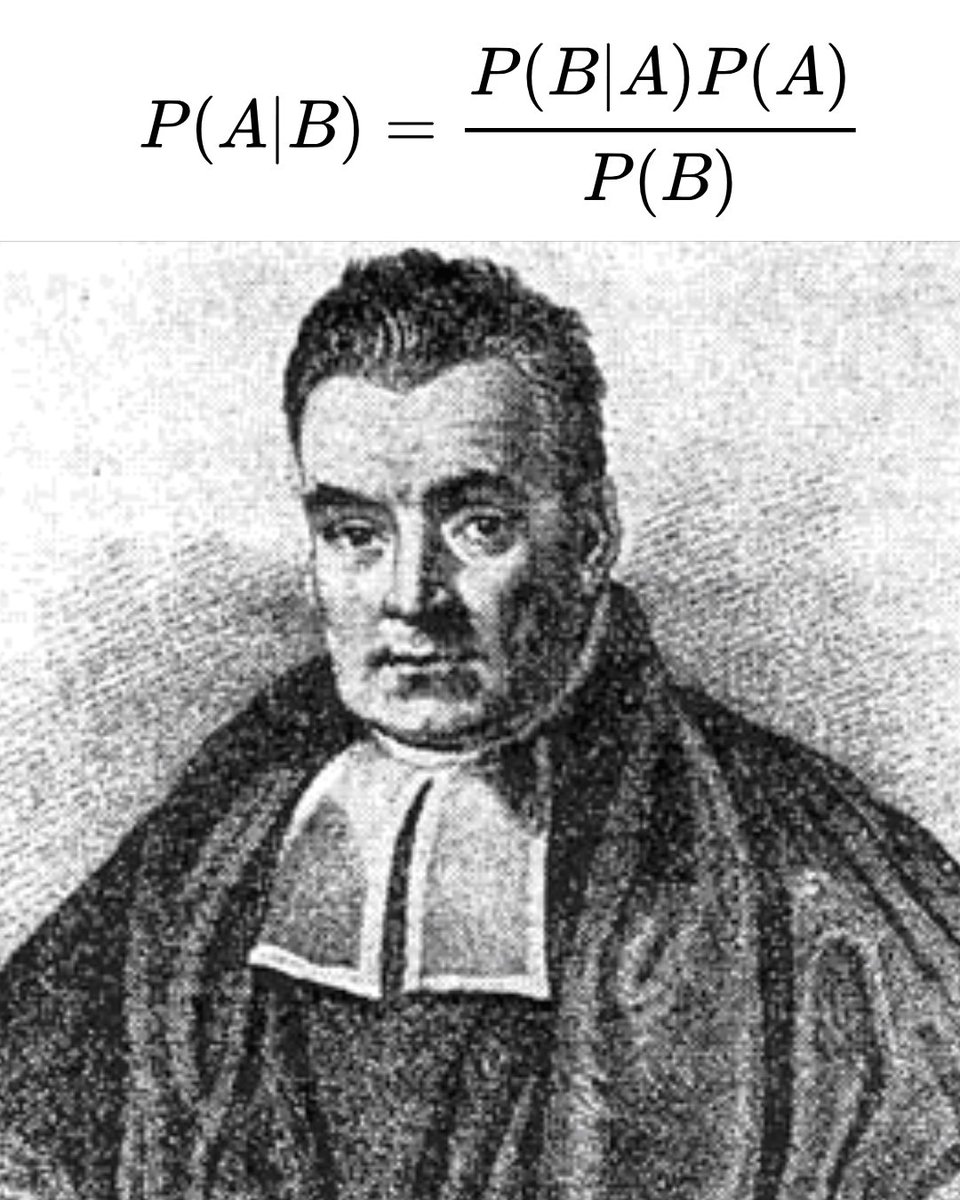
Bayes’ theorem is probably the single most important thing any rational person can learn.
So many of our debates and disagreements that we shout about are because we don’t understand Bayes’ theorem or how human rationality often works.
Bayes’ theorem is named after the 18th-century Thomas Bayes, and essentially it’s a formula that asks: when you are presented with all of the evidence for something, how much should you believe it?
Bayes’ theorem teaches us that our beliefs are not fixed; they are probabilities. Our beliefs change as we weigh new evidence against our assumptions, or our priors. In other words, we all carry certain ideas about how the world works, and new evidence can challenge them.
For example, somebody might believe that smoking is safe, that stress causes mouth ulcers, or that human activity is unrelated to climate change. These are their priors, their starting points. They can be formed by our culture, our biases, or even incomplete information.
Now imagine a new study comes along that challenges one of your priors. A single study might not carry enough weight to overturn your existing beliefs. But as studies accumulate, eventually the scales may tip. At some point, your prior will become less and less plausible.
Bayes’ theorem argues that being rational is not about black and white. It’s not even about true or false. It’s about what is most reasonable based on the best available evidence. But for this to work, we need to be presented with as much high-quality data as possible. Without evidence—without belief-forming data—we are left only with our priors and biases. And those aren’t all that rational.
Hi @JaafarSJaafar,
Let me begin by rejecting; clearly and categorically, the lazy and deliberately insulting label of “termites,” a term you deploy to insinuate parasitism, blind loyalty, or material dependency. Possibly because that is what your profession of journalism survives on. People like me do not relate with Sheikh Pantami for financial benefit, political access, or opportunism. We are his students, not his hangers-on; beneficiaries of his ideas, not his purse; shaped by his intellect and discipline long before politics entered the conversation. Alhamdulillah for what Allãh Has given us.
To conflate that with fandom is either ignorance or bad faith. You describe yourself as a fan of Sheikh Pantami the cleric but not Pantami the politician. Fair enough. But fandom, by definition, is shallow; it watches from a distance, applauds selectively, and retreats at the first sign of discomfort. Students, on the other hand, engage the totality of a teacher’s worldview: his theology, his ethics, his understanding of society, power, responsibility, and reform. We know what he teaches about governance, justice, accountability, and leadership. That is precisely why his entry into politics does not surprise or scandalize us.
Your argument rests on a familiar but deeply flawed premise: that Nigerian politics is so irredeemably corrupt that only the corrupt can enter it, and that anyone who tries will inevitably be stained. This is not realism; it is surrender dressed up as sophistication. It is the kind of thinking that guarantees the permanence of the very rot you lament. If politics is left only to “𝒕𝒆𝒏-𝒑𝒆𝒓𝒄𝒆𝒏𝒕𝒆𝒓𝒔, 𝒄𝒐𝒏𝒕𝒓𝒂𝒄𝒕𝒐𝒓𝒔, 𝒆𝒙-𝒄𝒐𝒏𝒗𝒊𝒄𝒕𝒔, & 𝒐𝒑𝒑𝒐𝒓𝒕𝒖𝒏𝒊𝒔𝒕𝒔,” then it is because people of conscience are constantly being bullied out of the arena by pessimists who confuse critique with cowardice.
You list the systemic failures of Nigeria; the weak institutions, corrupt civil service, compromised political culture, as if they are arguments against principled participation. In truth, they are the strongest arguments for it. Reform does not happen bcos the system is clean; it happens because men & women decide it is too dirty to be left alone. History; Nigeria’s & elsewhere, does not reward spectators who issue warnings from the sidelines; it remembers those who entered flawed systems and forced them, however painfully, to bend.
Your repeated insistence that “no one can emerge unblemished” in public office under scrutiny is a clever rhetorical move, but also a dangerous one. It subtly normalizes wrongdoing by redefining crime as inevitability. Yes, public office exposes people to scrutiny; that is the point of accountability. But to suggest, in advance, that tax infractions, conflicts of interest, and abuse of public funds are unavoidable is to excuse them before they occur. That position does not protect morality; it euthanizes it.
No one claims that Sheikh Pantami; or any human being is infallible. But there is a difference btw acknowledging human fallibility and preaching moral futility. There is a difference between caution and discouragement, between concern and condescension. Your tone does not merely warn; it seeks to pre-emptively delegitimize, to say in effect: don’t even try, because you will fail. That is not counsel, it is gaslighting those who refuse to accept stagnation as destiny. 𝐘𝐨𝐮 𝐚𝐫𝐞 𝐞𝐧𝐭𝐢𝐭𝐥𝐞𝐝 𝐭𝐨 𝐜𝐫𝐢𝐭𝐢𝐜𝐢𝐳𝐞. 𝐖𝐞 𝐚𝐫𝐞 𝐞𝐪𝐮𝐚𝐥𝐥𝐲 𝐞𝐧𝐭𝐢𝐭𝐥𝐞𝐝 𝐭𝐨 𝐝𝐢𝐬𝐚𝐠𝐫𝐞𝐞—𝐟𝐢𝐫𝐦𝐥𝐲, 𝐩𝐮𝐛𝐥𝐢𝐜𝐥𝐲, 𝐚𝐧𝐝 𝐰𝐢𝐭𝐡𝐨𝐮𝐭 𝐛𝐞𝐢𝐧𝐠 𝐜𝐚𝐫𝐢𝐜𝐚𝐭𝐮𝐫𝐞𝐝 𝐚𝐬 𝐟𝐚𝐧𝐚𝐭𝐢𝐜𝐬 𝐨𝐫 𝐩𝐚𝐫𝐚𝐬𝐢𝐭𝐞𝐬. Supporting a man’s decision to serve is not the same as suspending one’s moral judgment. Believing that integrity can contend with power is not naivety; it is the minimum requirement for progress.
Oga JJ,
The inference that politics and sanity cannot coexist is where I differ. Yes, Nigerian politics is deeply flawed and full of risks. But if that reality means people of conscience should stay away in order to “protect their reputation,” then governance is effectively
1/
Politics is not inherently evil or dirty in itself; what corrupts and destroys it is leaving it in the hands of corrupt and wicked people.
Leaving it in the hands of ignorant people and those who lack trustworthiness among us, is one of the main reasons we have been thrown into this miserable state of tyrannical leadership that we are suffering from.
Every day you hear people praying: “O Allah, reform us… O Allah, bring us relief… O Allah, send us a cure…” and similar statements. Are we truly being sincere? Are we truly ready for reform? Have we truly become tired of living in humiliation? The unpleasant reactions and backlash that followed Sheikh Professor Isa Ali Pantami’s declaration of picking up the APC membership card clearly prove this.
If we keep making such prayers while at the same time discouraging and suppressing righteous people from stepping forward, not because they’re incompetent, not because they don’t have what it requires, but just on the basis that they’re scholars preaching the words of Allah, then how exactly do we expect Allah to answer our prayers? Are we expecting Allah to send angels to make the reforms for us or what?
I salute Sheikh for the courage, for entering the political arena at such a time in his capacity as a religious scholar, something many of our scholars would not be able to do. This will open the door for other righteous people to follow suit, join the line, and become victorious in cleansing our politics.
That is not to say Mallam is free of mistakes, but certainly the benefits that will come from his entry into the political field far outweigh the disadvantages. He delivered an excellent performance during his time as Director General of NITDA and as Minister of Communications.
Finally, I wish Sheikh success and goodness on this path he has chosen. May Allah assist him, guide him to what is right, choose for him what is best for him, for our religion, and for the country as a whole. May Allah make him one of the means through which we witness the righteousness of choosing people like him to become pillars for the reform of our affairs.