BREAKING: ADVANCED ALZHEIMER’S PATIENT REGAINED SPEECH, MEMORY, AND BLADDER CONTROL AFTER SINGLE PSILOCYBIN DOSE
An 80-year-old woman with advanced Alzheimer’s — who had barely spoken for YEARS — experienced RAPID and SUSTAINED improvement after taking 5g of psilocybin mushrooms.
During the acute phase, she entered a prolonged deep sleep-like state with profuse sweating.
~19 hours later, she spontaneously started talking again for HOURS — sharing detailed autobiographical memories she hadn’t expressed in years.
Over the following days, her family reported improved memory, walking, emotional connection, speech, and regained bladder control.
After 1 month, bladder control REMAINED RESTORED, and she was still functionally improved compared with baseline.
While this is just one published case report, the implications are enormous given that there are currently NO approved medications known to produce effects like this in advanced Alzheimer’s.
These findings urgently need replication. For millions watching a parent or loved one disappear to Alzheimer’s, even the possibility of restoring lost function warrants serious scientific investigation.
I can build 100 products tomorrow.
But I don’t have the money for it.
That’s the reality for many builders in India.
People say, “Indians cannot innovate.”
I think they’re looking at the wrong problem.
The bottleneck isn’t ideas.
It’s moulds, dies, and tooling costs.
A single tool can cost more than what most small builders can afford to risk.
That’s why seeing Karuvi’s progress gives me hope.
Zoho proved that an Indian company can build world-class software.
Now @svembu Ji and team are taking on something even harder: manufacturing.
They’re investing in engineering, quality, trial units, and their own tool room.
This is what building looks like.
Once we solve the tooling problem,
we’ll unlock 1000s of products that
should have been made here 20 years ago.
And @svembu Sir, if there's ever a need for help on anything AC motors / plastics related, I'd be honoured to contribute.
Here at your service 🫡🇮🇳
INSTEAD OF WATCHING AN HOUR OF NETFLIX TONIGHT.
This 1 hour Stanford lecture by Joel Peterson will teach you more about negotiation and getting what you want than most people learn in years.
Bookmark it and give it an hour, no matter what.
The Delhi High Court just ruled against Google in a trademark case that every Indian founder needs to know about!!
Hindware sued because searches for "Hindware" returned competitor ads - Cera, Grohe, above their own listing. Customers looking specifically for Hindware were being intercepted at the moment of highest intent.
The court ruled it trademark infringement. Competitor keyword bidding on your brand name is now legally actionable in India.
Search your brand name on Google right now.
If a competitor's ad appears before yours, you have a case, and your competitor has a problem.
This reshapes performance marketing in India. Keyword bidding on competitor names is standard practice across every category - beauty, fintech, edtech, D2C.
The brands doing it most aggressively are also the ones most exposed to this ruling. Let's see how this pans out.
Indian scientists just made history.
Researchers from IIT Madras and IISc Bengaluru just pulled off something impossible.
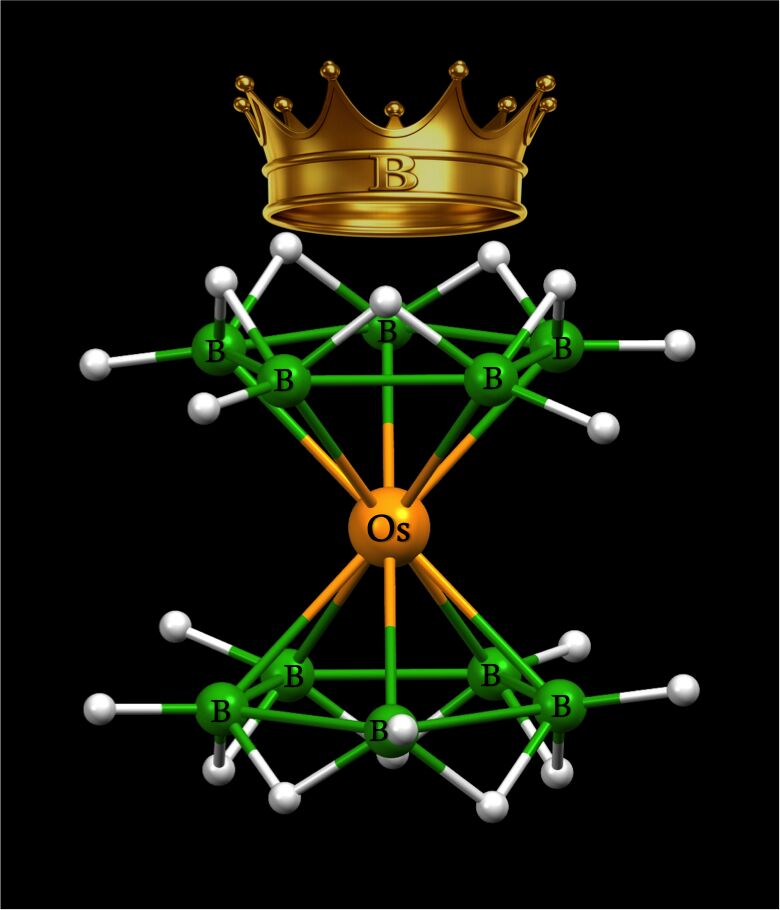
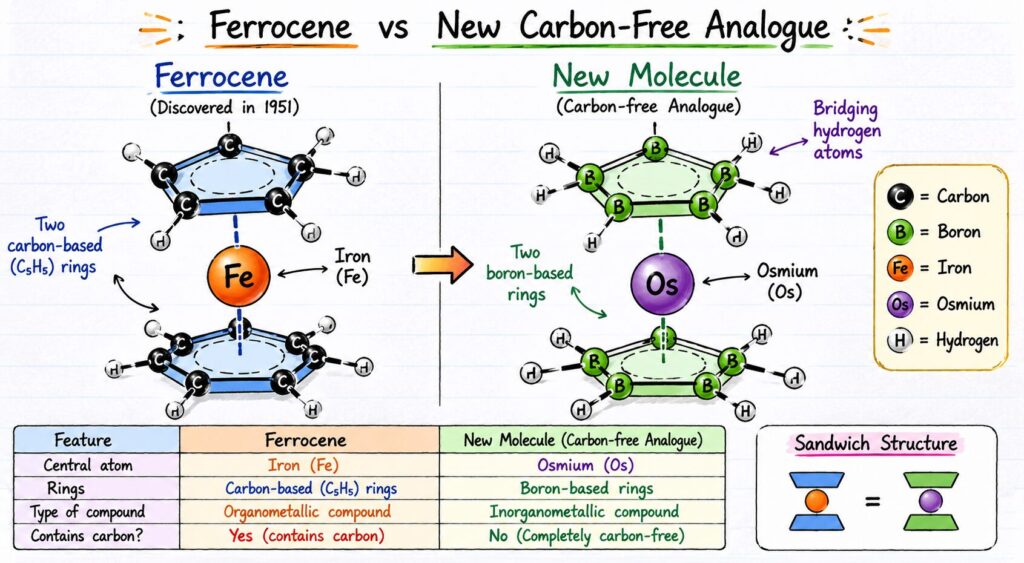
They've created the world's "first carbon-free ferrocene".
This means we can finally build the next generation of incredibly durable tech.
Let me explain.
See, ferrocene is this wild organometallic molecule - where an iron atom is perfectly sandwiched between two carbon rings.
But it’s insanely stable.
Which is why it is already used in rocket fuels, car gasoline additives, long-life batteries, and even cancer medicines.
And for the last 75 years, everyone thought it was impossible to build the same stable structure without using carbon.
But this team of Indian scientists proved everyone wrong.
They created the same perfect sandwich structure - by swapping iron for osmium and carbon rings for boron rings.
And what they got was the world's first carbon-free ferrocene - which is so much stronger than the carbon bonds.
By doing so - they've opened up a whole new era of chemistry. And we have no idea how many amazing things we might discover.
But to think all of this started in India is truly amazing.
Kudos to everyone on this team: Sundargopal Ghosh, Stutee Mohapatra, Suvam Saha, Urvashi Gupta, Deepak Patel - from IIT Madras, Gaurav Joshi and Eluvathingal D. Jemmis - from IISc Bengaluru.
Let me trace the timeline here because nobody's connecting it.
Step 1: Scrape the entire internet. Every book, every article, every conversation, every piece of art, every forum post. Do it without asking. Do it without paying.
Step 2: Train a model on all of it. Call it "artificial intelligence."
Step 3: Go to BlackRock's Infrastructure Summit and announce: "We see a future where intelligence is a utility, like electricity or water, and people buy it from us on a meter."
Step 3 is where you sell people's own knowledge back to them. On a meter.
They took the collective output of human thought, compressed it into a model, and now they want to charge you by the token to access a version of what you and everyone you know already created.
One Reddit user put it perfectly: "They stole all this data from us, the people, our life's work, creativity, art, by devouring the internet and blowing through all copyright laws. Now they want to sell it back to us in the form of a utility."
Imagine if someone photocopied every book in the public library, burned the library down, and then opened a subscription service for the copies.
That's the metered intelligence business model.
And they're pitching it to infrastructure investors as though they invented water.
🚨 CEO Anthropic Dario Amodei właśnie dostał nokaut na oczach całego świata.
Chiński founder Moonshot AI Yang Zhilin wziął i wrzucił za darmo całą rewolucyjną architekturę Kimi Agent Swarm.
Rój ponad 100 agentów działających równolegle. 1500 wywołań narzędzi jednocześnie.
Zadania, które Claude 4.5 i GPT-5.2 robią w godzinę, Kimi załatwia w 15 minut.
40-minutowy masterclass na NVIDIA GTC, w którym Yang tłumaczy wszystko krok po kroku:
• Orchestrator + parallel reinforcement learning
• MoE na bilionach parametrów
• Kimi Linear i 3D-synergia kontekstu
Efekt?
Kimi K2.5 miażdży Zachód w kluczowych benchmarkach agentycznych (HLE-Full, MathVista, OCRBench, multimodal) i robi to 4–5× taniej.
Mammograms miss cancer in 50% of Indian women.
Not because of a bad machine.
Because of biology.
90% of Indian women under 45 have dense breast tissue.
On an X-ray? Cancer appears white. Dense tissue also appears white.
White on white. The cancer is invisible.
And in India, 45–50% of breast cancers occur in women under 45.
She has personally seen cancer lumps in a 17-year-old girl.
The West designed its screening technology for its own bodies.
@geethamhp designed hers for ours.
No radiation. No compression. No touching.
Just a thermal camera, AI, and 400,000 temperature readings per scan.
A fantastic story of ground up innovation on @mundhebanni.
Link in first reply. Share this with every woman you know.
1987. A room in New Delhi is thick with the smell of old files & cold tea. The United States has just delivered a stinging slap to the face of the Indian Republic. They have officially refused to sell India the 'Cray X-MP' Supercomputer, the most powerful machine on Earth, claiming that India would use it for nuclear weapons.
The American officials mockingly suggest that India does not even have the electricity to keep such a machine running. In the middle of this national humiliation, a young, soft-spoken engineer named Vijay Bhatkar is asked by then Prime Minister Rajiv Gandhi: "Can we build our own?" Bhatkar does not hesitate. He looks at the No of the West & says: "We will not just build it; we will build it faster than you can ship it."
The Americans did not just stop at refusing the sale; they actively lobbied other nations to ensure India remained digitally blind. They believed that w/o their Logic Gates, India would remain a 3rd world backwater.
Bhatkar realized he could not replicate the Single-Processor behemoth of the Cray. Instead, he turned to Parallel Processing. He decided to stitch together 1000s of low-cost, off-the-shelf microprocessors. It was like building a giant's brain out of the neurons of ants.
In 1991, while the West was still celebrating its monopoly, Bhatkar unveiled the PARAM 8000. It was not just a computer; it was a Gigaflop monster.
To prove the PARAM was real, Bhatkar ran a standard global benchmark test. The results were sent to an international conference in Zurich. The PARAM 8000 was ranked as the 2nd most powerful supercomputer in the world, behind only the American machines. But there was a twist: the PARAM cost a fraction of the Cray, performed better in tropical heat, & was built in just 3 years.
When the PARAM 8000 was 1st turned on, the team did not have a high-tech cooling system like the Americans. They used industrial-grade desert coolers & adjusted the airflow manually. It was the ultimate Jugaad that defeated the most sophisticated tech embargo in history.
A major US newspaper ran a story with the headline: "Denied supercomputer, Angry India does it!" The ghost of the Native Engineer had officially entered the silicon temple. Vijay Bhatkar’s history is the story of how India became the IT Capital of the world.
Bhatkar founded the Centre for Development of Advanced Computing (C-DAC). He did not just build a machine; he built an ecosystem. Every software engineer in India today stands on the shoulders of the man who proved we did not need the West's permission to compute. Bhatkar was the 1 who realized that if computers only spoke English, 90% of India would be left behind. He led the development of GIST (Graphics & Intelligence Based Script Technology), allowing computers to work in Indian languages. He gave the Machine a local tongue.
Today, Bhatkar is a Padma Bhushan awardee, but he lives a life of deep spirituality & simplicity. He vanished from the corporate headlines to become a philosopher of the digital age.
The West thought they could freeze India’s future by withholding a single machine. They forgot that the Indian mind does not need a 'Cray' to think; it only needs a 'No' to ignite. Forget building a supercomputer; Bhatkar built a mirror, & for the 1st time, the West had to look into it & see that the primitive colony had become the master of the code.
65,000 herero & 10000 Nama people were killed between 1904 - 1908 in what would be present day Namibia. This was the first genocide of the 20th century.
Germany colonised Namibia in 1884 it was one of the most brutal colonies in Africa. The native herero and Nama people lost land, limb and life as german rule and their debt expanded.
After years of theft, abuse & oppression by Germans the herero people finally rose in rebellion what followed was one the most brutal purge by thousands by German troops under General lothar Von trotha.
In August 1904 after the battle of waterberg the herero surrendered but Lothar did not accept it instead he drove thousands of herero into the omaheke desert blocking access to food & water.
"Every Herero found inside German borders, with or without a gun, will be shot"
Thousands of Men, women and children died of thirst, starvation and exposure in the desert. The survivors were put into concentration camps were sexual violence, indentured labour and cruel experimentation were performed on them daily. The Nama rebellion faced the same result.
By the time Germans were done 80% of Herero and 50% of Nama were dead. It took the German government 117 years to recognise this as gencoide
This is just one chapter in the blood soaked book of colonisation
This is it.
Everything learned spending millions on longevity.
From: Your Immortal Unc and Auntie.
To: Our Immortal nieces and nephews.
0. Sleep is the world's most powerful drug.
1. Be in your bed for 8 hours
2. Same bedtime every night, any time before midnight
3. Don’t eat right before bed
4. Calm foods for dinner
5. No screens 1 hour before bed
6. Avoid added sugar (be aware it’s in everything)
7. Avoid all things in an American convenience store
8. Avoid fried foods
9. Shoes off at the door
10. Eat whole foods, particularly veggies fruits nuts legumes berries
11. Walk a little after meals or air squats
12. Get your heart rate high routinely
13. Lift heavy things
14. Stretch daily
15. Water pik, floss, brush, tongue scrape, morning and night
16. Make an effort to drink water
17. Get sunlight when you wake up (UV is low)
18. Protect skin in midday sun
19. Stand up straight
20. See at least one friend once a week
21. Avoid plastic where you can (in all things)
22. Circulate air in rooms
23. When stressed, breathe, learn to calm your body
24. Go to the dentist
25. Avoid sitting for long times
26. Protect your hearing, the world is too loud
27. Alcohol is bad for you
28. Finish coffee before noon
29. Avoid bright lights after sunset
30. If obese, look into a GLP
31. Sleep in a cold room
32. Texting while driving is dangerous
33. Turn off all notifications
34. Limit social media use
35. Don’t smoke anything
36. If you struggle to sleep, read a physical book before bed
37. 1 hour before bed have a calm wind down routine: bath, read, light walk, listen to music
38. The body is a clock and loves routine. Have a daily morning and evening schedule.
39. Avoid long distance travel where you can
40. Baby steps first: incorporate new things slowly
41. Do less… most things don’t work.
Bonus points if you get your blood checked.
Start here, it will change your life.
@dmuthuk I was traveling through TN to Kerala via Coimbatore from Bangalore last August. Easily crossed atleast 1k buses carrying ppl to his really next day in Karur.