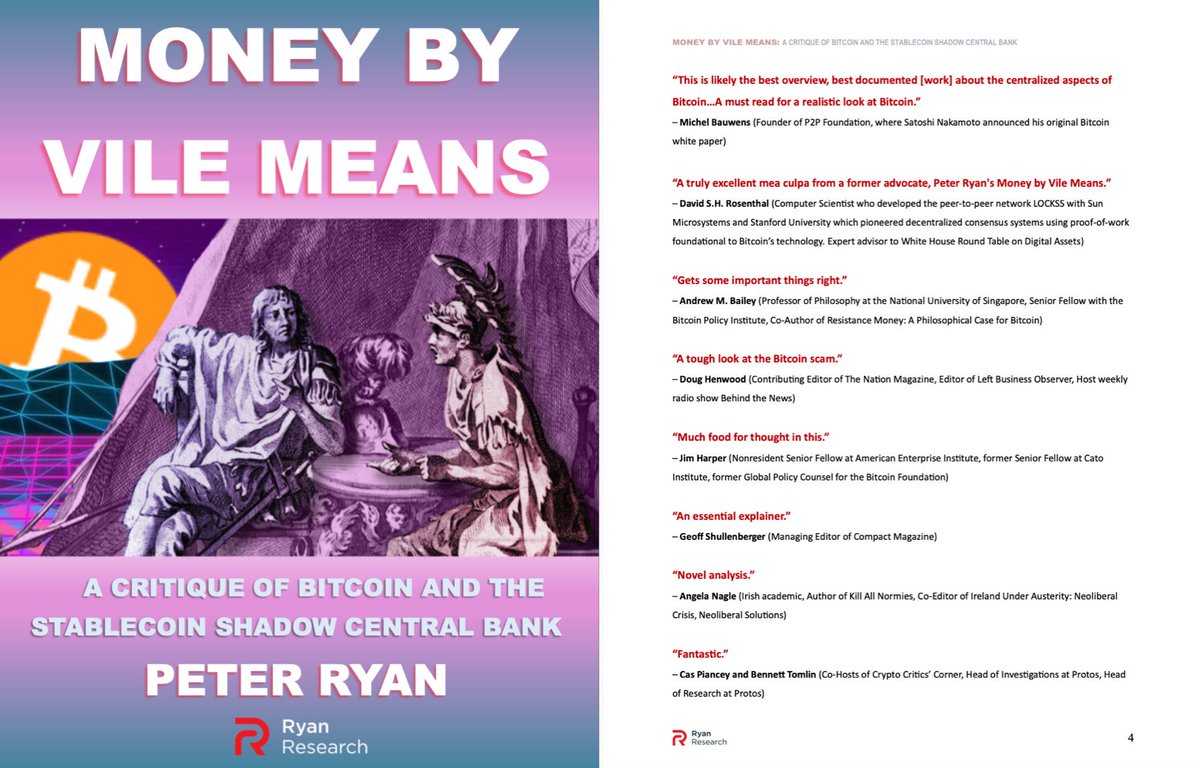
Just dropped an eBook/PDF of “Money by Vile Means.” Nowhere else will you get:
- What Bitcoin actually is (why it's corrupted)
- Debunked myths of decentralization
- Hidden stablecoin endgame = shadow central banking
If you're tired of the hype, grab it now.
(link below)
Capitalism is premised on a supplier creating more value from its use of productive factors (land, capital, labour) than the sum of those parts proven by selling said newly created value for a profit to a demander.
What we have today is a system premised on financiers extracting money from the real economy to spread that money among suppliers who create negative net new value proven by their inability to make a profit of demanders.
Before, demanders dictated suppliers. Now, financiers dictate suppliers with absent demand.
Parasite economics.
BREAKING: "Speculative data center debt is being repackaged and sold to pension and retirement funds, university endowments, and other institutional investors in a manner eerily reminiscent of the subprime bubble," per AFR
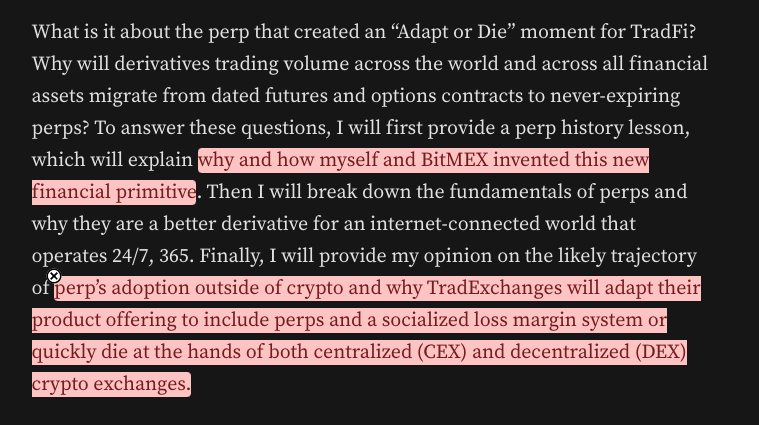
If you want to learn more about perps, then learn from the father of perps: BitMEX's Arthur Hayes.
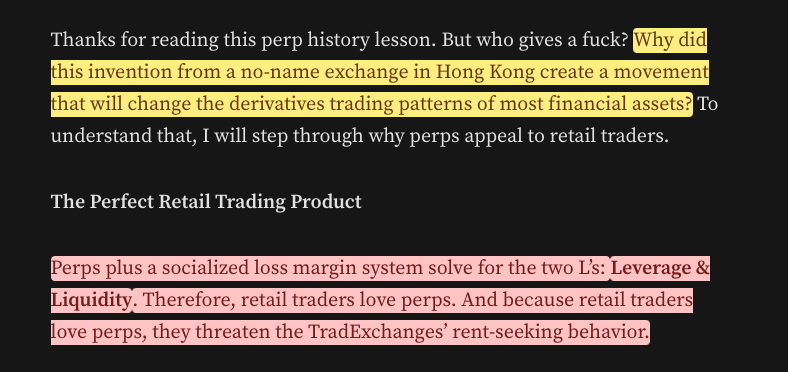
He said that traders love perps because they offer more leverage and liquidity: lots of sloshing to enable 100x degen trades.
However, being a degen merchant (BitMEX) means you eventually shoulder the risk of offering 100x leverage because there is not enough actual dry powder to cover what the degen merchant is liable for. When loser losses exceed the degen merchant's capacity to payout winners, the degent merchant is at risk of going bust.
To avoid going bust, Hayes added the socialized loss system which uses funds from winners on his platform to backfill the losses. Hayes is correct, in the narrow sense, that his socialized loss system is a necessary aspect for platforms like his to persist and that other platforms must converge to it out of competitive pressure.
While he may have created a short-term solution, mostly for his own firm's survivability, in the broad sense, he also created a more systematic risk. In the long-term, he introduced more fragility.
The honest look here is that Hayes transferred his risk of greedily/stupidly giving schmucks 100x leverage. The reason offering 100x leverage is not commonplace is because it's stupidly risky. Hayes is not a genius for noticing offering lots of leverage could result in him attracting a lot of dumb money he could skim off of. He did not innovate anything. He just got other schmucks to shoulder his risk for him without realizing he also created a new system-wide risk (or perhaps dgaf).
Eventually, a negative market shock will come and be big enough to overwhelm the socialized loss system. Winners who bet right will not tolerate their risk being correlated to losers who bet wrong. They will start yanking liquidity out of the platform therefore making shock worse. As more shock spill overs occur, the fire sale / exchange run loop spirals.
If perps expand into tradfi (i.e. big quantity and wide interconnectedness), what will happen is that 1.) competitive forces will race to the bottom to supply maximum leverage, 2.) socialized loss systems will become default to protect platforms in short-term, 3.) isolated platform risk will be transferred to system-wide risk creating more fragility, and 4.) a big enough shock will expose this fragility and cascade into a full-blown financial crisis because no one realized how wide the exposure was in our future crypto-tradfi interwoven market.
As Vítor Constâncio, Vice-President of the European Central Bank, said, "In pursuit of excess returns, market participants engage in excessive leverage without internalizing systemic costs of their risk-taking behaviour. These comprise spillovers to counterparties and financial networks or asset price declines triggered by fire sales. A large and growing literature supports the conclusion that these systemic externalities of excessive leverage call for macroprudential policies that restrict the use of leverage pre-emptively, as a way to improve general welfare."
The cryptoids that have taken over the Trump admin will not provide such sufficient policies. Which means we are sprinting towards our global financial market turning into one big BitMEX that is leverage-maxxing until it starts rekt-maxxing as many related parties as possible.
I don't see what productive purpose perps and the associated crypto-like "innovations" offer other than creating neo-casinos that if anything extract money that could have otherwise gone into the real economy and create more risks that eventually harm the real economy down the road. Speculating != investing.
https://t.co/1wbVtC0ZfC
Blockchain aside. One thing I feel pretty strongly about is that if you're a markets person, you should probably invest a little bit of time thinking about perpetuals, and how they work. Anyway, Sub to the newsletter here. https://t.co/25c7dc92bu
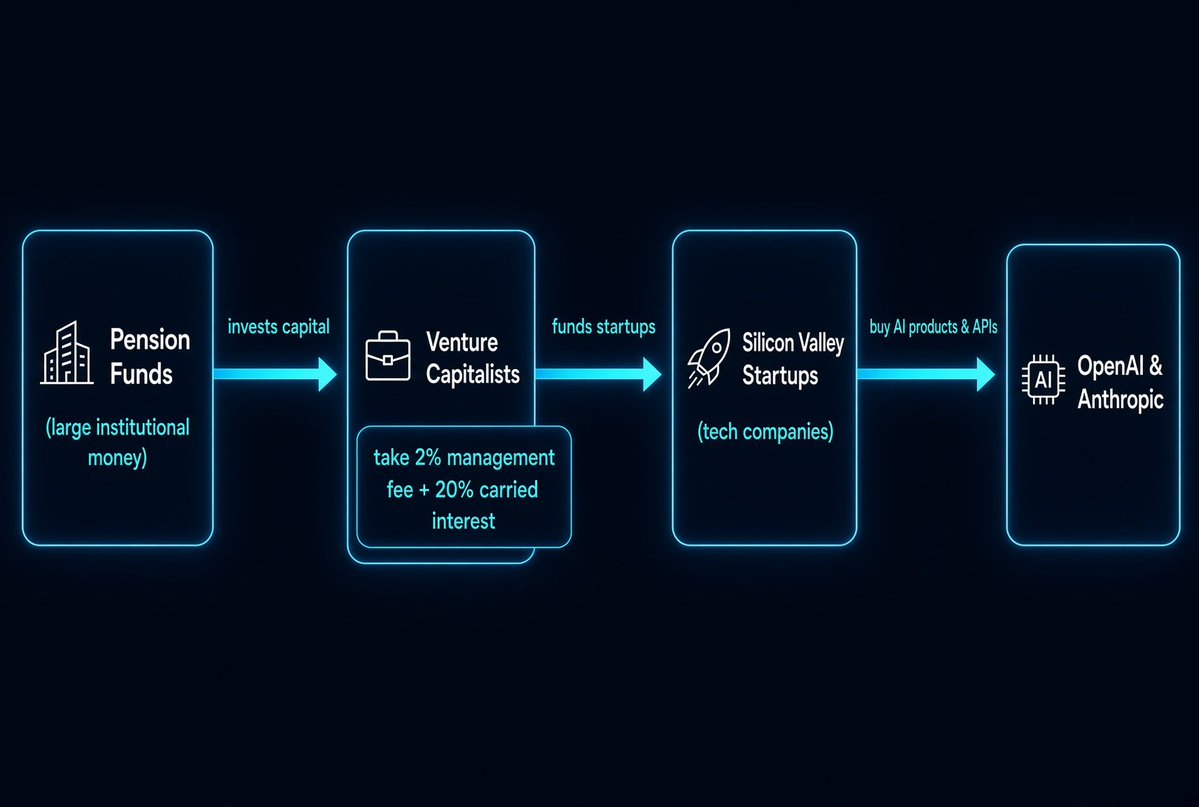
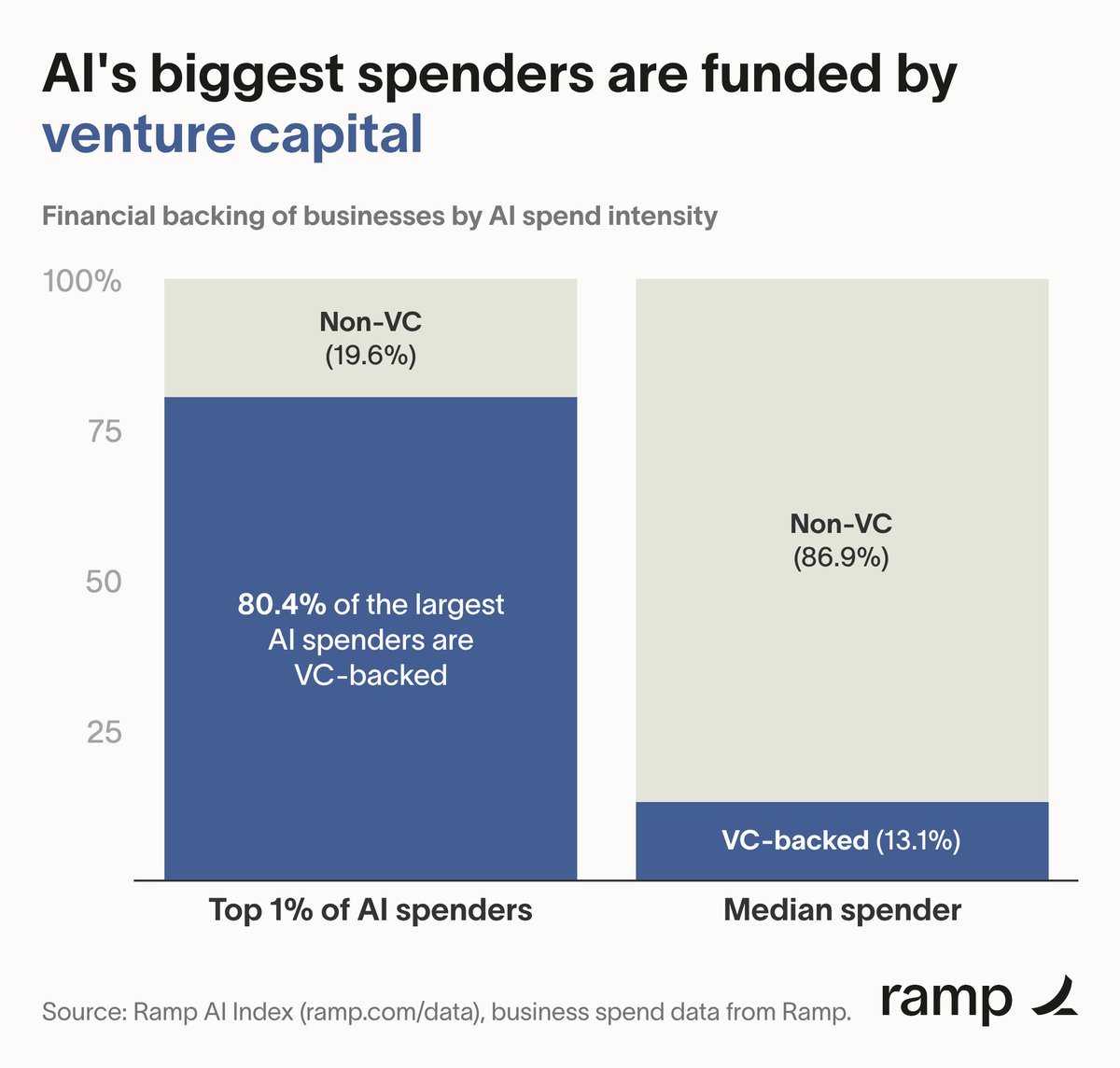
This chart shows the key risk to the AI trade, and it's missing from the latest revenue announcements.
The AI boom is fundamentally driven by a top 1% of companies that drive 80% of spend. Within that top 1%, 80% are venture-backed.
That's all fine if the AI trade works out, and if, as some prominent investors say, everyone wins.
But if it doesn't work out, then we have a cascading effect of large customers simultaneously pulling back their AI spend.
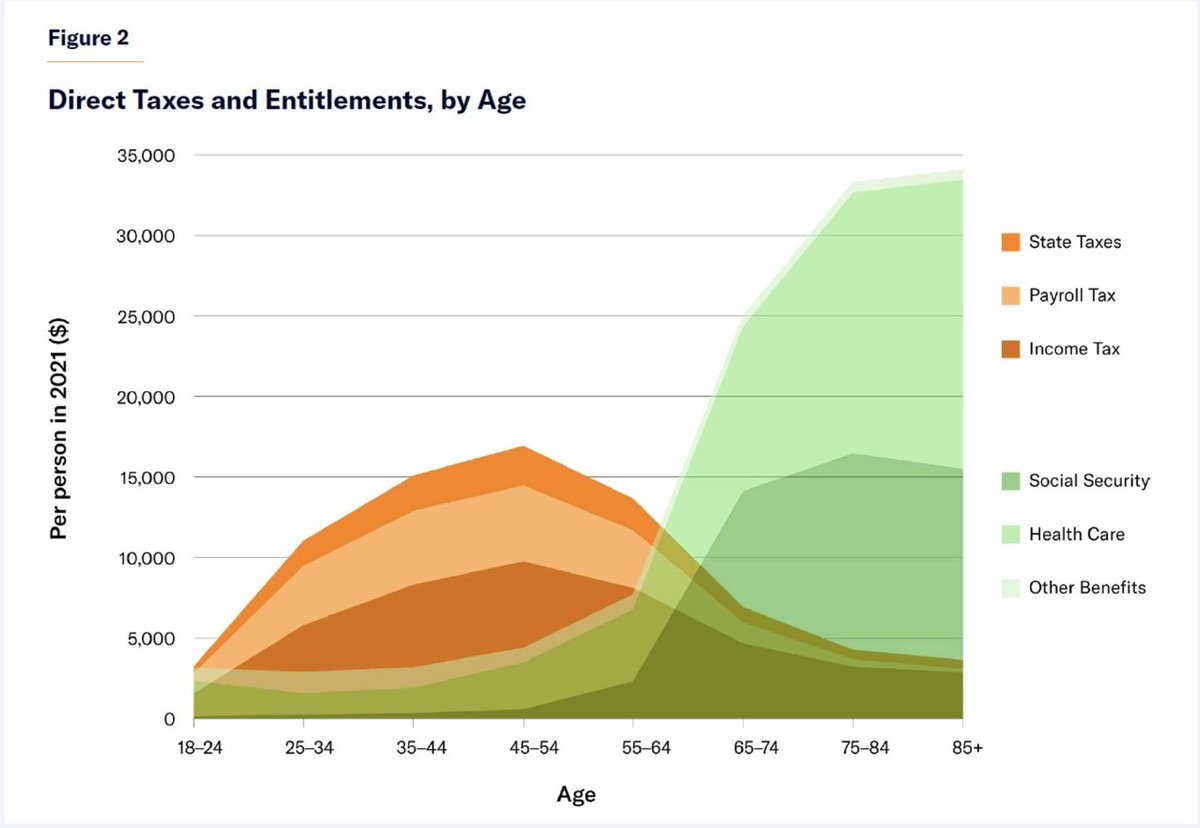
I was reflecting on this the other day with the Irish budget overspending driven by healthcare which is driven by old people.
When it comes to increasing entitlement costs, modern governments just have no way of dealing with an "is what it is" problem. They never expected there to be this many old people, living for so many extra decades, and consuming so much healthcare services to do so.
It's hard to imagine an obvious solution to this.
@AzizSunderji Interesting. I am curious to how "head" and "family" are defined.
You might find some of my analysis on the "are young people worse off" debate here interesting
https://t.co/SVykPI7F5b
Parvus (Helphand) also indicated that the Bolsheviks "was not supported by the majority of the [Russian] people: 'it was the victory of one minority over another minority'...In addition...the party had to carry with it the 'dark masses'...[or] Lumpenproletariat - which were now threatening the stability of the new order."
German State Secretary for Foreign Affairs Paul von Hintze: "What do we want in the East? The military paralysis of Russia. The Bolsheviks are taking care of this better than any other Russian party, without our contributing a single man or a single penny. We cannot demand that they or other Russians should love us for the fact that we are squeezing their country like an orange...That is exactly what we are doing: we are not co-operating with the Bolsheviks, we are exploiting them. That is what politics is about."
After the Bolshevik clear victory by late October of 1917, the German state transferred another 17 million marks ($73 million in today's USD) to the Bolsheviks.
@parella_anthony@RonanHunt88 Also what many non-coders don’t realize that much of “coding” is/was copy pasting from stack overflow. So ai substituted this activity rather than create a new activity albeit with a better search / copy paste capacity.
Not GDP but 89% of firms surveyed reported "no impact" on their productivity as expressed by the volume of sales per employee.
Source: Yotzov et al., "Firm Data on AI," NBER Working Paper 34836 (Feb, 2026).
https://t.co/VgFnyd2LUb
does anyone have handy the actual data on AI’s effect on GDP over the last four years?
also: is Dario innumerate, unaware of prior data; or just hustling his IPO and full of shit?
@Logo_Daedalus That’s essentially what this based on true events drama series of WeWork emphasized.
To some degree, this trend is almost like a millennial reinventing of the wheel of alchemy.
https://t.co/nD67556Nle
@RonanHunt88 That was evident for a long time: coders use ai to output more code.
Code output does not equal productivity.
You can make all the code you want but if it does not increase revenue or reduce costs, it is not productive definitionally.