Not all Earth observation data is built the same. 🛰️
Watch Ryan Hammock, Head of Solutions Engineering, in the latest episode of our Hyperspectral Academy series as he breaks down the fundamentals of remote sensing platforms, what goes into selecting the right data, and how hyperspectral imaging, with high spectral resolution and narrow bands, enables deeper analysis across industries.
Random thought after playing @factoriogame for hours.
Newness is bound by repetition.
A new system can't be figured unless already existing systems are looping and sustaining themselves.
@paraschopra Thanks for sharing. I'll read this.
I read the Principles of Synthetic Intelligence by Joscha Bach. Pretty dense as well!
Will revisit that with this one.
Today, we’re taking a step toward truly galactic-scale capabilities. 🚀
We’re partnering with @SarvamAI to bring sovereign AI into orbit aboard India’s first orbital data centre satellite, a pathfinder mission bringing datacenter-class GPUs and high-performance remote sensing together in space.
Built and operated by Pixxel, with Sarvam providing the AI backbone, the demonstrator marks a step toward making orbital data centres real, operational, and scalable from India.
May the 4th be with us all! ✨
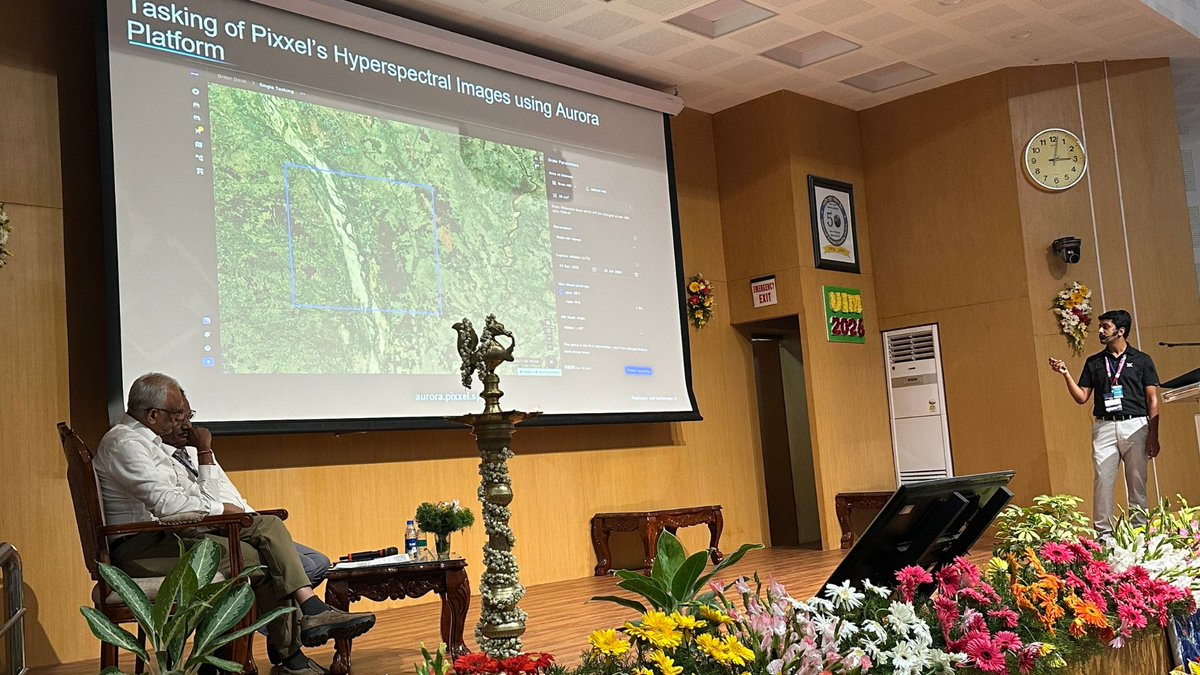
Pixxel attended the User Interaction Meet organised by the National Remote Sensing Centre (NRSC) and @NSIL_India (NSIL) in Hyderabad last week.
Bringing together voices from across India’s space and geospatial ecosystem, the event, in line with the theme of 'Viksit Bharat', created space for deeper exchange with government delegates and domain experts. We shared how our satellite missions and planetary intelligence are opening up more precise, data-driven ways to understand the Earth.
Continued collaboration across the ecosystem will be key to expanding what’s possible with Earth observation. 🤝
Some of the most serious environmental threats build quietly in the air, water, and soil long before visible damage appears.
So how do we detect what we can’t see? 🤔
By reading spectral signatures from space, hyperspectral satellites turn subtle chemical shifts into Planetary Intelligence that enables earlier, more informed action. 🌏🛰️
🎉One year since the first three Fireflies took to orbit!
A year of hyperspectral imagery capturing signals, materials, and change across the planet.
👇A glimpse of Fireflies’ latest views from around the world, translating signals into planetary intelligence.
At Pixxel, science shapes every step, from capturing light across hundreds of spectral bands to transforming that data into intelligence about our planet. 🌎
This is our journey from capture to delivery: science in motion, orbit to insight. 🛰️
Watch now! 👇
@waitin4agi_ It's interesting how the brain prioritizes internal order first. Entropy is always eating us away, why not plunge into it willingly.
People who wanna redefine the game are not entirely wrong, they just don't understand that they can play while always maintaining internal order.
Tune in to our newest episode of Pixxel’s Hyperspectral Academy and listen to our Analytics Lead Jeremy Kravitz talk about how hyperspectral data from our satellites can help with monitoring and protecting water resources across our planet! 🌍
Pixxel’s goal is to build the intelligence layer for our planet. A living, breathing map of Earth’s health powered by constellations of hyperspectral (and soon to come 😉 other) satellites. We want to reimagine and re-engineer how humanity sees the world. A living breathing model that helps us heal, grow, and thrive sustainably on planetary scale (and beyond)!
Only one private Indian company owns a satellite constellation.
On August 26th @PixxelSpace launched three satellites, scaling their hyperspectral Firefly constellation to six. They gave Runtime rare behind-the-scenes access to their facilities.
Here's a glimpse inside Pixxel:
Status check: From deployment to First Light in under 48 hours! 💡
The Fireflies have already crossed a major milestone: capturing first light and downlinking data from orbit!
Detailed commissioning across power, thermal, attitude control, and communications is also complete, confirming the satellites are performing as expected.
This pace sets a new benchmark for how quickly we can bring missions online and begin monitoring the planet. 🚀🌎
On January 14th, @PixxelSpace launched the first three Fireflies into orbit.
This film captures that day — the anticipation, the liftoff, and what it meant for us.
PS: Buckle up, the next launch is just around the corner.
#SpaceTech#pixxelspace#earth
🎬 How Pixxel’s First Fireflies Took Flight: A Launch Story 🚀
They’ve completed thousands of orbits since liftoff, delivering the world’s highest-resolution commercial hyperspectral imagery from space. But before all that, there was the day our first three Firefly satellites launched. A day that marked the start of our constellation and a new chapter in Earth observation.
As we prepare to launch the next set of Fireflies, here’s where the journey began! 🌌👇
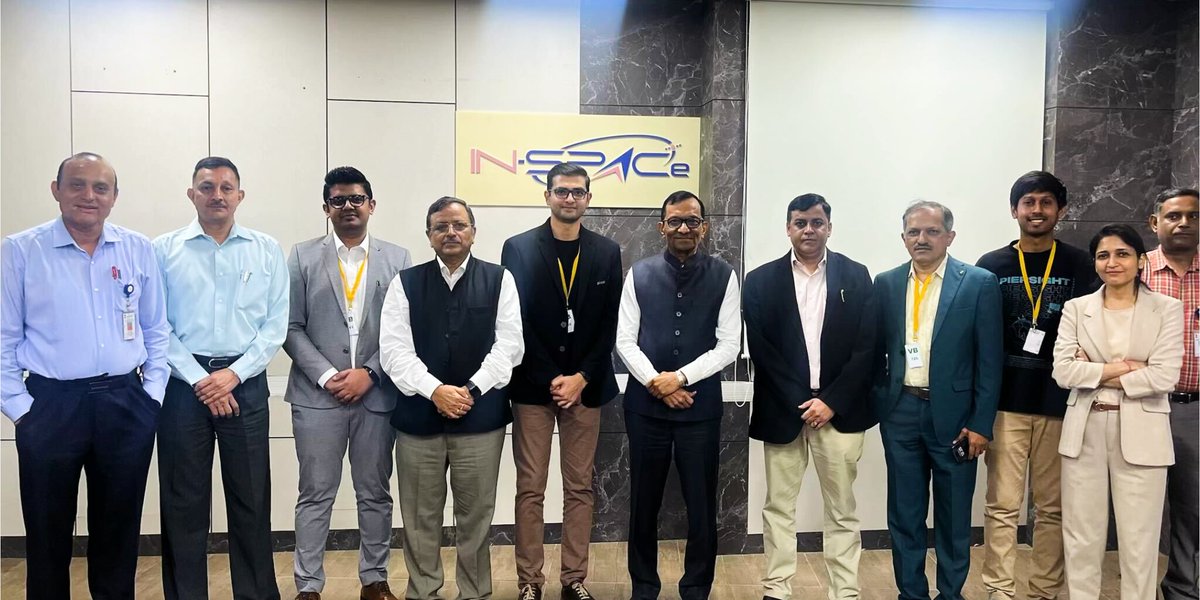
Pixxel will lead a first-of-its-kind private consortium to design, build, and operate India’s national Earth Observation constellation under a Public-Private Partnership with @INSPACeIND! ✨
Alongside @DhruvaSpace, @piersightspace, and @sat_sure, we will develop a 12-satellite network, including sub-metre very high-resolution, multispectral, SAR, and hyperspectral satellites, entirely from India, serving users in India and around the world.
This is a milestone for India’s space sector, strengthening data sovereignty and showcasing world-class space-tech capabilities on the global stage. 🚀
Read more here: https://t.co/ujy3fVrIzs
A little bit more of humanity is in space today. 🇺🇸🇮🇳🇵🇱🇭🇺
The four-member crew of #Ax4 includes astronauts from @ESA and @ISRO. @Axiom_Space's fourth private astronaut mission is set to arrive at the @Space_Station on Thursday, June 26: https://t.co/fnGkb4d64E