@Truebitprotocol WE, the investors were victims of a hack on an old unaudited smart contract because you were negligent. You should be figuring out a way to revive your token and integrate it into the protocol. No one needed your bonding curve garbage print mechanism in the first place.
When a Protocol Accepts ETH, Every Holder Exists,No Exceptions
There is a claim circulating after the Truebit exploit that must be addressed directly:
“Some TRU tokens are not recognized because they were bought on exchanges.”
This claim is false technically, economically, and legally.
And if it were allowed to stand, it would undermine not just Truebit, but the foundations of Ethereum itself.
All TRU tokens trace back to ETH without exception
Every single TRU token in circulation exists because ETH was exchanged for it at some point.
There is no other source.
That ETH exchange occurred through:
the bonding curve
Uniswap liquidity
secondary market trades
centralized exchanges that sourced liquidity from on-chain pools
But here is the critical point:
Exchanges do not mint tokens.
They redistribute them.
If a user bought TRU on:
MEXC
BitMart
any centralized exchange
That TRU originated on-chain, from:
the same TRU token contract
the same mint logic
the same bonding curve
the same ETH-backed system
An exchange trade does not erase provenance.
It does not create a “second-class” token.
Selling does not invalidate origin
Another implied argument is this:
“Once tokens are sold into an exchange, they are no longer directly linked to the bonding curve.”
This misunderstands how markets work.
When someone sold TRU into an exchange:
they sold their claim, not the protocol’s responsibility
ETH (or stablecoins) still entered the system via the original mint
ownership changed, not legitimacy
If selling invalidated tokens, then:
every ERC-20 traded on Binance would become unofficial
every Uniswap LP withdrawal would void provenance
every secondary market would be illegitimate
That is obviously absurd.
There is only one TRU
There is not:
“real TRU”
“exchange TRU”
“MetaMask TRU”
“unsupported TRU”
There is:
one TRU token
one proxy contract
one supply counter
one ledger of ownership
All holders hold the same asset.
Anything else is narrative not reality.
The protocol accepted the ETH not the UI
Whether a user:
clicked “Swap” in MetaMask
used Uniswap directly
traded on a centralized exchange
Is irrelevant.
What matters is this:
The protocol accepted ETH in exchange for TRU.
Once that happened:
supply was created
ownership was assigned
value was transferred
economic standing was established
UI paths do not change economic facts.
“Unintended” does not mean “invalid”
Yes, the bonding curve behaved incorrectly. Yes, the math overflow allowed hyper-minting. Yes, this was catastrophic.
None of that makes the tokens illegitimate.
A bug does not retroactively void consent.
If a protocol wants the right to say:
“These tokens should never have existed”
Then it must also say:
“This ETH should never have been accepted”
You cannot keep one and deny the other.
The real question Truebit must answer
This is not about compensation. It is not about recovery. It is not even about token price.
It is about recognition.
Truebit must state clearly and publicly:
Are all TRU tokens issued by the protocol recognized?
Are all holders, regardless of acquisition path, first-class participants?
Or does interaction with Truebit carry hidden revocation risk?
There is no neutral silence here.
Why this moment matters beyond Truebit
If a protocol can:
deploy a contract
accept ETH
mint tokens
allow free transfer
then later declare some holders “unsupported”
Then DeFi is not trustless it is discretionary.
That precedent would be devastating.
Final clarity
If ETH went in, and TRU came out, through Truebit contracts,
the holder exists.
Everything else is denial of on-chain reality.
And no verification system can survive denying its own ledger.
@Truebitprotocol Imagine telling your audience to not “Trust” anything from anyone unless it’s from the company that just lost $28,000,000 of investor money…. No that wasn’t Jason’s money, or the teams money, it was our money. The investors who lost everything.
@Truebitprotocol Yea but the token inflated to like a trillion units, so holders are burned even if you get the money back. Plus you won’t. Let’s be honest.
Decentralized applications face critical challenges due to the lack of verified off-chain data, underscoring the need for robust verification solutions to maintain blockchain ecosystem integrity and reliability. #Truebit addresses this by providing secure verification methods to integrate off-chain data and real-world assets into blockchain environments, as Web3 becomes the transactional layer for these assets. Check out the full interview with @BlocksterCom here 📷 https://t.co/XecfDUy5sF
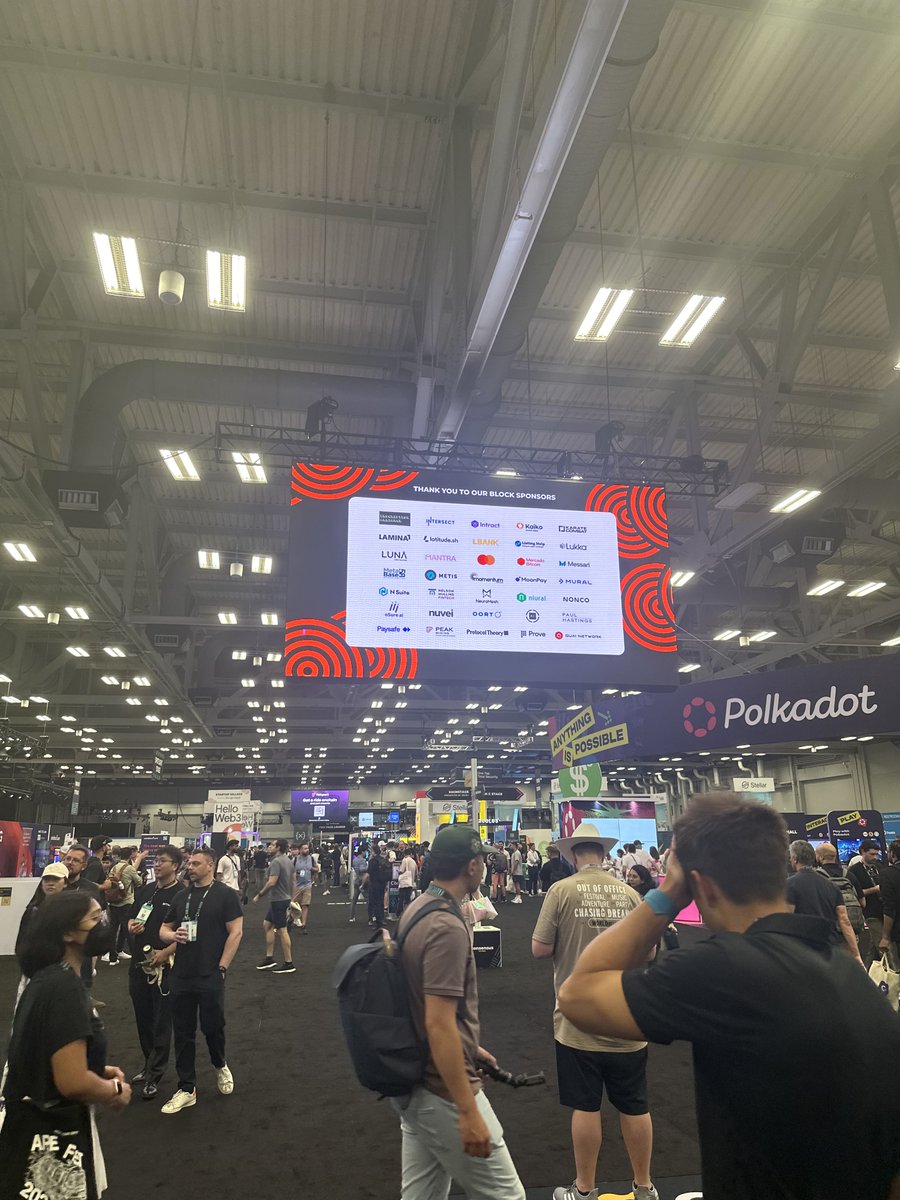
Next week we're heading to Austin for @consensus2024
Drop us a line if you'll be in town and want to know how verification can improve the credibility of your Web3 project
Book a time to connect! ⬇️
https://t.co/DU8un4Mo1X
@alexthesolver @FightMate Yea, this is close but wrong like others said. Actual loss to store is what it cost for them to buy the “$70 worth of goods” + cash.
Lmao, y’all are dumb. He uses the $100 he stole at the same store. That means the $100 he stole is back in the register. So now, what does he actually end up walking away with? $70 worth of goods and $30. But the store doesn’t pay $70 for the goods. So it’s cost of inventory + $30
Blockchain & Web3 enable trustworthy AI via anchored data, transparent governance & usage rights. Investing in data provenance and integrity builds trust in AI applications. More on Web3's role in secure, unbiased AI: https://t.co/uZA3kPv8yY