@elonmusk You're just a racist!! Be it black or white our blood is still red, so no one has any right to take someone's life, stop making it look like pple don't care cuz his white, when Floyd died you didn't even make any post about it and now you're trying to make yourself an idol
> FX NG: A place where educated beggars call another man "dad" while their own fathers are alive and well, all in the hope of getting money. A space crowded with clueless newbies chasing fake mentors, and ego driven idols who only engage when they're being praised. A community where some people would rather shower attention on women for validation than support everyone equally. A place filled with people who have money but lack wisdom, where bragging often speaks louder than results.
If you’ve been waiting for the right time to grab a funded challenge with @_fundedhero , this is it.
🔥 65% OFF ALL FundedHero Challenges
🎟️ Code: FLASH65
⏳ Ends Friday
Here: https://t.co/VCxiB5oWuc
@_fundedhero is doing a 65% of on all challenges
Yes, you heard that right, “65% off on all Challenges”
Offer valid till Friday,
don’t let this skip you, click on the link below to get started
https://t.co/x2SeRfzeWz
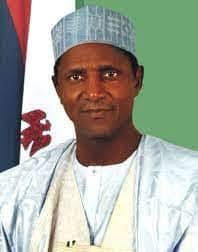
Legacy of the Servant Leader: H.E. Umaru Musa Yar’Adua, 16 Years On
Today marks 16 years since our nation lost a dear hero, an icon of integrity, a selfless patriot, and a man I was privileged to call not just my boss, but my brother and worthy partner in service.
As I reflect on the passing of President Umaru Musa Yar’Adua, I am reminded of the shared passion we both held for a Nigeria where justice is not a slogan, but a lived reality for every citizen.
Our partnership was anchored on a common vision: to build an inclusive, united, and just nation. Yar’Adua was a man of quiet but profound conviction who believed that the strength of a country is measured by its commitment to the rule of law and the sanctity of the ballot.
He did not just lead; he served with a humility that is rare in the corridors of power, often putting national stability above personal or political gain.
His record in peace-building stands as an enduring legacy. He understood that true nation-building requires the courage to admit flaws and the sincerity to fix them.
For leaders, the life of Umaru Musa Yar’Adua serves as an enduring lesson. His example teaches us that leadership is a sacred trust, and that progress is only sustainable when it is rooted in transparency, accountability, and a genuine love for the people.
Sixteen years later, his strides continue to testify for him. As we remember this "Gentleman President," let us rededicate ourselves to the worthy causes he pursued with such passion.
I pray that Almighty Allah (SWT) continues to grant him eternal rest in Al-Jannah Firdaus.
-GEJ
A Nation Losing Its HUMANITY.
Some events shatter a society so deeply that words are no longer enough to express the shock; the brutal killing of a teacher and the horrific rape and murder of an elderly woman are among such tragedies. These are not isolated incidents but signs of deeper moral and social decay.
How did we get here? How did we reach a point where teachers are hunted and killed, and the elderly—custodians of memory and wisdom—suffer such dehumanising violence?
This is more than a security crisis; it is a failure of collective humanity. We have become desensitised, consuming tragedy briefly and moving on, allowing indifference to normalise the unacceptable.
To the families affected, I share in your grief. But grief alone is not enough.
We must demand accountability and urgent systemic change. If such atrocities no longer move us to action, then we risk losing our shared humanity. -PO
Debt Servicing, Borrowing, and Nigeria’s Fiscal Priorities
During his recent foreign tour, President Bola Ahmed Tinubu stated that Nigeria will spend about $11.6 billion on debt servicing, a figure that should concern anyone interested in the country’s economic future and long-term development.
There is nothing inherently wrong with borrowing when it is guided by prudence and directed toward productive investment. Countries such as Japan, the United Kingdom, the United States, the United Arab Emirates, Singapore, and Indonesia are all heavily indebted, yet their borrowings are largely channelled into education, healthcare, infrastructure, and innovation - sectors that generate long-term economic returns and sustain repayment capacity. As a result, despite high debt levels, their obligations remain more manageable because they are tied to measurable productivity.
Nigeria’s situation, however, is markedly different. A huge proportion of past borrowing has been directed toward consumption, with limited visible or sustainable developmental outcomes to justify the scale of indebtedness.
It is also important to note that a huge portion of the debt currently being serviced was accumulated under the Tinubu administration itself, while borrowing has continued at a significant pace. The administration’s recent external borrowing alone includes about $6 billion (from First Abu Dhabi Bank in the UAE—$5 billion, and UK Export Finance via Citibank London—$1 billion), a further $1.25 billion under consideration from the World Bank, and an additional $516 million arranged through Deutsche Bank, bringing the latest known external loan commitments to roughly $7.8 billion. In addition, domestic borrowing through monthly bond issuances continues to add to the overall debt stock.
Against this backdrop, Nigeria’s 2026 budget shows that health is ₦2.46 trillion, education is ₦2.56 trillion, and poverty alleviation is ₦865 billion, giving a combined total of about ₦5.885 trillion for these three critical sectors. By comparison, debt servicing at about $11.6 billion (approximately ₦17–₦18 trillion, depending on exchange rate assumptions) is almost three times higher than the total allocation to health, education, and social protection combined. This imbalance highlights a troubling fiscal reality in which debt obligations increasingly crowd out investment in human capital and poverty reduction. Moreover, even within the limited allocations to these sectors, funds may not be fully released, and a significant portion of what is eventually released could be misappropriated.
Ultimately, the central issue is not borrowing itself, but whether borrowed funds are being converted into measurable productivity, inclusive growth, and improved living standards. Without this, debt servicing shifts from being a temporary fiscal obligation to a long-term structural burden that constrains development and deepens economic vulnerability.
A New Nigeria is POssible. -PO