A @Nature study from the #RutaLab reveals how fruit flies store a #memory of how to relocate a #scent, even after it disappears. It depends a #brain region used by insects for #spatialnavigation, showing that odor tracking is not simply reflexive.
🔗: https://t.co/cFj9OpDyTw
Your body doesn't age as one unit. Stanford researchers can now measure 11 organs separately, and roughly 1 in 5 people has organs aging at meaningfully different rates.
Each organ sheds specific proteins into your blood. The liver leaks hepatic proteins. The pancreas leaks pancreatic proteins. The heart leaks cardiac proteins. Plasma proteomics measures thousands at once. Apply machine learning, and you can build a separate aging clock for each organ from a single blood draw.
Oh et al. (2023, Nature) validated 11 organ-specific aging clocks in 5,676 adults across 5 independent cohorts. Roughly 20% of the population had at least one organ aging significantly faster than the rest of their body. Heart aging alone conferred 250% higher heart failure risk. Brain and vascular aging predicted Alzheimer's progression as strongly as plasma pTau-181, currently the best blood-based biomarker for the disease.
Then came the 20-year data. Whitehall II tracked 6,235 middle-aged adults for two decades (Kivimäki et al., 2025, Lancet Digital Health). Organ ages measured from a single baseline blood draw predicted 30 different age-related diseases over the following 20 years. Six diseases were predicted exclusively by aging in their corresponding organ. People whose liver was aging faster than the rest of their body were more than twice as likely to develop liver failure.
Accelerated heart aging raised the risk of dilated cardiomyopathy by about two-thirds and chronic heart failure by about half. Accelerated lung aging raised lung cancer risk by roughly 30%.
A 50-year-old whose heart is aging at 53 and kidneys at 39 has a fundamentally different risk profile than one whose values are flipped. Commercial "biological age" tests collapse eleven separate signals into a single output. That single number hides the signal that actually matters: which organ is leading the decline.
One important context. The Stanford lab that discovered organ clocks (Wyss-Coray, Oh) co-founded Teal Omics to commercialize the test. Stanford filed a patent on the method. No clinical-grade panel exists for purchase today. Most of the validation work to date has been conducted by people with financial interest in the technology becoming a commercial product. This is common in early-stage biomarker research. It is not disqualifying. It is something to know.
Until clinical-grade panels are available, the practical lesson holds. One number cannot tell you where to focus. Eleven can. Focus on the modifiable behaviors that protect the organ you are most worried about based on family history, current biomarkers, and known exposures. The averaged number works for marketing. It does not work for prevention.
Oh, Nature 2023
Kivimäki, Lancet Digit Health 2025
It’s the first time a frog—or any amphibian—has been observed pollinating a plant, researchers reported in 2023.
Learn more during #AmphibianWeek: https://t.co/UR3gYiXuiS
Bacteria has a tiny motor that makes them move- "flagellar motor"
It operates like an outboard motor, spinning a tail-like flagellum. Powered by a stream of protons, this nanomachine can rotate hundreds of times per second, enabling bacteria to swim, tumble, and navigate toward nutrients
The E. coli genome, pulled into a straight thread, is about 780x longer than the cell from which it came.
If you placed one E. coli into a gallon-sized jug and waited a day, the genomes of its descendants, placed end-to-end, would reach to the moon and back.... seven times.
At the age of 23, before she’d even earned her PhD, Carol Greider made the discovery that would earn her the 2009 medicine prize. Along with her supervisor and co-laureate Elizabeth Blackburn she discovered the enzyme telomerase.
An efficient and vicious microscopic hunter, the single-cell organism Lacrymaria olor, attacks and consumes another single-cell organism.
📽: James Weiss
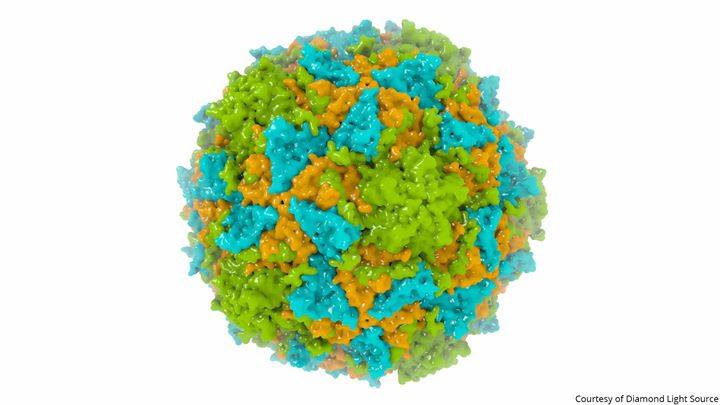
This 3D structure of a polio vaccine was enabled by a #NobelPrize-awarded discovery. Cryo-electron microscopy allows us to see intricate details in biological structures. Jacques Dubochet, Joachim Frank and Richard Henderson were awarded the 2017 chemistry prize for their work.
A HARVARD psychologist says: “if you’ve achieved nothing by 25, you’ve avoided the most destructive illusion of youth”
> In 2021, a Harvard psychologist surprised a lecture hall with an unexpected statement:
“If you haven’t accomplished much by 25, you may have escaped one of youth’s biggest illusions.”
At first, the room laughed.
She wasn’t kidding.
> The illusion of early success.
In your early 20s, the brain seeks quick proof of worth ~status, attention, rapid achievements.
But psychologists warn that chasing recognition too soon can lock people into roles or paths they never consciously chose.
They decide too early… and spend years trying to undo it.
> The exploration phase.
Research on career development suggests that people who explore more before 30 often build stronger long-term directions.
Testing ideas.
Making mistakes in public.
Changing course.
At 25 it looks like confusion ….but by 35 it often turns into clarity.
People who feel “behind” in their mid-20s frequently gain something others miss:
Perspective.
Patience.
And a clearer sense of what truly matters to them.
That foundation often leads to better decisions later on.
At the end of the lecture, the psychologist left the students with one final thought:
“You’re not meant to have life fully figured out at 25.”
“You’re meant to discover who you’re not.”
New Essay: Why Cell's Cannot Grow Faster
Biologists are obsessed with records.
We like to learn about the smallest and biggest cells, the animals that live longest, and the birds which migrate furthest. Perhaps this is an intrinsic part of Human Nature; but a part of me — deep down — wants to resist it. I'll not be a stamp collector, I think, or mere record keeper!
And yet, records are often a starting point for a deeper curiosity. When we learn that elephants do not get cancer despite the abundance of cells in their bodies, it is only natural to think, "Wait, then why do humans get cancer?" Records are a starting point toward rich questions.
But the record I think about most is cell division; specifically, why an obscure microbe — called Vibrio natriegens — is able to divide every 9.8 minutes and not a moment sooner.
V. natriegens was first isolated from a glob of mud on Sapelo Island in 1958. A few years later, a man named R.G. Eagon incubated these cells at 37°C, shaking them vigorously in a liquid broth containing blended bits of brains and hearts. Eagon found that the cells divided every 9.8 minutes. This must have been startling, because the average microbe divides every three hours or so. Some, living deep in the Earth's crust, divide once every few years.
It has been more than 60 years since Eagon made his discovery, and yet nobody has found a microbe which grows faster than V. natriegens. Is 9.8 minutes some kind of magical threshold; a speed limit to life’s replication?
I don’t think so. And the reason I say so is because there is a simple math equation, with just four parameters, that *beautifully* predicts how quickly a cell will grow based on the size, abundance, and activity of its ribosomes. When we understand those four parameters, we can quickly imagine new ways to engineer cells to divide even faster.
The equation is λ = (r_t · f_a · Φ_R) / L_R and you can learn all about it in my new essay :)