Grep just achieved SOTA on the three major deep research benchmarks, beating Perplexity, Google, Nvidia, OpenAI, and Anthropic.
We're a two-person founding team.
I also use a Combustion thermometer (grilling in my case). My understanding is that the ambient temp is not the same as my grill thermometer because the area right around what you are cooking (where fhe ambient temp sensor is) is cooler because of the moisture evaporating from the food you are cooking. Not sure if you tested just the thermometer in the oven without inserting into something.
More details explaining this from the creator of Combustion: https://t.co/2Y96BJHHOz
Since whole brain emulation is looking a bit less remote this morning, this is a great time to read @qntm’s incredible flash fiction MMAcevedo. 5 minutes of your time, but will haunt your nightmares for years.
https://t.co/bNjj72jv12
I think agentic AI would work much better if people took lessons from organizational theory, which has actually spent a lot of time understanding how to deal with complex hierarchies, information limits, and spans of control.
Right now most agentic AI systems seem to pretend that models have basically unlimited ability to manage subagents when that is clearly not true. We need measures of spans of control for AI. A human tops out at less than 10 direct reports. I am pretty sure that 100 subagents is too much for an orchestrator agent - suspect we need middle management agents (yes, I get it, insert middle management joke here).
Similarly, we need more attention to boundary objects. These are what is handed between groups (marketing to IT to sales) in organizations to convey meaning as a project crosses group boundaries, like a prototype or a user story. Right now agents pass raw text & maybe code back and forth. Structured boundary objects that multiple agents of different ability levels can read and write to would solve a huge number of coordination failures & reduce token use.
I also think aboht coupling, which is how tightly units inside organizations are bound. Most agentic systems are either too tightly coupled (every step needs approval) or too loose (Moltbook). This tradeoff is well-studied in organizations, I bet a lot would apply to agents. Other known issues like bounded rationality also apply, I suspect.
Everyone is rushing towards the (terribly named) agent swarm, but the issue won’t just be how good the model is, it will be org design choices. I am not sure the labs see this, but we definitely need a lot more experiments with organizing agents done by people who understand real coordination issues.
📣 Open call to agent builders: Let's read agent skills from `.agents/skills`, so people don't have to manage separate folders per agent.
Today we pulled the trigger for Codex to read `.agents/skills`. Goal is to deprecate `.codex/skills`.
Pls like/tag/RT for momentum.
Made an MCP so Claude Code can tap into @lennysan's podcast.
You're building an onboarding flow. Or a pricing page. Or trying to figure out if your new feature should be free. It pulls what guests actually said about those decisions.
Works automatically when you're planning. Or just ask: /lenny how should I plan for distribution?
https://t.co/jOjGRMRSPT
Here are the full transcripts from all 320 of my podcast episodes.
It's been super fun for me to play with AI to extract insights from this data. Now you can to.
My only ask is that if you do something cool with it, just let me know.
I'll keep this folder updated with as each new episode comes out.
Have fun.
https://t.co/DwBhryFF7d
I've been using Claude Code for a few months now and I keep thinking about why it feels so different from everything else.
Everyone's trying to build "AI-powered" versions of existing apps. AI Photoshop. AI spreadsheets. AI whatever. More interfaces, more buttons, more layers between you and what you're actually trying to do.
Boris went the opposite direction. He put Claude in the terminal.
Most people think the terminal is this scary technical thing. And yeah, it used to be - you had to memorize commands, remember syntax, know exactly what to type.
But I realized: the terminal is just text input and text output. It's basically a chat interface. It's been sitting there the whole time, connected to everything on your computer - your files, your system, your processes.
Everything.
The problem was never the terminal. The problem was that computers only spoke computer language.
Now they speak English.
You can ask Claude Code to find a file. Clean up your desktop. Check what's using memory. Write some code. Whatever. It understands what you mean, translates it to what the computer needs, and shows you what happened.
No new app. No new operating system. Just your computer, but you can finally have a conversation with it.
I keep seeing people try to build the "AI OS" and honestly, I think they're missing the point. We don't need a new operating system. The one we have is fine. We just needed it to understand us.
That's what Boris figured out. The CLI was always the perfect interface for this. Direct access to everything. Just needed to speak human.
Watch his videos if you haven't. The clarity of thinking is rare.
There'll always be more emails in need of reply, more meetings to attend, and more updates to read. A person can fill the entire workweek with these tasks over and over again. But to stay sane and sharp, you must pay yourself first by doing the work that actually means something to you.
I feel this acutely as someone responsible to employees, customers, followers, and readers. I could do nothing all day but check up on projects, people, and posts, but my brain would quickly check out if it was just doing that.
So quite frequently, I just don't. Don't check in, don't check up, and instead dive into the work that checks my own intellectual boxes. Programming for the love of it. Experimenting for the hell of it. Researching for the fun of it.
In another age, I might have been tempted to apologize for such privilege, but screw that. Privilege is wonderful. You should do your best to earn more of it. Even if you have to carve it out of the bare rocks around you.
Ironically, the best way to do that is also to choose to always pay yourself first, however little at first. By solving your own problems, tickling your own interests, chasing your own curiosity. That's where you'll find the motivation to elevate your talent. To turn interest into competency.
And once you've developed some competency, you'll be rewarded with more privilege to build it further. This is the virtuous circle of merit.There'll always be an endless list of work that could be done.
You'll never get through it all and onto your own priorities, if you continue to put them at the bottom.
Typing practice on Keybr is the perfect mini-task while waiting for ai code agents to finish.
- Doesn't add to or shift mental context
- Helps improve a skill
- Micro sized (~30 secs / round)
- Not exciting enough to suck me in
Anthropic co-founder Ben Mann on why he chose Montessori for his daughter:
"If this were 10-20 years ago, I'd be lining her up for top-tier schools and extracurriculars. But now I don't think any of it's going to matter. Learning facts is going to fade into the background. What matters is that she's happy, thoughtful, curious, and kind."
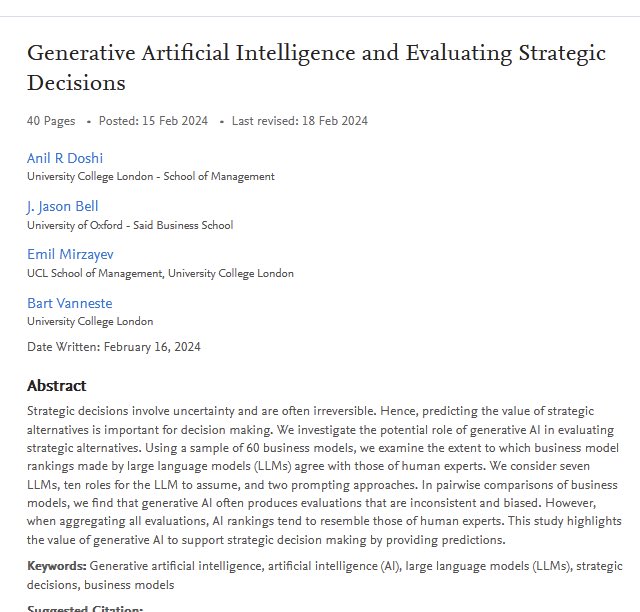
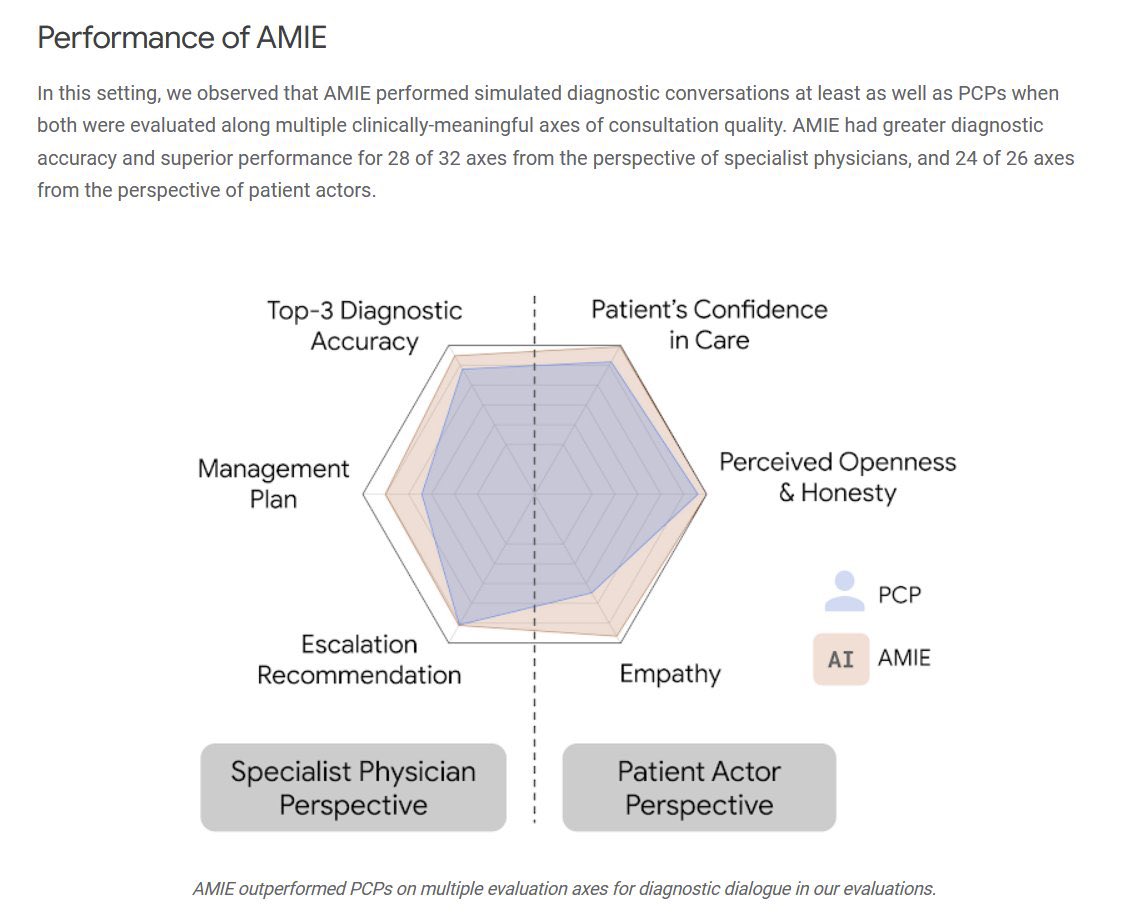
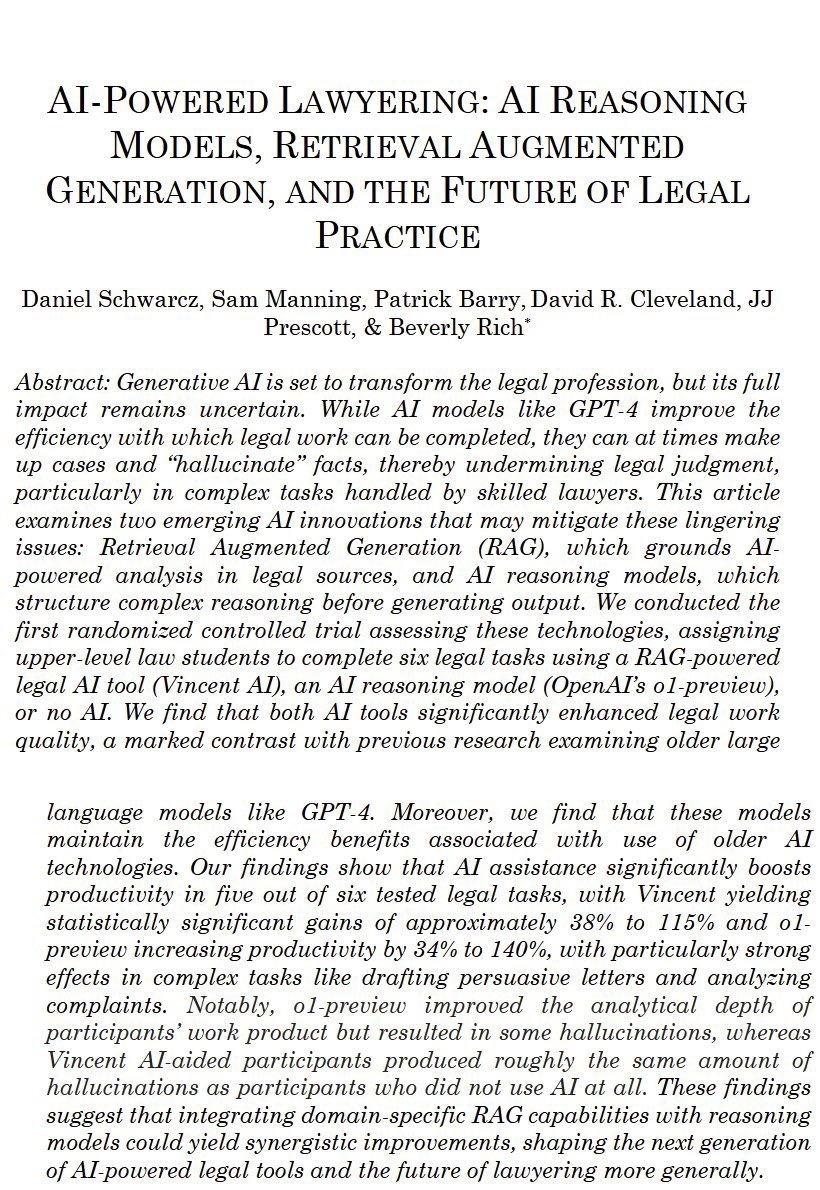
I don’t mean to be a broken record but AI development could stop at the o3/Gemini 2.5 level and we would have a decade of major changes across entire professions & industries (medicine, law, education, coding…) as we figure out how to actually use it.
AI disruption is baked in.
Why do restaurants in San Francisco close before 10pm?
One reason:
Workers can’t afford to live here, so they commute in from neighboring cities.
But b/c BART stops at midnight, workers need to leave early to get home.
As is often the case in SF, it comes back to housing.