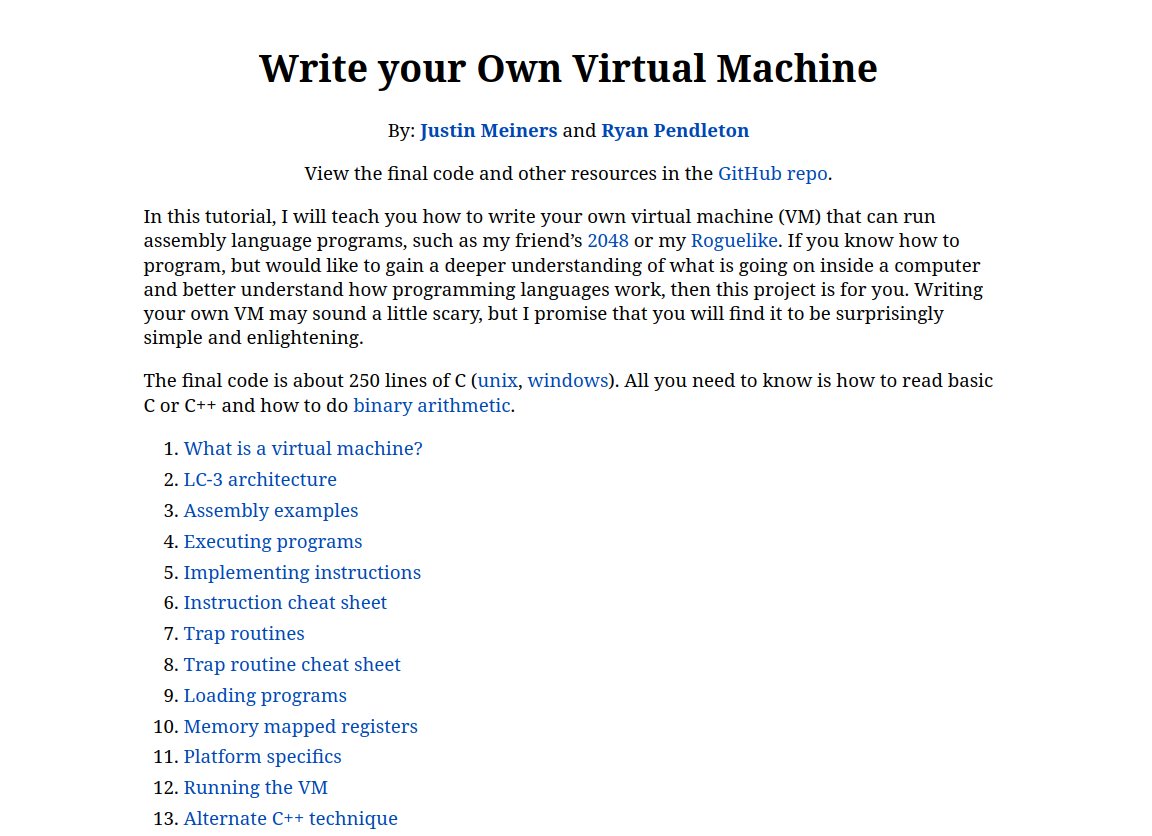
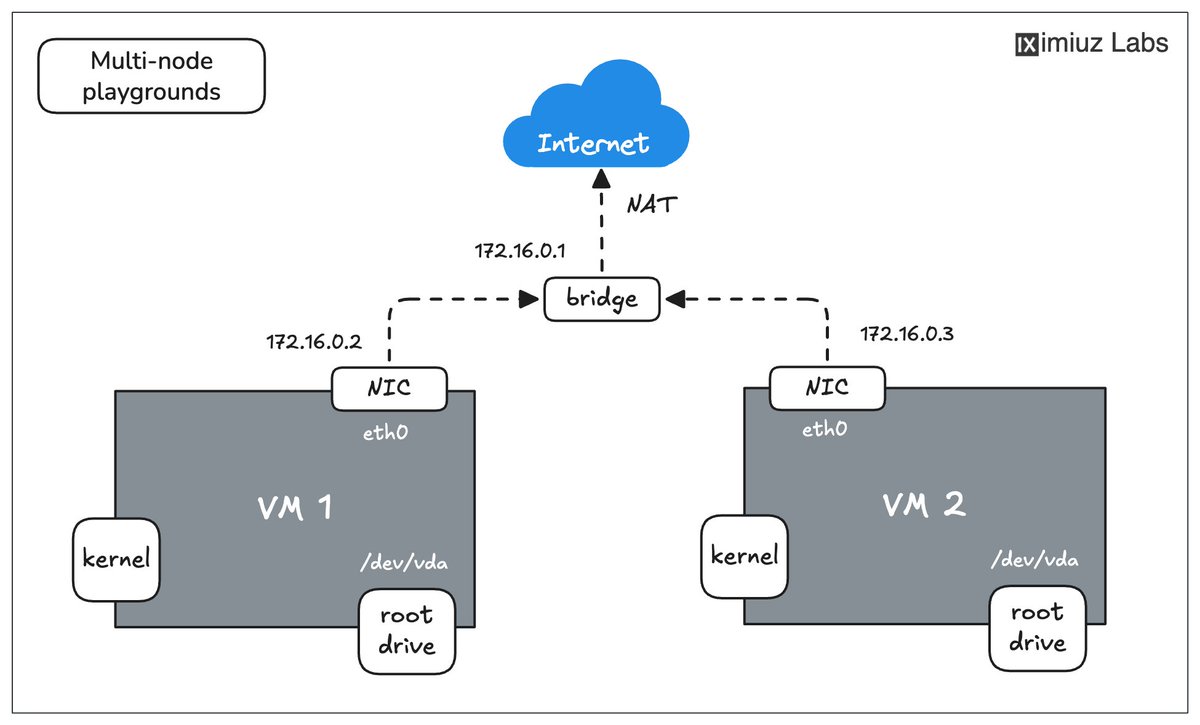
By far the most comprehensive guide for virtual machines, literallyy.
-great for understanding low level concepts
-it's kind of very detailed guide
the whole thing is soo structured and anyone can understand vm.
‼️A German hacker known as "Martha Root" dressed as a pink Power Ranger and deleted a white supremacist dating website live onstage
This happened during the recent CCC conference.
Martha had infiltrated the site, ran her own AI chatbot to extract as much information from users as possible, and downloaded every profile. She also uncovered the owner of the site. She has published all of the data.
All assignments for Stanford's The Modern Software Developer are now available online.
This is the first comprehensive university course covering how coding LLMs are transforming every stage of the software development life cycle. The assignments are intended to take you from noob to expert in how to use AI to improve your software engineering productivity.
Enjoy!
https://t.co/YxzneOSCY5
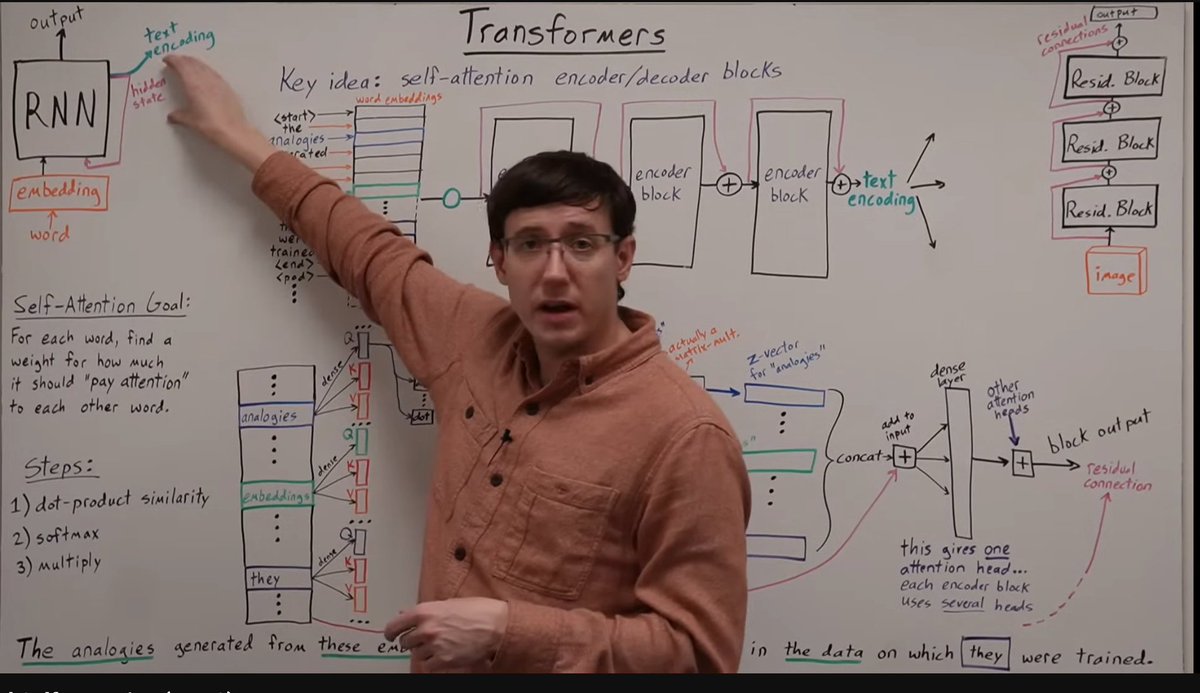
Hands down, this is the clearest and most effective explanation of Transformers on YouTube. The lecture was delivered by Professor Bryce as part of Davidson’s CSC 381: Deep Learning (Fall 2022).
If your goal is to truly understand Transformers and self-attention, this is the only video you need and there’s no reason to watch anything else.
I've finally decided to spend some time studying @__tinygrad__ codebase. I've been impressed by the elegance of their pattern matcher, so I wrote some notes and turned them into a tuto: https://t.co/6uwEJU99iR
The more I read the code, the more I think it's the future of software: anti-bloating and very close to the hardware.
Attention Is Not What You Need
This paper replaces self-attention with Grassmann Flows: a linear-time sequential model based on low-rank geometric flows on a Grassmann manifold.
Early results show competitive performance with Transformers, with potentially better scaling and a more interpretable mathematical structure.
Warum haben wir in Deutschland trotz hoher Gesundheitskosten eine vergleichsweise niedrige Lebenserwartung?
Weil der Politik die Wirtschaft wichtiger ist als die Prävention!
Alois Reiner, Metzgermeister und Minister für Ernährung und Landwirtschaft, ist gegen eine Zuckersteuer.
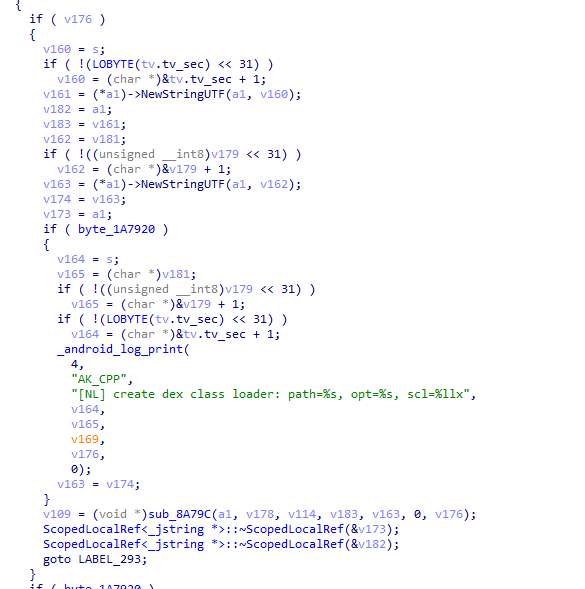
#Kaspersky researchers discovered preinstalled malware on certain models of tablets running Android – we called it Keenadu.
It's a backdoor in 𝘭𝘪𝘣𝘢𝘯𝘥𝘳𝘰𝘪𝘥_𝘳𝘶𝘯𝘵𝘪𝘮𝘦.𝘴𝘰.
More details are coming soon!
#KasperskyGReAT#Research#Cybersecurity
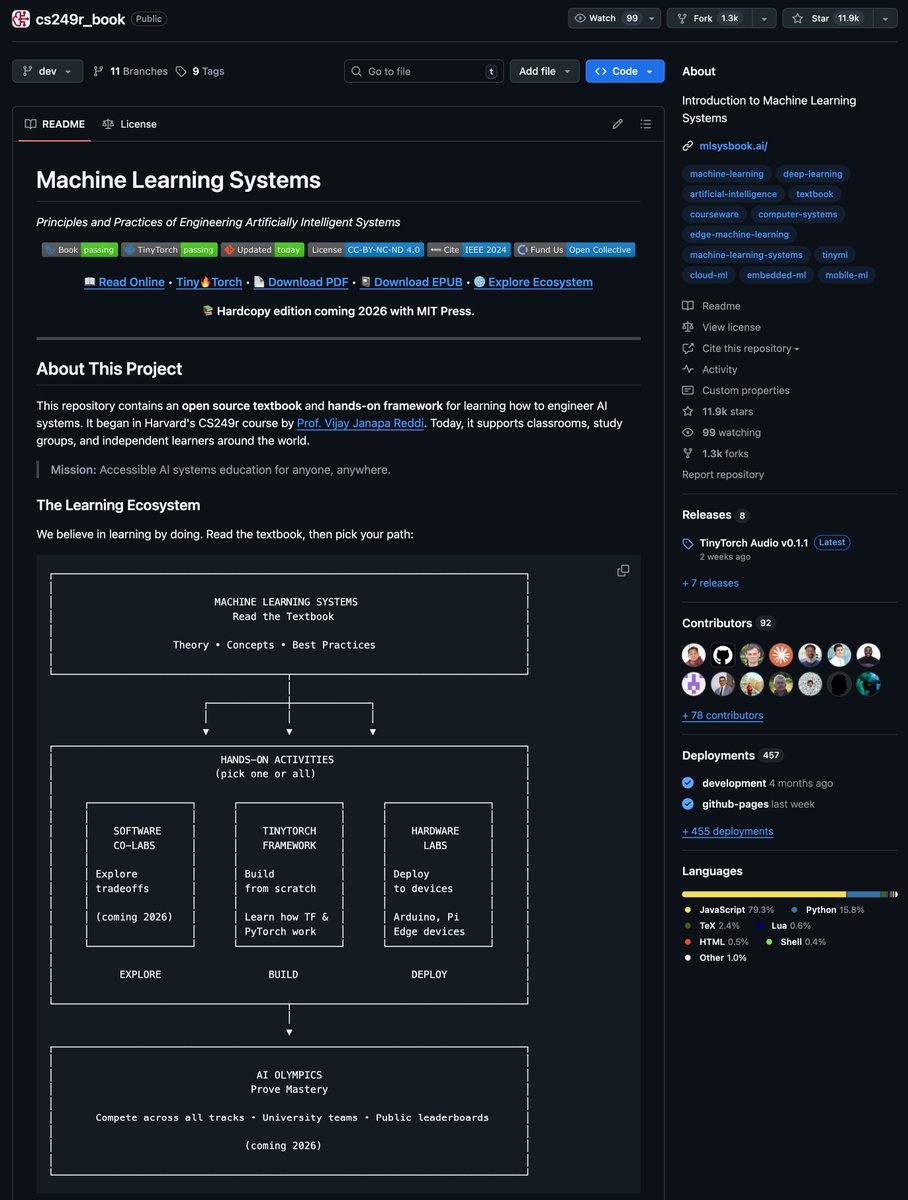
Harvard's just open-sourced their ML Systems textbook. it's extremely practical for not just learning how to build and train models, but to build production systems (the skill that actually matters). topics are cool af:
> building autograd, optimizers, attention, and a mini-pytorch from scratch to truly learn how an ML framework runs. (i love this the most)
> basics of DL, batch sizes, precision, model architectures, and training
> ML performance optimization, HW acceleration, benchmarking, efficiency
so this is not just an intro to machine learning, it's the full package from the beginning to the actual end. right now you can read the book and access the code for free. this is one of the best books I've seen dropping in 2025, so don't sleep on it.
here's the repo (you can find the book link there): https://t.co/5OEWPBNaJp
EP2: Networking in Linux - Routing Deep Dive
When we talk about routing, we often picture routers, firewalls, and network appliances moving traffic across large networks. But Linux itself is a router. Every Linux system makes routing decisions, even if it only has a single network interface.
Every time an application sends a packet, the Linux kernel decides where that packet should go. Sometimes the traffic stays local. Sometimes it leaves through a specific interface. In other cases, it must be forwarded to another network entirely. All of those decisions are made using the same routing logic, regardless of whether the system is acting as a simple workstation or as a multi-homed router.
This article looks at routing from the perspective of a single Linux host. We focus on how the kernel determines reachability and selects paths for outgoing traffic, working step by step through routes, scopes, routing tables, policy-based routing, and routing marks.
Read the full deep dive on substack:
https://t.co/Wg4VSoUVeD
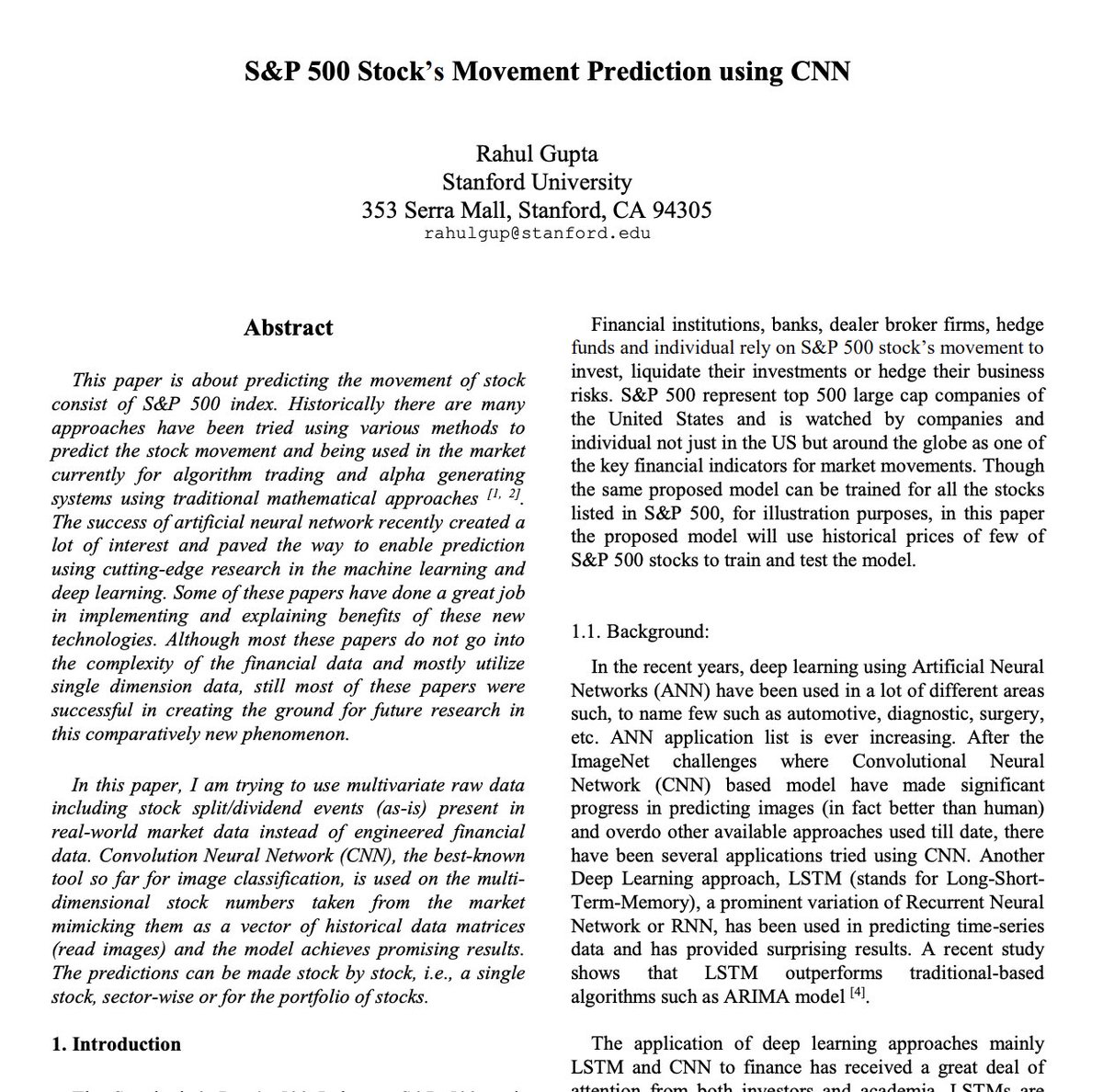
This paper from Stanford University tackles a question that’s been debated for decades in quantitative finance: can raw market data alone meaningfully predict stock price direction, without handcrafted indicators or heavy financial feature engineering?
The author proposes a Convolutional Neural Network–based approach to predict the directional movement (bullish vs bearish) of individual S&P 500 stocks using pure multivariate price data.
Instead of technical indicators, the model consumes raw daily OHLCV data plus adjusted prices that explicitly encode dividends and stock splits, which are usually smoothed away or ignored in most academic work.
The core idea is subtle but important. Multivariate time series are treated as spatial objects, not just sequences. Each rolling window of historical prices is reshaped into a matrix that behaves like a 1D “image,” allowing CNN filters to detect local patterns such as short-term momentum, volatility shifts, and structural breaks caused by corporate actions.
This reframing borrows intuition from computer vision rather than traditional econometrics.
The dataset spans up to two decades of daily data per stock, sourced from an institutional-grade provider. Ten channels are used: open, high, low, close, volume, and their adjusted counterparts.
Sliding windows generate thousands of training samples per stock, dramatically increasing data density without synthetic augmentation. A normalization step ensures scale invariance across features.
Architecturally, the model uses a deep 1D CNN with eight convolutional layers, followed by fully connected layers and a Softmax classifier optimized with cross-entropy loss. Early layers focus on short-term price structure, while deeper layers capture longer-term trends.
Unlike LSTMs, which struggle with noisy gradients and statefulness in finance, the CNN’s localized receptive fields make it naturally robust to volatility spikes and event-driven price jumps.
The training objective is framed as a probabilistic classification task: predicting bullish or bearish movement over future horizons ranging from 2 to 30 days.
Extensive hyperparameter tuning reveals that performance depends heavily on window size, batch size, and learning rate, with Adam optimization and larger batch sizes producing the most stable convergence.
Results are where the paper becomes provocative. On several large-cap stocks, reported validation accuracies reach high-80s to low-90s percent, significantly outperforming earlier deep learning baselines trained on raw data.
JP Morgan stock, in particular, shows accuracy touching ~91% for longer forecast horizons. Loss curves and accuracy plots suggest genuine learning rather than overfitting, aided by careful train–validation splits and shuffling.
The author is careful not to overclaim. The model predicts direction, not returns, and does not directly incorporate transaction costs, slippage, or execution constraints. Still, the findings suggest that CNNs can internalize complex market mechanics directly from raw price tensors, including the non-linear distortions introduced by dividends and splits.
The broader implication is that feature engineering may be less critical than representation choice. By letting the model learn spatial relationships inside time-series windows, the approach sidesteps many subjective assumptions baked into technical indicators. The paper also hints at natural extensions: hybrid CNN–LSTM architectures, portfolio-level predictions, and integration of textual sentiment for fundamentals-aware forecasting.
In short, this work argues that treating financial time series as structured, image-like data is not a gimmick. It is a viable inductive bias that unlocks predictive signal from raw market data, challenging the long-held belief that markets are too noisy for deep learning without heavy human intervention.
Paper: S&P 500 Stock’s Movement Prediction using CNN
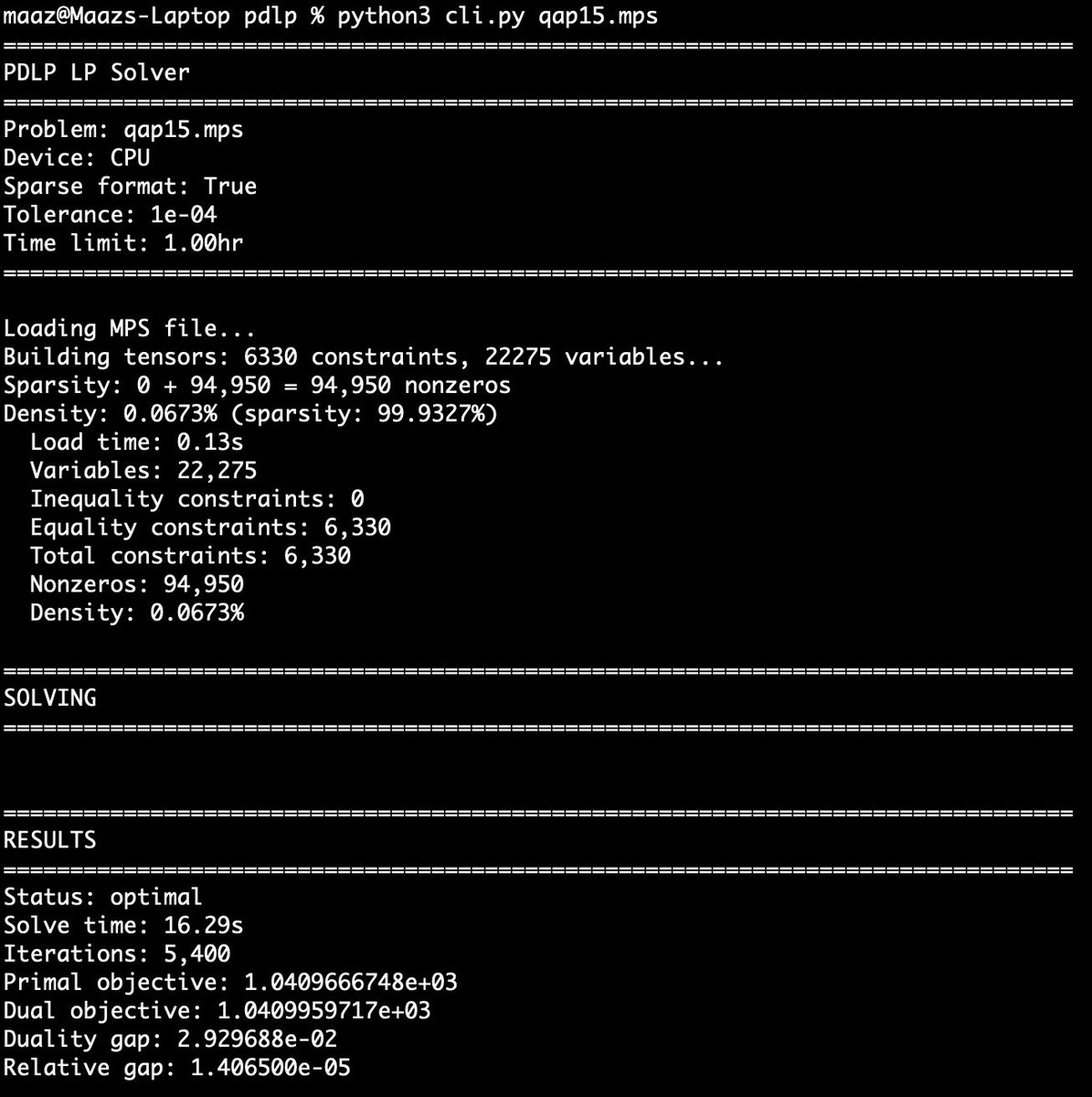
I built a GPU-accelerated linear programming solver in PyTorch that scales to 100k+ variables and constraints -- and is competitive with state-of-the-art solvers.
The entire implementation is only ~350 lines (excl. docs / logging) and is meant to be as simple as possible.
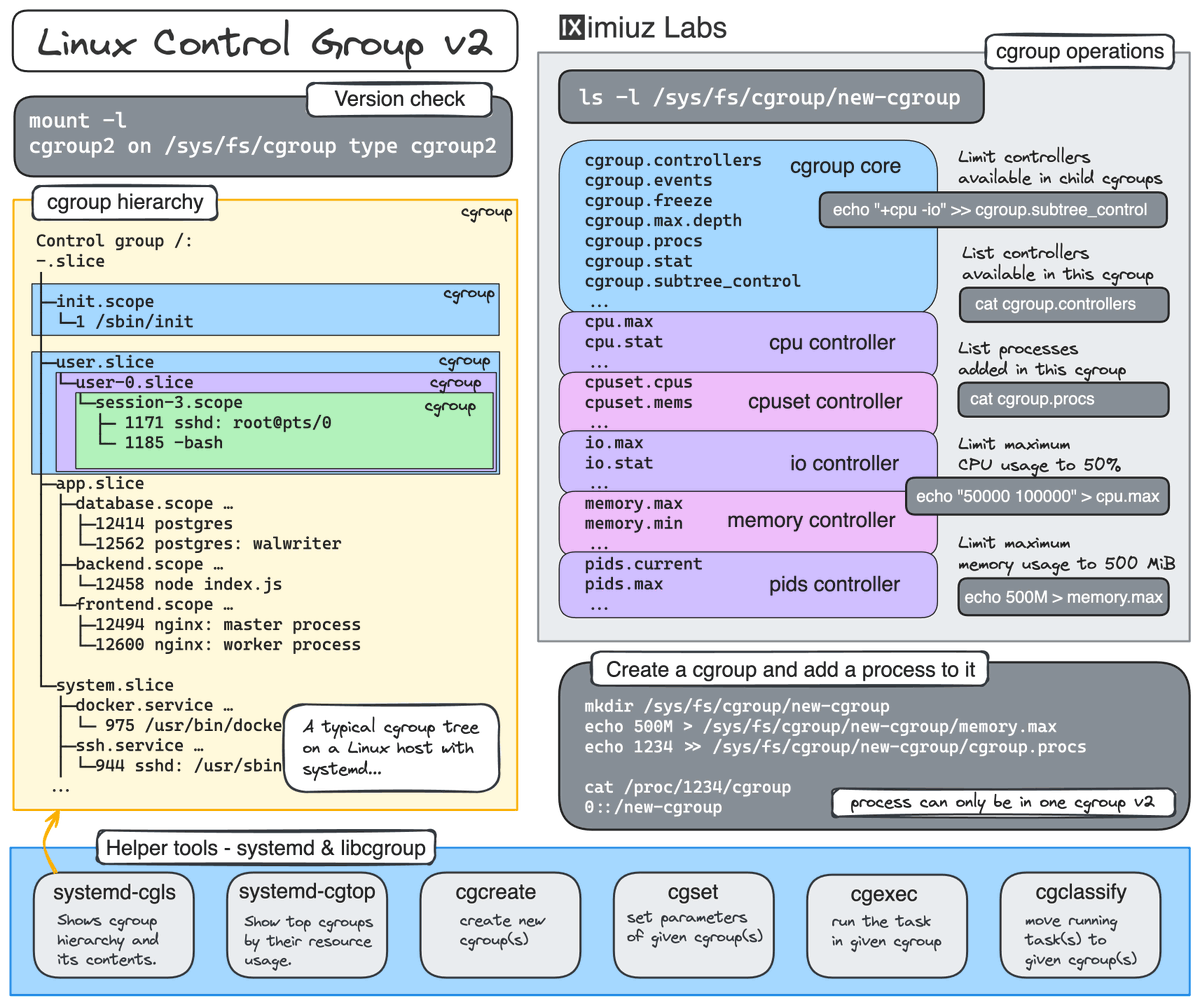
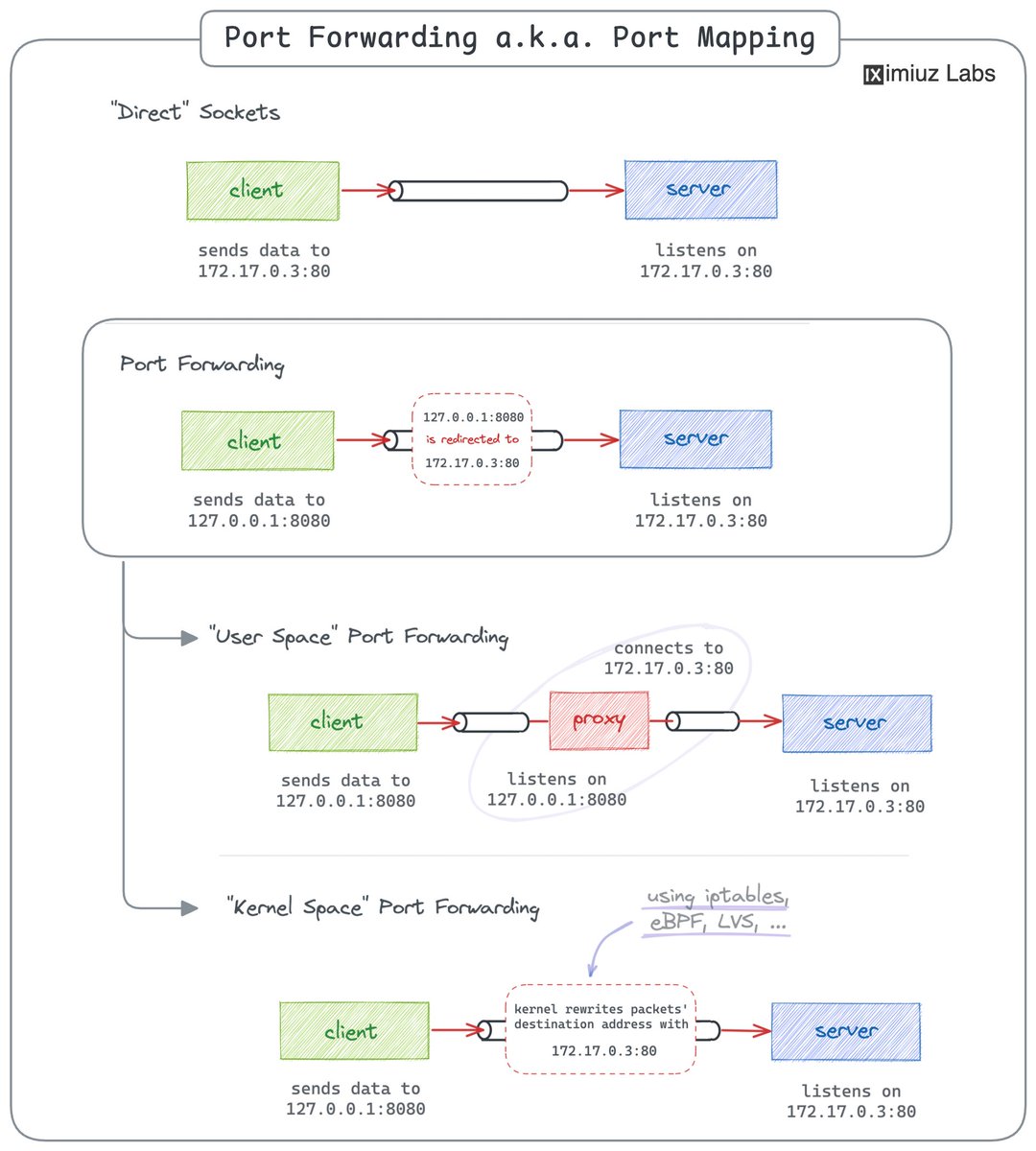
If you are learning Linux, networking, containers, or Kubernetes, check out my work at https://t.co/enVaqlOx2f. You'll find:
- 60+ free playgrounds (remote Linux VMs)
- 100+ SysAdmin/DevOps problems (practice)
- Dozens of deep dives (theory)
- Lots of helpful technical diagrams