A company called eka care messaged us out of the blue, with a copy of our childs doctors prescription.
We checked the website, and they're an "AI Native Ambient Healthcare platform" for "patient context".
So our childs data is being collected in an ambient manner and used for AI? without verifiable consent by the doctor.
We certainly don’t want patient context to be developed around our child by this platform. Eka’s privacy policy explicitly says that they retain the right to: “programmatically use Your data to give You contextual Services.” The DPDP Act also says and despite parental consent, there should be no behavioral monitoring of the child. health data over time is behavioral data.
Their privacy policy was written for the IT Act, not DPDPA.
It doesn’t have purpose limitation, which means that they claim that they can use the data for any purpose, which could include AI training.
Their website also doesn’t mention any Data Protection Officer. They also disclaim any liability for data breaches, which is a red flag.
They also say that withdrawal of consent will not be retroactive. DPDP gives us the right to erasure.
the website points towards their terms of use, which on their website point to the privacy policy which points towards terms of use (which don't exist).
I've drafted and sent a withdrawal of consent notice to the doctor and told him that he's the data fiduciary, and hence responsible for taking parental consent, and what they do with the data... the liability will fall on him and he's dealing with childrens data.
@elonmusk Really wish @elonmusk enters Healthcare. The magic wand number for most of the medical equipment including Next Gen Sequencers and the consumables (reagents, library prep kits etc etc) will really be at single digit %ages of current prices we pay. Can impact millions of lives.
Reminds me of c++ based NACH OS (Not Another Completely Heuristic Operating System) that I (and my batchmates) worked on as part of my Masters in CS at IISc in 1996.
This is a very cool article describing how they built a virtual filesystem for their agent.
But there was no code.
So, I studied the blog, burned through a lot of tokens, and implemented a POC. Here is the result:
A virtual filesystem over Elasticsearch.
Blog: https://t.co/cFUs4kleFR
GitHub repo: https://t.co/qbU0kUfNfK
Never ever take a Zoomcar. They ruined our trip and left us stranded.
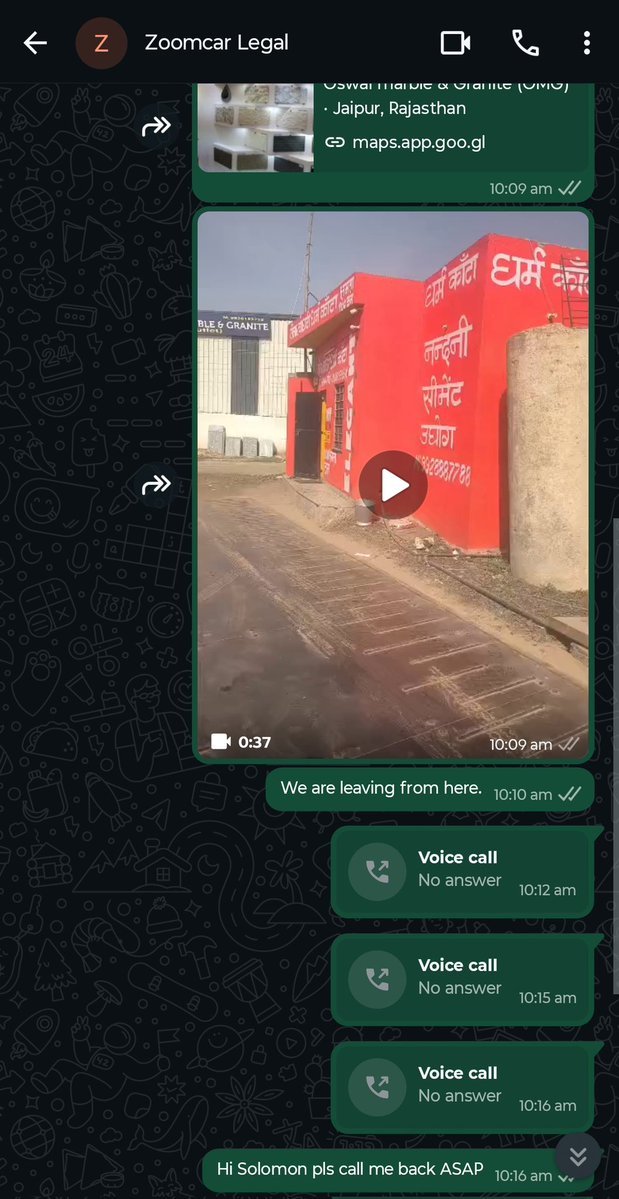
What happens when you rent a Zoomcar and the police seize it mid-highway? We had a ridiculous experience with @Zoomcar_India in Jaipur.
Last Sunday, we booked a car in Jaipur to drive to Ranthambore. Number plate was masked on the app, so no idea what we were getting.
We reached the car and it’s a Gujarat (GJ) white plate vehicle. I felt uncomfortable instantly, but it was too late to change the vehicle - this was the only 7 seater option available in the city.
The owner reassured: “No issues. It’s been on Zoomcar for 4 months. Cops won't stop. Take my number if anyone stops you.”
Within 45 minutes, we got stopped by the police.
They seize the car, take the keys, park it in some random plot and ask us to call the owner.
Owner proudly tells them that he’s been renting it out for months and never faced an issue.
Police is adamant that this is illegal (and rightly so). The owner needs to visit the RTO and pay up. Any commercial vehicle playing for that long in RJ needs to pay Road Tax here + convert to yellow plate if used commercially. Road Tax alone would come to around Rs. 1.5 Lakhs.
And then the cops just leave.
So now we’re just standing there, at 38°C, in a random area off the highway.
Owner doesn’t show up. Says it’s a Zoomcar problem and that he'll wait for their legal team to deal with this.
Zoomcar support? Useless!
“Err, It’s Sunday, our team will come tomorrow. And since your booking is still live, please don’t leave the spot; if any damage happens to the car, it’ll still be your responsibility.”
Tomorrow???
And don't leave the spot???
We’re stuck in a live police situation and your solution is wait till tomorrow?
We stood there for almost 2 hours before we could even figure out what to do next.
Because of this:
– Missed a ₹28,000 safari
– Paid ₹12,000 extra for last-minute transport
– Entire day gone
After all this and 7 days of escalations, Zoomcar calls and says they’ll “refund the booking amount.”
Think about this. No one would know the legalities of vehicle rules better than them. Yet, they listed this. And then abandoned us mid-crisis.
And honestly - what if this happened at night, to a woman travelling alone? You hand over an illegal car and then disappear?
I've been chasing Zoomcar for a week now. Let's see where this ends.
@Deepankar8@Zoomcar__India@nch1915@jagograhakjago
@IndiGo6E@ShubhAgrawal26 Have experienced this many times. Hope @DGCAIndia issues policies around seat selling practices so that there is consistency and transparency for travelers.
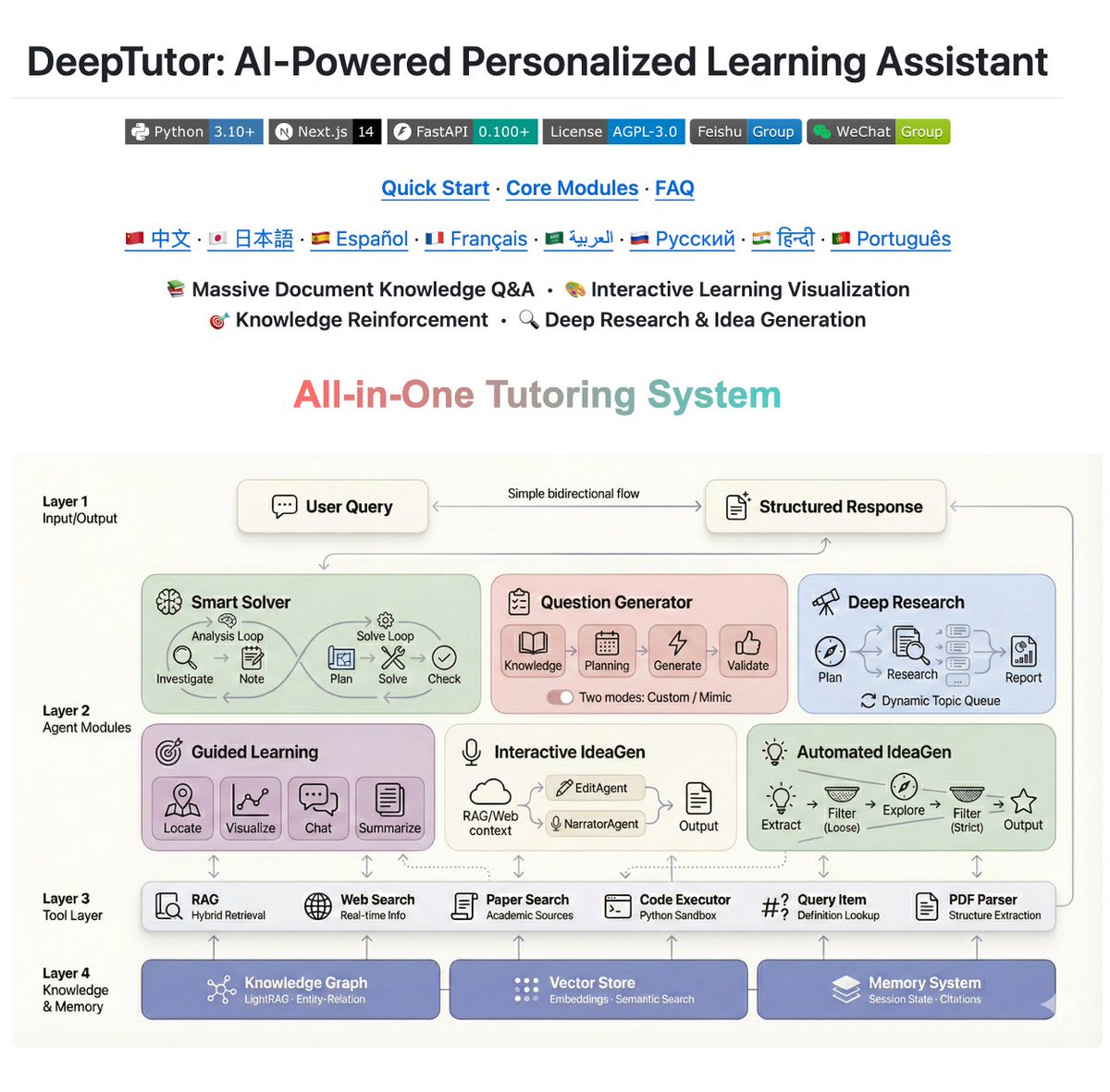
Released just five days ago, DeepTutor has already surged past 1.4K stars on Github! It seems people are hungry for a smart learning assistant that truly understands them.
🔗 Fully Open-Source: https://t.co/Wd8odKIRSn
We talked to countless students and kept hearing the same pain points: existing AI tools are either too fragmented or fail to capture personal learning context effectively. That's exactly why we built DeepTutor—to create an AI learning companion that actually remembers your progress and adapts to your unique learning style.
DeepTutor's Core Architecture
- 💬 User Interface Layer
Intuitive bidirectional interaction with structured, actionable outputs that organize complex context seamlessly.
- 🤖 Intelligent Agent Modules
Specialized multi-agent collaboration: problem solving, deep research, guided learning, and idea generation.
- 🔧 Tool Integration Layer
Unified access to RAG retrieval, real-time web search, academic databases, and code execution capabilities.
- 🧠 Personalized Knowledge & Memory Foundation
Persistent memory system built on knowledge graphs with contextual session tracking. Creates truly personalized learning experiences tailored to your individual progress and preferences.
One cold winter night, in a small Viking village perched on the edge of the fjords, a fearsome warrior named Rudolph the Rhed stood quietly by the window of his longhouse.
He was broad-shouldered and battle-scarred, with a massive red beard that had earned him his name and a long list of enemies who no longer existed.
Among his people, Rhed was known as a man of unusual insight.
He had saved the village more times than anyone could count—not with an axe, but with advice given at exactly the right moment.
Once, on a perfectly calm morning, Rhed urged the fishermen to delay their voyage. The sea was glassy, the sky flawless. They argued, laughed, and accused him of growing soft with age.
That afternoon, a sudden storm smashed three boats that had gone out. The rest never questioned him again.
Another time, during the summer harvest, Rhed insisted the grain be moved indoors immediately. The villagers protested—it would take hours, and the weather was beautiful. Still, they obeyed.
By nightfall, the fields were flooded.
Even the village feast was once spared when Rhed casually suggested moving it inside “just to be safe.” Minutes after the last bench was dragged into the longhouse, the sky opened up and drenched the empty clearing.
After years of this, the villagers stopped asking why. If Rhed spoke, people listened. Boats were tied down. Cloaks were donned. Fires were covered. His instincts had become law.
That night, as snow lined the rooftops and the fjord lay silent, Rudolph the Rhed stood by the window once more.
“It’s coming,” he said quietly.
His wife, Astrid, set down her weaving. She had never doubted him—but tonight, curiosity finally got the better of her.
“You always know,” she said. “Before the clouds, before the wind, before anyone else even thinks to worry. Is it the birds? The sea? Some gift from the gods?”
Rhed shook his head.
“The air, then?”
“No.”
“The shaman?”
“No.”
Astrid folded her arms. “Then tell me. How do you always know when to warn everyone?”
Rhed turned to her, stone-faced, and said:
“Because Rudolph the Rhed knows rain, dear.”
Outside, thunder cracked, and the rain began to fall.
Dr. Amanda Hess was 9 months pregnant with complications, and was in the hospital to be induced into labor.
She was putting on her gown when she overheard that a mother in another room needed an emergency delivery because her baby was in distress, but her doctor wasn’t available.
Amanda threw on another gown and delivered the woman’s baby. Then she gave birth to her own baby an hour later.
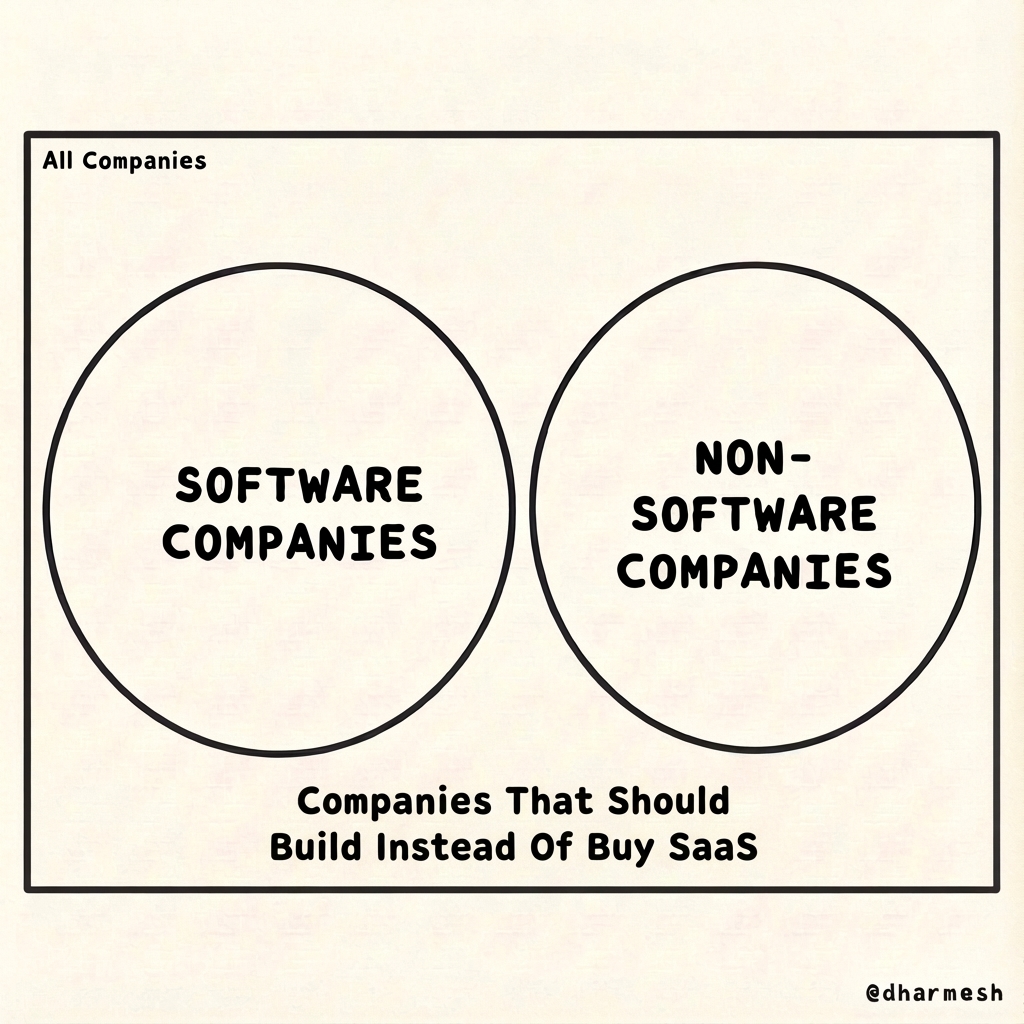
"Why should companies pay for SaaS (HR/CRM/ERP/etc.) when they could just vibe code them?"
I get variations of this question or comment with some regularity (granted, it's sometimes just me talking to myself).
Here are some biased (but hopefully, well-considered) thoughts:
1) I am a big proponent and user of vibe coding (what I call "agentic coding"). I do it every day, 7 days a week, including Sundays. It's amazing.
2) My company, HubSpot is a software company. We have hundreds of professional engineers -- just about all of them use AI for product development too. They are brilliant and know how to build production-grade products.
3) Even with this powerful army of talent, the number of internal, core SaaS applications that we have replaced with a vibe-coded variant is exactly ZERO. The number of applications we plan to replace is also exactly ZERO.
4) It's not the absence of talent that keeps us from rolling our own SaaS apps, it's the presence of focus. It would be silly to try and replace our HR, team collaboration, expense tracking and 100+ other SaaS apps we use when we can just buy them. Just doesn't make sense.
5) That's us -- as a software company at some scale. If you're a non-software company it makes even less sense for you. Doesn't matter how good the AI coding tools get. Let's say you *could* vibe code a replacement for that SaaS app you're using, who's going to maintain it? Who's going to keep up with industry trends? What are you going to do when the 20-something genius that vibe coded it over a weekend leaves the company? Who do you call when there's a major bug?
6) If you're a Fortune 500 company at some scale, perhaps you could pull this off for some discrete use cases and the tradeoffs are worth it. You have an IT/Engineering department that is larger than the population of some countries. You can take on the pain in return for the positives.
For the millions of others, my advice is:
Spend every calorie possible on creating value for your customers.
What I learned from Brian Chesky, founder of Airbnb, at his YC keynote:
•There is the right way, and there is your way.
•Don’t apologize for how you run your company.
•Don’t overly delegate.
•Be in the details.
•Partner with people, help them solve problems.
•Take care of yourself.
•Make sure you sleep well.
•It’s your job to hire the best people of their generation.
•Hire people who make you never want to hire “normal” people again.
•Never make decisions out of fear; the best decisions always come from courage.
•Don’t worry about the rest of your life, what if now is as good as it gets?
•The whole point is to have fun.
Happy Thanksgiving @bchesky and thank you for the inspiration.
I gifted my father an Ultrahuman Ring for his retirement, and it’s been my worst purchase 😞💔
He's someone who loves staying active – has gymmed for 20 years, swims, plays badminton, does yoga, and cycles. I wanted to support a homegrown brand and even bought one for myself so we could track our fitness together.
While I don’t like posting grievances publicly, this experience has been awful, and we've exhausted every option.
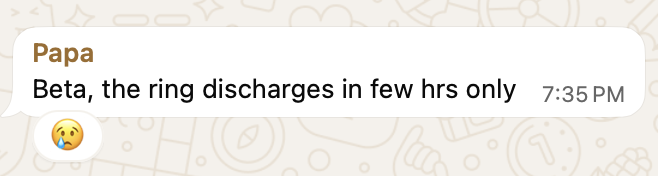
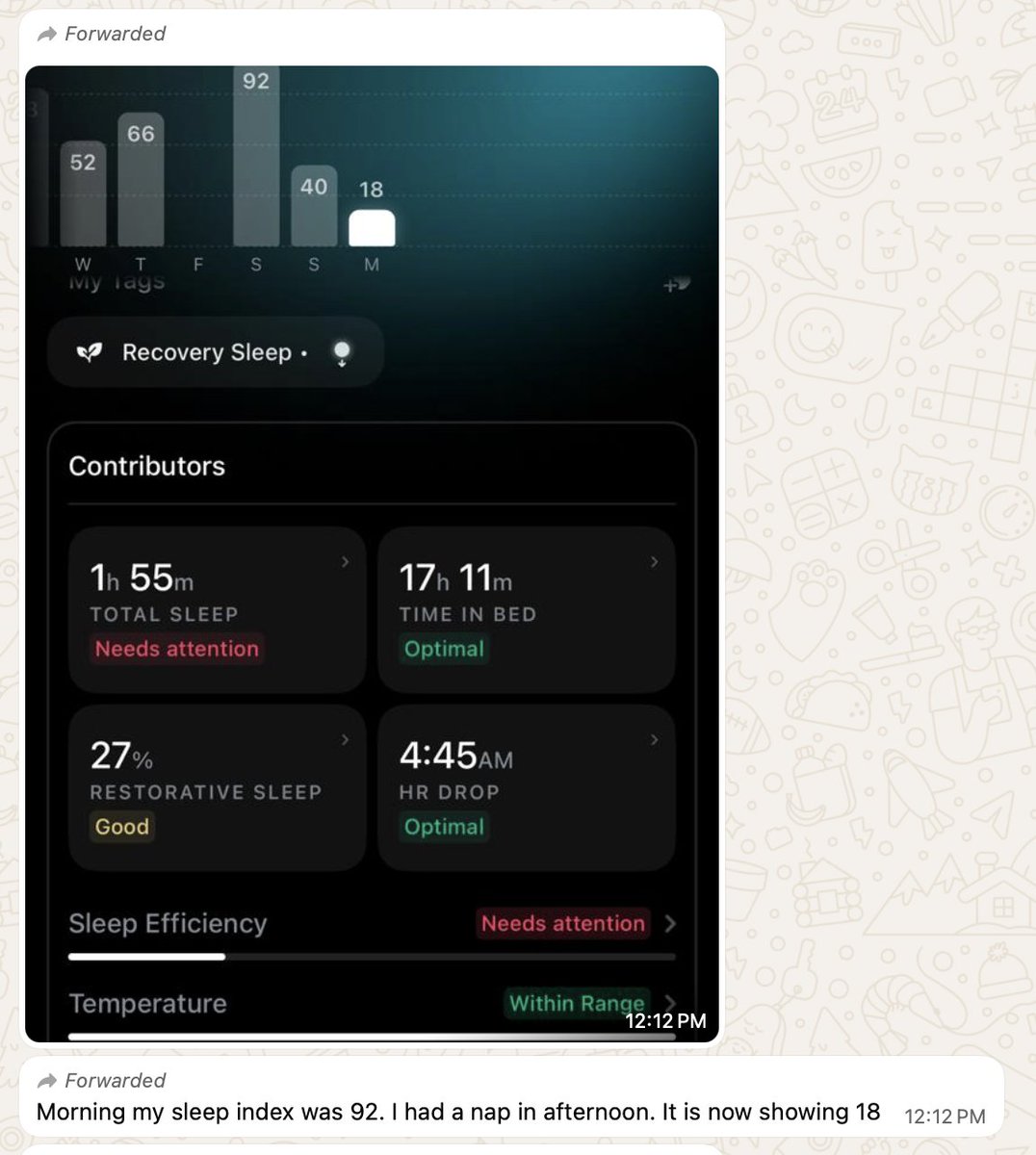
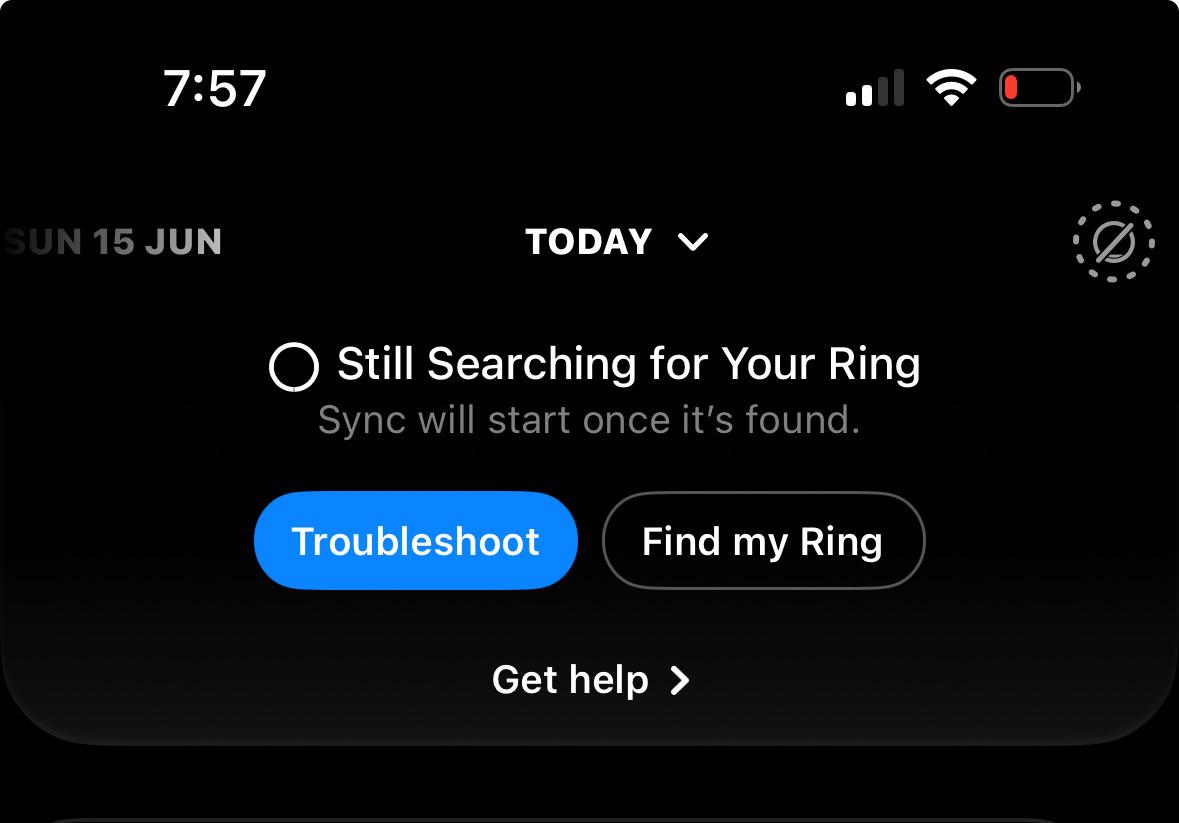
In less than six months, the ring had charging problems, heating issues, stopped detecting sleep midway, drained battery randomly, and the app kept crashing and failing to sync. At one point, we were speaking to @UltrahumanHQ more than our own family.
We tried everything. Resets, updates, replacements, escalations, and even reaching out to the founders, hoping it would finally work.
I have stopped using mine completely, but being an Indian dad, my father is still trying because it was an expensive purchase.
I’m okay letting the money go. I just feel sad that something meant to motivate him became such a letdown and stole time he was supposed to enjoy. And I doubt he will try new tech again after this.