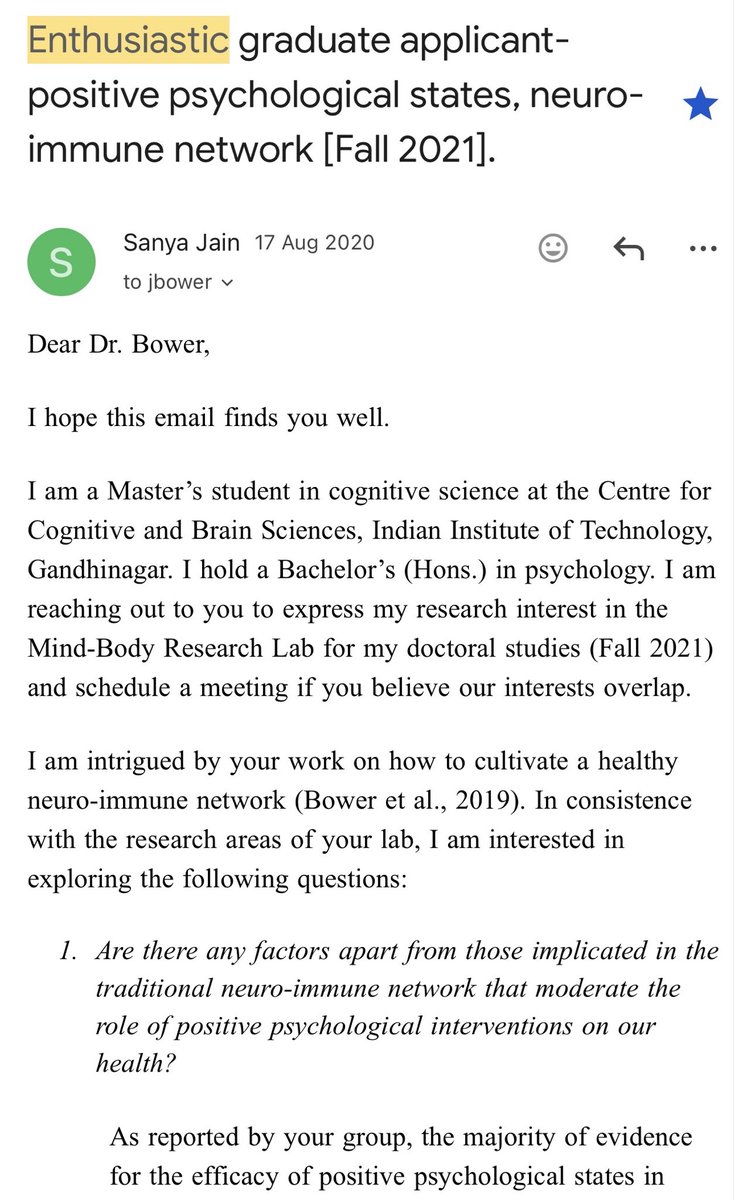
Your cold emails can be the golden ticket to your dream PhD lab. Here’s how:
Most applicants treat cold emails like polite introductions. That’s a mistake. A PI isn’t looking for politeness. They are scanning for signal. Can this person think, contribute, and reduce my uncertainty?
Here’s a research-oriented, high-leverage approach:
1. Start with a paper, not a profile
Don’t begin with “I’m interested in your work.” Begin with a specific claim from one of their recent papers.
Identify a gap, assumption, or unexplored extension.
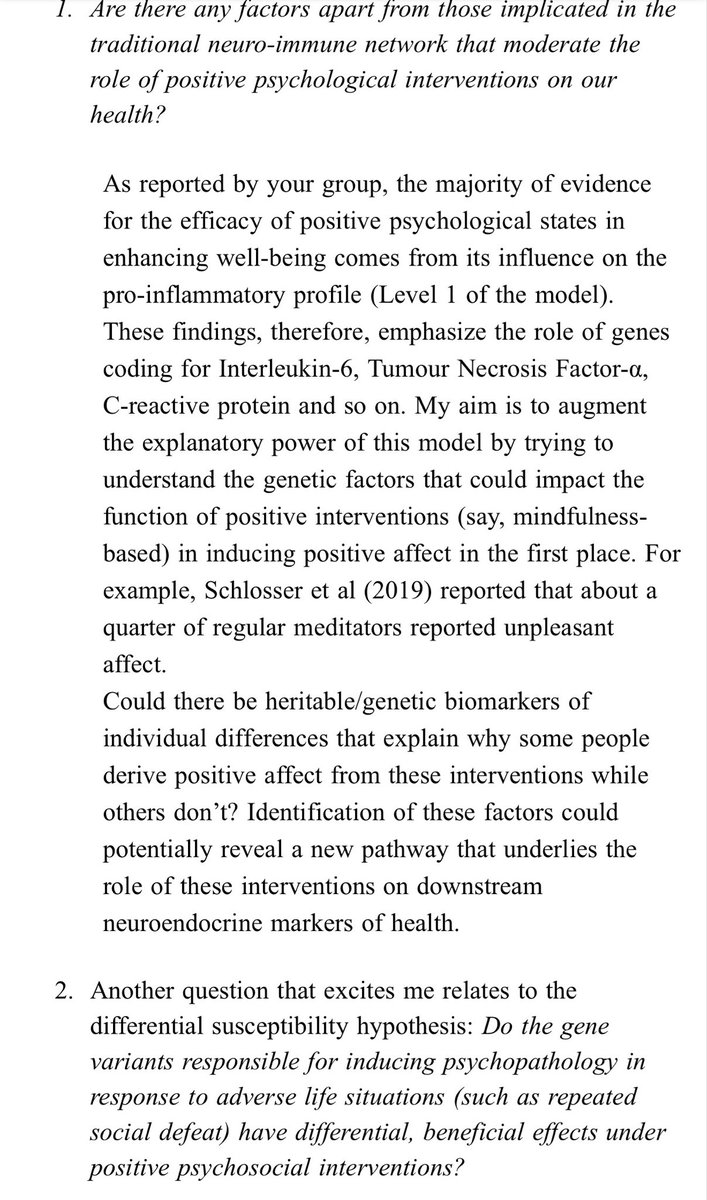
2. Write a 3 to 4 sentence micro-proposal
Structure it like this:
Observation: What they did
Tension: What remains unclear or limited
Idea: Your proposed extension
Method hint: How you would approach it
This signals you are already thinking like a researcher, not an applicant.
3. Attach proof of execution, not just potential
Link 1 to 2 artifacts only:
A GitHub repo
A preprint
A tight 2-page research note
Each should directly relate to the idea you pitched.
4. Use the adjacent expertise angle
Labs do not just need clones. Position yourself as someone who brings a method or perspective they do not currently have but clearly need.
5. Ask a low-friction question
Instead of “Are you accepting students?” ask:
“Would this direction align with your current priorities, or am I missing a key constraint?”
This invites engagement, not rejection.
6. Timing is strategic, not random
Email right after:
A new paper release
A conference talk
A grant announcement
You are entering when attention is already on new ideas.
7. Subject line equals hypothesis, not a request.
Good: “Extending your X paper: idea on Y limitation”
8. Keep it under 350-400 words
Constraint forces clarity. Clarity signals intelligence.
DM me “cold-email” if you also want to create highly magnetic cold-emails that turn into interview offers.
Introducing Prism, a free workspace for scientists to write and collaborate on research, powered by GPT-5.2.
Available today to anyone with a ChatGPT personal account: https://t.co/9mTLAbxPdH
My advisor once told me to have two different types of projects; one which could be boring but gives you a paper, another gets you excited but it may not work out. It is always nice to have something to show that you accomplished something.
What do you think, can you graduate and get a PhD if you did everything right but didn't get any original results worth publishing? I have a feeling most people would say 'no', but in my opinion it's a 'yes'. Where would science be if we don't try things that can fail?
➡️ Shorten the eligibility window and refocus review criteria for a key mentored career development award (K99/R00) to facilitate more rapid transition of postdoctoral scholars.
Problem is not the ChatGPT itself but the authors who decided to publish without any effort of editing, the editors and reviewers who didn’t even read the first sentence of introduction, and the academic nature encouraging mass production of papers. Blame the right ones.
We are profoundly concerned with the potential of ChatGPT to degrade academic standards, but how will we detect its use when it can be so seamlessly integrated?
The article:
Record what you eat and calculate calories. It’s as simple as calories in, calories out. It doesn’t matter how “busy” you are or how much you “tried” unless you understand what you are doing. Clarify a goal. Reducing weight is not losing fat. Work smarter, not harder.
Asian countries eat a lot of rice & noodles, but don’t gain weight.
Americans & Europeans eat the same thing and tend to get fat.
Why is this?
I’ll explain.
THREAD
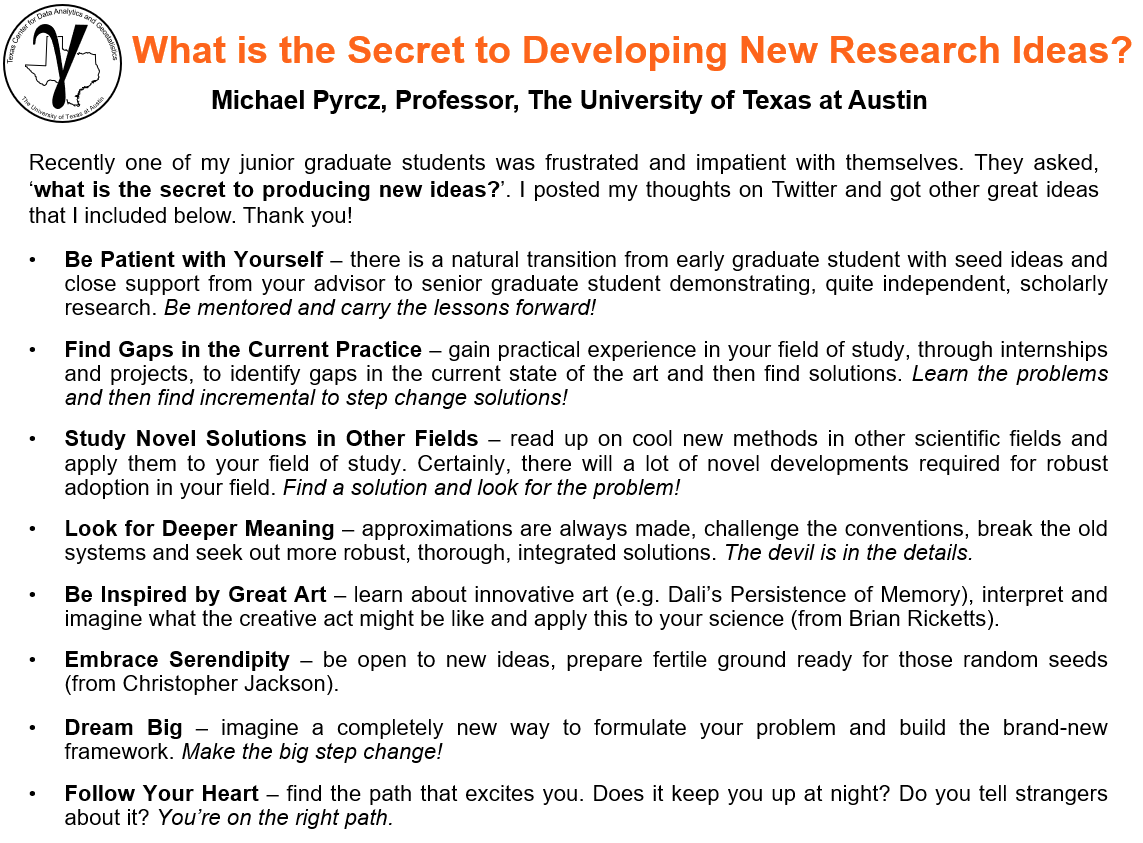
One of my graduate students dropped by my office, exasperated, and said, "I don't know how to innovate. So, how can I do a PhD?".
I erased my whiteboard and began listing strategies for generating new research ideas. They left reassured and excited!
As #professors, we mentor and make knowledge accessible to empower our students. I hope this is helpful to others! #academicchatter #Phdlife #Highered
@ithinkwellHugh Always great to see how backward minded the writers are for these self-serving takes. If an advisor isn't good at advising, they should be a research tech instead. Stop trying to make grad students accommodate their terrible advisors. Horrible take, do better.
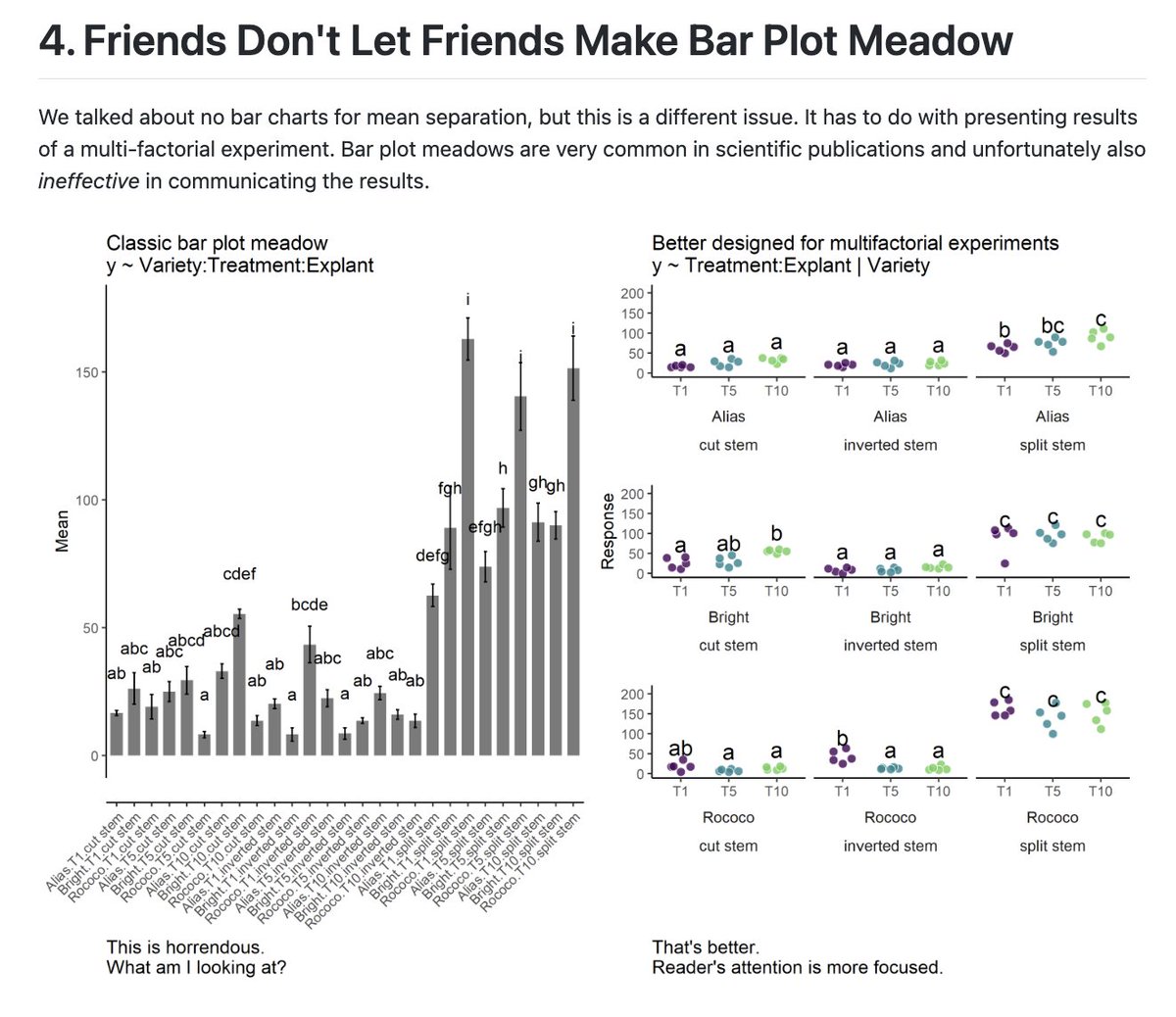
Friends don't let friends make bad charts!
Chenxin Li, pulled together a lot of great advice for data visualization, with clear "do this, not that" examples for each item.
Here are a few of my favorites, see the link below for more.
Why I use Notion to organize my PhD research
Maya Gosztyla describes the database tool as a ‘second brain’, helping her to coordinate her work.
https://t.co/92f2Ntskpx
If you want to start learning AI from the very beginning:
Google released 9 free courses covering some of the most critical topics in AI.
And they start from scratch.
Here is the list and links: