Nanosciences, Artificial Intelligence, and Quantum Computing will take the world to the next level.
Write code is my hobby, ML and Numerical methods is the goal
When device physics gets too messy for equations, train a neural network instead: ML compact models for flexible carbon nanotube circuits
Designing an integrated circuit depends on compact models: equations that tell the simulator how each transistor behaves so thousands of them can be placed and routed automatically. For silicon this machinery is mature. For carbon nanotube thin-film transistors on flexible plastic it barely exists, and that gap has kept flexible CNT circuits stuck at a few dozen transistors wired into simple ring oscillators.
The obstacle is physical. A CNT transistor's behavior depends on network density, alignment, and purity in ways that semi-empirical equations struggle to capture, and ultrathin polymeric substrates processed at low temperature add interface charges and non-ideal transport on top.
Zebang Luo and coauthors get around the equations entirely. They fabricate CNT TFTs across many channel geometries, measure their transfer and output curves, and train a multilayer perceptron to map geometry to electrical response, reaching 91.2% accuracy on drain current. The trained network is then exported as a Verilog-A compact model that drops straight into commercial EDA tools like Cadence Virtuoso, with SPICE simulations matching experiment at an RMSE of 0.057. Crucially, the model generalizes across devices from three different labs, which is exactly where hand-tuned models tend to fall apart.
With that model in place, the rest follows the standard chip flow: a 12-cell CNT logic library, automated placement and routing, and a working edge-computing circuit of 361 transistors and 160 logic gates on a 2 micron self-delaminating substrate. Wired to an 8-channel tilt sensor, it compresses sensor data by 62.5% on-skin, keeps functioning through 360 degree deformation, and draws just 68.8 microwatts.
This matters well beyond carbon nanotubes. When a material's behavior resists clean analytical equations, a trained surrogate that speaks the language of existing design tools can unlock automation instead of forcing teams to model everything from first principles. For flexible electronics, wearable diagnostics, and emerging-materials platforms where device-to-device variability blocks scale-up, that is a practical bridge from lab prototypes into mature industrial pipelines.
Paper: Luo et al., Nature Communications (2026) — CC BY-NC-ND 4.0 | https://t.co/PSVzuf8Nfa
Knowledge graphs as the backbone of digital twins for chemical processes
Building a digital twin of a chemical reactor sounds simple in principle: connect a virtual model to the plant, feed it data, let it predict. In practice, every unit operation needs its own bespoke model, and the equations, parameters and process descriptions live scattered across papers, software and lab notebooks. Scaling this to hundreds of processes is the kind of problem where ontologies and graphs shine.
Shuyuan Zhang and coauthors propose a knowledge graph that organizes process model building blocks (variables, laws, formulas, phenomena, context) into two ontologies, OntoModel and OntoProcess. Formulas are stored in MathML and parse automatically into code for SciPy, Pyomo or Julia. Autonomous agents handle assembly, calibration, SPARQL rule inference, database queries, AI property prediction, and chemistry queries via an LLM.
Two workflows emerge. A bottom-up agent assembles models when phenomena are explicit, tested on an annular microreactor where Villermaux–Dushman calibration reveals tunable mixing times down to 0.1 ms. A top-down agent screens candidates when phenomena are ambiguous, applied to a ribbed Taylor–Couette reactor where the best dispersion law shifts with rotation speed and solvent. It then drives multi-objective optimization of a flow amidation, finding Pareto-optimal trade-offs between space-time yield and E-factor, and beating Bayesian optimization on a benchmark.
What I find compelling is the philosophy. Rather than training one black-box model per process, the authors treat models as structured, reusable knowledge objects, with LLMs and AI predictors as supporting agents. A clean answer to a familiar frustration: predictive science gets stuck not on math, but on the lack of shared semantics across teams and tools.
For groups in pharma, specialty chemicals or battery electrolytes, this points to digital twins that actually scale. Process knowledge becomes queryable infrastructure rather than tribal memory, and new reactors can be onboarded by adding instances to the graph rather than rebuilding from scratch.
Paper: Zhang et al., Nature Chemical Engineering (2026) — CC BY 4.0 | https://t.co/5ZNLId2eVd
Mathematics. Chaos Theory Attractor.
On being and becoming. Imagine this is an alien entity, trying to visit us from another dimension.
Source and equation: rodrigo.siqueira, https://t.co/FADg7tPHvj, Oct 8, 2020. See also: https://t.co/YgfObUHaXg
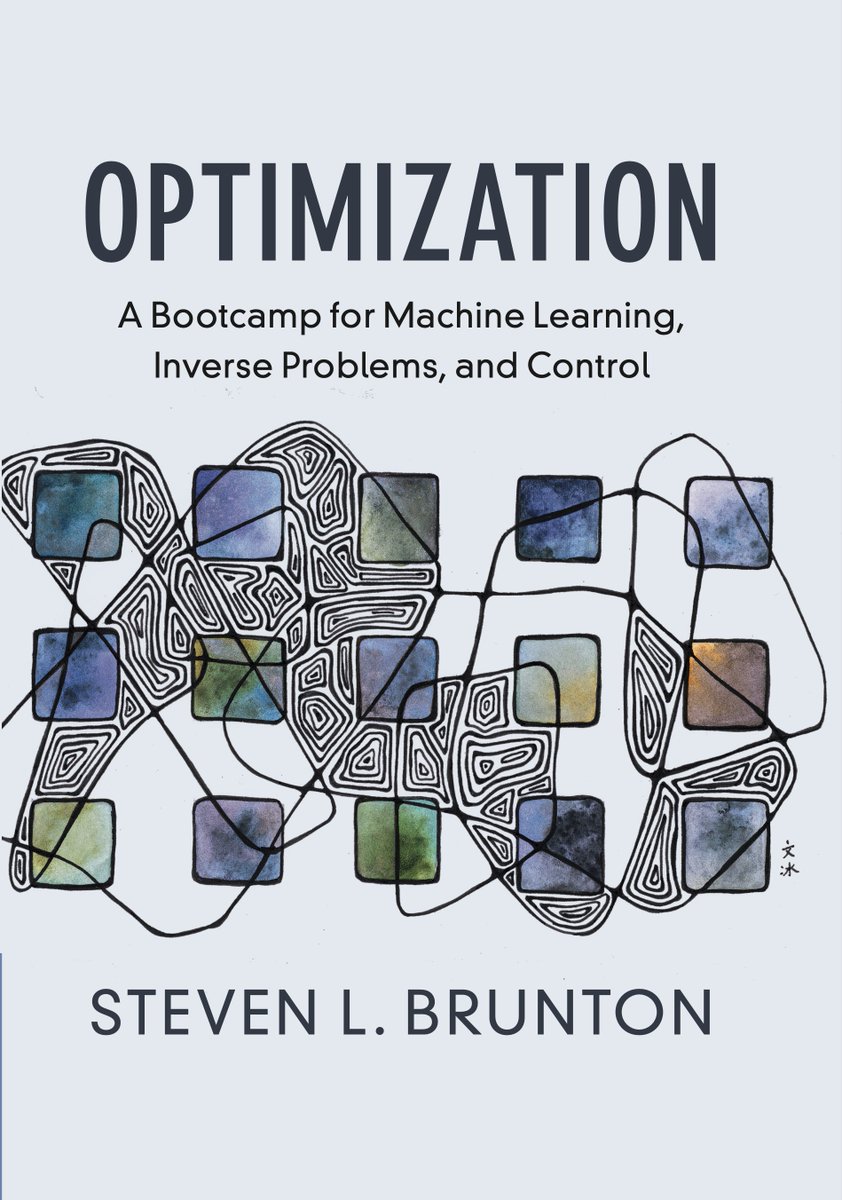
I Wrote a New Book!!!
Optimization: A Bootcamp for Machine Learning, Inverse Problems, and Control
Pre-Order Now (July 31)
https://t.co/EoDMFapUUf
Coming Soon:
* Free PDF on website
* YouTube Videos for entire book
* Python code on GitHub
New article: a visual tour of recent LLM architecture advances, from Gemma 4 to DeepSeek V4.
I focus on long-context efficiency tweaks like KV sharing, per-layer embeddings, layer-wise attention budgets, compressed attention, and mHC.
Link: https://t.co/KO81y3kTH7
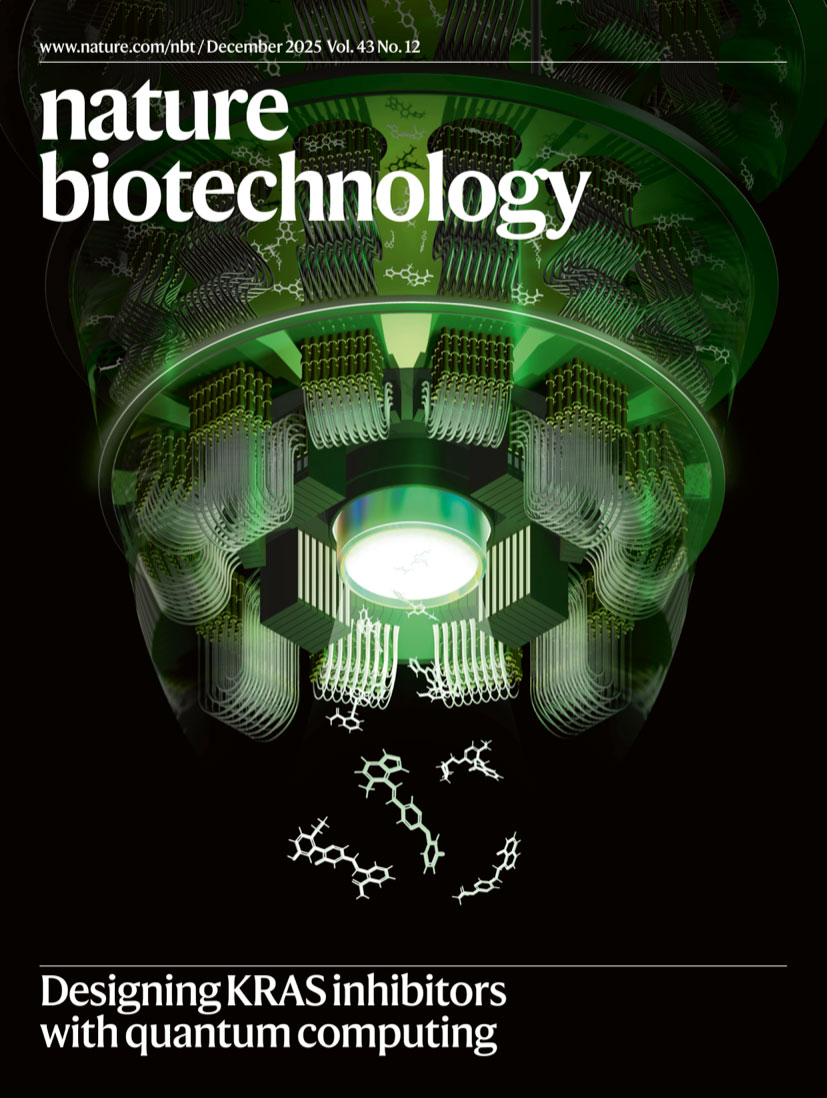
The December issue is live https://t.co/qd4O18ID6y
The cover shows a representation of hybrid quantum computing for drug design. Ghazi Vakili et al. present a hybrid quantum–classical generative model to design molecules to inhibit KRAS activity. Two candidates are synthesized and further characterized https://t.co/ynEyJfsVlf
Random graphs model networks by connecting nodes with probabilistic rules, revealing how global structure emerges from chance. In probability, they help study thresholds, connectivity, and phase transitions. In ML, they support graph neural networks, generative models, and reasoning over uncertain links. In real life, they capture social ties, epidemics, communication networks, and infrastructure, offering insight into robustness and spreading dynamics.
I was an English-as-Second-Language learner when I moved to Canada with my family many years ago. I remember doing endless fill-in-the-blank exercises to practice English. Deep Learning Math is also a language. So I thought: why not use the same method to practice this math language? See more 👉 https://t.co/f3CyvD1sB6
This month’s #QuantumScience collection spotlights breakthroughs in #quantum error mitigation — from reducing noise with limited information to exponentially suppressing errors and improving reliability through repeated runs.
🔗 https://t.co/C2ZcaH5SxE
#IYQ2025
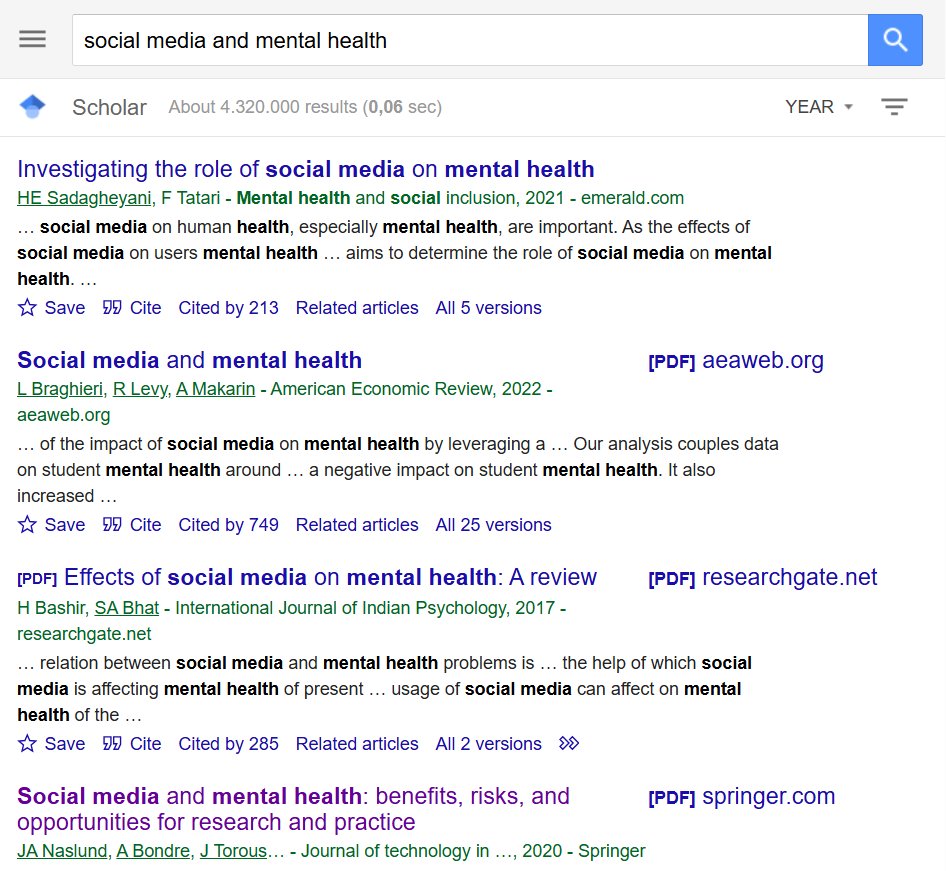
☹️Google Scholar is a great tool. But it doesn't show how papers are connected with each other.
😀Here's how the new Research Rabbit app can help you fast-track your literature review with visual search.
You can learn this workflow in 15 min: