Over the past few months, I've been conducting research on applying fountain codes to Bitcoin, together with @edil_medeiros. In my blog post , I'll give an overview of the idea and share the advances we've made so far.
Check out the full post here: https://t.co/XkiynF2vWa
Jan Kvapil and Ondrej Ceska has been doing meaningful contributions to the bitcoinfuzz project. This week Ondrej defended his MSc thesis - "Differential fuzzing of BIP32 implementations". 🎉
One of the great outcomes of this research is to realize the lack of adherence to evolving specifications (BIP). Specifications evolve, but maintainers and contributors may not be aware of recent updates.
1.
from #BOSSChallenge2026, I built Know Your Coin History l, a Bitcoin transaction graph explorer that lets you trace the origin of your coins.
Enter a txid, walk backwards through ancestor transactions, and label every input and output.
We’ve been on a side-quest, and we have good news from the other side! 40 million Kenyans now have a bitcoin Lightning Address! They didn’t need to sign up for one because they had it this entire time, attached to the phone number in their pocket!
Try it: send bitcoin to [email protected] (254 is optional). The BTC arrives as KES in their M-Pesa. ⚡ EVERY M-Pesa number works. All 40,000,000.
Wallets with LUD-09 support give you a nice clickable link to see your M-Pesa receipt. For example: https://t.co/OK0R62jNWt
Throwing it back to our 2025 Year in Review.
2025 was about strengthening the foundation for decentralized Bitcoin development across Africa and the broader Global Majority. After several years of experimentation and iteration, the year marked a shift toward more structured execution; deepening the programs, partnerships, and systems that support open‑source contributors across the Bitcoin ecosystem.
Throughout the year, we focused on building and strengthening the developer pipeline, from discovery and education to mentorship, grants, and long‑term contribution opportunities. Across our initiatives, more than 3,800 developers engaged with Btrust programs and ecosystem activities.
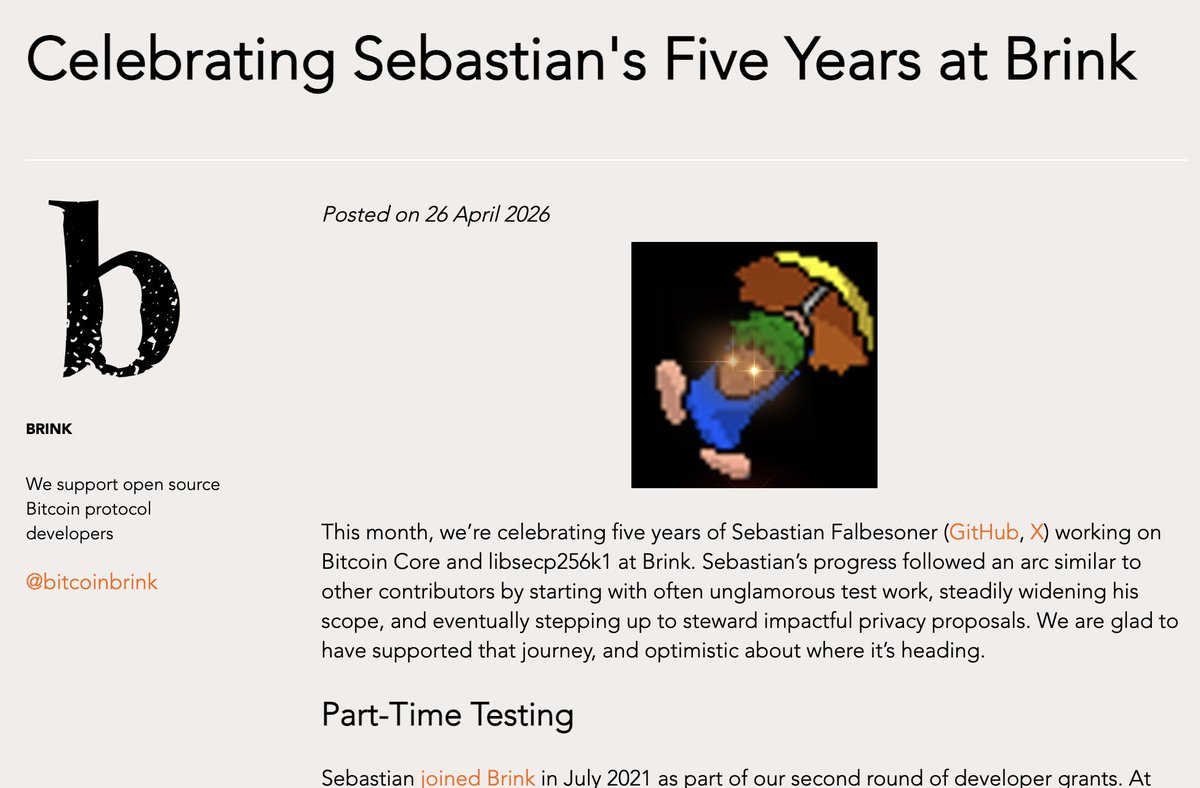
This month, we're celebrating five years of Sebastian Falbesoner (@theStack) working on Bitcoin Core and libsecp256k1 at Brink.
Sebastian started with often unglamorous test work, steadily widening his scope, and eventually stepping up to steward impactful privacy proposals…
Fully-static, reproducible, release binaries for Bitcoin Core, have been a long-time goal of mine, and we are getting are closer to making them a reality. I've produced test binaries from a PR of mine (#25573), and am looking for feedback, questions, and hopefully testing on various systems or obscure platforms.
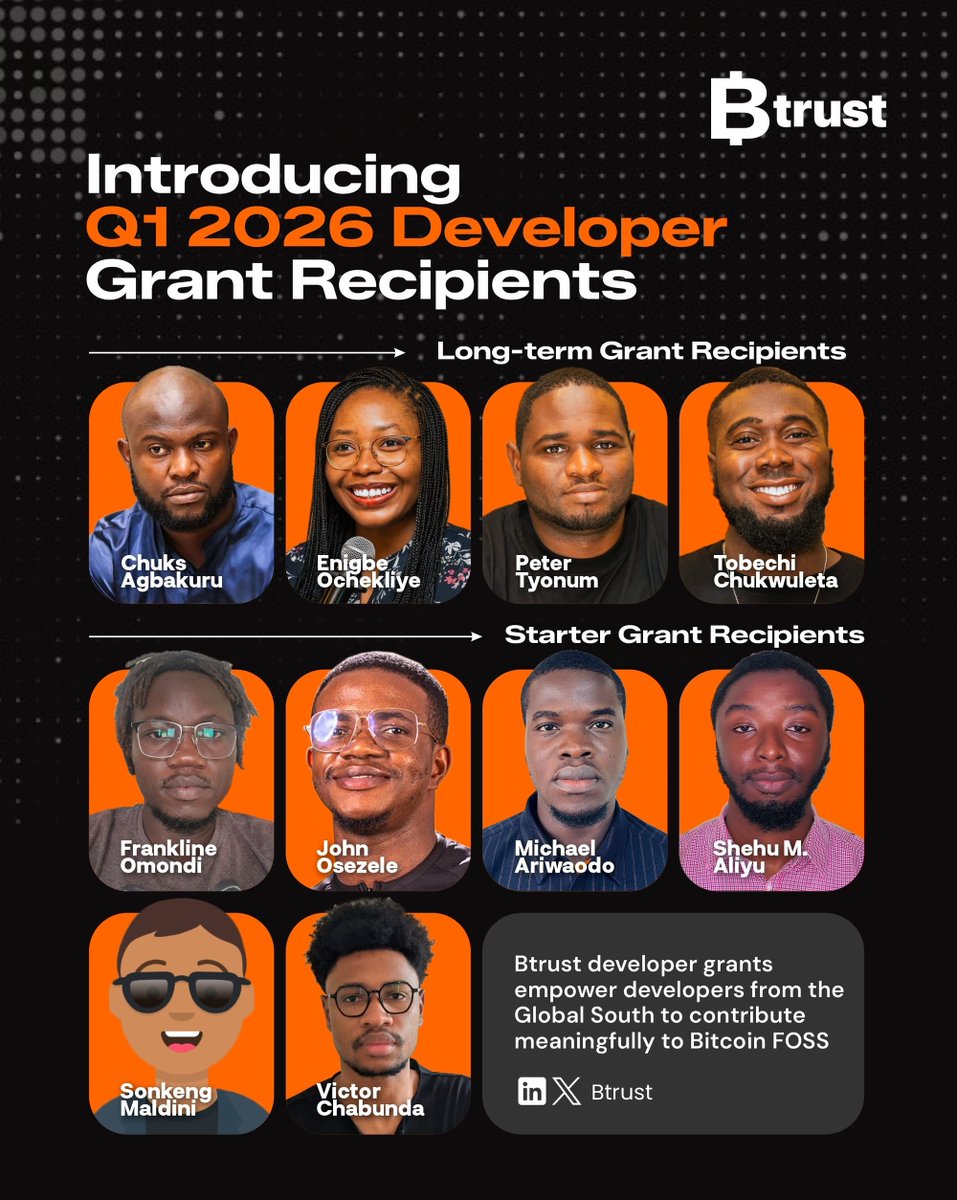
We’re excited to announce the Q1 Btrust Developer Grant recipients, our largest cohort to date.
Ten Bitcoin open-source developers have been awarded grants, including six starter grant recipients and four open-source cohort members, including two renewals and two promotions from starter to long-term grants.
This cohort also marks a couple of important firsts: support for Cashu development and the introduction of a dedicated research role within the open-source cohort. This builds on our work across the stack, from core protocol development to wallets, privacy tools, and user-facing applications.
Learn more about Q1 recipients and what they’re working on here: https://t.co/Hi0IzPYn3G
@_frankomosh contributes to @bitcoincoreorg with a focus on fuzz testing, networking, and validation logic in consensus-critical systems.
He works on improving fuzz testing infrastructure and QA coverage to detect bugs earlier and strengthen overall network reliability.
As part of his grant, he will expand fuzzing across key subsystems such as P2P networking and validation, design new fuzz harnesses, and run long-duration fuzzing campaigns.
He also maintains bip353‑rs, a Rust implementation of DNS-based payment instructions with DNSSEC validation, contributing to improved payment infrastructure.
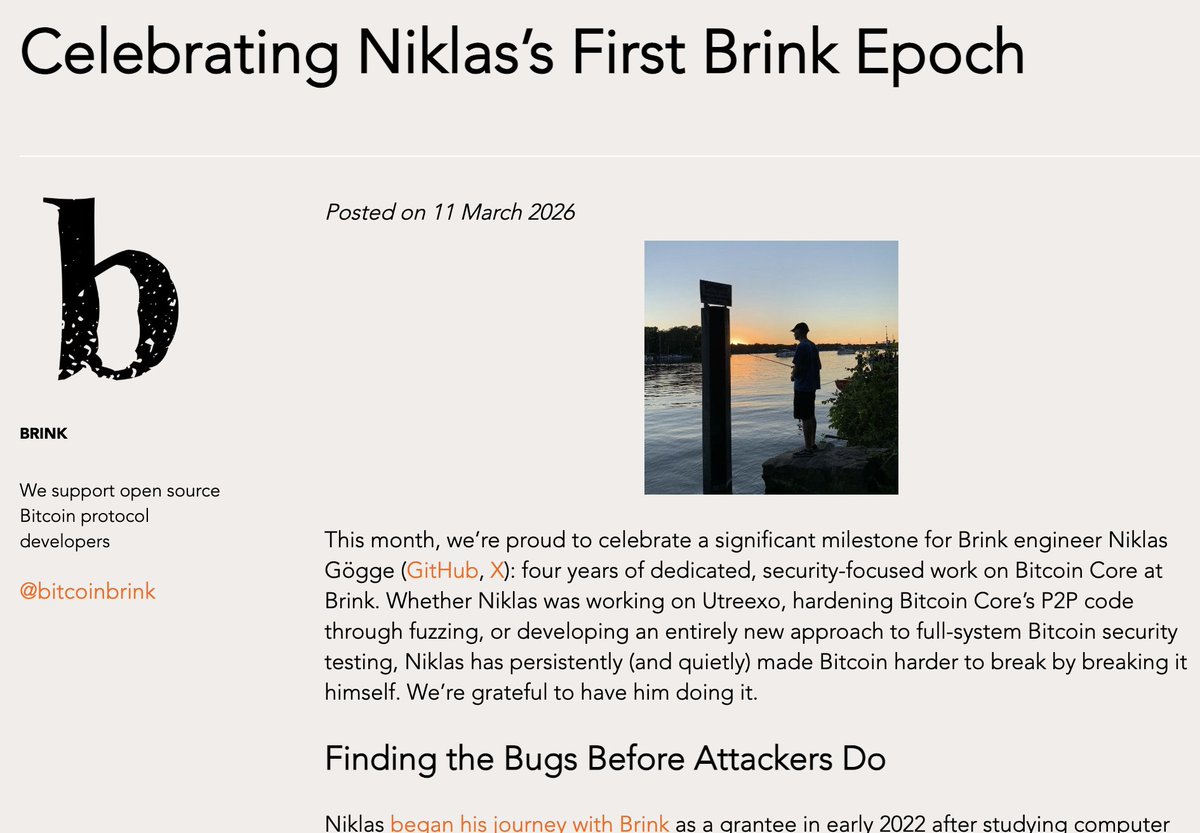
Join Brink in celebrating Niklas Gögge’s (@dergoegge) four years as a Bitcoin Core developer at Brink.
Niklas has persistently (and quietly) made Bitcoin harder to break by breaking it himself. We’re grateful to have him doing it...