@linamagoga Congestion taxes were only effective for middle & high SES commuters who were driving relatively short distances & in areas of the city with good PT infrastructure. So when they shifted from car to PT, travel times weren't extended (even if PT can be slower then driving)
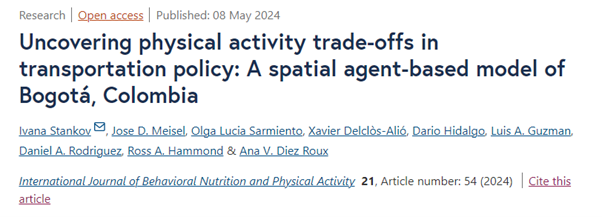
Why could transportation policies promoting active transportation lead to less physical activity in low-and middle-income countries?
Is the trade-off worth it?
https://t.co/g6YQAF6Ug5 @IJBNPA@osarmien_@lu_guzma@dhidalgo65@jdmeisel@xavidelclos @adiezroux
🧵👇
@linamagoga Hi Lina, we think it's because fare subsidies allowed people (mostly lower SES commuters) relying on walking for transport to use buses and the BRT, which were previously unaffordable.
Ver nota de prensa aquí
@LACUrbanHealth#salurbal@_ivana_stan
Viajes gratuitos en transporte público mejoran bienestar de población de menores ingresos y reducen caminata
Cobros por congestión no tienen efectos en actividad física
https://t.co/OlmvqLpcgz
Un resultado adicional de esta investigación: #TarifaCero en transporte público en Bogotá no baja a (casi) nadie del 🚗🚙. En cambio, muchos 🚶🚶♀️🚶♂️ se suben al 🚌. Para cambio modal, mucho más eficiente los cobros a 🚗🚙(por externalidades negativas.
Son datos y hay que darlos👇
🚨🚨🚨
Nueva investigación multidisciplinaria donde simulamos los efectos de medidas de cobros por congestión🚗 y tarifa gratis en 🚌, entre otros, en la actividad física.
Aquí los detalles: https://t.co/c3o3HWzlbk
Promoting active travel and addressing existing inequalities must go hand-in-hand for truly equitable policymaking.
Our model enables policymakers to assess both the social and health consequences of policies, and their trade-offs before they're enacted.