Solopreneur building a cross-border skincare brand with AI as the co-founder. Sharing how I use AI agents, automation & content systems to run lean — in CN & EN
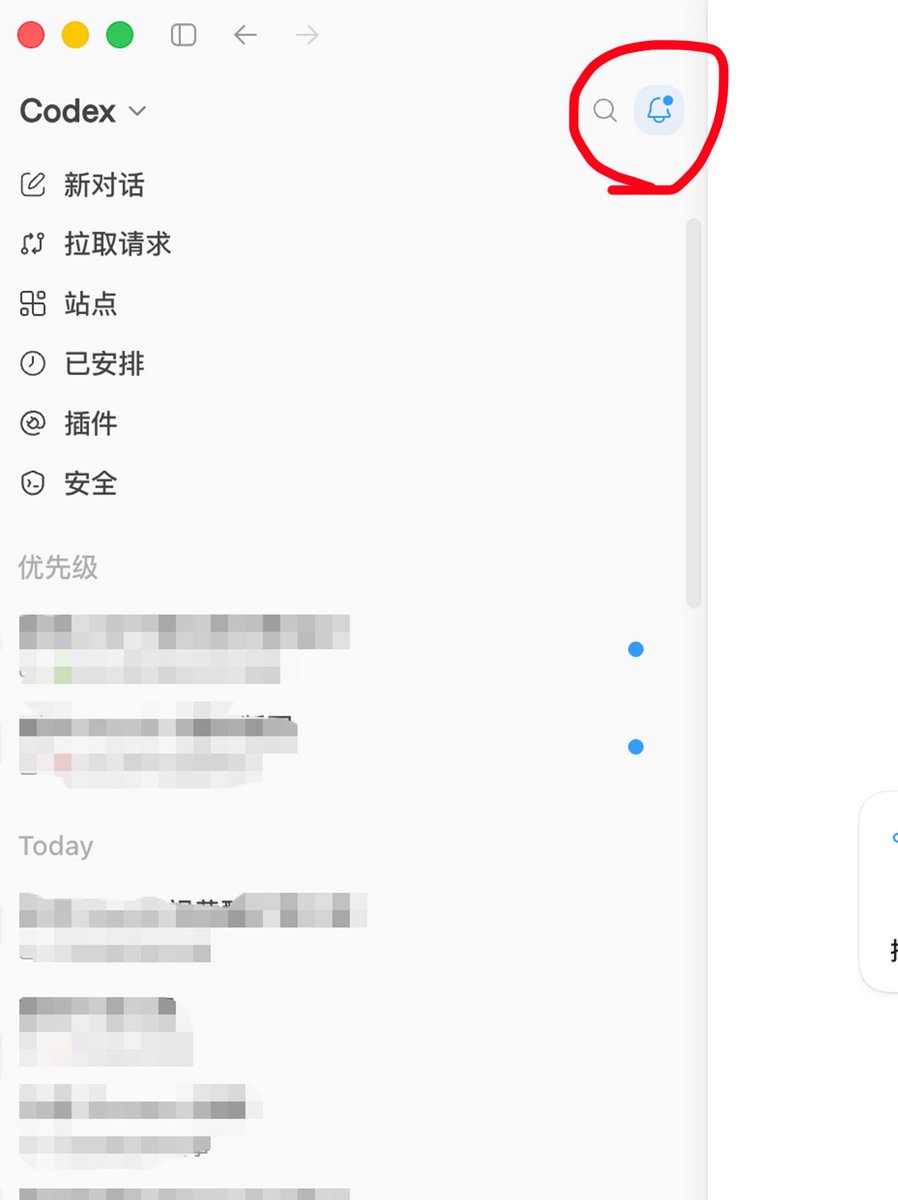
The new Codex absolutely needs this 🔔 turned on!!
It completely changed the way I work.
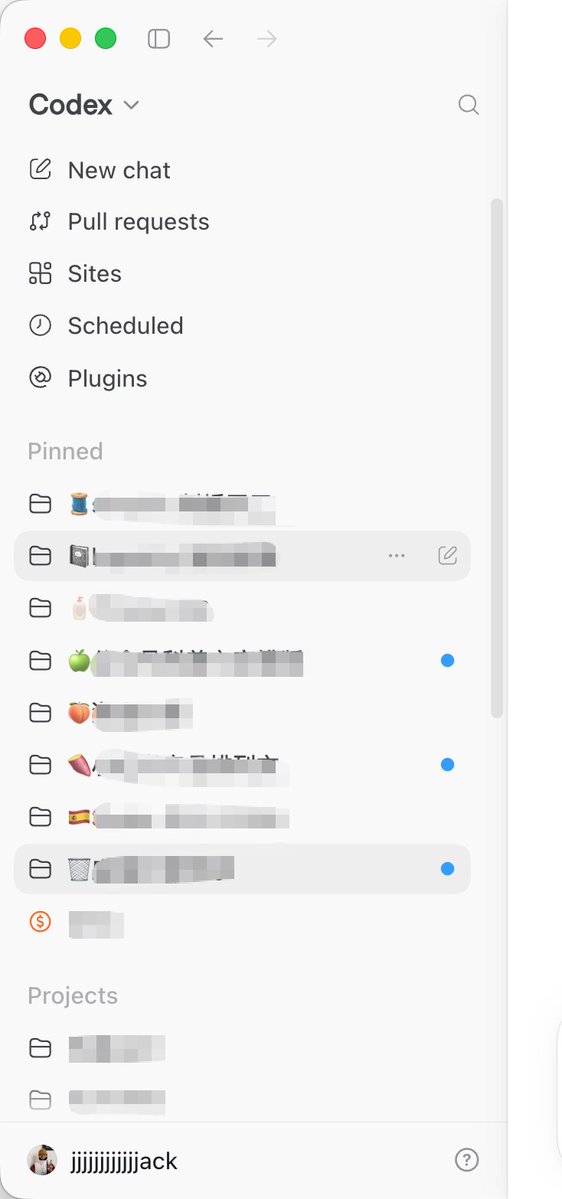
I used to think about which project to open whenever I wanted to move something forward.
Now, whenever an idea pops into my head, I just start a new conversation, select the relevant project, and get to work.
Perfect for people with wildly scattered thoughts and a memory of zero!!!
There are only a few projects I work on anyway 😂
I thought starting new conversations would make Codex forget which project everything belonged to.
Turns out, I don��t even have that many projects hahaha
The best part is that all my scattered ideas get captured, organized, and moved forward.
Codex is carrying me!
If you’ve been thinking about starting something but haven’t found the right direction yet, browse the words in this thread and see what sparks for you.
Treat it like an answer book—open it with an open mind, and let a few unexpected ideas collide.
A practical AI workflow for recurring daily operations: clean tasks, human approval gates, and a system that gets better after every exception. https://t.co/tUSECAK6ln
100% agree.
I’ve found voice is the best interface for early-stage thinking.
When you stop worrying about organizing your thoughts and just keep talking, the LLM gets a much richer picture of what you’re trying to achieve.
Some of my best ideas have come from seeing it connect patterns that I didn’t realize were already there.
One pattern I find useful for working with LLMs is a nice long ramble session. Sometimes the LLM needs more bits to understand what you're trying to achieve, but you're too lazy to type them. In these cases I like to lean back, switch to /voice and just ramble for like 10 minutes, total mess, anything goes, full stream of consciousness. Sometimes I declare it up top, something like "switching to speech recognition sorry for any typos...". Sometimes I turn it into a small interview of a few turns. But I find that the LLMs are somehow very good at reconstructing long incoherent rambles and often their echo of your own tangle of thoughts comes out quite a bit cleaner than what you started with. The result is that you improve the mind meld and have to correct things less from that point on.
In my experience, Claude is still the best model for writing Chinese copy.
There’s something about its tone and rhythm that feels remarkably human.
GPT-5.6 comes next.
Grok still requires a fair amount of editing before the writing sounds natural.
A dumpling restaurant with its own AI Skill might be one of the coolest AI use cases I’ve seen.
It made me realize that every business should eventually think beyond building interfaces for humans.
Build interfaces for AI agents too.
Once an agent can understand your business and execute tasks directly, customer support, ordering, booking, and countless other workflows become dramatically more scalable.
This feels like a much bigger opportunity than it first appears.
Voice conversations with AI are quietly improving my ability to think and communicate.
I didn’t expect that.
When I first switched from typing to voice, I kept getting stuck. I knew what I wanted to say, but turning those thoughts into spoken words felt surprisingly difficult.
So I stopped trying to sound fluent.
I simply left the microphone on.
If I needed 20 or 30 seconds to think, I paused. When the next idea came, I kept talking.
The interesting part is that AI doesn’t care.
It doesn’t interrupt you. It doesn’t rush you. It doesn’t make silence feel awkward. It just waits, listens, and eventually turns scattered thoughts into something coherent.
What surprised me was how quickly things changed.
After just a few conversations, speaking started to feel natural. My thoughts flowed more easily, and ideas began showing up while I was talking instead of before I started talking.
I realized that voice conversations with AI aren’t just a faster input method.
They’re also a remarkably effective way to practice thinking out loud.
If you’ve mostly been typing to AI, try switching to voice.
Leave the recording on. Don’t worry about awkward pauses.
You might be surprised how quickly your brain adapts.
This campaign came at the perfect time. I just got locked out of Claude, tried Codex for a few days, and now I can’t stop using it. Add $100 in credits and I’m officially about to become a Codex addict 😂
Or… what if we gave you $100 in Codex credits if you tell us what you love about GPT-5.6 Sol or why you switched?
Tweet it, claim your gift, enjoy more usage. First 10k get the free tokens!
https://t.co/8mU93eA13i
After using GPT-5.6 and Fable, it’s clear that models are more capable than ever.
But many Skills were designed around the limitations of older models. Today, they may add little value, waste tokens, or even make the model perform worse.
It’s time to audit the Skills I’ve been using.
After using it for the past few days, I can honestly say ChatGPT Sol gets real work done. It’s stable, handles a huge workload, and even comes with reset credits. I think I’ve finally moved on from losing Claude. ChatGPT Sol has taken over. 🚀
I stopped asking AI to redesign the whole page every time.
One question fixed it: same every time, or different every time?
Fix the structure. Let AI vary only what should vary.
And put human judgment where ambiguity actually lives — not everywhere, not nowhere.
Working notes from a real content pipeline ↓
ChatGPT has been burning through tokens way too fast for me over the past few days, so I urgently renewed Cursor to make sure my daily work wouldn’t be disrupted.
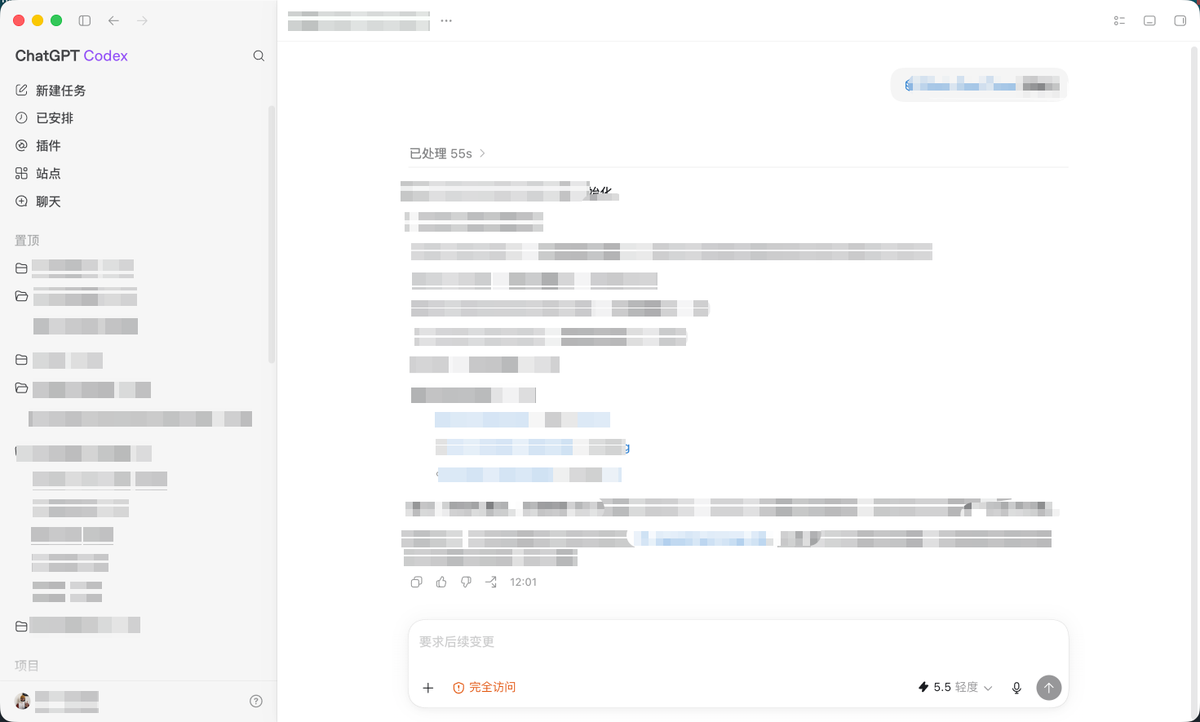
Today I got the redesigned ChatGPT Desktop. After using it for a full morning, token usage seems to be back to a more normal level—maybe?
I’m still seeing reports from other users saying their tokens are draining unusually fast. Is anyone else experiencing this?
Yeah, it seems like this is something we’ll have to wait for the official teams to fix.
For now, I’ve switched over to Cursor so I can keep working, and so far it feels pretty normal in terms of token usage. At least it’s letting me stay productive while all this gets sorted out.
Has anyone else noticed this?
I moved from Claude Code to Codex after my Claude account was banned.
Running almost the same coding tasks on the same repo, Codex is burning roughly 5x more tokens than Claude Code did.
It feels way beyond normal variance.
I’ve also seen people mentioning recent quota/token regressions, so I’m wondering:
Is this expected with Codex?
Is it a recent bug or backend change?
Or am I doing something wrong in my workflow?
Curious if others are seeing the same thing.