@htihle I don’t think this is quite true. Tokens are an implementation detail of the model. Increasingly so with approaches like looping. One tradeoff you could make, for example, is have a smaller vocab size to reduce the softmax bottleneck and then rely more on speculative decoding.
We released Sonic-3.5 and Ink-2, the #1 streaming models for text to speech and speech to text you can use in your voice agents today.
New architectures enable new frontiers for speed and quality.
We're now the only provider to have #1 models for both speaking and listening.
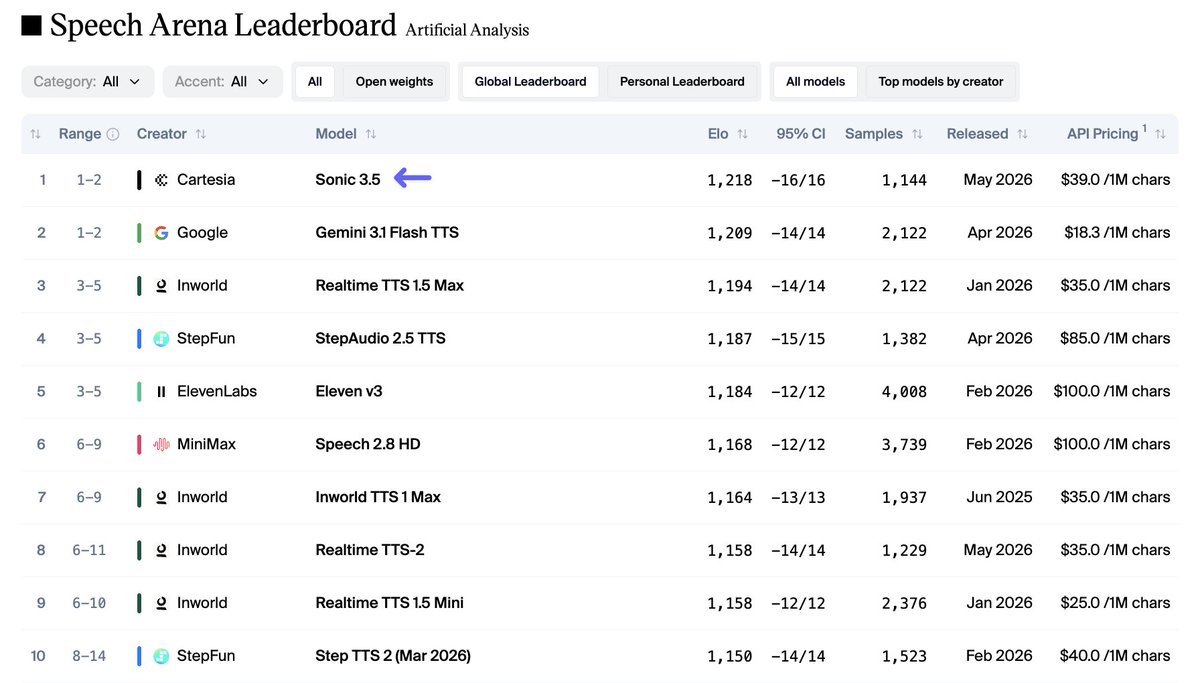
Cartesia’s Sonic-3.5 takes the #1 spot on the Artificial Analysis Speech Arena Leaderboard, surpassing Inworld Realtime TTS 1.5 Max and Google’s Gemini 3.1 Flash TTS
Sonic-3.5 is the latest TTS model from @cartesia . It supports 42 languages, including 9 Indian languages, with 500+ voices available out of the box. The model has been highly preferred among voters in the TTS Arena, with its demonstrated naturalness and accurate transcript following.
Key takeaways:
➤ Quality: Sonic-3.5 has an Elo score of 1,218 (+16/-16) based on 1,144 arena appearances, placing it ahead of Inworld Realtime TTS 1.5 Max at 1,194 and Gemini 3.1 Flash TTS at 1,209
➤ Pricing: Sonic-3.5 is priced at $39/1M characters, a premium compared to Gemini 3.1 Flash TTS at $18.3/1M characters, and Inworld Realtime TTS 1.5 Max at $35/1M characters
➤ Speed: 105.5 characters per second, compared to 205 characters per second for Inworld Realtime TTS 1.5 Max and 26.3 characters per second for Gemini 3.1 Flash TTS
See more details and listen to samples below 🧵
We've raised $100M from Kleiner Perkins, Index Ventures, Lightspeed, and NVIDIA.
Today we're introducing Sonic-3 - the state-of-the-art model for realtime conversation.
What makes Sonic-3 great:
- Breakthrough naturalness - laughter and full emotional range
- Lightning fast -
@NikoMcCarty If Rubisco can be made more efficient in a relatively straightforward (for evolution) manner, why is the inefficient version so prevalent?
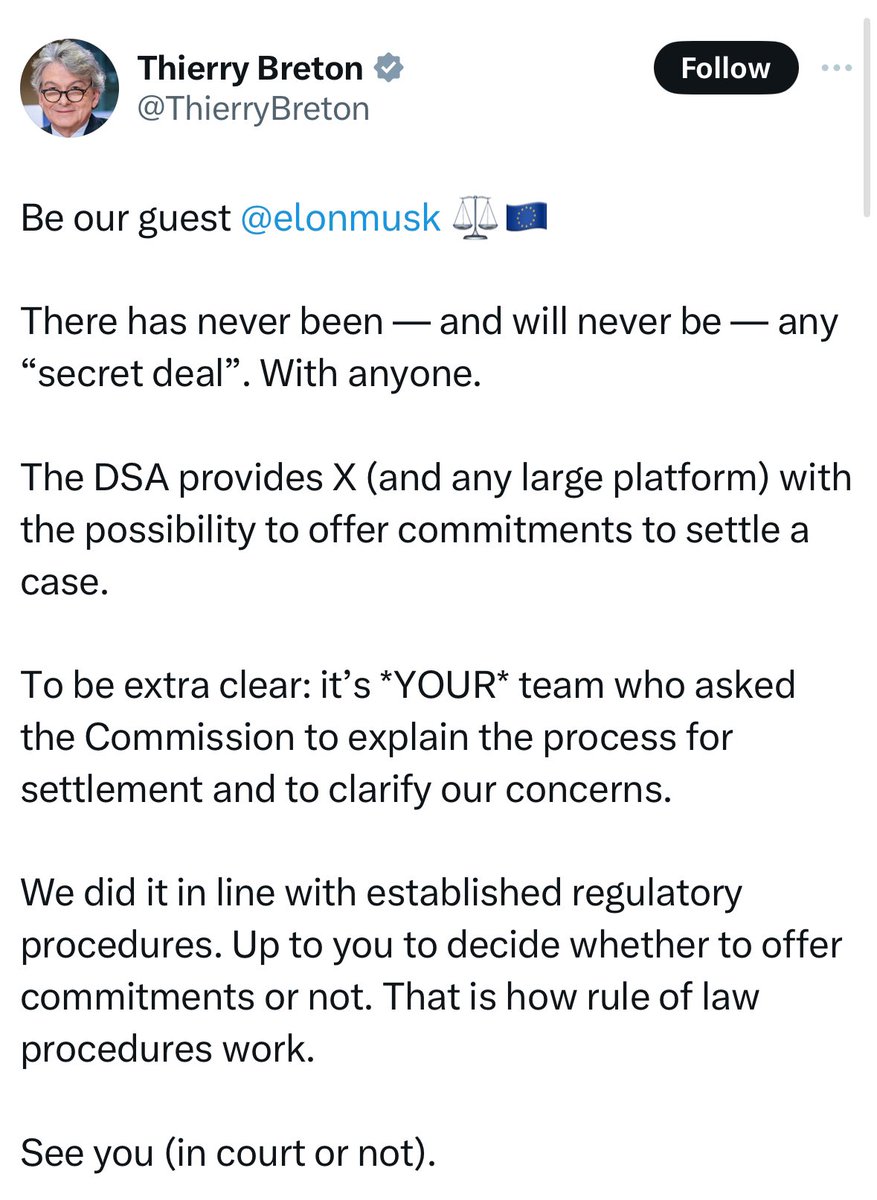
@francoisfleuret Well, I guess it depends on what “commitments” they asked for and if they are related to the previous stated issues (blue check, research data etc) or were commitments around removing content. If the latter, it’s clear EU officials don’t want to say that outright.