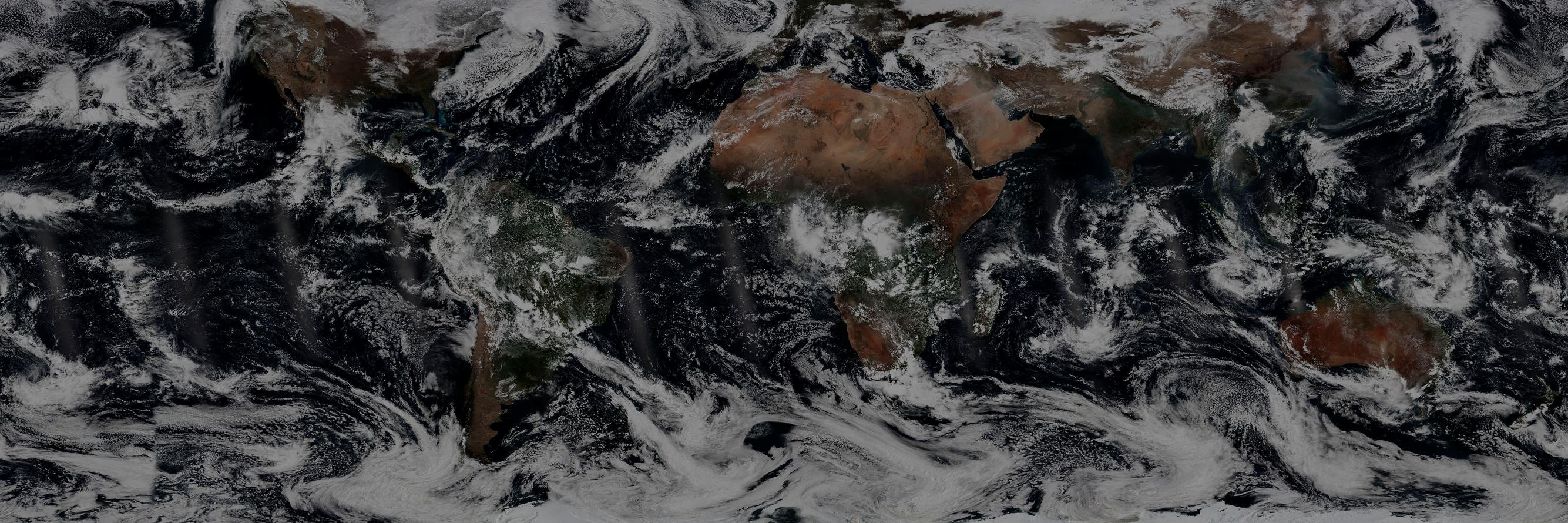
I’ve got some exciting news to share. @rabernat and I have started @EarthmoverHQ, a new company with a mission to empower people to use scientific data to solve our planet’s most urgent challenges.
https://t.co/1Nji5GOhjW
👋 Earthmover is a new startup whose mission is to empower people to use scientific data to solve humanity’s greatest challenges. Founders @rabernat and @_jhamman sat down with @tdechant of @techcrunch to explain why this company needs to exist.
https://t.co/rcD5RqlTpV
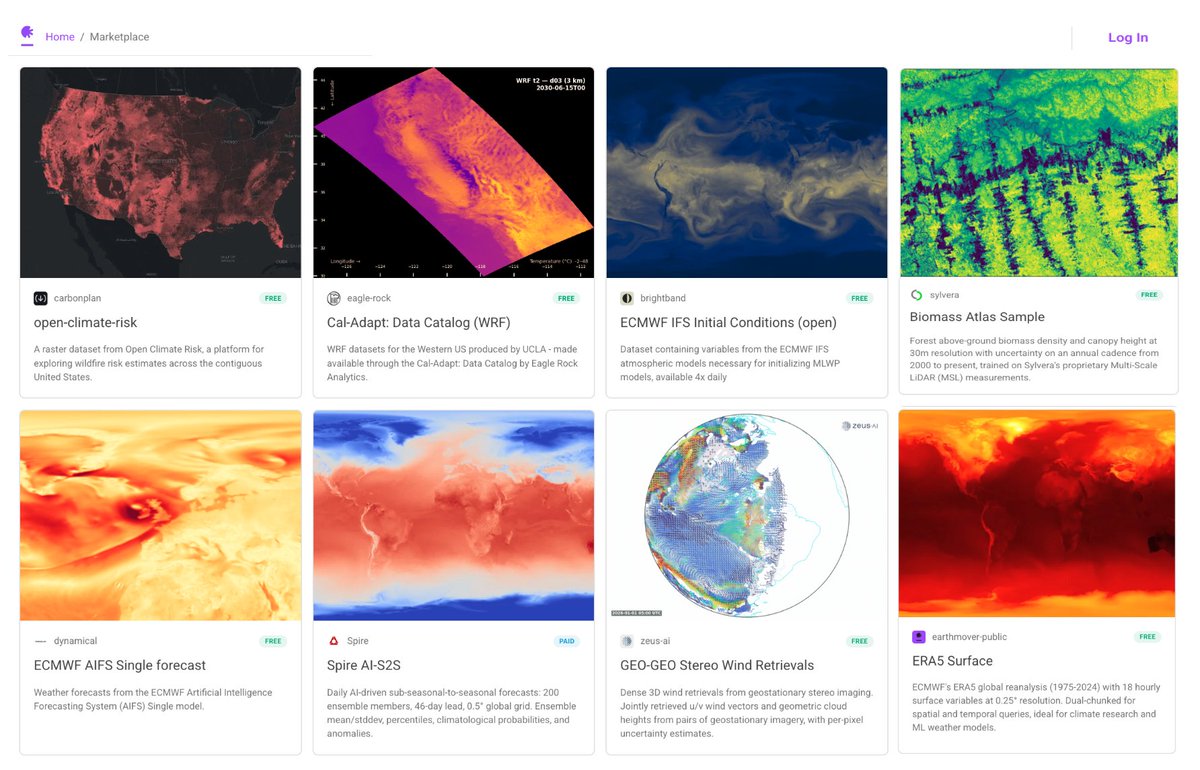
🚀 The Earthmover Data Marketplace is expanding!
New partners @SylveraCarbon, @SpireGlobal, Eagle Rock Analytics/Cal-Adapt, and @carbonplanorg list their data sets: From forest carbon to 46-day forecasts to wildfire risk: read up or explore for yourself!
We watched data teams waste years building the same ingestion pipelines for weather data.
So we fixed it. Zero ingestion. High velocity. Cloud-native.
Proud to launch with incredible partners like @brightbandtech, #zeusai, and https://t.co/2HdivyF88z. Give it a spin! 👇
Announcing the Earthmover Data Marketplace: cloud native access to high-velocity weather, climate, & E/O datasets. Get access to ARCO ready data cubes from trusted providers, including forecasts from @ECMWF@NOAA- and exciting new AI-based forecasts!
CEO @rabernat, CTO @_jhamman & the Earthmover team are out and about at #ClimateWeekNYC - and registration is still open for Wednesday's workshop, 'Open Data in Applied Risk Analysis' and Thursday's panel, 'Bridging Earth Observation & Risk Analytics at Scale.' Join them!
🚀 Big launch today: introducing Flux — a game-changing way to serve geospatial data via standard APIs in seconds. Built for scale, speed, and simplicity.
1/ Today we are launching Flux, a powerful new addition to the Earthmover platform. Flux is a high-performance gateway for exploring, querying, and visualizing geospatial data via standards-compliant APIs (EDR, WMS, and OPeNDAP).
No more bespoke APIs. No glue code.
Just fast, interoperable access via tools you already use — QGIS, ArcGIS, web maps, Python, R, MATLAB, and more.
Flux is a cheat code for building data products.
1/ 🚀 Solving #NASA ’s cloud data dilemma: Icechunk unlocks 100x faster access to archival data formats
We're thrilled to publish results from our pilot project with @NASA + @developmentseed to enable high-performance cloud-native access for NASA’s 100s of PBs of EO data.
We're moving over to BlueSky and LinkedIn for all our future announcements. Follow us at https://t.co/CfejMIiPuH to find out more about tomorrow's showcase 😉 (p.s., it's on Xpublish at Scale at 4 PM EST 🚀) Connect with us on LinkedIn at https://t.co/b0duHratPH
🌍 As we digitize the analog world, new data formats unlock exponential value.
@EarthmoverHQ's open-source Zarr and Icechunk are redefining how we organize and compute massive geospatial datasets, scaling solutions for problems once thought inaccessible.
🔊 Links 👇
🌎 Why do we need a cloud-native data lake for geospatial data?
In the latest episode of The Infra Pod, @tnachen & @ianlivingstone chat with the cofounders of @EarthmoverHQ, @rabernat & @_jhamman, about the future of data in climate and earth sciences.
🎧 Link in 🧵
If you’ll be at #AMS25 and love weather data, join us for a @pangeo_data Community Happy Hour! We’ll have drinks, appetizers, and great conversation with friends old and new about technology, weather & climate data, and open-source software! Register: https://t.co/7CujhX8Fqa
We’re thrilled to announce the release of @zarr_dev-Python 3! This major release brings full support for Zarr v3 specification, including the new chunk-sharding extension, major performance enhancements, and a thoroughly modernized codebase. Read more: https://t.co/lMFdEHzTb3
The 3.0.0 release clears the way for a bunch of exciting extensions built on top of the v3 spec. #icechunk, variable chunking, new dtypes, and more are all now possible. Time to get busy.
We released Zarr-Python 3 today, complete with support for the v3 spec, new extensions (chunk-sharding) and significant performance gains.
https://t.co/AFuKdqte1k
One of the best parts of this release is that it included contributions from over 30 people. After a period of slow development, the v3 refactor really managed to build momentum in the project. Special shout out to @normanrz and Davis Bennett for doing a big chunk of the work.