I-JEPA: Efficient method for Self-Supervised Learning of image features.
No need for data augmentation, just masking.
Joint embedding predictive architecture, not generative.
And it's open source, of course.
Blog: https://t.co/ZuouZgeEMC
Paper: https://t.co/BoHSnELyw8
Code & models: https://t.co/DgS9XiwnMz
@ChristophAdami I think this is interesting because most EAs don’t evaluate complexity (other than GP and NEAT). Maybe this is what’s missing in progress in EC.
"Machine Love" - new paper w/ LM expts: Leaving to humans what is human (emotions/relationships/autonomy), is there any conception of love fitting for machines to embody? One idea: to provide unconditional support for humans to pursue their own growth.
https://t.co/cVl6bB02TF
𝗥𝗲𝘄𝗮𝗿𝗱 𝗶𝘀 𝗻𝗼𝘁 𝗡𝗲𝗰𝗲𝘀𝘀𝗮𝗿𝘆: How to Create a
Compositional Self-Preserving Agent
for Life-Long Learning
Absolutely tantalizing by @no_reward_for_u
https://t.co/IHoOX089c5
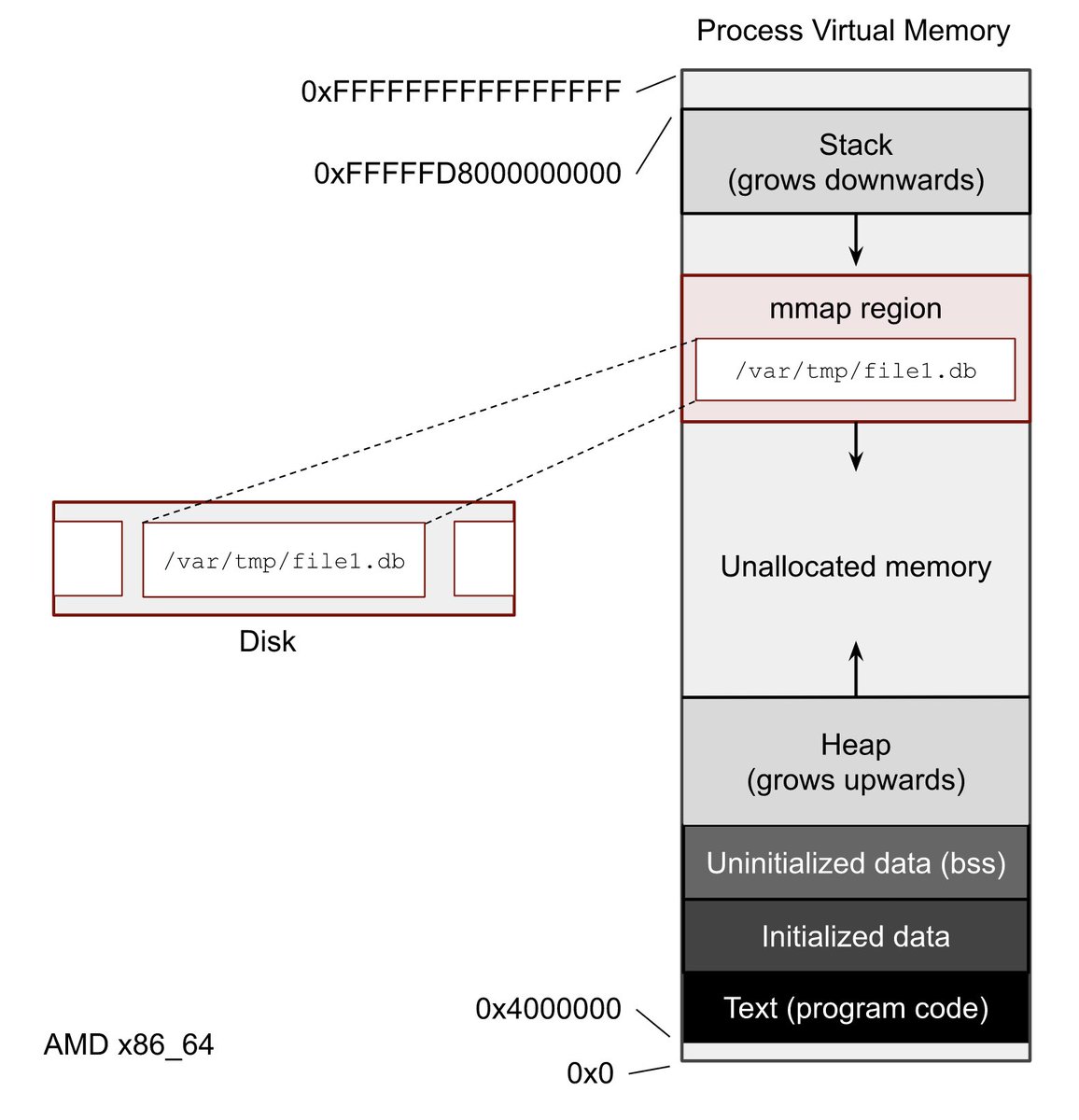
mmap() is a tremendously important Linux syscall. Many open-source and in-house databases and KV storages use it internally to simplify data access. That's why it's so essential for SREs to understand its interaction with Page Cache: https://t.co/SaLhniuPpK
I feel like whatever Google is trying to do with AI may be almost as ludicrous as what Meta is doing with metaverse; yet the public’s perception is seemingly different. I’m starting to wonder if pursuing VR makes more sense than AI at this point.
This is all of course from a perspective of engineering, not science. AI might always be interesting as science projects, but how long until the public gets tired of all the PR research projects that cost more to execute than the profit?
@cesarberardini@benedictevans I wouldn’t say they’re the same — people already carried phones; smart phones got better without changing the form factor too much. Everyday people don’t wear headsets in 2022, they’re not gonna suddenly start in 2023.