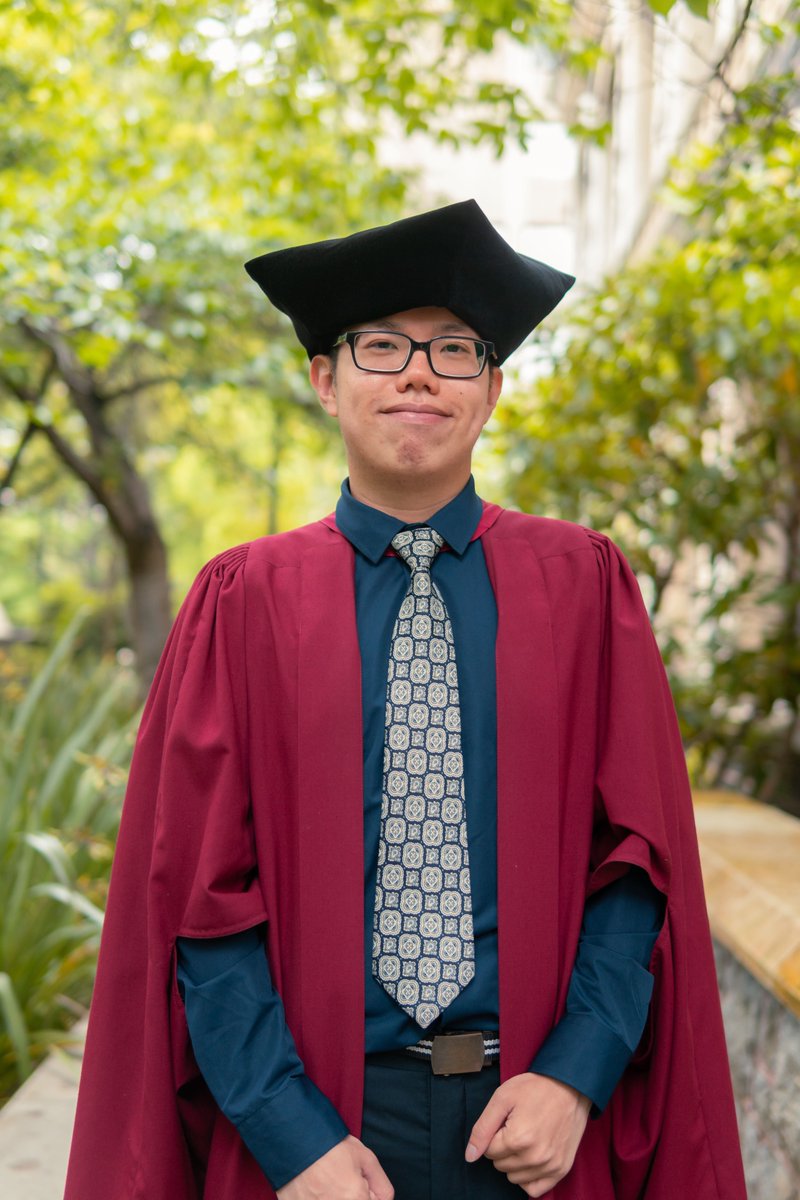
Huge congratulations to our lab member Dr. Wei Hong Lo who graduated last weekend. Wei Hong wrote his PhD thesis about "ARSpectator—Enriching On-Site Sports Spectating with Augmented Reality". Big thanks to the examiners @_kai_ku, @slukosch and @danielcalencar.
testing Mastodon. Preparing for a #Dagstuhl Seminar discussing how we can augment our cognition https://t.co/hKibvrbcPs
Excited to finally meet people in person again.
Due to popular demand, we will provide you with an extension ...
Paper Deadline: 14th January AoE
Full/Short Papers: January 14th, 2022, Anywhere on Earth
Decisions sent to Author: February 7th February 14th, 2022
https://t.co/upKHXKAjUL
Will be giving a Talk about a new collaboration project: Frisson Waves at the #rC3 tonight 22:00 CET (6:00+1 JST) Stream Link:
https://t.co/NxJR0nzVTL
Talk info:
https://t.co/xA7N0Z89CE
Congratulations to Dr. Jamie Ward (@DrJamieW) who was awarded an interdisciplinary APEX award (from @royalsociety@BritishAcademy_@RAEngNews)
Jamie's award will support his work exploring social interaction using theatre and wearable sensing.
https://t.co/zO2OJLPqZz
@miss_tungsten https://t.co/JqgZWe5oeE
Japan has everything. spotted a friend from Tokyo University wearing one … they have more formal meetings then us at KMD ;)
After many months of work we are excited to announce the new Jupyter Book!
https://t.co/WzaJXaku6j
This is a complete re-write of Jupyter Book to make it more modular, powerful, customizable, and easy to use. See this 🧵 for some highlights!
Presenting a novel method for metric distance estimation from video using #MediaPipe Iris 👀 — no depth sensor required. Check out our blog for more details at https://t.co/Mqd2tUTy34
@nanotronics@AnimaAnandkumar@nvidia@Caltech That definition is questionable. It implies machine learning is how artificial inteligence learns, seems an anthropomorphism to me. ML are computer algorithms that improve automatically based on data.
On July 22, 2009, the neuroscientist Henry Markram walked onstage at the TEDGlobal conference in Oxford, & told the audience that he was going to simulate the human brain in a computer. It’s been exactly 10 years. He did not succeed. @edyong209 https://t.co/0686mtYukQ