THEO VON: “Was there anybody who was immune to COVID-19?”
DR. MCCULLOUGH: “There’s one adult group. You’re going to laugh.”
[Theo Von listens closely for the reveal]
DR. MCCULLOUGH: “Smokers… They got very mild cases. And they don’t get long COVID.”
THEO VON: “Why?”
MCCULLOUGH: “Because smokers maintain a level of nicotine in the bloodstream… Smoking blocks the spike protein. It’s amazing. I thought smokers were going to go down.”
THEO VON: “Do you think that’s a good idea [to use nicotine patches] on a regular basis?”
DR. MCCULLOUGH: “I think [it’s a good idea] if they have long COVID... Nicotine, don’t forget, is a nootropic. A nootropic is a drug that makes the brain function more effectively... It’s addictive, but it’s not harmful to the human body... Nicotine patches are perfectly safe.”
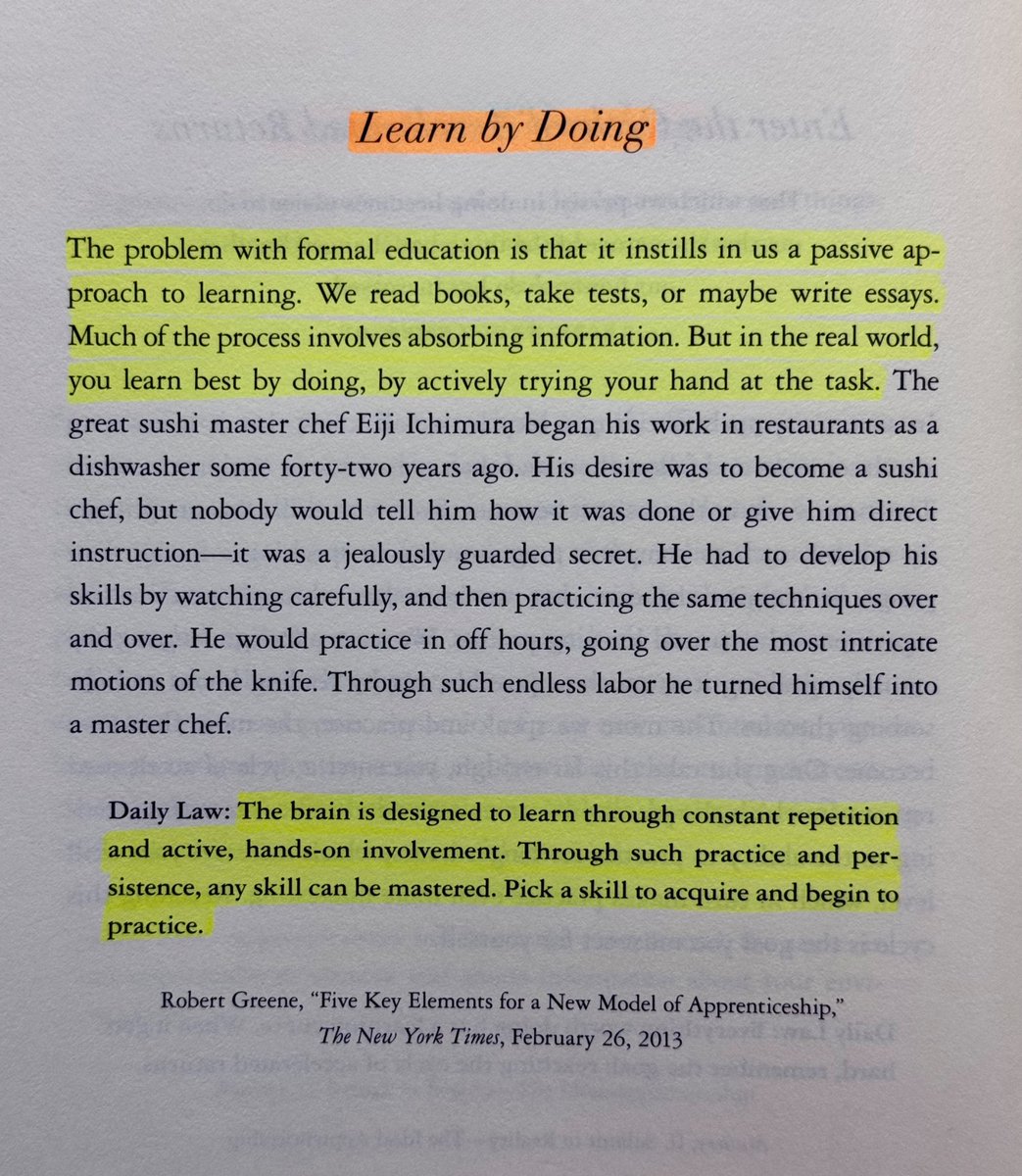
Robert Greene: Learn by Doing.
“The brain is designed to learn through constant repetition and active, hands-on involvement. Through such practice and persistence, any skill can be mastered.”
Scientists shut off the dopamine in some rats and they stopped eating. Food everywhere. They starved in a full cage, not because they hated it. Put sugar on their tongue and they licked their lips. They still liked it. They just lost the drive to go get it.
This is one of the strangest things we know about the brain, and it traces back to a researcher named Kent Berridge at the University of Michigan. Your head runs two different systems. One is wanting, the push that gets you off the couch and moving. The other is liking, the good feeling once you are in it. Dopamine runs the wanting. The enjoyment runs on separate wiring. So you can be sure you will love something and still feel almost no pull to start it.
That is the man in the cartoon, swinging at rock with diamonds all around him. He could see the good stuff. He just could not make himself dig toward it.
Once you see why, the usual story about procrastination stops making sense. We say lazy, or bad with time. Mostly, it is neither. Two psychologists, Fuschia Sirois and Tim Pychyl, argued back in 2013 that it runs on emotion. A task makes you feel something you would rather not feel, even just the small dread of starting, and putting it off makes that feeling vanish on the spot. So you scroll, or you suddenly need to clean the kitchen. Dodging the task is a quick hit of relief, and your brain grabs it. The bill goes straight to future-you, who is left holding the guilt and the deadline.
You can even see it on a brain scan. In 2018, a team in Germany scanned 264 people and matched the scans against how much each person put things off. The big procrastinators had a larger amygdala, the little alarm bell deep in the brain that flags anything risky. They also had a weaker link to the part meant to quiet that alarm and get you moving, a region called the dorsal anterior cingulate cortex. Loud alarm, weak off-switch.
And if this is you, you have plenty of company. A big 2007 review found that 80 to 95 percent of college students procrastinate, that roughly one in five adults does it long-term, and that more than 95 percent of them wish they could quit. Students alone burn about a third of their day on it.
The fix falls out of that same split. If wanting and liking are two different systems, then waiting to "feel like it" is waiting for a bus that may never come. The main treatment for the severe version, called behavioral activation, flips the order. You start first, as small as you can stand, before any motivation shows up. The wanting tends to arrive a few minutes after you begin. The diamonds were there the whole time. You just have to swing the pick before you feel ready.
Indian visa worker in Dallas.
Software Engineer.
Makes $120,000 per year through contract work.
No degree. No certificate. Just a 6-month online boot camp.
How did he get the job? By getting a “reference” from his compatriot that works in finance.
Straight from the source: not highly skilled. Not highly educated. Speaks poor English. Got his job from nepotism.
This is who is replacing you. This is why Americans are done.
Nick asks if he's the only one who wears the same pants every day
"I literally wear the same pair of pants every day until I get a stain on them. Then I wash them."