I don't think many Kenyans have understood the weight of the figures David Maraga released yesterday.
According to the former Chief Justice @dkmaraga, 3,958 Kenyans have been killed by police since President William Ruto came to power, an average of roughly 990 deaths every year.
Now put that number next to the country's terrorism figures.
Available Kenyan terrorism data records roughly 343 terror-related deaths between 2022 and 2025.
That means the number of Kenyans Maraga says have been killed by police is more than 11 times the number of people killed in terror-related violence over the same four-year period. Think about that.
We have spent years being told to fear Al-Shabaab terrorism, and violent extremism as some of the greatest threats to our national security.
And rightly so.
But what does it say about the state of our country when the number of people reportedly killed by the police is an order of magnitude greater than those killed in terror-related attacks?
The police are supposed to protect citizens from violence.
They are supposed to be the institution standing between citizens and those who want to harm them.
The State gives them uniforms, guns, training, and extraordinary powers because we are supposed to trust them with our lives.
So when thousands of citizens are reportedly dying at the hands of the very institution tasked with protecting them, this is no longer simply a conversation about police brutality. It is a national security question.
Who is protecting Kenyans from those who are supposed to protect Kenyans?
And perhaps that is the figure we should all be struggling to comprehend: 3,958.
Not a statistic.
Not a political talking point.
3,958 human beings.
3,958 families.
3,958 stories.
3,958 people who did not go home.
And if a terrorist organization killed anything close to that number of Kenyans, we would quite rightly call it a national catastrophe.
So why should the identity of the person holding the gun change the seriousness with which we treat the death?
A terrorist killing a Kenyan is a threat to the State.
A police officer unlawfully killing a Kenyan is also a threat to the State.
The difference is that one is supposed to be our enemy. The other is supposed to be our protector.
Hello @Safaricom_Care nimedeposit 10K kwa Ziidi Invest na napitia hapa head office Westlands sioni police kwa gate. What's happening, is my money safe?
Jamaa wangu ako na BnBs hapo umoja house na kuna client alicheck in Sunday.
Jana amenicall kunililia buana, jamaa walikojoa kwa kitanda ikapita mattress cover hadi ndani ya 12 inch, inabidi sasa mattress ifanyiwe loundry na ianikwe siku tatu hivi.
Walipika indomie na jug ya kuchemsha maji 😂 ikachapa alafu hadi towel za white wakapanguzia floor after kumwaga pombe, wamevunja mlango ya bafu na wakachoma instant shower na wakavunja kiti ile ya makanji.
Sometimes Newsrooms embarrasses Journalism.
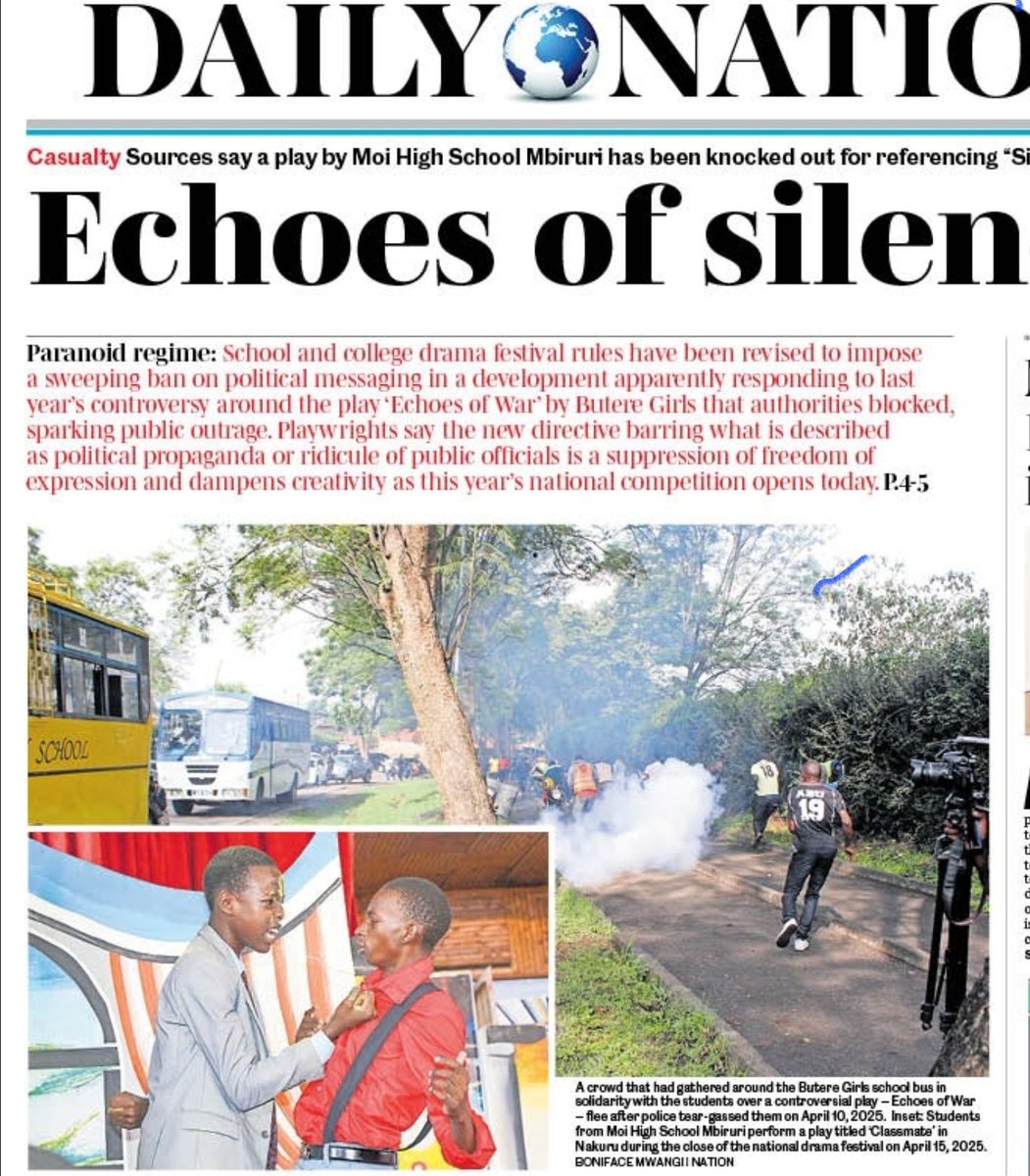
The Mbiruri play was not “banned” over a mention of Singapore, it simply didn’t qualify for Nationals. It took different qualifying positions from Sub-County, through County, and finished 4th at Regionals. That is the reality.
Did @NationAfrica, look at the winning plays in the Eastern region? Very strong items. Please let us not politicised theatre in schools.
And the rule on politics? It is not new. It has always been in the rulebook.
Plays that prioritize a school setting and child based themes carry the day and this year there are quite some intriguing pieces, make sometime to watch them dear NATION Newsroom.
Not every story is a scandal. Do not twist facts just to chase a headline.
Importantly, it is a competition, some plays just do not win. The Mbiruri play even at County Level was second, not the winning play. Your reporter actually captured that, but the Newsroom chose a shortcut in the misleading headline.
The Mbiruri play was Number 4. Outside the automatic qualification of Top Two/ Three plays.
#SystemYaFacts